Patent Information & Production OptionsBaby Stroller with Linked Seat Backrest Folding Mechanism · Patent CN210882284U

Patent CN210882284U: bibliographic data, legal status, family, a plain-language reading of the claims, plus customization, US compliance points and how a manufacturing project runs.

At a glance

Patent numberCN210882284U (application CN201921207433)
TypeChina utility model (实用新型) - protects product shape and structure
Original titleBaby carriage with seat backrest capable of being linked to be folded (一种座椅背靠可联动收合的婴儿车)
Patent ownerIndividual
InventorsLiu Lingzhi
Filing date2019-07-28
Grant date2020-06-30
Status (China)In force - valid until at most 2029-07-28, subject to payment of annual fees
Patent familyChinese filings only - no US, European, Japanese, PCT or other filings listed
Cited by2 later documents
SourceGoogle Patents (search for CN210882284U)

What the claims cover, in plain language

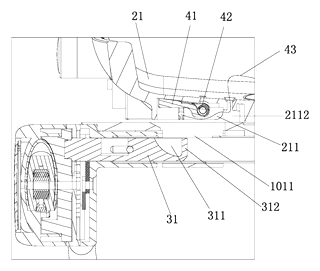
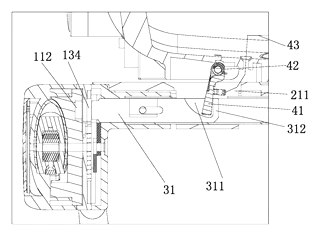
Claim 1 - A baby stroller comprising a frame with an unfolded and folded state, a frame locking mechanism, and a seat disposed on the frame. The frame includes left and right side brackets and a support seat. The seat includes a seat plate and a backrest pivoted to the rear of the seat plate. A frame unlocking mechanism is provided on the seat plate. A backrest locking mechanism limits relative rotation between the backrest and seat plate. Crucially, the backrest locking mechanism is configured such that when the frame locking mechanism is released by the frame unlocking mechanism, the backrest locking mechanism is also released.

Claim 2 - Specifies the frame structure further includes left and right side brackets connected by the support seat.

Claim 3 - Introduces a second lock release mechanism on the backrest itself. This allows the backrest to be unlocked independently while the frame remains locked in the unfolded state (e.g., for adjusting recline without folding the whole stroller).

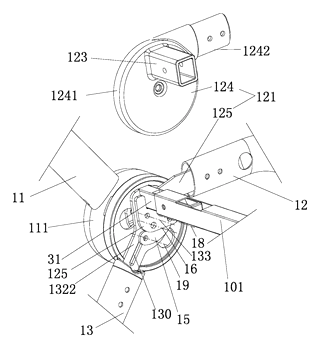
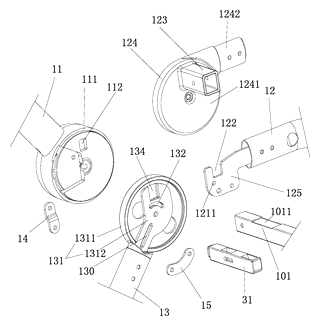
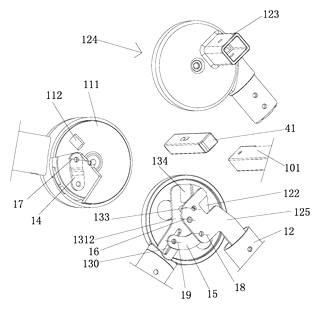
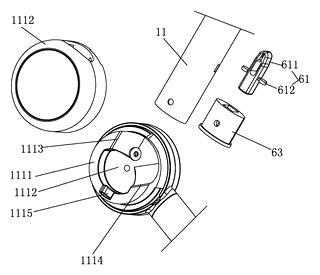
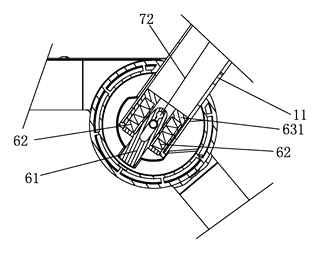
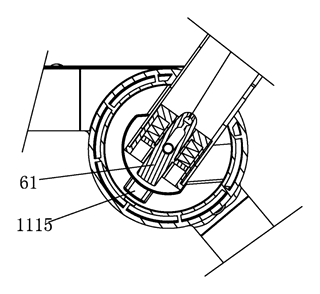
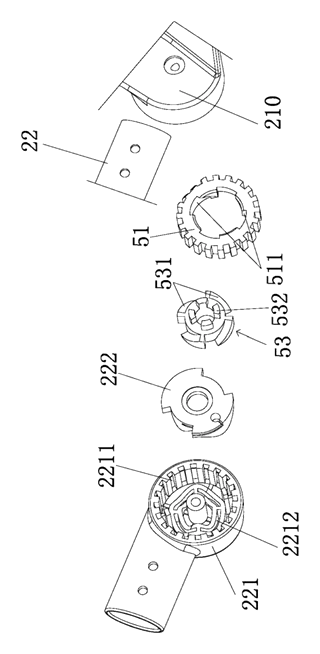
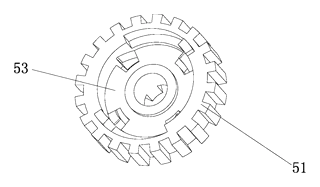
Claim 5 - Details the backrest locking mechanism: it comprises a gear and a first spring. The gear is positioned between tooth grooves on the backrest pivot seat and the seat pin joint seat. The spring forces the gear to mesh with both grooves, locking the angle.

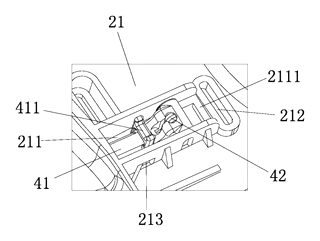
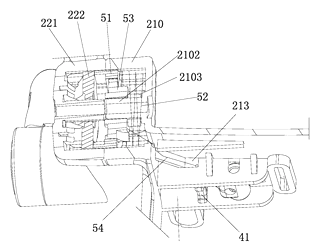
Claim 6 - Describes the transmission: a first driving part is arranged in the second tooth groove, connected to the frame unlocking mechanism by a first steel wire. When the frame unlock is pulled, the wire drives the gear out of engagement.

This is a simplified reading for orientation only. The legal scope is defined by the exact claim wording in the official Chinese document.

What this means for US production

This patent was filed only in China and is currently in force. It has no US or other foreign counterpart. However, making or selling this specific design in China would require the owner’s permission. For US production, the primary concern is whether similar mechanisms are patented in the US.

Two points to settle early:

  • Other patents may exist. The field of stroller folding mechanisms is highly competitive and heavily patented in the US and Europe. Specifically, Wonderland Switzerland AG has cited this patent in their application EP4262484A4, indicating they are developing related technology in this region. A freedom-to-operate (FTO) review is essential to ensure your design does not infringe on existing US patents regarding linked-release or gear-locking seat mechanisms.
  • Mechanism Complexity. The linked release relies on precise cable routing and gear meshing. Tolerances in injection-molded plastic parts and metal wires must be tightly controlled to prevent jamming during the 360-degree seat rotation.

Customization and manufacturing

What can be customized

AreaOptions
MaterialAluminum alloy or steel for the frame; PP/PA nylon for seat plate and gears.
FinishAnodized aluminum, powder-coated steel, matte or glossy plastic.
ColorFrame and fabric colors per Pantone reference.
Release HandleShape and location of the actuating member (button vs. lever).
Gear RatioTooth pitch and gear size for smoother or tighter locking feel.
Rotation StopOptional 180-degree stop if 360-degree rotation is not required for all SKUs.

Things to plan for (US market)

  • ASTM F833 - Standard Consumer Safety Specification for Carriages and Strollers. This is the primary standard for strollers sold in the US, covering entanglement, pinch points, and durability.
  • CPSC Regulations - General consumer product safety rules enforced by the US Consumer Product Safety Commission.
  • California Prop 65 - Screening for chemicals in plastics and finishes.
  • Lead and Phthalates - Testing for heavy metals and plasticizers in accessible components, especially relevant for children’s products.

How a project runs

  1. Inquiry - Define target price, volume, and desired aesthetic (frame color, handle style).
  2. Design Review - Verify mechanism compatibility with your existing chassis or create new tooling for the seat plate and gear assembly.
  3. Prototype - 3D printed or CNC machined samples to test the linked release action and 360-degree rotation smoothness.
  4. Pilot Run - Small batch production for ASTM testing and quality control validation.
  5. Production - Injection molding of plastic parts, stamping/machining of metal frame, cable assembly, and final assembly.

Quantities & timeline

Tooling for the seat plate and gear mechanisms requires precision molds. Cable length and routing paths must be finalized before mass production to ensure consistent operation. Lead times depend on mold complexity and material sourcing. Send us your target quantity, material preferences, and deadline and we will reply with options.

Patent drawings
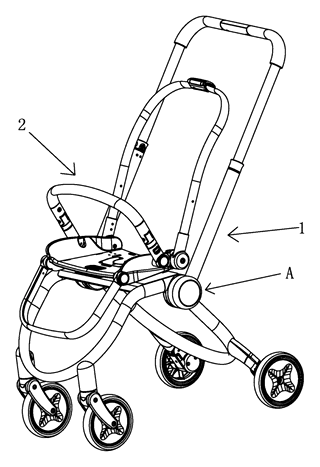
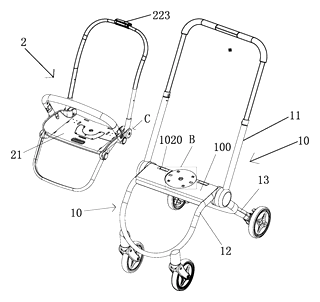
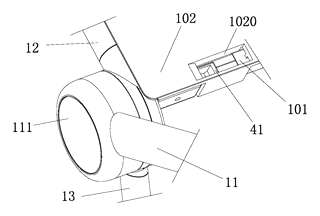
Baby Stroller with Linked Seat Backrest Folding Mechanism - Patent Fig. 1
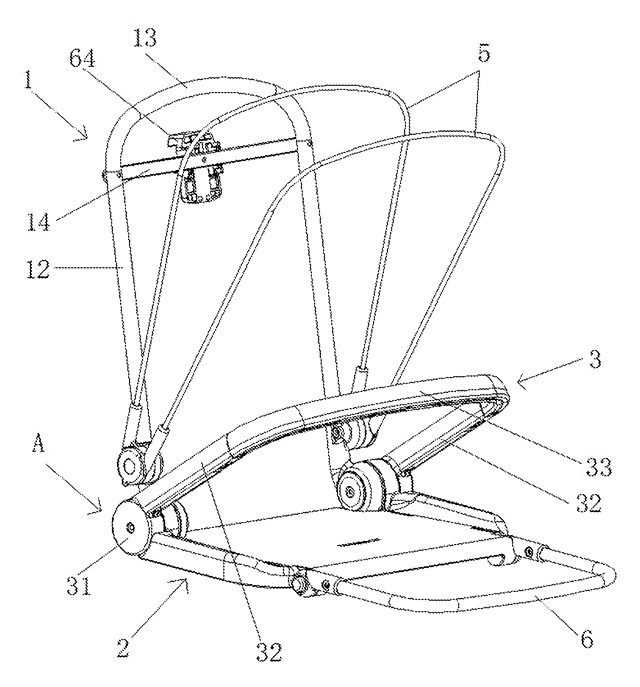
Fig. 1 - Overall structure of the stroller.
Baby Stroller with Linked Seat Backrest Folding Mechanism - Patent Fig. 2
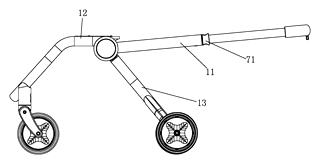
Fig. 2 - Side view of the unfolded stroller.
Baby Stroller with Linked Seat Backrest Folding Mechanism - Patent Fig. 3
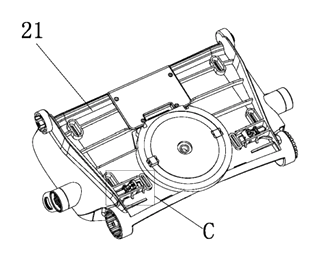
Fig. 3 - Rear view of the seat assembly.
Baby Stroller with Linked Seat Backrest Folding Mechanism - Patent Fig. 4
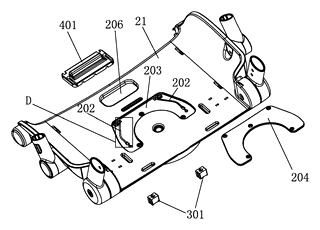
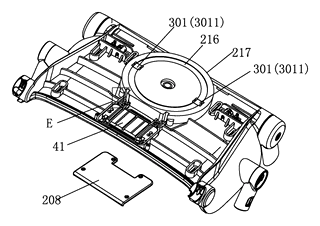
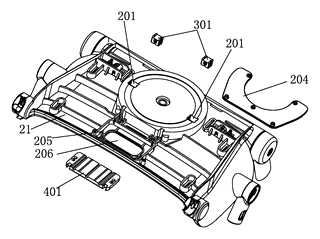
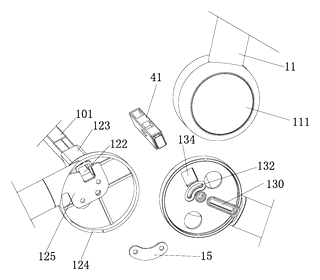
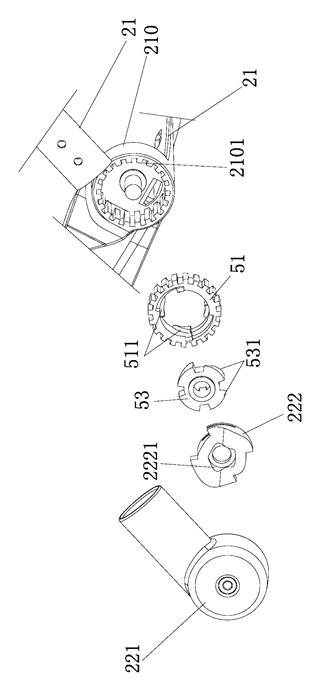
Fig. 4 - Exploded view of the seat plate and locking mechanism.
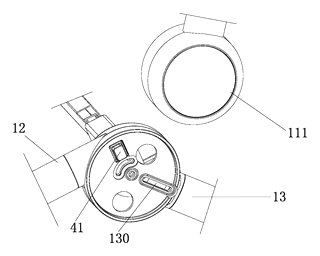
Baby Stroller with Linked Seat Backrest Folding Mechanism - Patent Fig. 5
Fig. 5 - Underside detail of the seat plate showing the housing groove.
Baby Stroller with Linked Seat Backrest Folding Mechanism - Patent Fig. 6
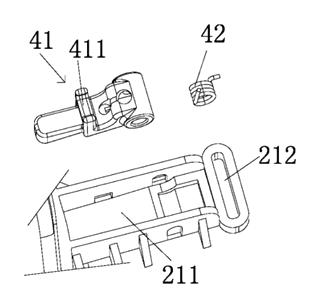
Fig. 6 - Cross-section of the locking piece and torsion spring.
Baby Stroller with Linked Seat Backrest Folding Mechanism - Patent Fig. 7
Fig. 7 - Position of the actuating member within the through hole.
Baby Stroller with Linked Seat Backrest Folding Mechanism - Patent Fig. 8
Fig. 8 - Connection of the traction portion to the actuating member.
Baby Stroller with Linked Seat Backrest Folding Mechanism - Patent Fig. 9
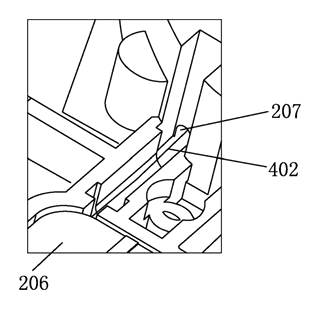
Fig. 9 - Notch in the receiving groove wall for cable passage.
Baby Stroller with Linked Seat Backrest Folding Mechanism - Patent Fig. 10
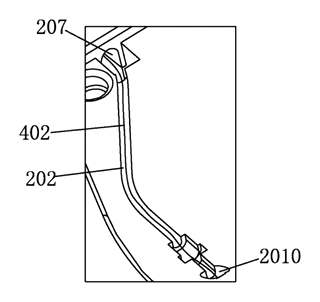
Fig. 10 - Routing path of the steel wire.
Baby Stroller with Linked Seat Backrest Folding Mechanism - Patent Fig. 11
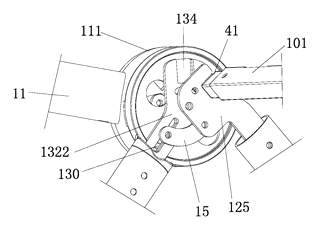
Fig. 11 - Engagement of the gear with the tooth grooves.
Baby Stroller with Linked Seat Backrest Folding Mechanism - Patent Fig. 12
Fig. 12 - Disengagement of the gear during release.
Baby Stroller with Linked Seat Backrest Folding Mechanism - Patent Fig. 13
Fig. 13 - Pivot connection of the backrest to the seat plate.
Baby Stroller with Linked Seat Backrest Folding Mechanism - Patent Fig. 14
Fig. 14 - Left side bracket structure.
Baby Stroller with Linked Seat Backrest Folding Mechanism - Patent Fig. 15
Fig. 15 - Right side bracket structure.
Baby Stroller with Linked Seat Backrest Folding Mechanism - Patent Fig. 16
Fig. 16 - Support seat connecting the brackets.
Baby Stroller with Linked Seat Backrest Folding Mechanism - Patent Fig. 17
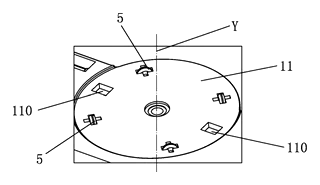
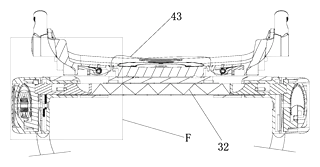
Fig. 17 - Rotation interface between seat plate and support seat.
Baby Stroller with Linked Seat Backrest Folding Mechanism - Patent Fig. 18
Fig. 18 - Alternative embodiment of the locking piece.
Baby Stroller with Linked Seat Backrest Folding Mechanism - Patent Fig. 19
Fig. 19 - Spring configuration for the backrest lock.
Baby Stroller with Linked Seat Backrest Folding Mechanism - Patent Fig. 20
Fig. 20 - Second lock release mechanism detail.
Baby Stroller with Linked Seat Backrest Folding Mechanism - Patent Fig. 21
Fig. 21 - Independent backrest adjustment mode.
Baby Stroller with Linked Seat Backrest Folding Mechanism - Patent Fig. 22
Fig. 22 - Nested groove arrangement for the locking mechanism.
Baby Stroller with Linked Seat Backrest Folding Mechanism - Patent Fig. 23
Fig. 23 - Interference check during 360-degree rotation.
Baby Stroller with Linked Seat Backrest Folding Mechanism - Patent Fig. 24
Fig. 24 - Actuator movement sequence.
Baby Stroller with Linked Seat Backrest Folding Mechanism - Patent Fig. 25
Fig. 25 - Wire tensioning mechanism.
Baby Stroller with Linked Seat Backrest Folding Mechanism - Patent Fig. 26
Fig. 26 - Gear tooth profile detail.
Baby Stroller with Linked Seat Backrest Folding Mechanism - Patent Fig. 27
Fig. 27 - Housing cover for the mechanism.
Baby Stroller with Linked Seat Backrest Folding Mechanism - Patent Fig. 28
Fig. 28 - Bottom view of the seat plate.
Baby Stroller with Linked Seat Backrest Folding Mechanism - Patent Fig. 29
Fig. 29 - Top view of the seat plate.
Baby Stroller with Linked Seat Backrest Folding Mechanism - Patent Fig. 30
Fig. 30 - Side section of the backrest hinge.
Baby Stroller with Linked Seat Backrest Folding Mechanism - Patent Fig. 31
Fig. 31 - Exploded assembly of the backrest lock.
Baby Stroller with Linked Seat Backrest Folding Mechanism - Patent Fig. 32
Fig. 32 - Final folded state configuration.

Drawings reproduced from the public patent document for reference.
🔥 Popularity – views

Bring this product to market

  1. ✓ Patent vetted China-only family and legal status checked
  2. 2 Product brief · now How it works, uses and options written up
  3. 3 Prototype First samples for buyers to review
  4. 4 Pilot run Small first batch for launch customers
  5. 5 Volume production Repeat orders at scale

Buyer interest

– of 100 buyers needed to start prototyping

or request a quote Share to speed it up:

One click, no sign-up. Each vote is one real visitor, and products with the most interest go to prototyping first.

Build team: no members yet. Need a partner, co-funding or skills to build this? Join and we introduce the team once it forms.

Join the build team

Want to develop this product with others? Tell us what you can bring. When the team has enough people, we introduce the members to each other by email.

I can help with (pick any)

Letters only. The team list on this page shows your country and the first 5 letters of your name (e.g. "Micha**"); leave the name blank to appear as "Anonymous".

No money is collected on this site. IP2M does not hold or manage funds, and pledges are non-binding. We email you a link to confirm; only confirmed members are introduced to each other. See our privacy policy.

Interested in building this?

Tell us your target market, quantity and timeline. We reply with options for prototyping, small-batch runs or volume production.

All Baby & Kids patents →

This page is based on the public patent document CN210882284U, assigned to Individual. IP2M is an independent manufacturing service and is not affiliated with, endorsed by or licensed by the patent owner. Images marked as concept renderings are illustrations, not photos of an existing product. Patent status information is provided for reference only and is not legal advice; confirm freedom to operate for your market before production. Full disclaimer.