
Patent CN211407802U
Updated November 7, 2026Insole with Removable Medicine Box and Outward-Inclined Edges
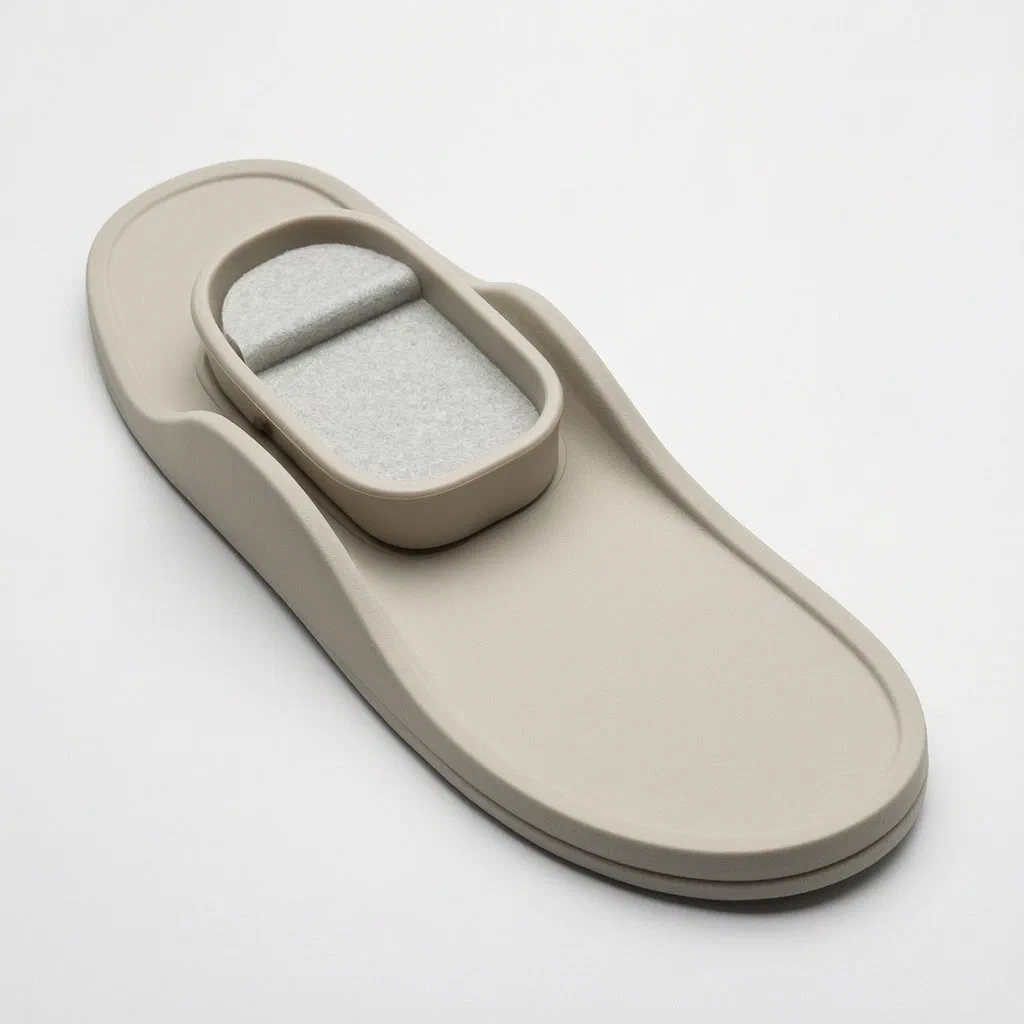
Standard insoles offer cushioning but no way to apply topical treatments directly to the foot without removing shoes or using messy creams. This design integrates a dedicated compartment into the insole itself. A drop-shaped groove sits under the arch area, corresponding to the Yongquan point. Inside, a removable box holds the medication. Its top layer is made of breathable non-woven fabric, letting the active ingredient touch the sole while the rigid walls keep the dose contained. When the topical product is used up, you swap the small box instead of throwing away the whole insole. The heel and mid-foot edges tilt outward, a detail the patent says improves comfort inside the shoe.
- China utility model - lapsed
- No filings outside China
- Footwear accessories
- Non-woven fabric covers, molded plastic boxes
Splat! What let you down?
💊
Integrated dispenser
A removable box sits in a groove, holding medicine against the sole.
🦶
Yongquan alignment
The drop-shaped groove positions the box under the central arch point.
📐
Outward-tilted edges
Heel and mid-waist edges angle out to reduce rubbing and improve fit.
♻️
Replaceable insert
Swap the medicine box when exhausted; reuse the main insole body.
Bring this product to market
- ✓ Patent review Patent family and legal status reviewed in the relevant jurisdictions.
- 2 Product brief · now How it works, uses and options written up
- 3 Prototype First samples for buyers to review
- 4 Pilot run Small first batch for launch customers
- 5 Volume production Repeat orders at scale
Buyer interest
– of 100 buyers needed to start prototyping
One click, no sign-up. Each vote is one real visitor, and products with the most interest go to prototyping first.
Build team: no members yet. Need a partner, co-funding or skills to build this? Join and we introduce the team once it forms.
Patent Rights & Team Participation
Before joining a development team, participants should ensure they have the necessary rights or authorization to participate in the project.
Participation is generally appropriate where:
- You own the relevant patent rights or have obtained permission or a license from the rights holder.
- The relevant patent rights have expired or have been legally invalidated in the jurisdictions where the planned activities will take place.
- The planned development, manufacturing, and commercialization activities have been independently assessed and do not infringe applicable patent rights in the relevant jurisdictions.
Important: Being located outside a country where a patent is protected does not automatically exempt you from patent infringement risks. Patent rights may apply based on where development, manufacturing, use, sale, or import activities take place.
IP2M does not grant any patent license or authorization through team participation. Joining a project does not provide permission to use, manufacture, or commercialize patented technology.
The problem
Most topical foot treatments require applying creams or patches directly to the skin, which can rub off inside shoes or cause messiness. Standard insoles provide cushioning but lack any mechanism to hold medication in place against specific areas of the sole. Users often have to choose between comfort and treatment, or deal with bulky external devices that alter how the shoe fits. Additionally, many insoles have flat or inward-curving edges that can create pressure points at the heel and arch, leading to discomfort during extended wear.
The solution
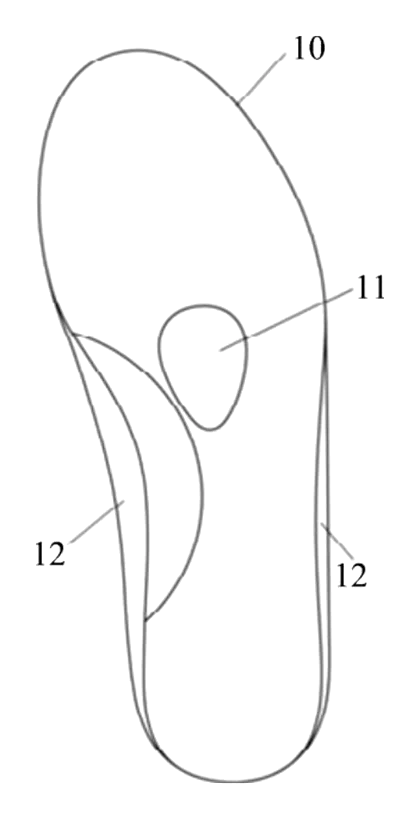
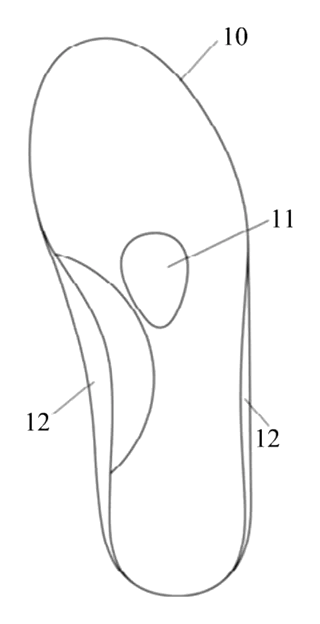
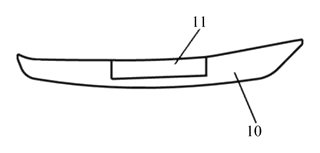
- The insole body (10) is shaped like a standard footbed but includes a specific groove (11) on the surface that touches the human sole.
- This groove is designed to correspond to the Yongquan point, located in the center of the sole near the arch.
- A medicine box (20) fits removably into this groove. It acts as a container for various topical medicines or health care agents.
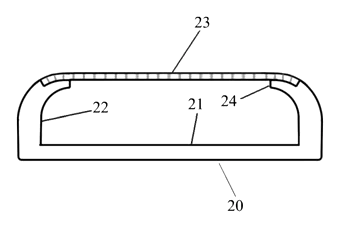
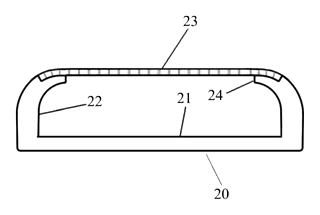
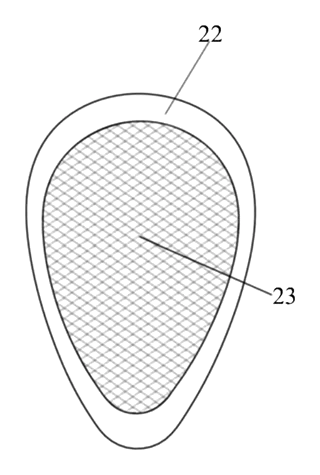
- The box features a bottom plate (21), side perimeter plates (22), and a top cover (23).
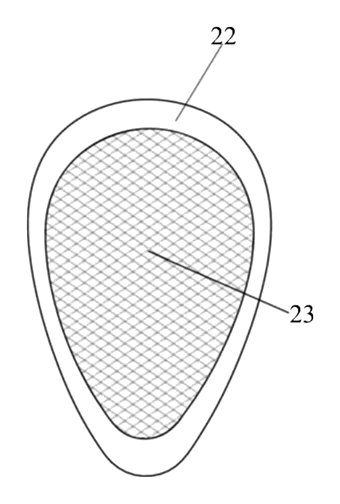
- The top cover is made of non-woven fabric, allowing direct contact between the medicine and the user’s skin while keeping the liquid or semi-solid agent contained within the closed storage space formed by the walls.
- The insole’s heel part and middle waist part are provided with edges (12) that are inclined outwards. This geometry is described in the patent as improving comfort inside the shoe.
Who it is for
- Health-focused footwear brands looking to differentiate products with integrated wellness features.
- Pharmaceutical companies seeking novel delivery methods for topical foot treatments or supplements.
- Orthotic manufacturers who want to add therapeutic value to standard arch-support designs.
- E-commerce sellers targeting consumers interested in alternative health remedies and sleep support.
How it works
The main parts
| No. | Part | What it does |
|---|---|---|
| 10 | Insole Body | The main footbed supporting the foot. |
| 11 | Groove | A recess in the sole-contact surface, shaped like a water drop. |
| 12 | Inclined Edges | Outward-angled rims at the heel and mid-waist for comfort. |
| 20 | Medicine Box | Removable container for the topical agent. |
| 21 | Bottom Plate | Base of the box, resting in the groove. |
| 22 | Side Perimeter Plates | Walls enclosing the medicine; may include inward bosses. |
| 23 | Top Cover | Non-woven fabric lid allowing skin contact. |
Operation Steps
- Insertion: Place the medicine box (20) into the groove (11) on the insole surface. The box snaps or adheres in place.
- Placement: Insert the insole into the shoe so that the medicine box aligns with the user’s Yongquan point.
- Contact: As the user stands or walks, the sole presses against the non-woven top cover (23), facilitating absorption of the medicine from the enclosed space.
- Replacement: When the medicine loses efficacy, remove the old box (20) and insert a new one, reusing the original insole body (10).
Applications
Daily Wellness Footwear
The patent describes this insole for everyday wear where a topical agent is held against the sole. The design keeps the agent in a contained box instead of a loose patch, so it stays in place through the day.
Post-Activity Recovery
After exercise, athletes or walkers can use the insole to apply a topical gel directly to the arch area. The contained box prevents the gel from spreading across the entire sole or staining socks.
Elderly Care Products
For older adults who have trouble bending down to apply foot creams, the insole holds a topical product in place without manual application.
Travel Comfort
Travelers wearing shoes for long periods can use the insole to keep a topical product against the sole during the day. The replaceable nature means they can carry multiple pre-loaded boxes for different times of the trip.
Where it is less suitable
- High-intensity sports: The added bulk of the box and potential movement during vigorous activity might compromise performance or cause irritation.
- Liquid-only medications: The design relies on a closed space with a permeable cover; highly fluid substances may leak if not properly sealed or gelled.
- Regulatory-sensitive markets: Marketing the insole to treat a disease would require medical device approval; the mechanical design alone does not provide that approval.
Patent & Production
At a glance
| Patent number | CN211407802U (application CN201922057628) |
| Type | China utility model (实用新型) - protects product shape and structure |
| Original title | Novel Insole (一种新型鞋垫) |
| Patent owner | Dongguan Defani Shoes Technology Service Co ltd |
| Inventors | Guo Pingyi |
| Filing date | 2019-11-22 |
| Grant date | 2020-09-04 |
| Status (China) | Lapsed - terminated for non-payment of annual fees (recorded 2025-11-14) |
| Patent family | Public record shows Chinese filings only - no US, European, Japanese, PCT or other filings listed |
| Cited by | 0 later documents |
| Source | Google Patents (search for CN211407802U) |
What the claims cover, in plain language
Claim 1 - an insole where a medicine box is arranged on the surface contacting the sole, and the heel and middle waist parts have outwardly inclined edges. Claim 2 - the surface has a groove, and the medicine box is disposed in this groove. Claim 3 - the medicine box is removably connected to the groove. Claim 4 - the indentation corresponds to the Yongquan point on the human sole. Claim 5 - the grooves are drop-shaped. Claim 6 - the medicine box conforms to the shape of the recess. Claim 7 - the medicine box comprises a bottom plate, side perimeter plate, and top cover; these enclose a closed storage space; the top cover is made of non-woven fabrics.
This is a simplified reading for orientation only. The legal scope is defined by the exact claim wording in the official Chinese document.
What this means for US production
This patent was filed in China and has lapsed, so it no longer restricts anyone in China either. The public record shows no US or other foreign counterpart.
Two points to settle early:
- Other patents may exist. Footwear inserts and drug-delivery mechanisms are a crowded field. While this specific combination of a drop-shaped groove and non-woven cover appears unique in this record, broader patents covering insoles with dispensers or ergonomic edge modifications may exist. A freedom-to-operate (FTO) review is recommended before tooling.
- Material Safety. Since the product involves prolonged skin contact with materials intended to hold pharmaceuticals or supplements, material biocompatibility is critical. Ensure all components meet relevant safety standards for skin-contact items.
Customization and manufacturing
What can be customized
| Area | Options |
|---|---|
| Groove Shape | Drop-shape (standard), circular, oval, or trapezoidal per Claim 2/5 variants. |
| Box Material | TPU, EVA, or rubber for the base/sides; varied pore sizes for non-woven tops. |
| Edge Geometry | Angle of inclination for heel and mid-waist edges to suit specific shoe lasts. |
| Attachment Method | Snap-fit, adhesive bonding, or friction fit for the removable box. |
| Size Range | Grading from child to adult sizes, adjusting groove position relative to arch height. |
Things to plan for (US market)
- FDA Regulations: If marketed with claims to treat conditions (for example, a named disease or pain condition), the product may be classified as a medical device. Purely cosmetic or wellness claims (“relaxation”) avoid this but still require careful labeling.
- CPSC Guidelines: For children’s products, ensure small parts (the box) do not pose choking hazards if detached.
- Textile Standards: Non-woven fabrics must comply with flammability and chemical safety standards (e.g., OEKO-TEX) for skin contact.
- Labeling: Clear instructions on how to replace the box and warnings about potential skin sensitivities.
How a project runs
- Inquiry - Define target shoe types, size range, and intended medication consistency (gel, solid, liquid).
- Design - CAD modeling of the insole body, groove depth, and box dimensions. Selection of non-woven fabric weight.
- Prototype - 3D-printed insole bodies with prototype boxes. Test fit in sample shoes.
- Pilot Run - Injection molding of TPU/EVA bases; sewing/bonding of non-woven covers. Wear trials for comfort and leakage.
- Production - Mass molding, assembly, packaging.
Quantities & timeline
Tooling for the insole body and the medicine box requires separate molds. The non-woven cover adds a textile processing step. Development time depends on the complexity of the attachment mechanism and the number of sizes. Send us your size range, material preferences, and estimated quantity and we will reply with options.
Production notes
Tooling and process
Likely requires injection molding for the TPU or EVA insole body and the rigid parts of the medicine box. The non-woven top cover typically undergoes heat pressing or adhesive bonding to the box frame. Cutting and sewing processes may be used for trimming the fabric edges.
Cost drivers
Fabric grade typically has the largest impact on cost, especially if medical-grade non-wovens are required. Sole mold costs depend on the number of sizes produced. Stitch density and hardware corrosion resistance (if metal clips are used) also affect the final cost.
Prototyping path
We would typically start with a sewn first sample using existing insole stock and a manually assembled box. Move to 3D-printed or cast components to verify the drop-shaped groove fit. Conduct a wear trial to check for seam slippage and edge comfort.
What we would change before tooling
We would likely verify the outward inclination angle of the heel and mid-waist edges against actual shoe lasts to prevent rubbing. Ensure the box’s removal force is balanced—too tight makes replacement hard, too loose risks falling out during walking.
Common failure points
Sole delamination between the insole layers is a risk if adhesives fail under sweat. Seam strength and edge finish determine durability. Size deviation in the groove can prevent the box from seating correctly, affecting contact with the Yongquan point.
Patent drawings
Drawings reproduced from the public patent document for reference.
Frequently asked questions
How does the medicine stay in the box?
The patent describes a closed storage space formed by a bottom plate and side walls. The top is covered by a non-woven fabric. This fabric allows contact with the skin while containing the medicine inside. The box fits snugly into a groove on the insole.
Can I replace just the medicine box?
Yes. Claim 3 specifies that the medicine box is removably connected to the groove. You can take out the used box and insert a new one without replacing the entire insole. This reduces waste and ongoing costs.
Why is the groove drop-shaped?
The patent states the drop shape corresponds to the inner arch of the human foot. This positioning aims to align the medicine box with the Yongquan point, a traditional acupressure location on the sole, for better contact and comfort.
What materials are used for the box?
The patent mentions a bottom plate, side perimeter plates, and a top cover. The cover is explicitly non-woven fabric. The patent does not name the polymer for the rigid parts; the material would be specified in design.
Is this a medical device?
According to the patent, the invention aims to relieve symptoms like low sleep quality or dizziness via topical application. However, regulatory classification depends on marketing claims and local laws. In the US, making disease-treatment claims requires FDA clearance. We recommend consulting a regulatory expert for your specific product launch.
Will the edges hurt my foot?
The patent describes outwardly inclined edges at the heel and middle waist. This geometry is intended to improve comfort by reducing pressure points compared to flat or inward-curving edges. Fit should be confirmed on prototypes.
Can this design be made and sold in the US?
The patent was filed in China and has lapsed due to non-payment of fees. The public record shows no US counterpart, so it does not restrict the design in the US. However, other US patents may exist in the footwear or drug-delivery fields. We recommend a freedom-to-operate check before volume production.
Are you affiliated with the patent owner?
No. IP2M is an independent design and manufacturing service working from the public patent document.
Request a quote
Click Request a Quote below to see our email address - copy it, or open your email app with a ready-made message. Please mention patent CN211407802U in the subject.
Helpful details to include:
- Your company and channel (footwear brand, orthotics supplier, pharma distributor)
- Target shoe types and size range
- Medication form (gel, patch, solid) to determine box design
- Material preferences for the insole body and non-woven cover
- Estimated quantity and target price
- Timeline - when you would like samples and the first shipment
You can also reach us at (332) 203-9997.
Page editor: Emily Zhang, Product Editor · IP2M
Last updated November 7, 2026. If something on this page looks wrong, email [email protected] and we will check it against the patent.
Interested in building this?
Tell us your target market, quantity and timeline. We reply with options for prototyping, small-batch runs or volume production.
Send your inquiry to
Please put CN211407802U in the subject line and tell us your company, country, estimated quantity and timeline.
Prefer to talk? Call (332) 203-9997.
More product-ready patents
All Apparel & Accessories patents →
Apparel & Accessories
Stacked Zipper with Teeth That Mesh Top-to-Bottom
Zipper whose two identical tooth rows mesh on top of each other, closed by a simplified slider.
Patent CN205795062U
Apparel & Accessories
Impact-Resistant Glove with a 3D-Printed Lattice Layer
Work glove with a 3D-printed lattice impact layer, TPU knuckle guards and a light mounting area.
Patent CN213785583U
Apparel & Accessories
Massage Insole with Spring-Back Silicone Nubs and a Removable Top Layer
Layered insole: silicone nubs rise through a removable perforated top sheet and sink under each step.
Patent CN208286505U
Apparel & Accessories
Heel-Less Carbon Plate Running Shoe Sole for Forefoot Strikers
Running sole for forefoot strikers: no ground-touching heel, winged carbon plate between two midsoles.
Patent CN216723354U
Apparel & Accessories
Waterproof Magnetic Zipper Stop That Snaps the Two Halves Together
Separating-zipper stop with sealed magnets: pin and box snap together one-handed, safe in rain and wash.
Patent CN215075936U
Apparel & Accessories
Left-Right Specific Soccer Socks: Grip for the Plant Foot, Touch Pads for the Kicking Foot
Soccer socks knitted as a left-right pair: grip zones for the plant foot, pads for the kicking foot.
Patent CN212728807U
Browse by category
- Apparel & Accessories (48)
- Baby & Kids (29)
- Bags & Luggage (17)
- Bath & Personal Care (32)
- Car Accessories (25)
- Furniture, Bedding & Storage (24)
- Garden & Outdoor (32)
- Health & Wellness (14)
- Home, Kitchen & Cleaning (50)
- Lighting (23)
- Packaging & Containers (12)
- Pet Products (11)
- Phone & Camera Accessories (9)
- Retail Display (25)
- School, Office & Art (36)
- Sports & Recreation (46)
- Tools & Workshop (54)
- Toys & Games (22)
This page is based on the public patent document CN211407802U, assigned to Dongguan Defani Shoes Technology Service Co ltd. IP2M is an independent manufacturing service and is not affiliated with, endorsed by or licensed by the patent owner. Images marked as concept renderings are illustrations, not photos of an existing product. Patent status information is provided for reference only and is not legal advice; confirm freedom to operate for your market before production. Full disclaimer.