
Patent CN211723937U
Updated November 8, 2026Dual-Handle Impact Massager with Rotatable Shaft
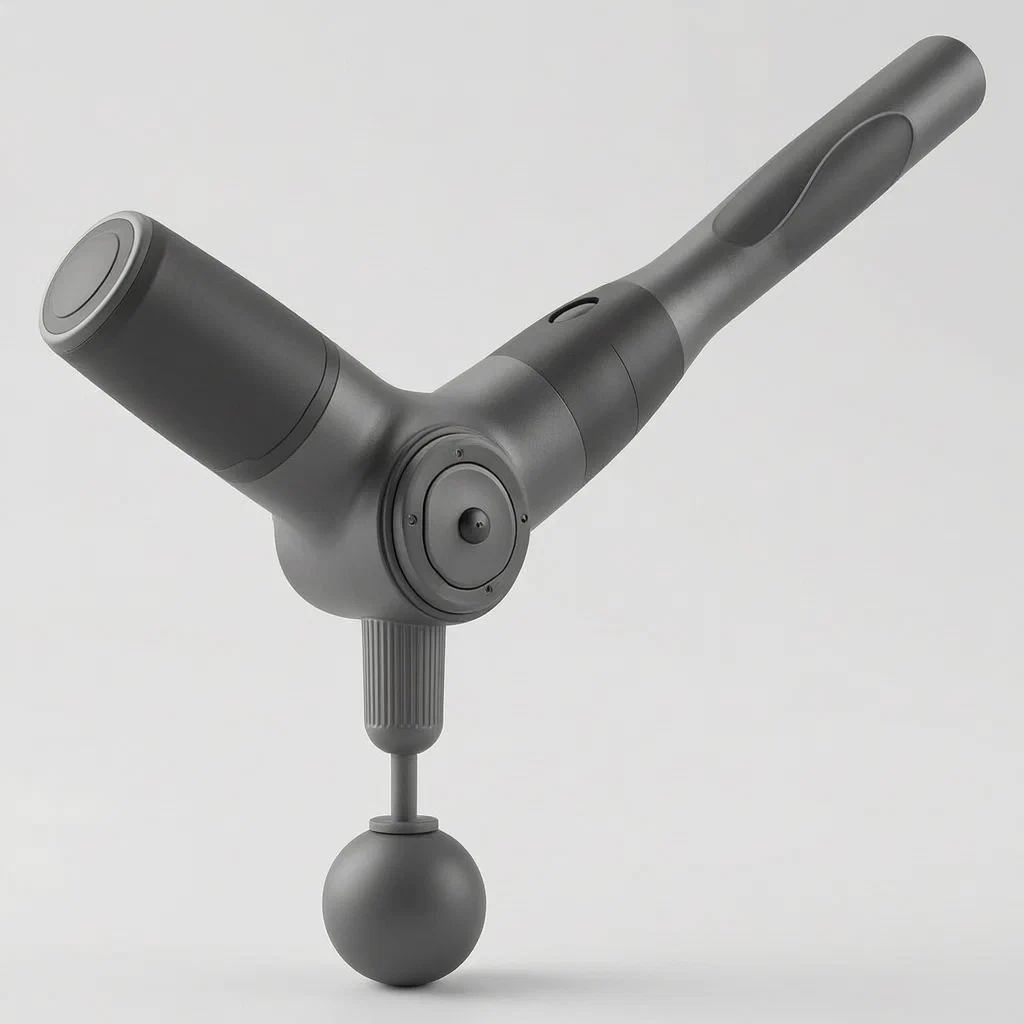
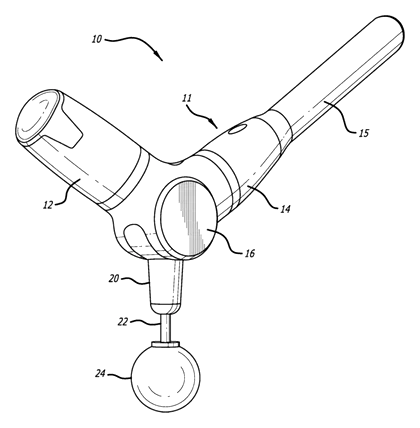
Standard massage guns are often one-handed and awkward to use on your own back. This design uses two handles spaced apart to provide stability and leverage. The user grips both handles while the percussion head sits between them. A locking rotation mechanism allows the head to swivel more than 90 degrees, changing the angle of impact without moving the hands. This setup lets users apply significant force to their own back muscles or use it as a therapist tool, with an optional extension handle for hard-to-reach spots.
- China utility model - lapsed
- No filings outside China
- Personal care devices
- Battery powered, rotating shaft mechanism
Splat! What let you down?
🤲
Dual-Hand Grip
Two handles allow stable, two-handed control for applying pressure to the back.
🔄
Rotating Head
The output shaft pivots relative to the handles to adjust the impact angle.
🔒
Locking Mechanism
A button-operated sprocket lock holds the shaft in the desired position.
📏
Extension Option
A detachable extension handle helps reach distant muscle groups.
Bring this product to market
- ✓ Patent review Patent family and legal status reviewed in the relevant jurisdictions.
- 2 Product brief · now How it works, uses and options written up
- 3 Prototype First samples for buyers to review
- 4 Pilot run Small first batch for launch customers
- 5 Volume production Repeat orders at scale
Buyer interest
– of 100 buyers needed to start prototyping
One click, no sign-up. Each vote is one real visitor, and products with the most interest go to prototyping first.
Build team: no members yet. Need a partner, co-funding or skills to build this? Join and we introduce the team once it forms.
Patent Rights & Team Participation
Before joining a development team, participants should ensure they have the necessary rights or authorization to participate in the project.
Participation is generally appropriate where:
- You own the relevant patent rights or have obtained permission or a license from the rights holder.
- The relevant patent rights have expired or have been legally invalidated in the jurisdictions where the planned activities will take place.
- The planned development, manufacturing, and commercialization activities have been independently assessed and do not infringe applicable patent rights in the relevant jurisdictions.
Important: Being located outside a country where a patent is protected does not automatically exempt you from patent infringement risks. Patent rights may apply based on where development, manufacturing, use, sale, or import activities take place.
IP2M does not grant any patent license or authorization through team participation. Joining a project does not provide permission to use, manufacture, or commercialize patented technology.
The problem
Most handheld percussion massagers are designed for single-handed use. When a user tries to massage their own back, they must hold the device behind them with one arm extended, which limits the amount of force they can apply and makes it difficult to maintain a steady angle. Two-handed operation is often unstable because standard designs do not have a second grip point positioned to counterbalance the recoil. Additionally, fixed-angle heads cannot easily adapt to the curvature of the spine or reach specific muscle groups without twisting the wrist uncomfortably.
The solution
- Central Body with Dual Handles: The device features a central portion with a first handle and a second handle extending away at an angle greater than 75 degrees but less than 180 degrees. According to the patent, this creates a wide stance for the hands, providing leverage and stability.
- Reciprocating Output Shaft: An electric drive motor inside the body drives an output shaft that extends into the space between the two handles. The shaft produces a linear reciprocating motion (percussion) at its distal end.
- Rotation Mechanism: The output shaft is mounted such that it can rotate relative to the handles. This allows the user to change the angle of the massage head without moving their hands.
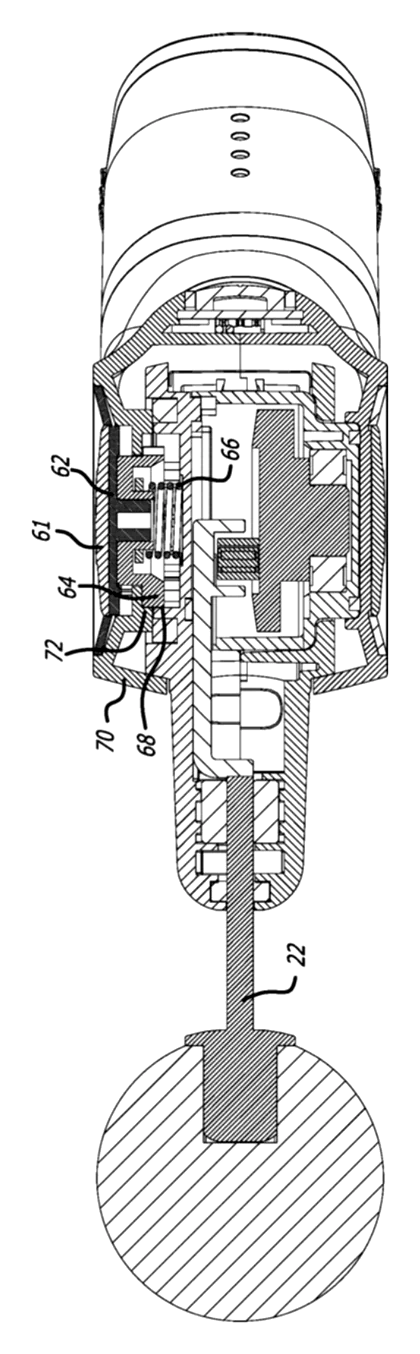
- Locking Sprocket System: A lock mechanism using a toothed sprocket, a spring, and a release button keeps the shaft fixed in the chosen rotational position until the button is pressed.
- Variable Handle Sizes: The claims describe handles with different circumferences to accommodate left and right hands of different sizes or preferences.
- Extension Handle: An optional removable extension handle attaches to one of the main handles, allowing the user to pull the massager against their back for deeper tissue work.
Who it is for
- Home Users Seeking Self-Massage: Individuals who want to massage their own back and tight muscles without needing a partner to hold the device.
- Physical Therapists and Chiropractors: Professionals who need a stable, two-handed tool to apply consistent pressure to patients’ backs and shoulders.
- Fitness Enthusiasts: Athletes looking for a way to target specific muscle groups like the calves or hamstrings using the extension handle feature.
- Consumer Electronics Brands: Companies developing premium personal care devices that differentiate through ergonomic design and multi-position usability.
How it works
The main parts
| No. | Part | What it does |
|---|---|---|
| 10 | Body | Central housing containing the motor and battery. |
| 12, 14 | First and Second Handles | Grips for the operator’s hands, forming an obtuse angle. |
| 22 | Output Shaft | Reciprocates to deliver impact; rotates relative to handles. |
| 24 | Massage Head | Attached to the shaft tip; contacts the skin. |
| 30 | Motor Drive Assembly | Electric motor converting energy to mechanical motion. |
| 40 | Rotation Mechanism | Allows shaft to pivot; includes locking sprocket. |
| 15 | Extension Handle | Detachable part for pulling the device toward the body. |
Operating Steps
- Grip the Device: The user holds the first handle with one hand and the second handle with the other. The wide spacing provides a stable base.
- Select Angle: If a different impact angle is needed, the user presses the release button to disengage the sprocket lock, rotates the output shaft to the desired position, and releases the button to lock it in place.
- Activate Motor: The electric drive assembly powers the output shaft, causing it to move back and forth rapidly.
- Apply Pressure: The user pushes the massager against the target area. For self-back massage, the user may attach the extension handle to one grip and pull the device toward their spine with the free hand, using the other hand to stabilize.
Applications
Lower Back Self-Massage
Users can stand or sit and reach behind their back. The dual handles allow them to lean forward slightly, using body weight to press the massager into the lumbar region. The patent describes the rotating head as adjustable to follow the curve of the spine for more even contact.
Calf and Foot Massage
By attaching the extension handle, a seated user can hook the device around their leg. Pulling the extension handle brings the massage head against the calf muscles or the sole of the foot, areas that are difficult to reach with standard one-handed tools.
Therapist-Assisted Use
Professionals can use the device on patients lying prone. The two-handed grip gives the therapist better control over the force applied, reducing fatigue during long sessions compared to single-handed devices.
Shoulder and Neck Massage
The ability to rotate the shaft allows the user to direct the impact downward onto the trapezius muscles while keeping their wrists in a neutral position. This reduces strain on the user’s arm and shoulder joints during self-treatment.
Where it is less suitable
- Single-Handed Operation: The design relies on two hands for optimal stability and control; it is heavier and bulkier than compact one-handed massagers.
- Precision Small Areas: The large footprint of the dual handles may make it difficult to target very small trigger points in tight spaces like between the scapulae without careful maneuvering.
- Waterproof Outdoor Use: The patent describes electrical components and batteries within a housing; unless specifically sealed in production, this design is not inherently suited for wet environments or shower use.
Patent & Production
At a glance
| Patent number | CN211723937U (application CN201921792186) |
| Type | China utility model (实用新型) - protects product shape and structure |
| Original title | Multi-functional and ergonomic impact massager (多功能且符合人体工程学的冲击式按摩器) |
| Patent owner | Bode Co ltd |
| Inventors | S. Li, A. Garfio, T. Frey |
| Filing date | 2019-10-23 |
| Grant date | 2020-10-23 |
| Status (China) | Lapsed - terminated for non-payment of annual fees (recorded 2023-11-03) |
| Patent family | Public record shows Chinese filings only - no US, European, Japanese, PCT or other filings listed |
| Cited by | 2 later documents |
| Source | Google Patents (search for CN211723937U) |
What the claims cover, in plain language
Claim 1 defines an impact massager with a body having a central portion, a first handle, and a second handle. The handles extend away from the center at an angle greater than 75° and less than 180°. An electric motor drives an output shaft located between the handles to produce linear reciprocating motion. A rotation mechanism allows the shaft to pivot relative to the handles so the user can select the impact angle.
Claim 6-7 detail the locking system: a sprocket with teeth engages with teeth on the body and shaft, biased by a spring. A button disengages the sprocket to allow rotation; releasing the button locks the shaft in place.
Claim 8 specifies that the first and second handles have different circumferences (differing by more than ten percent) to accommodate different hand sizes.
Claim 9 introduces a releasable extension handle attached to one of the main handles.
Claim 11 describes a Y-shaped configuration where the handles and the reciprocation axis form a Y-shape, optimized for holding the device on the user’s back with both hands.
This is a simplified reading for orientation only. The legal scope is defined by the exact claim wording in the official Chinese document.
What this means for US production
This patent was filed in China and has lapsed, so it no longer restricts anyone in China either. The public record shows no US or other foreign counterpart.
Two points to settle early:
- Other patents may exist. Personal massagers are a crowded field with active US patents covering various handle geometries and percussion mechanisms. Notably, Gregory Ford Glassman holds US11896543B2, which cites this patent. A freedom-to-operate (FTO) review is required to ensure the specific dual-handle and rotating-shaft combination does not infringe on active US patents before tooling.
- Battery and Motor Safety. The design integrates a battery pack and high-speed motor. Compliance with UN 38.3 for transport and UL/IEC standards for consumer electronics safety is critical for US market entry.
Customization and manufacturing
What can be customized
| Area | Options |
|---|---|
| Handle Shape | Ergonomic contours, rubberized grips, diameter variations |
| Material | ABS plastic, silicone coating, metal accents |
| Motor Power | Voltage and torque settings for different percussion intensities |
| Battery Type | Lithium-ion cell capacity and charging interface (USB-C, etc.) |
| Head Attachments | Interchangeable massage heads (ball, flat, bullet) |
| Color Finish | Matte, glossy, or textured surfaces |
Things to plan for (US market)
- UN 38.3: Mandatory testing for lithium-ion batteries shipped internationally.
- FCC Part 15: Electromagnetic compatibility certification for electronic devices.
- FDA Registration: While not a medical device, general wellness products should avoid unverified health claims in marketing.
- California Prop 65: Warning labels may be required if materials contain listed chemicals.
- UL/IEC 62368: Safety standard for audio/video and information technology equipment, often applied to consumer electronics chargers and devices.
How a project runs
- Inquiry - Define handle geometry, motor specs, and battery requirements.
- Design - CAD modeling of the housing, rotation mechanism, and internal layout.
- Prototype - 3D-printed housings with off-the-shelf motors and batteries for functional testing.
- Pilot Run - Injection molding of tooling samples, assembly, and safety/certification tests.
- Production - Full-scale injection molding, PCB assembly, battery packing, and final assembly.
Quantities & timeline
Tooling for the complex dual-shell housing and the internal gear/sprocket mechanism requires precision molds. Lead times depend on mold complexity and certification turnaround. Send us your specifications, quantity, and target price and we will reply with options.
Patent drawings
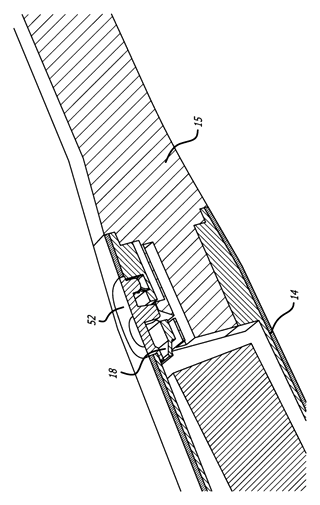
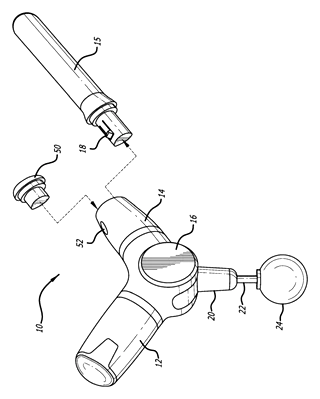
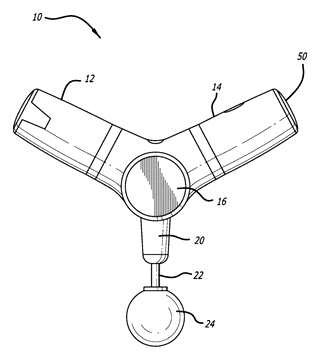
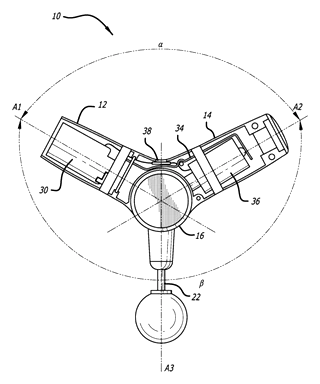
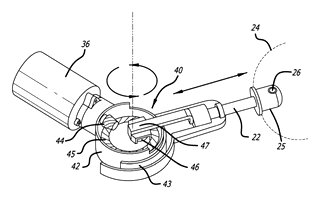
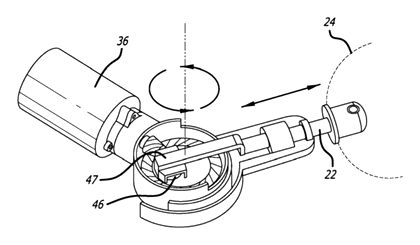
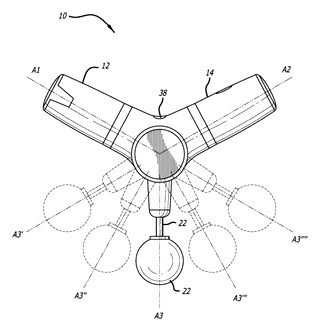
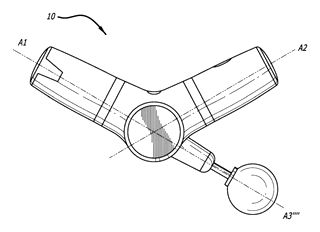
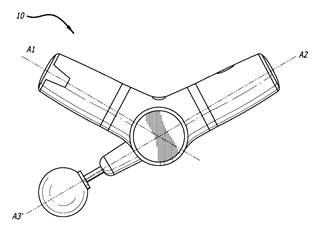
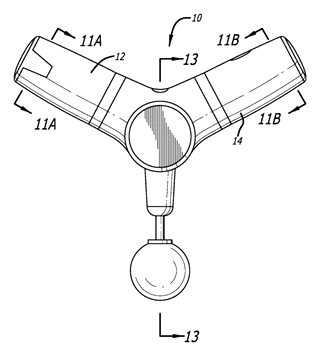
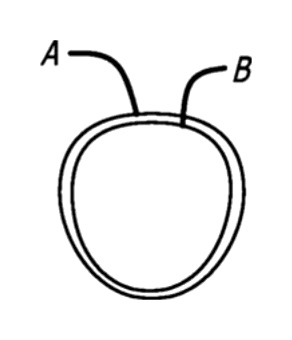
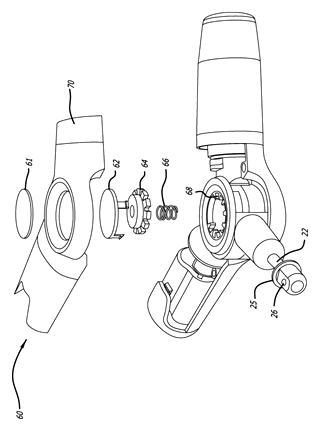
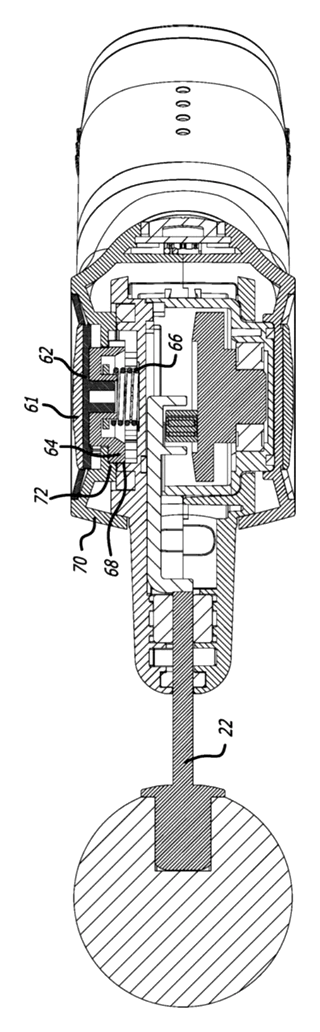
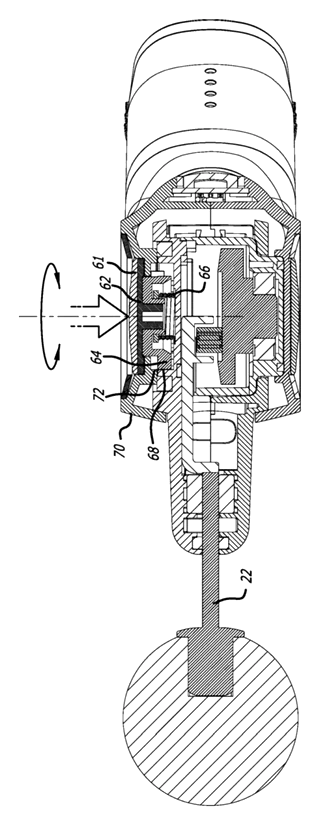
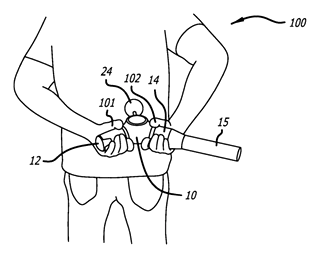
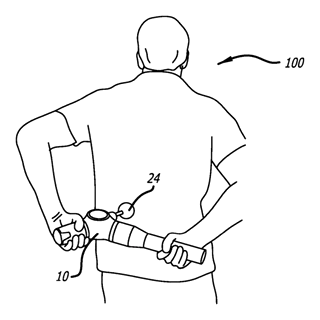
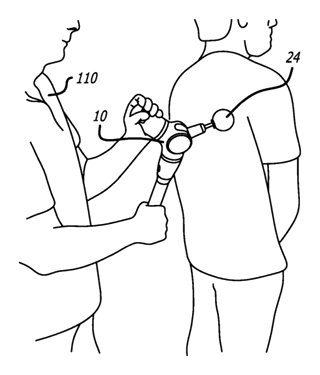
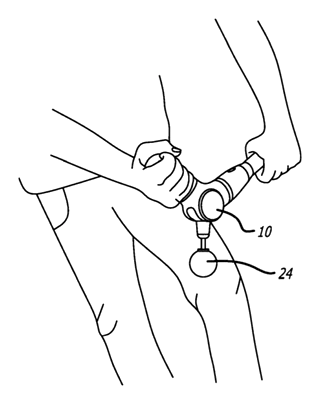
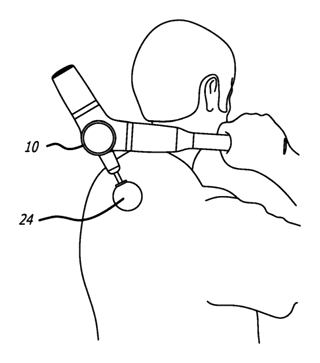
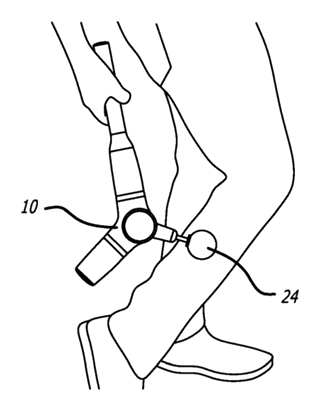
Drawings reproduced from the public patent document for reference.
Production notes
Tooling and process
Injection molding is likely the primary process for the dual-handle housing and central body. The rotation mechanism requires precise gears and sprockets, typically made via injection molding or powder metallurgy. Silicone molding may be used for soft-touch grip overlays. Motor and battery pack assembly will require dedicated lines for safe handling of lithium cells.
Cost drivers
Part count is typically a significant driver due to the locking mechanism and separate handle attachments. Skin-contact material grade affects cost if hypoallergenic silicone is specified. Battery certification and motor life testing add upfront costs. Sealing requirements for dust resistance can increase mold complexity.
Prototyping path
We typically start with 3D-printed housings to verify ergonomics and handle spacing. Use off-the-shelf motors and batteries to test the reciprocating motion and rotation mechanism. Conduct thermal and vibration tests on the functional sample to check for heat buildup and loosening of screws or snap-fits before committing to tooling.
What we would change before tooling
We would likely simplify the locking sprocket design to reduce part count and assembly time, if possible without compromising stability. We might also integrate the extension handle mount directly into the main shell rather than as a separate piece to improve durability.
Common failure points
Vibration loosening is a risk given the percussive nature of the device. Hinge boss and pivot wear could degrade the rotation mechanism over time. Heat buildup in the motor compartment needs monitoring. Cleaning difficulty may arise from crevices in the handle junctions. Spring fatigue in the locking button could lead to inconsistent engagement.
Frequently asked questions
How does the rotating head work?
The output shaft is connected to a locking mechanism inside the body. By pressing a button, you disengage a toothed sprocket, allowing the shaft to rotate relative to the handles. Once you release the button, a spring pushes the sprocket back into place, locking the shaft at your chosen angle.
Why are the two handles different sizes?
The patent describes handles with circumferences differing by more than ten percent. This design accounts for natural differences in hand size or grip preference between the left and right hands, aiming to provide a more comfortable and secure hold during use.
Can I use this massager on my own back?
According to the patent, the dual-handle design lets you grip the device with both hands for the stability needed to push it against your back. You can also attach the extension handle to one grip and pull the device toward your spine with your other hand for deeper pressure.
Is the battery replaceable?
The patent mentions a battery located within the first handle portion. Specific details on whether it is user-replaceable or factory-sealed are not defined in the claims and would depend on the final production design.
What materials are used?
The patent does not specify exact materials. Typical designs for this category use ABS plastic for the housing, silicone for grips, and metal for internal shafts and gears. Material choices affect cost and feel.
Does it have multiple speed settings?
The patent mentions that the massager may include standard features of a variable speed motor and associated control. However, the core claims focus on the mechanical structure and rotation mechanism, not the electronics.
Can this design be made and sold in the US?
The patent was filed in China and has lapsed, and the public record shows no US counterpart, so it does not restrict the design in the US or in China. However, other US patents may exist in this field, such as those citing this patent, so we recommend a freedom-to-operate check before volume production.
Are you affiliated with the patent owner?
No. IP2M is an independent design and manufacturing service working from the public patent document.
Request a quote
Click Request a Quote below to see our email address - copy it, or open your email app with a ready-made message. Please mention patent CN211723937U in the subject.
Helpful details to include:
- Your company and channel (consumer electronics brand, fitness equipment maker, therapy device distributor)
- Desired handle shape and grip material
- Motor specifications (power, noise level)
- Battery requirements (capacity, charging port)
- Estimated quantity and target price
- Timeline - when you would like samples and the first shipment
You can also reach us at (332) 203-9997.
Page editor: Daniel Chen, Product Research Editor · IP2M
Last updated November 8, 2026. If something on this page looks wrong, email [email protected] and we will check it against the patent.
Interested in building this?
Tell us your target market, quantity and timeline. We reply with options for prototyping, small-batch runs or volume production.
Send your inquiry to
Please put CN211723937U in the subject line and tell us your company, country, estimated quantity and timeline.
Prefer to talk? Call (332) 203-9997.
More product-ready patents
All Health & Wellness patents →
Health & Wellness
Wrist-Mounted Umbrella Stabilizer
Wrist-worn umbrella holder with an anti-shake link; the patent designs it for people with tremor.
Patent CN212545964U
Health & Wellness
Spring-Valve Breath Trainer for Singers
Pocket breath trainer: blow against a spring-loaded valve to practice breath support for singing.
Patent CN207833725U
Health & Wellness
Closed-Loop Nasal Rinse Kit with Collection Bottle
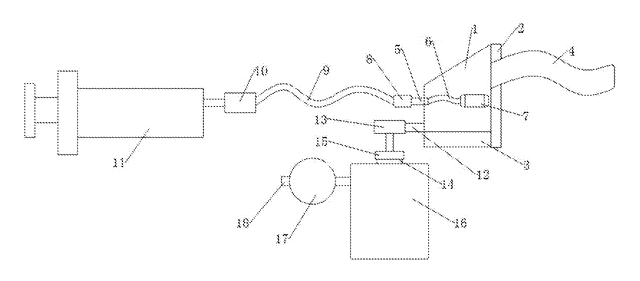
Nasal rinse set: syringe-fed nose plug inside a sealed hood, with used solution drawn into a bottle.
Patent CN208017763U
Health & Wellness
Inflatable Cervical Traction Collar Shaped for a Child's Neck
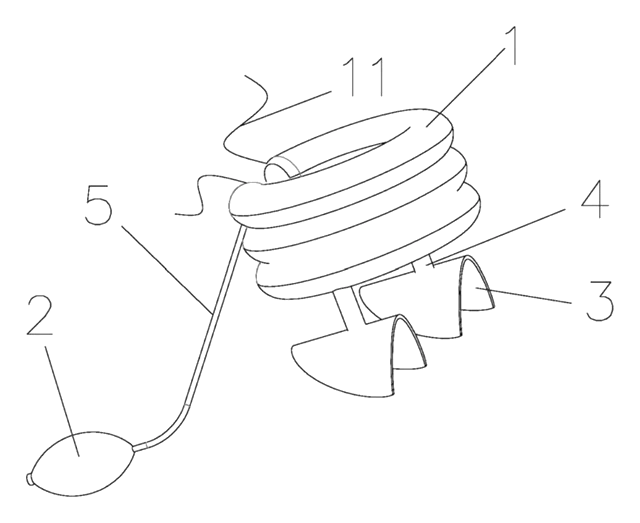
Child-size three-ring air collar on telescoping shoulder struts, inflated with a hand bulb.
Patent CN208958444U
Massage & Wellness
Pneumatic Multi-Directional Neck Traction Collar
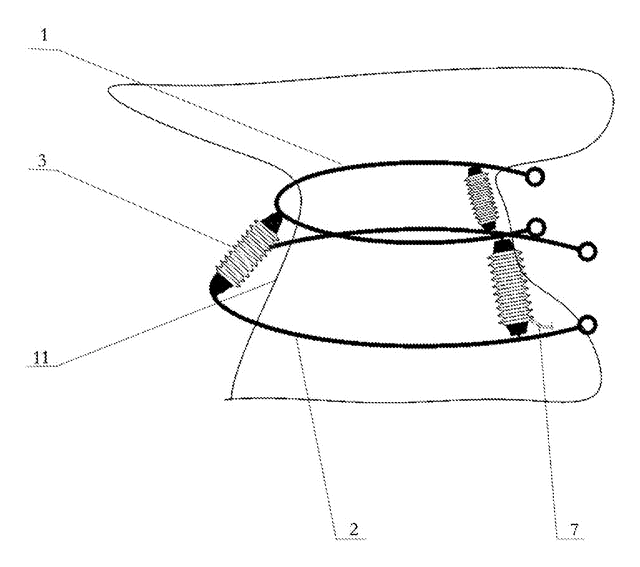
Three-airbag cervical collar that inflates in sequence to guide the head in multiple directions.
Patent CN207202980U
Health & Wellness
Shoulder-Detecting Massage Chair Mechanism with Forked Swing Arms
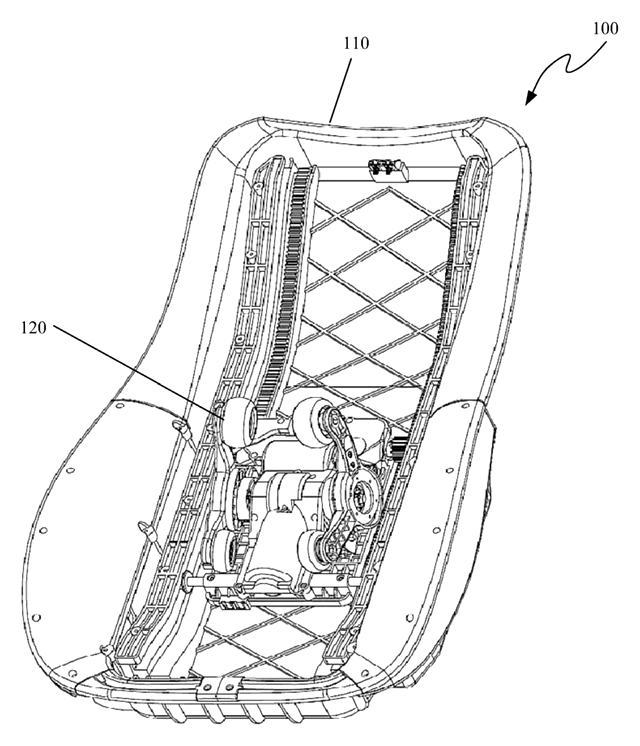
Massage chair core uses forked swing arms and sensors to detect shoulders and adjust the routine.
Patent CN106618998B
Browse by category
- Apparel & Accessories (51)
- Baby & Kids (30)
- Bags & Luggage (17)
- Bath & Personal Care (33)
- Car Accessories (27)
- Furniture, Bedding & Storage (25)
- Garden & Outdoor (34)
- Health & Wellness (15)
- Home, Kitchen & Cleaning (52)
- Lighting (25)
- Packaging & Containers (13)
- Pet Products (12)
- Phone & Camera Accessories (10)
- Retail Display (27)
- School, Office & Art (38)
- Sports & Recreation (49)
- Tools & Workshop (57)
- Toys & Games (24)
This page is based on the public patent document CN211723937U, assigned to Bode Co ltd. IP2M is an independent manufacturing service and is not affiliated with, endorsed by or licensed by the patent owner. Images marked as concept renderings are illustrations, not photos of an existing product. Patent status information is provided for reference only and is not legal advice; confirm freedom to operate for your market before production. Full disclaimer.