
Patent CN211869484U
Updated November 5, 2026Baby Stroller with Pedal-Driven Bicycle Function
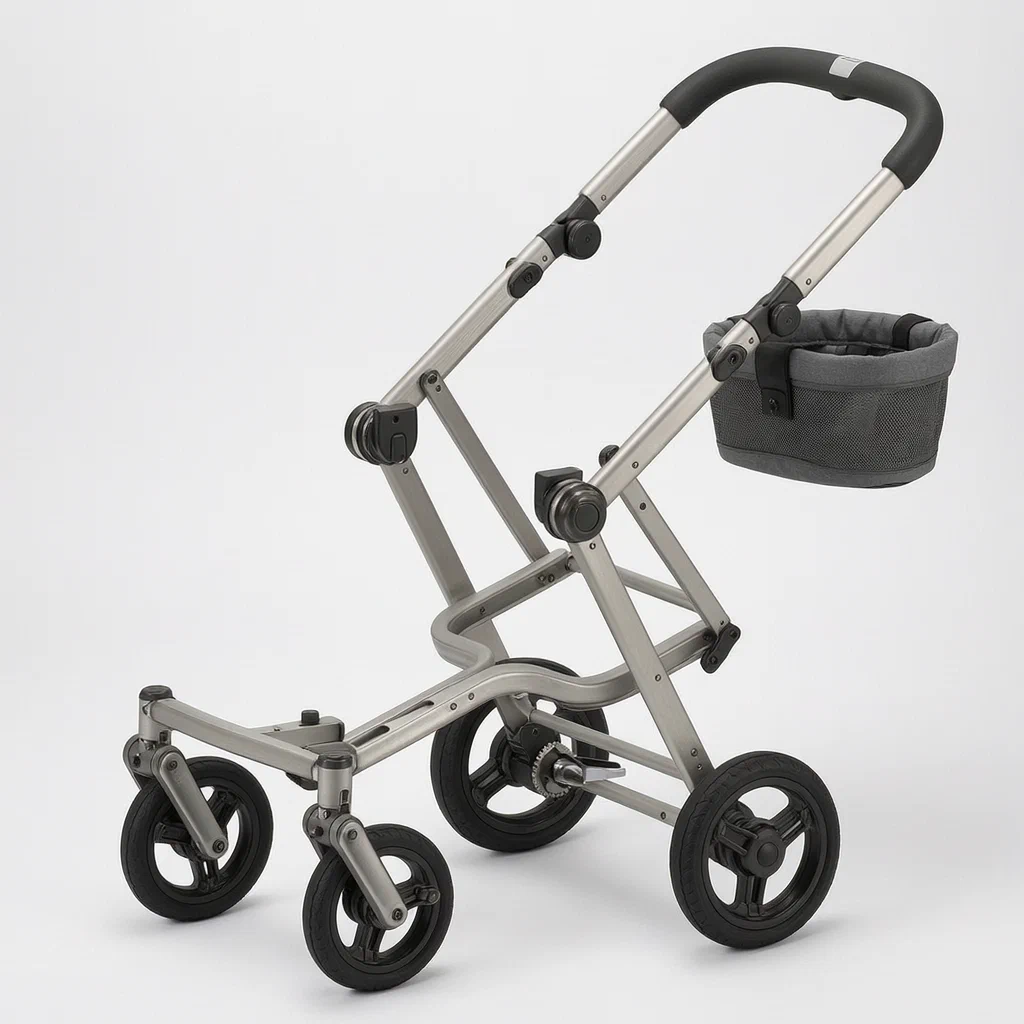
Standard strollers require constant pushing, offering no engagement for toddlers who want to 'drive' themselves. This utility model integrates a bicycle-like propulsion system into a stroller frame. The child sits in a standard stroller seat but uses their feet on pedals to turn the front wheels. A ratchet mechanism ensures the wheels only move forward when pedaled, providing safety against sudden reversals. The structure allows the seat to be removed or replaced with a bassinet, and the handlebar folds for transport. It bridges the gap between a walker, a tricycle, and a push-stroller, giving parents control while letting the child exercise independence.
- China utility model - lapsed
- No filings outside China
- Child-powered mobility
- Ratchet drive, folding frame, multi-mode seat
Splat! What let you down?
🚲
Pedal-Propelled
Child pedals drive front wheels via a central shaft and ratchet gear.
🔒
Forward-Only Safety
Ratchet mechanism prevents backward rotation of the front wheels.
🪑
Modular Seating
Releasable seat and snap-on sleeping basket options on the same frame.
📏
Folding Frame
Handlebar and armrests use joint gears and pull-cords for compact folding.
Bring this product to market
- ✓ Patent review Patent family and legal status reviewed in the relevant jurisdictions.
- 2 Product brief · now How it works, uses and options written up
- 3 Prototype First samples for buyers to review
- 4 Pilot run Small first batch for launch customers
- 5 Volume production Repeat orders at scale
Buyer interest
– of 100 buyers needed to start prototyping
One click, no sign-up. Each vote is one real visitor, and products with the most interest go to prototyping first.
Build team: no members yet. Need a partner, co-funding or skills to build this? Join and we introduce the team once it forms.
Patent Rights & Team Participation
Before joining a development team, participants should ensure they have the necessary rights or authorization to participate in the project.
Participation is generally appropriate where:
- You own the relevant patent rights or have obtained permission or a license from the rights holder.
- The relevant patent rights have expired or have been legally invalidated in the jurisdictions where the planned activities will take place.
- The planned development, manufacturing, and commercialization activities have been independently assessed and do not infringe applicable patent rights in the relevant jurisdictions.
Important: Being located outside a country where a patent is protected does not automatically exempt you from patent infringement risks. Patent rights may apply based on where development, manufacturing, use, sale, or import activities take place.
IP2M does not grant any patent license or authorization through team participation. Joining a project does not provide permission to use, manufacture, or commercialize patented technology.
The problem
Toddlers often resist being pushed in passive strollers, preferring to walk or ride bikes, which creates logistical challenges for parents managing both supervision and transportation. Traditional strollers offer no physical engagement for the child, leading to fussiness, while separate tricycles lack the safety containment and parental steering control needed for younger children or crowded environments. There is a need for a hybrid device that allows the child to exert effort and feel independent while remaining securely within a parent-controlled frame.
The solution
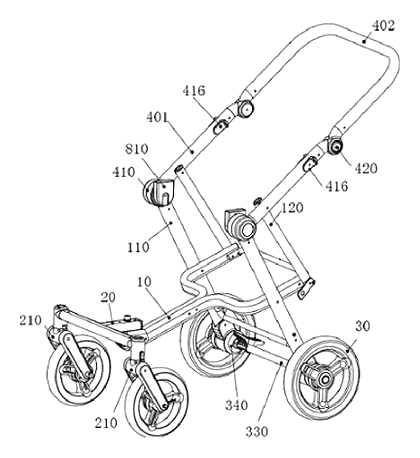
The patent describes a baby stroller that incorporates a bicycle-style propulsion system driven by the child’s legs. The core of the solution is the front wheel assembly, where a pedal rod bent in a continuous reverse direction connects to a central shaft. This shaft passes through the axis of the front wheel and carries a driving gear. A gear block attached to the wheel hub via a torsion spring forms a ratchet mechanism with the driving gear. This setup ensures that when the child pedals, the gear turns and propels the wheel forward, but if the child stops or tries to roll backward, the ratchet locks, preventing uncontrolled reverse movement.
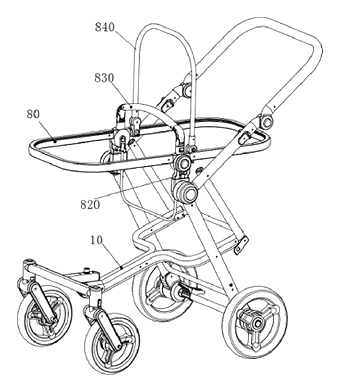
The frame consists of a main support base with hinged connections for the front tube group and lower support pipes (rear). A seat is releasably connected to the main base, allowing it to be swapped for a sleeping basket that snaps onto supports under the armrests. The handlebar is vertically adjustable and connected to the front tubes via hinge screws, enabling steering. Folding joints with internal gear rings and spring-loaded clamps allow the armrests and frame to collapse for storage. Braking is achieved through a foot-operated lever on the rear axle that engages a conical surface against a brake ratchet, locking the rear wheels.
Who it is for
- Boutique Baby Gear Brands: Companies looking to differentiate their product line with unique, interactive mobility solutions that appeal to modern parents seeking developmental benefits for their children.
- Amazon Sellers & DTC Startups: E-commerce businesses needing a high-margin, visually distinct product that solves the specific pain point of toddler resistance to passive strolling.
- Toy & Play Equipment Manufacturers: Firms expanding from traditional toys into functional outdoor equipment, leveraging existing supply chains for metal tubing and plastic molding.
- Specialized Retailers: Stores focusing on active lifestyle families or travel-friendly baby gear, as the folding mechanism and dual-functionality make it attractive for vacations and urban living.
How it works
The main parts
| No. | Part | What it does |
|---|---|---|
| 1 | Main Support Base | Central chassis connecting all structural elements. |
| 2 | Front Tube Group | Holds the handle and front wheels; hinges to steer. |
| 3 | Pedal Rod | Reverse-bent crankshaft driven by the child’s feet. |
| 4 | Central Shaft & Gear | Transfers pedal torque to the wheel hub. |
| 5 | Ratchet Block | Allows forward drive, blocks backward motion. |
| 6 | Seat / Basket | Releasable user interface for sitting or lying. |
| 7 | Armrest Joint | Gear-based folding mechanism for compact storage. |
| 8 | Rear Brake System | Foot-lever activated lock on the rear axle. |
Operating Steps
- Seating: The parent installs either the toddler seat or the sleeping basket onto the main support base using release connectors.
- Steering & Propulsion: The child places feet on the pedals. Pushing down rotates the pedal rod, turning the central shaft.
- Drive Engagement: The driving gear on the shaft meshes with the ratchet block on the front wheel, causing the wheel to rotate forward.
- Safety Lock: If the child stops pedaling, the torsion spring holds the ratchet block, preventing the wheel from spinning backward due to gravity or inertia.
- Braking: Pressing the rear brake pedal moves the brake shaft axially, engaging the conical surface with the brake ratchet to stop the rear wheels.
- Folding: Pulling the shift knob releases the joint clamps via a pull rope, allowing the armrests and handle to fold inward around the pivot gears.
Applications
Urban Park Walks
In parks and pedestrian zones, the child can actively pedal along smooth paths. The ratchet mechanism provides a sense of autonomy similar to a tricycle, while the parent retains full steering control via the handle, ensuring the child stays on designated trails without wandering off.
Shopping & Errands
For quick trips to stores, the modular seat allows the child to sit comfortably while the parent pushes. If the child becomes restless, they can engage the pedals to help propel the stroller, reducing the physical strain on the parent during long walks through large retail spaces.
Travel & Airport Transit
The folding frame design makes this stroller suitable for travel. When not in use, the armrests and handle collapse significantly smaller than standard rigid frames. The dual-function nature means one item serves as both a transport stroller and an activity toy, saving luggage space for families.
Developmental Therapy
Occupational therapists may find value in the pedal-driven aspect for building leg strength and coordination in toddlers. The controlled environment of the stroller frame offers more stability than a free-standing bike, allowing children to practice pedaling motions with stable balance support.
Where it is less suitable
- Rough Terrain: The ratchet drive relies on consistent wheel contact; uneven ground may cause slippage or inefficient power transfer compared to geared mountain bikes.
- Newborns: While a basket option exists, the primary focus is on mobile toddlers; dedicated newborn prams offer better suspension and recline angles.
- High-Speed Riding: The mechanical simplicity limits top speed; it is designed for walking pace, not cycling speed, making it unsafe for steep hills or fast traffic areas.
Patent & Production
At a glance
| Patent number | CN211869484U (application CN201922332739) |
| Type | China utility model (实用新型) - protects product shape and structure |
| Original title | Baby stroller with bicycle function (带脚踏车功能的婴儿推车) |
| Patent owner | Individual |
| Inventors | Shen Xiaodong |
| Filing date | 2019-12-23 |
| Grant date | 2020-11-06 |
| Status (China) | Lapsed - terminated for non-payment of annual fees (recorded 2024-12-20) |
| Patent family | Public record shows Chinese filings only - no US, European, Japanese, PCT or other filings listed |
| Cited by | 4 later documents |
| Source | Google Patents (search for CN211869484U) |
What the claims cover, in plain language
Claim 1 defines the core structure: a baby stroller frame with a main support base, hinged front tube group, lower support pipes for rear wheels, and a handle. The critical feature is the pedal group inside the front wheel, consisting of a reverse-bent pedal rod driving the wheels.
Claim 2 adds a cradle support under the armrests for attaching a sleeping basket via snap-fit inserts. Claim 3 specifies the connection of the lower support pipe to the main base side and the fixing of the armrest to the base and rear support. Claim 4 details the front wheel assembly: a central shaft coaxial with the pedal rod, a driving gear on the shaft, and a gear block on the wheel forming a ratchet mechanism for unidirectional rotation. Claim 5 describes the steering column: the handle connects to the front tubes via a hinge screw and locking nut, allowing rotation around the vertical axis. Claim 6 covers the quick-release wheel mounts: vertical shafts with annular grooves, limiting pins, and spring-loaded ejector pins for securing the front wheels. Claim 7 details the rear braking system: a limit bolt, brake tube, and a brake shaft with a conical surface that engages a brake ratchet when the pedal is pressed, plus shock-absorbing springs. Claim 8 explains the folding armrests: joint gears with inner rings, a pin shaft, and a pull-rope mechanism to release the clamp for folding. Claims 9-10 add optional features like headrests, baskets, and specific clip designs for the pedal rods.
This is a simplified reading for orientation only. The legal scope is defined by the exact claim wording in the official Chinese document.
What this means for US production
This patent was filed in China and has lapsed due to non-payment of fees, so it no longer restricts anyone in China either. The public record shows no US or other foreign counterpart.
Two points to settle early:
- Other patents may exist. Child-powered vehicles and convertible strollers are a competitive field. One later US application (US20210101634A1) by Sang Jin Yoo cites this patent, indicating ongoing interest in this technology area. A freedom-to-operate (FTO) review is recommended to check for any active US patents covering similar ratchet-drive stroller mechanisms before tooling.
- Mechanical Complexity. The integration of a ratchet drive, folding joints, and modular seating increases part count and assembly steps compared to standard strollers.
Customization and manufacturing
What can be customized
| Area | Options |
|---|---|
| Frame Material | Steel tube forming or aluminum alloy extrusion for weight reduction |
| Seat Fabric | Breathable mesh, padded nylon, or waterproof polyester (phthalate-free) |
| Colorway | Custom powder coating on steel parts; injection-molded color matching |
| Drive Ratio | Gear size adjustment for different age groups/leg lengths |
| Accessories | Sun canopy, cup holder, storage basket underneath |
Things to plan for (US market)
- CPSC 16 CFR 1227: Mandatory safety standard for strollers, covering tip-over, entrapment, and durability.
- ASTM F833: Standard consumer safety specification for strollers, often required by retailers.
- Small Parts Rule: Ensure no detachable small parts pose choking hazards for children under 3.
- Flammability Standards: Upholstery must meet specific flammability criteria (e.g., CPAI-84 or equivalent).
How a project runs
- Inquiry - Define target age range, load capacity, and desired features (basket vs. seat).
- Design - Finalize tube diameters, gear ratios, and folding joint mechanics.
- Prototype - 3D-print fit samples for joints; fabricate first metal frame.
- Pilot Run - Small batch for safety testing (tip-over, pinch tests) and user feedback.
- Production - Tube forming, powder coating, plastic molding, and final assembly.
Quantities & timeline
Tooling for injection-molded plastic parts (joints, gears, clips) takes 4-6 weeks. Steel tube forming fixtures are simpler but require precision for the hinge axes. Safety certification testing typically adds 4-8 weeks. Send us your target price, quantity, and feature list and we will reply with options.
Production notes
Tooling and process
Steel tube forming is likely the primary structural process, requiring custom bending dies for the main base and support pipes. Injection molding tools will be needed for the complex folding joints, gear housings, and plastic clips. Assembly typically involves press-fitting bearings and snapping plastic components onto the formed steel frame.
Cost drivers
Part count is typically a significant cost driver due to the numerous small fasteners, springs, and molded clips required for the folding and ratchet mechanisms. Rounded edges and specialized tooling for the reverse-bent pedal rod also contribute to initial costs. Material certification for fabrics and plastics adds overhead.
Prototyping path
Start with a 3D-printed fit sample to verify the folding joint geometry and ratchet engagement. A single-unit metal prototype is typically used to test joint integrity and tube alignment. Conduct small-parts and pinch tests early to identify safety risks before mass production tooling.
What we would change before tooling
We would likely simplify the folding joint mechanism to reduce part count if cost is a priority. Adjusting the wall thickness of the plastic gear housing may improve durability. Ensuring the pedal rod bend radius is optimized for standard tube bending processes could reduce scrap rates.
Common failure points
Hinge boss and pivot wear are likely issues given the repeated folding action. Spring fatigue in the ratchet and folding clamps must be tested for rate consistency. Pinch points at the folding joints and small parts detaching from the pedal assembly are critical safety concerns to mitigate.
Patent drawings
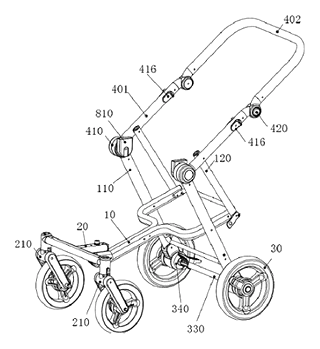
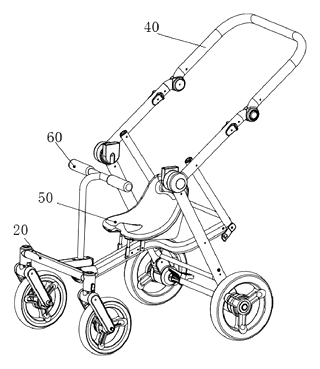
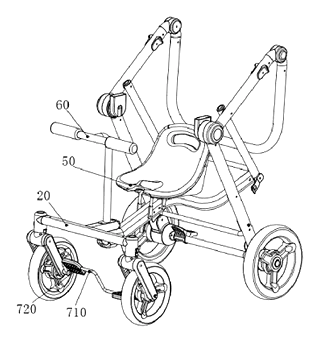
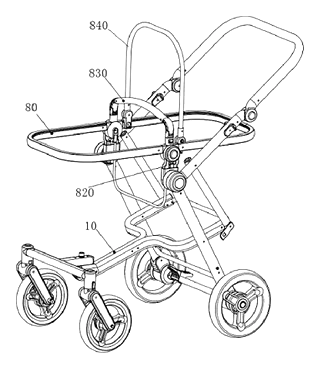
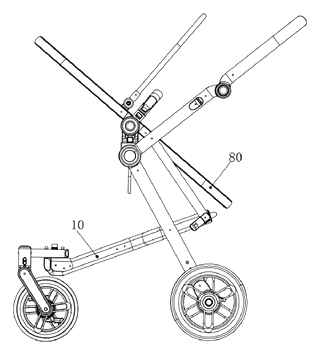
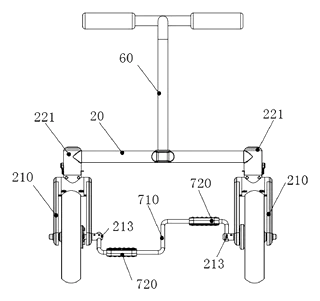
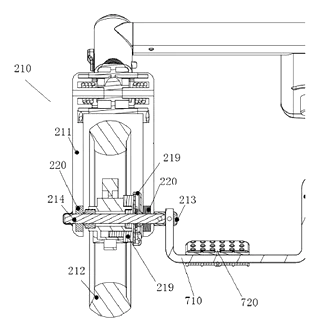
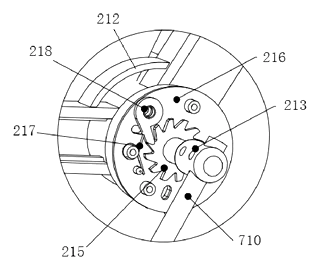
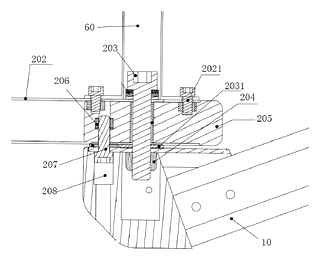
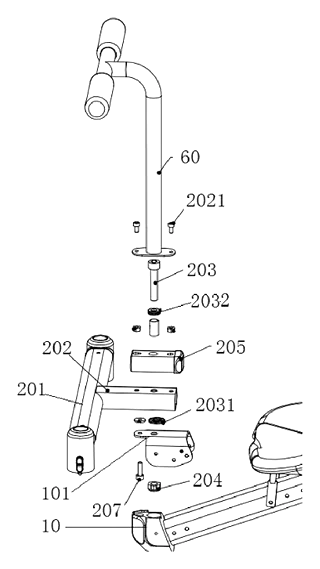
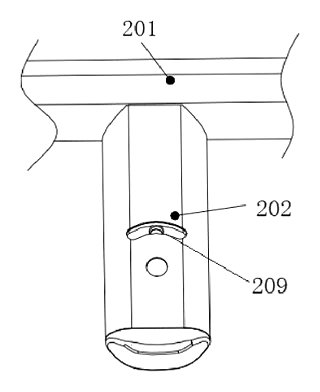
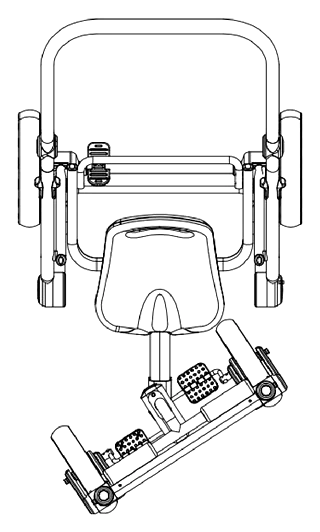
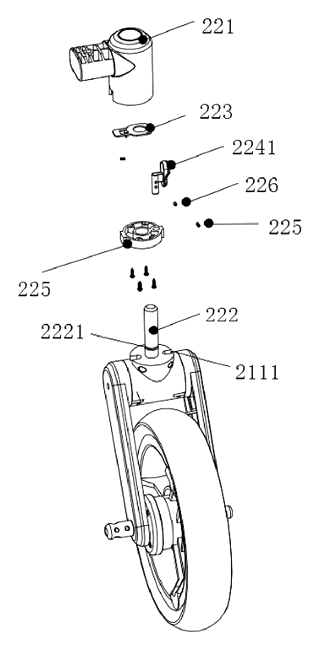
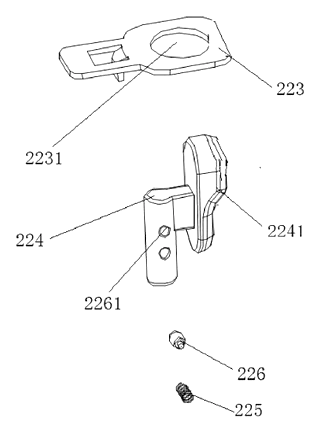
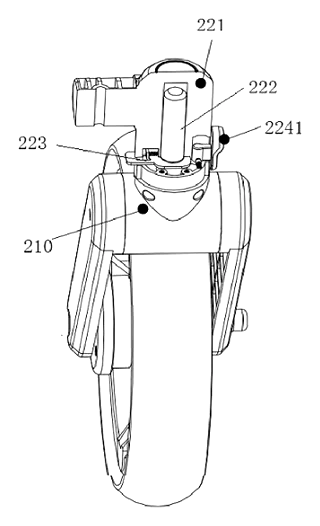
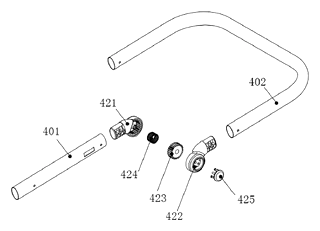
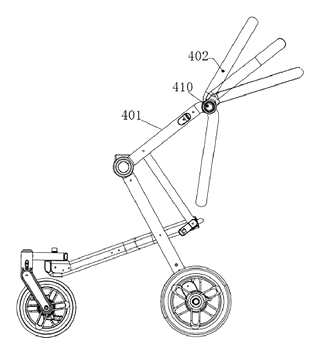
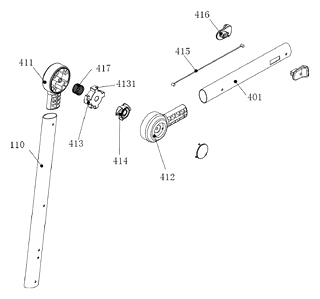
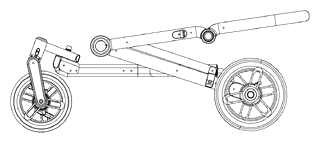
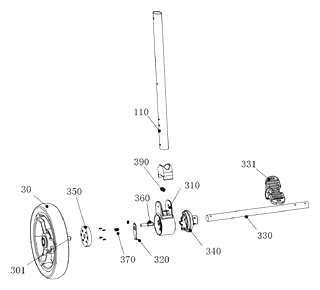
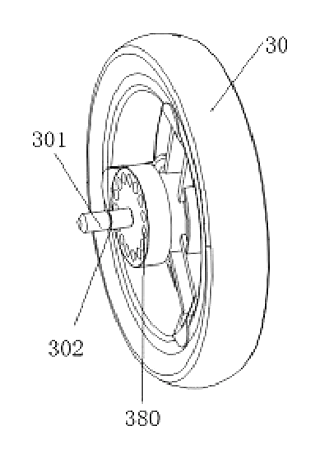
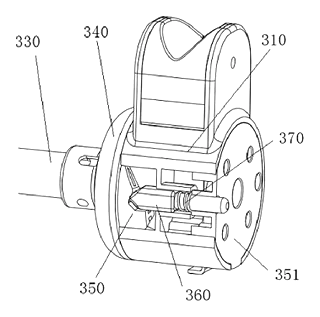
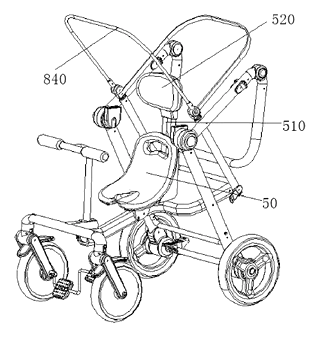
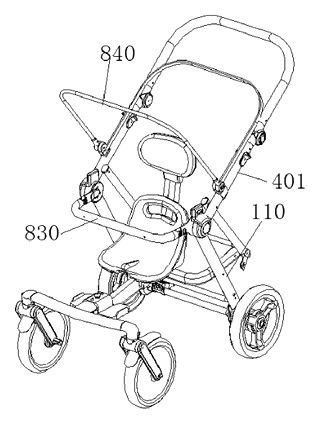
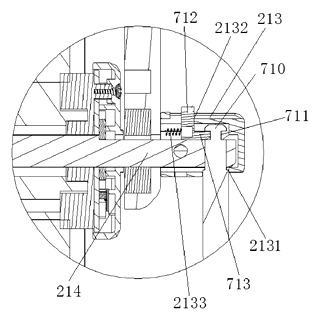
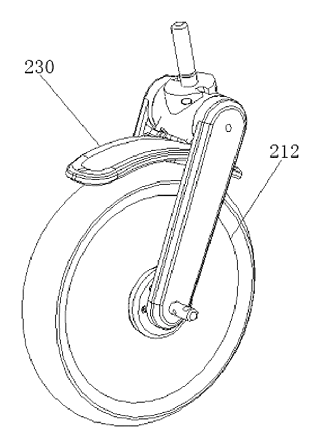
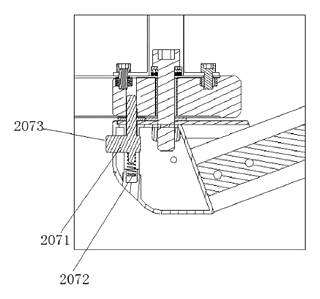
Drawings reproduced from the public patent document for reference.
Frequently asked questions
How does the pedal drive work?
The child’s feet push on pedals connected to a central shaft inside the front wheel. This shaft has a gear that engages with a ratchet mechanism on the wheel hub. When the child pedals forward, the wheel turns. If they stop, the ratchet prevents the wheel from spinning backward, keeping the stroller stable.
Is it safe for toddlers?
The design includes a ratchet mechanism to prevent accidental backward rolling and a foot-operated brake for the rear wheels. However, it must be used under adult supervision. The frame is designed to meet standard stroller stability requirements, though specific certifications depend on the final production model.
Can I remove the seat?
Yes. The seat is releasably connected to the main support base. You can swap it for a sleeping basket that attaches to the armrest supports using snap-fit inserts, allowing the stroller to be used for younger infants or napping.
Does it fold easily?
The armrests and handle use a joint gear mechanism with a pull-cord release. By pulling the shift knob, the clamps disengage, allowing the frame to fold inward. This reduces the footprint for car trunk storage or air travel.
What materials are used?
The frame is primarily steel tube forming, which provides strength. Plastic parts like the folding joints, gears, and clips are typically made from durable polymers such as ABS or PP. Fabrics for the seat and basket are customizable.
Are there pinch points?
The folding mechanism involves moving parts. In the patent description, care is taken with joint designs, but a freedom-to-operate and safety review is essential for US market entry to ensure compliance with CPSC standards regarding pinch and entrapment hazards.
Can this design be made and sold in the US?
The patent was filed in China and has lapsed, and the public record shows no US counterpart, so it does not restrict the design in the US or in China. Other patents may exist in this field, so we recommend a freedom-to-operate check before volume production.
Are you affiliated with the patent owner?
No. IP2M is an independent design and manufacturing service working from the public patent document.
Request a quote
Click Request a Quote below to see our email address - copy it, or open your email app with a ready-made message. Please mention patent CN211869484U in the subject.
Helpful details to include:
- Your company and channel (baby gear brand, retailer, importer)
- Target age group (infant with basket, toddler with seat)
- Material preferences (steel vs. aluminum, fabric type)
- Features (sun canopy, storage basket, brake type)
- Estimated quantity and target price
- Timeline - when you would like samples and the first shipment
You can also reach us at (332) 203-9997.
Page editor: Emily Zhang, Product Editor · IP2M
Last updated November 5, 2026. If something on this page looks wrong, email [email protected] and we will check it against the patent.
Interested in building this?
Tell us your target market, quantity and timeline. We reply with options for prototyping, small-batch runs or volume production.
Send your inquiry to
Please put CN211869484U in the subject line and tell us your company, country, estimated quantity and timeline.
Prefer to talk? Call (332) 203-9997.
More product-ready patents
All Baby & Kids patents →
Baby & Kids
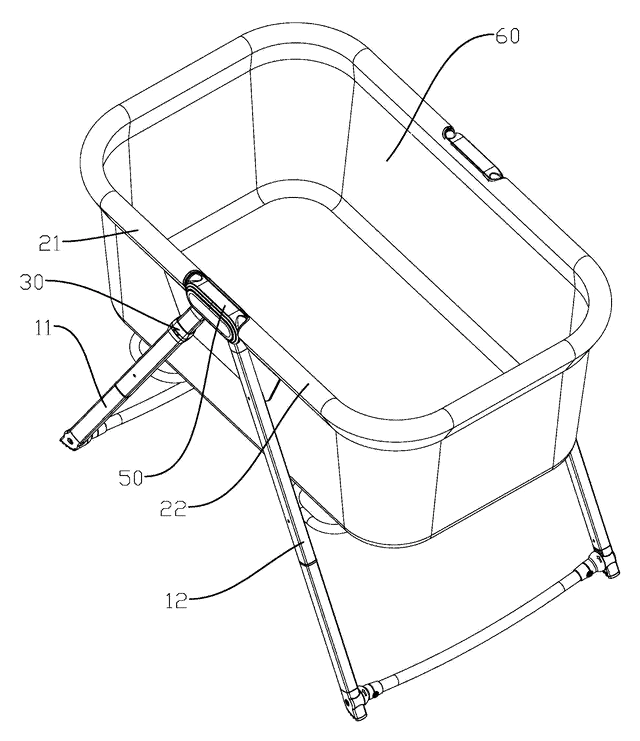
Portable Folding Rocking Bassinet Frame
Rocking bassinet frame that folds flat: telescopic hub, folding rails, two-part legs, curved rockers.
Patent CN206910143U
Baby & Kids
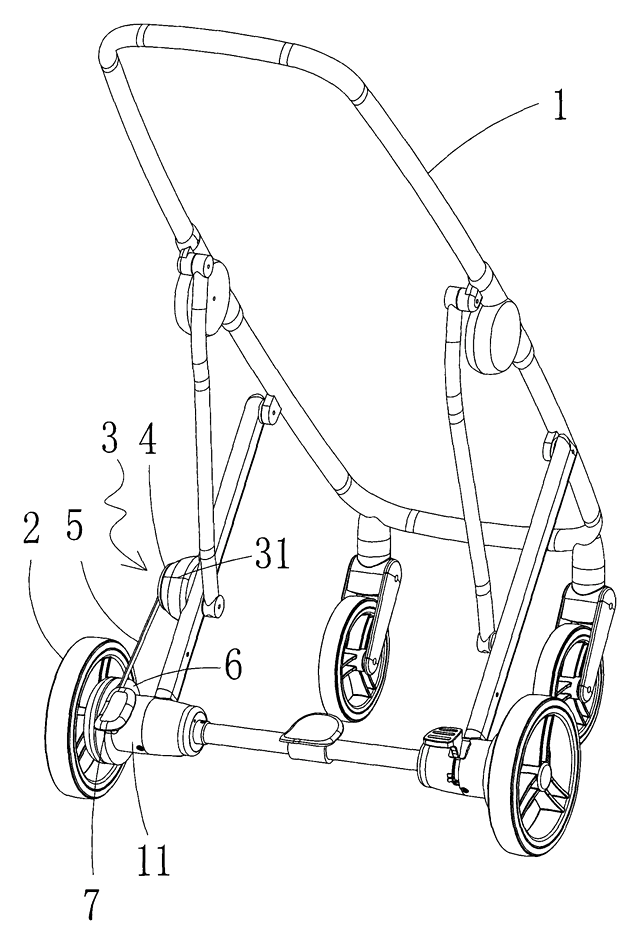
Stroller Seat with Linked Fold-Away Armrest
Stroller seat whose armrest unlocks and folds automatically when the backrest is folded forward.
Patent CN206856772U
Baby & Kids
One-Motion Folding Baby Crib with Linked Frame
Portable baby crib whose top rails fold down automatically as the A-frame legs are closed.
Patent CN207202585U
Baby & Kids
Motorized Rocking Stroller That Rocks by Turning Its Wheels
Baby rocker or stroller whose motor turns the wheels back and forth; a clutch switches to pushing.
Patent CN208119238U
Baby & Kids
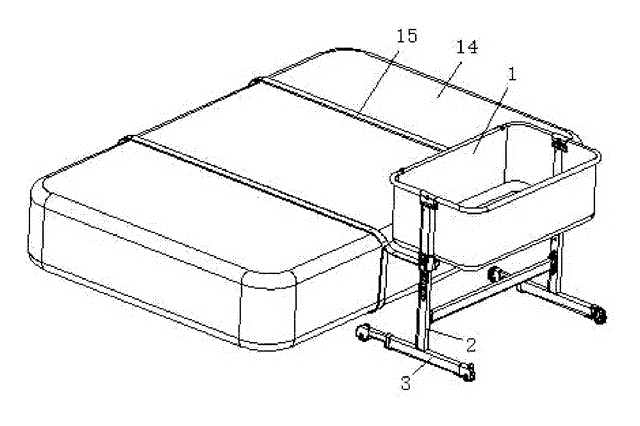
Bedside Crib Base with Spring-Loaded Telescoping Caster Legs
Bedside crib feet with spring-loaded sliding casters: wide when alone, short to sit flush at the bed.
Patent CN207168269U
Baby & Kids
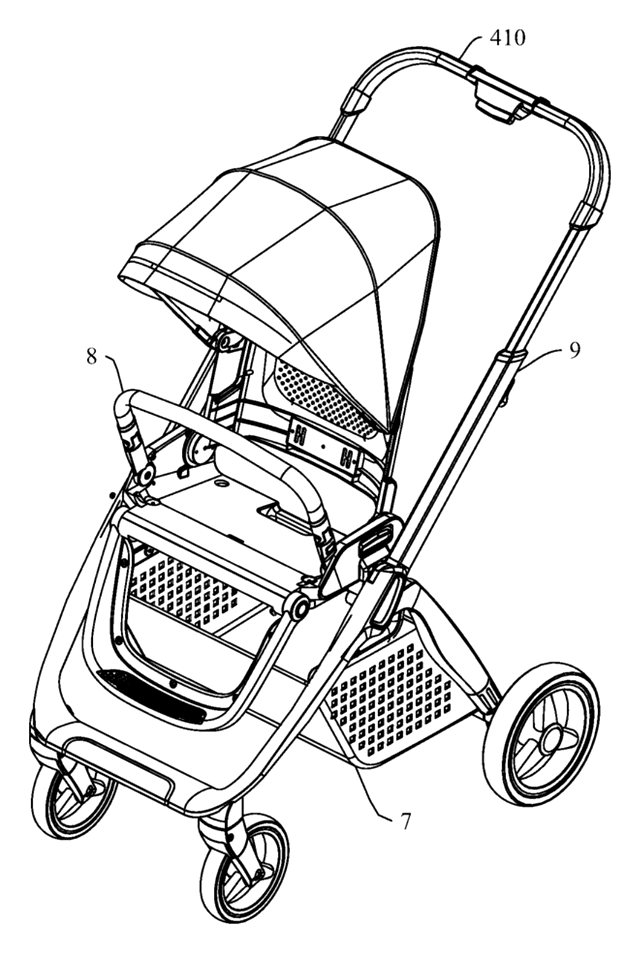
Compact-Fold Stroller with a Four-Bar Side Frame and Telescoping Handle
Stroller with four-bar side frames: handle and rear leg fold onto the front leg, handle telescopes.
Patent CN213799844U
Browse by category
- Apparel & Accessories (41)
- Baby & Kids (27)
- Bags & Luggage (15)
- Bath & Personal Care (28)
- Car Accessories (23)
- Furniture, Bedding & Storage (21)
- Garden & Outdoor (29)
- Health & Wellness (13)
- Home, Kitchen & Cleaning (44)
- Lighting (22)
- Packaging & Containers (11)
- Pet Products (10)
- Phone & Camera Accessories (8)
- Retail Display (23)
- School, Office & Art (32)
- Sports & Recreation (41)
- Tools & Workshop (50)
- Toys & Games (21)
This page is based on the public patent document CN211869484U, assigned to Individual. IP2M is an independent manufacturing service and is not affiliated with, endorsed by or licensed by the patent owner. Images marked as concept renderings are illustrations, not photos of an existing product. Patent status information is provided for reference only and is not legal advice; confirm freedom to operate for your market before production. Full disclaimer.