
Patent CN212234163U
Updated November 3, 2026Pot Lid with Integrated Rotating Turner for Stir-Frying
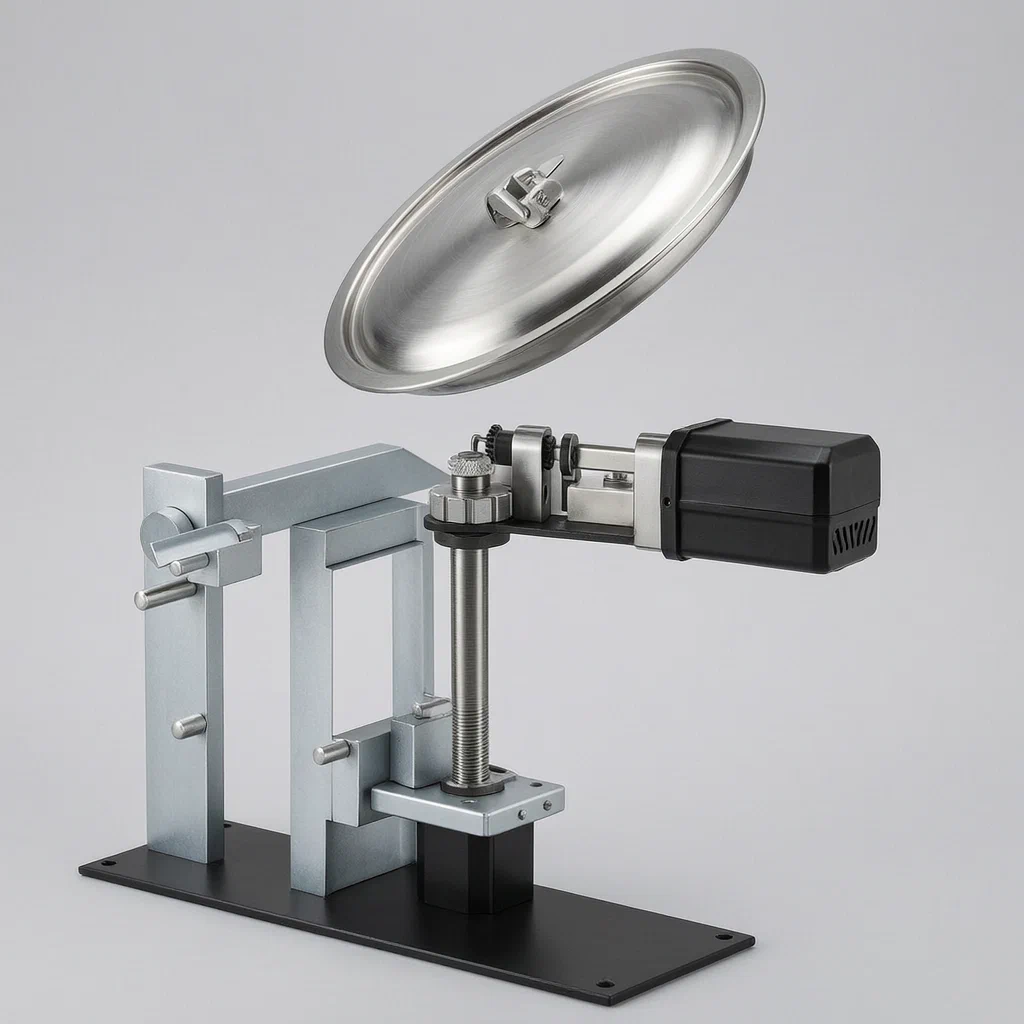
Stir-frying requires constant attention: you must hold the spatula, move it in circles, and manage the heat simultaneously. If you step away, the food burns. Existing lids just cover the pan; they don't help cook. This utility model integrates a turner directly into the lid structure. A motorized arm lowers a drive shaft onto the turner's central pivot. Once engaged, the motor spins the turner automatically. The design places the motor on the side of the lid, away from the direct heat of the frying pan, ensuring longevity and safety. It allows for consistent stirring motion without holding a utensil.
- China utility model - In force
- No filings outside China
- Kitchen appliances & cookware
- Motor-driven rotating turner integration
Splat! What let you down?
🔄
Auto-Rotation
The turner rotates continuously via a drive shaft engaging the lid's pivot.
🛡️
Heat Protection
The motor is mounted on the side arm, keeping electronics away from direct pan heat.
⬆️
Lift-and-Lock
A rotary lifting platform aligns and engages the drive shaft with the turner axis.
🍳
Hands-Free Cooking
Enables consistent stirring motion without manual intervention during stir-fry.
Bring this product to market
- ✓ Patent vetted China-only family and legal status checked
- 2 Product brief · now How it works, uses and options written up
- 3 Prototype First samples for buyers to review
- 4 Pilot run Small first batch for launch customers
- 5 Volume production Repeat orders at scale
Buyer interest
– of 100 buyers needed to start prototyping
One click, no sign-up. Each vote is one real visitor, and products with the most interest go to prototyping first.
Build team: no members yet. Need a partner, co-funding or skills to build this? Join and we introduce the team once it forms.
The problem
Traditional stir-frying demands constant manual effort. The cook must hold a spatula, agitate the ingredients to prevent burning, and monitor the flame all at once. This limits multitasking and leads to uneven cooking if attention wavers. Standard pot lids offer no mechanical assistance; they simply trap steam. There is a gap in the market for a lid that not only covers the pan but also actively participates in the cooking process by automating the stirring motion, specifically designed to keep sensitive electronic components safe from the intense heat generated by woks and frying pans.
The solution
This utility model describes a pot lid device with an integrated turner (spatula). The core innovation lies in the drive assembly and its interaction with the revolute pair (pivot joint) of the turner.
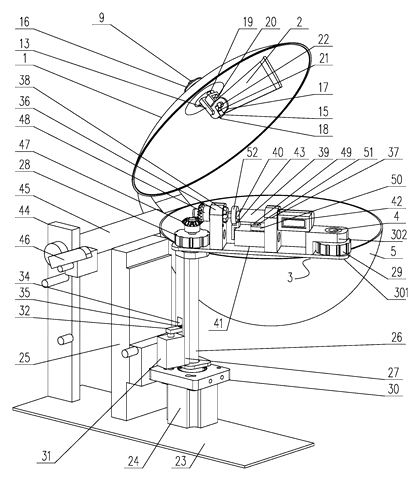
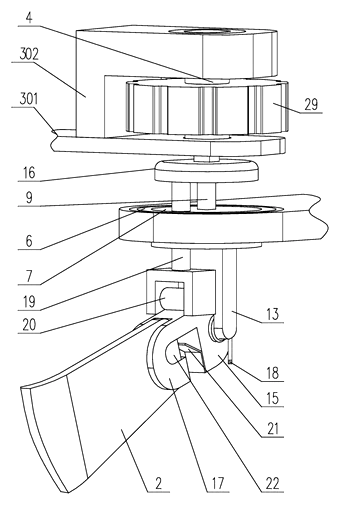
- Integrated Structure: The turner (2) is rotatably installed inside the pot lid (1) via a revolute pair consisting of a bearing (6) and a lower rotating shaft (7).
- Drive Assembly: A supporting arm (3) holds a driving mechanism. This includes a rotary lifting platform that moves the upper rotating shaft (4).
- Engagement Mechanism: When activated, the rotary lifting platform raises and rotates the support arm so that the upper rotating shaft (4) aligns coaxially with the lower rotating shaft (7) of the turner.
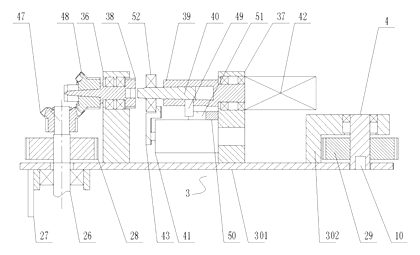
- Power Transmission: A buffer spring (11) ensures proper engagement. Once aligned, the upper shaft inserts into the lower shaft, transmitting rotation from the motor to the turner.
- Heat Management: The motor and belt pulley system are located on the support arm, positioned to the side of the pot lid, effectively distancing the electrical components from the high-temperature zone of the frying pan (5).
Who it is for
- Smart Kitchen Appliance Brands: Companies developing automated cooking accessories who need a reliable mechanical interface for stirring.
- Commercial Kitchen Equipment Makers: Manufacturers building semi-automated stations for high-volume stir-fry dishes where consistency is key.
- Cookware Innovators: Brands looking to differentiate their wok or pan sets with functional lids that assist in cooking rather than just covering.
- DIY Hobbyists & Prototypers: Individuals creating custom automated kitchen rigs who require a clear example of motor-to-tool coupling under thermal constraints.
How it works
The main parts
The device consists of three primary subsystems: the static lid/turner assembly, the dynamic drive arm, and the engagement interface.
| No. | Part | What it does |
|---|---|---|
| 1 | Pot Lid | Houses the turner pivot and mounting hole. |
| 2 | Turner | The spatula blade that stirs the food. |
| 3 | Support Arm | Holds the motor and drive shaft; rotates around the lid. |
| 4 | Upper Shaft | Driven by the motor; inserts into the turner pivot. |
| 6, 7 | Bearing & Lower Shaft | The pivot point of the turner inside the lid. |
| 9 | Plug Shaft | Non-circular cross-section connector between upper and lower shafts. |
| 11 | Buffer Spring | Absorbs axial impact during engagement. |
| 28, 29 | Pulleys & Belt | Transfers power from motor to upper shaft. |
Operating steps
- Preparation: Place the pot lid with the attached turner over the frying pan. The turner rests in the center.
- Activation: The user triggers the drive assembly. The rotary lifting platform rotates the support arm (3) over the lid.
- Alignment: The platform lifts the support arm, moving the upper rotating shaft (4) vertically until it is directly above the lower rotating shaft (7).
- Engagement: The upper shaft descends. The plug shaft (9), which has a non-circular cross-section (e.g., square or hexagonal), inserts into the corresponding holes in both shafts. The buffer spring (11) compresses slightly to ensure tight contact.
- Operation: The motor drives the belt pulleys, spinning the upper shaft. Because of the plug shaft’s shape, torque is transferred efficiently to the lower shaft, causing the turner (2) to rotate continuously inside the pan.
- Disengagement: To remove the lid, the process reverses: the shaft lifts out, the arm rotates away, and the lid can be opened or removed manually.
Applications
Automated Stir-Fry Stations
In small commercial kitchens or food stalls, this lid can be paired with a fixed wok burner. The turner provides consistent agitation for noodles or vegetables, reducing the labor required for each batch and ensuring uniform heating without constant chef supervision.
Smart Home Cooking Kits
For home users interested in gadgetry, this design serves as a module for smart cooking setups. It can be integrated into larger robotic arms or standalone countertop units, allowing users to set a timer for continuous stirring during slow-cook or sauté processes.
Educational Demonstrations
Science museums or engineering classrooms can use this mechanism to demonstrate torque transmission, clutch systems, and thermal isolation in appliance design. The visible lift-and-lock action makes it an excellent teaching tool for mechanical principles.
Specialized Dietary Preparation
Individuals with limited hand mobility or arthritis may find value in a version of this device adapted for gentle, consistent mixing of ingredients in a bowl or pan, removing the physical strain of repetitive stirring motions.
Where it is less suitable
- High-Speed Wok Tossing: This mechanism is designed for rotational stirring, not the rapid tossing and flipping characteristic of professional Cantonese wok cooking.
- Deep Frying: The open structure of the turner and lid may not provide sufficient containment for hot oil splatter compared to fully sealed fryers.
- Complex Multi-Course Meals: The single-turner setup handles one pan at a time; it does not scale easily to simultaneous multi-pan coordination without significant redesign.
Frequently asked questions
How does the turner attach to the lid?
It doesn’t detach during use. The turner is permanently pivoted inside the lid via a bearing. The drive mechanism is separate: a motorized arm swings over the lid and lowers a shaft onto the turner’s pivot to spin it.
Why is the motor placed on the side?
The patent explicitly positions the motor and drive belt on a support arm to the side of the lid. This keeps the electrical components away from the direct high temperatures rising from the frying pan below, preventing overheating and extending the motor’s life.
Can I use this with any wok?
The lid size must match your pan. The mechanism relies on precise alignment between the drive shaft and the turner’s central pivot. You would need to customize the lid diameter and the arm length to fit specific pan sizes (e.g., 24cm, 28cm, 32cm).
Does it work for deep frying?
The design focuses on stir-frying and sautéing where agitation is needed. For deep frying, the open nature of the turner and potential oil splash onto the motorized arm make it less suitable unless fully enclosed modifications are made.
Is the stirring speed adjustable?
The patent shows a belt-drive system. By changing the ratio of the driving and driven pulleys, or using a variable-speed motor controller, you can adjust the rotation speed of the turner.
What materials are used?
The patent describes metal components for the shafts and bearings. The lid and turner can be manufactured from various materials, but for food safety, we recommend FDA-compliant stainless steel, silicone, or heat-resistant plastics for the parts touching food.
Can this design be made and sold in the US?
Yes. This patent is registered only in China and is currently in force there. Since there are no corresponding US patents in this family, this specific design is not restricted by this patent in the United States. However, always conduct a freedom-to-operate check for broader “motorized cooking” patents.
Are you affiliated with the patent owner?
No. IP2M is an independent design and manufacturing service working from the public patent document.
Request a quote
Click Request a Quote below to see our email address - copy it, or open your email app with a ready-made message. Please mention patent CN212234163U in the subject.
Helpful details to include:
- Your company and channel (kitchen appliance brand, commercial equipment maker, DIY supplier)
- Target lid diameter and pan compatibility
- Material preferences for lid and turner (food-grade requirements)
- Motor specifications (voltage, speed range)
- Estimated quantity and target price
- Timeline - when you would like prototypes and the first shipment
You can also reach us at (332) 203-9997.
Explore this product
Interested in building this?
Tell us your target market, quantity and timeline. We reply with options for prototyping, small-batch runs or volume production.
Send your inquiry to
Please put CN212234163U in the subject line and tell us your company, country, estimated quantity and timeline.
Prefer to talk? Call (332) 203-9997.
More product-ready patents
All Home, Kitchen & Cleaning patents →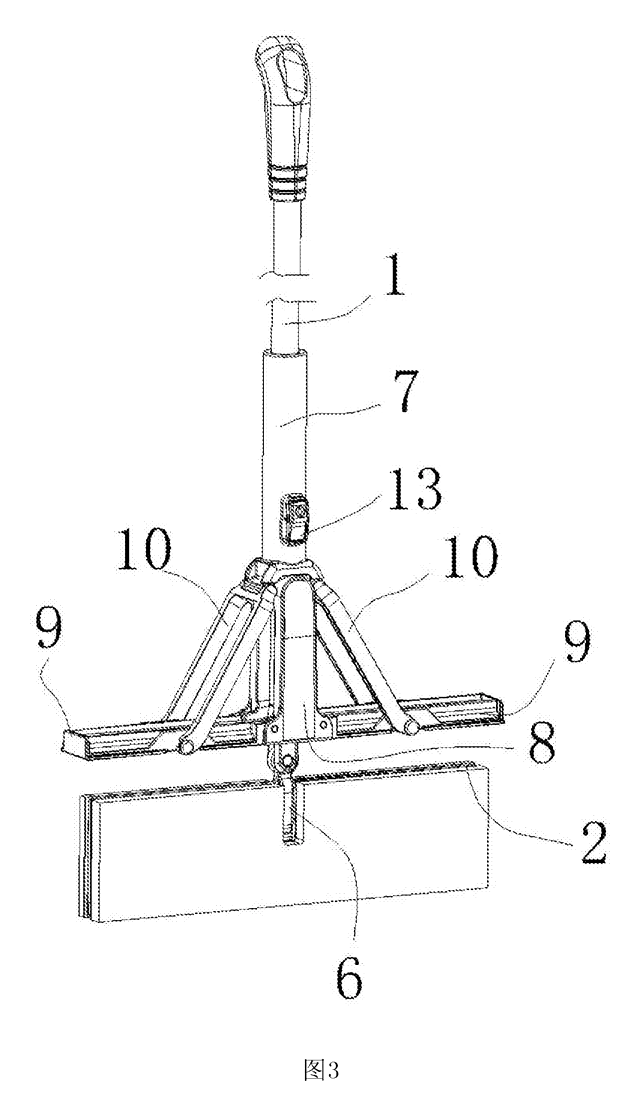
Home, Kitchen & Cleaning
Self-Wringing Flat Mop with Fold-Away Wringer
Flat mop with a built-in wringer that opens only when you wring and folds flat against the pole when you mop.
Patent CN207734114U
Home, Kitchen & Cleaning
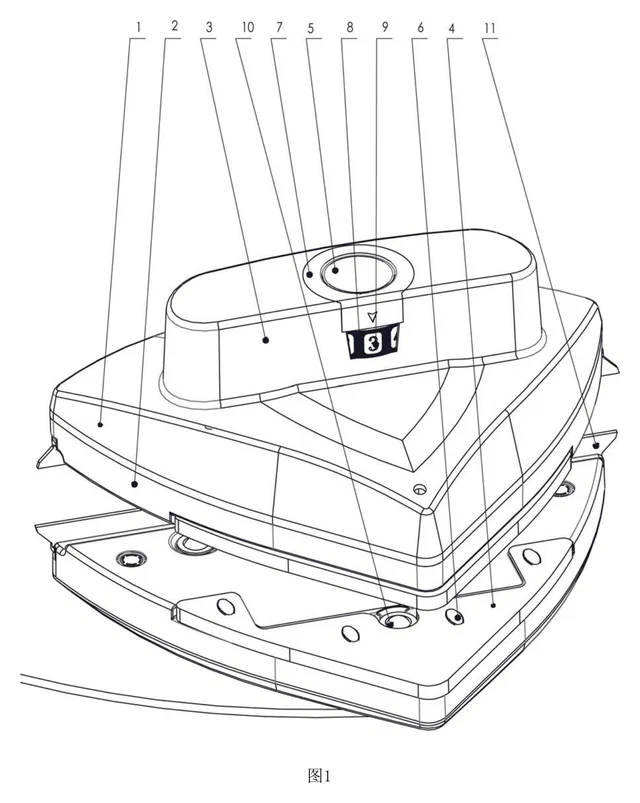
Magnetic Double-Sided Window Cleaner with Dial-Set Magnet Strength
Magnetic window cleaner with a sealed, sliding magnet, dial-set strength for different glass thicknesses and a spring-held idle position.
Patent CN209360543U
Home, Kitchen & Cleaning
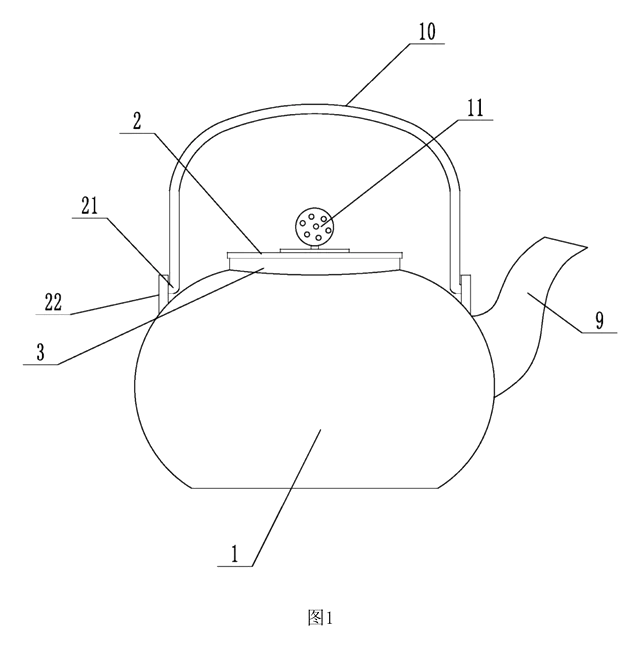
Metal Kettle with Magnetic Lid That Stays On When Pouring
Metal teapot/kettle with a magnet-held lid that does not fall off when pouring, and an insulated, vented lid knob.
Patent CN210540477U
Home, Kitchen & Cleaning
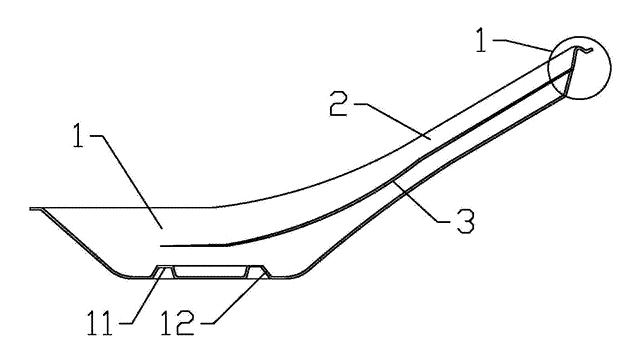
Reinforced Disposable Soup Spoon
Disposable soup spoon with a handle-to-bowl rib, stiffened edges and a ring foot to resist breaking.
Patent CN206964482U
Home, Kitchen & Cleaning
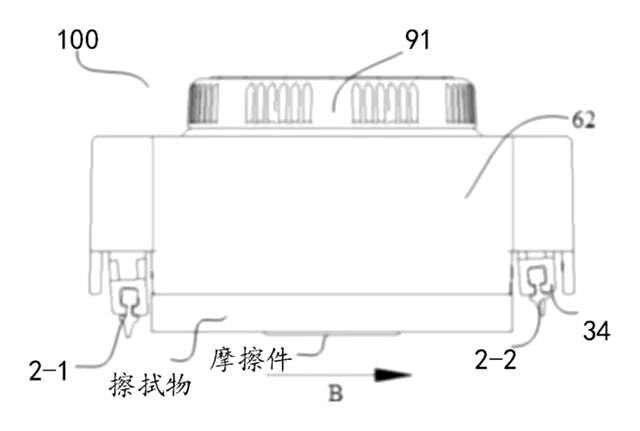
Self-Switching Double-Squeegee Window Cleaner
Cleaning head with two squeegee blades that switch automatically with the direction of movement.
Patent CN212630655U
Home, Kitchen & Cleaning
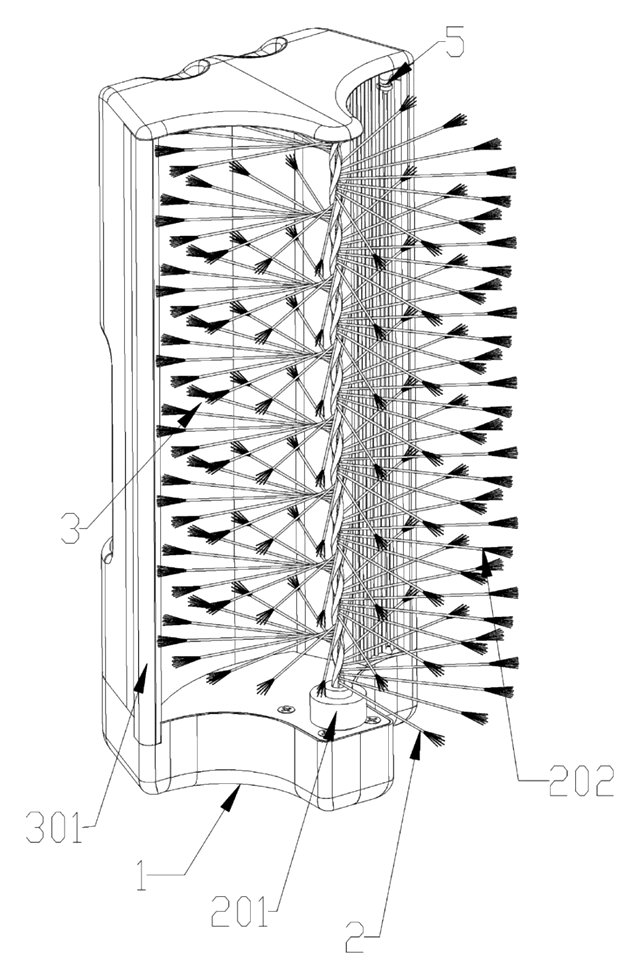
Self-Rinsing Roller Scrub Brush with Dirty-Water Tank
Powered roller brush that rinses and spins its bristles clean inside the body and stores the dirty water.
Patent CN210076909U
Browse by category
- Apparel & Accessories (33)
- Baby & Kids (24)
- Bags & Luggage (14)
- Bath & Personal Care (24)
- Car Accessories (19)
- Furniture, Bedding & Storage (18)
- Garden & Outdoor (26)
- Health & Wellness (11)
- Home, Kitchen & Cleaning (39)
- Lighting (18)
- Packaging & Containers (9)
- Pet Products (8)
- Phone & Camera Accessories (7)
- Retail Display (19)
- School, Office & Art (27)
- Sports & Recreation (33)
- Tools & Workshop (42)
- Toys & Games (18)
This page is based on the public patent document CN212234163U, assigned to Meishan Huachen Technology Co ltd. IP2M is an independent manufacturing service and is not affiliated with, endorsed by or licensed by the patent owner. Images marked as concept renderings are illustrations, not photos of an existing product. Patent status information is provided for reference only and is not legal advice; confirm freedom to operate for your market before production. Full disclaimer.