At a glance
| Patent number | CN212234163U (application CN202020555619) |
| Type | China utility model (实用新型) - protects product shape and structure |
| Original title | Pot cover device provided with turner (一种设置有锅铲的锅盖装置) |
| Patent owner | Meishan Huachen Technology Co ltd |
| Inventors | Huang Jianhua |
| Filing date | 2020-04-15 |
| Grant date | 2020-12-29 |
| Status (China) | In force - valid until at most 2030-04-15, subject to payment of annual fees |
| Patent family | Chinese filings only - no US, European, Japanese, PCT or other filings listed |
| Cited by | 2 later documents |
| Source | Google Patents (search for CN212234163U) |
What the claims cover, in plain language
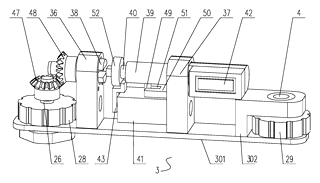
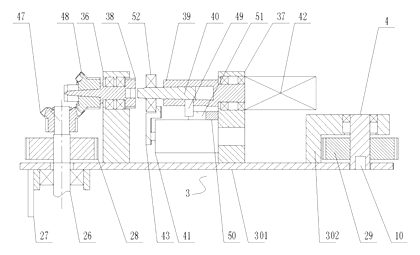
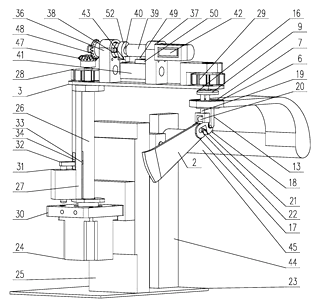
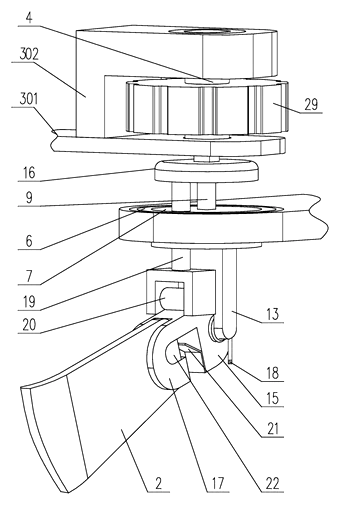
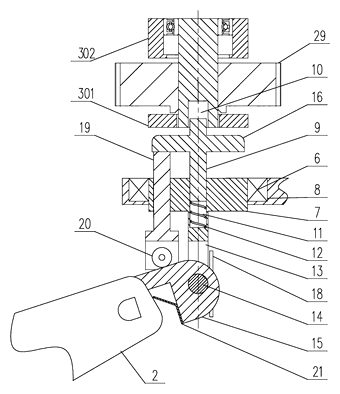
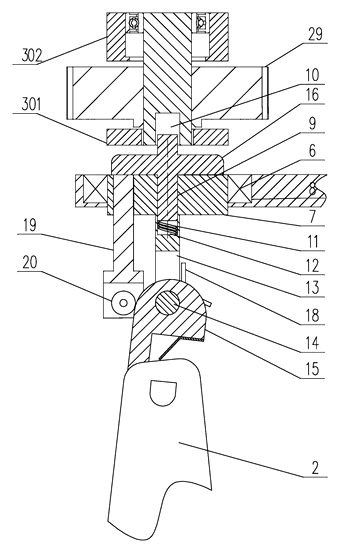
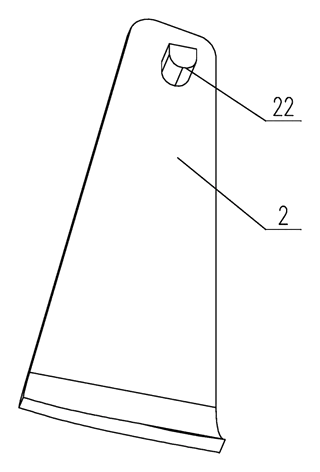
Claim 1 defines a pot lid device comprising a pot lid, a turner rotatably mounted via a revolute pair, and a drive assembly. The drive assembly includes a rotary lifting platform and a support arm. Crucially, the platform moves an upper rotating shaft to align coaxially with the turner’s pivot (lower rotating shaft) for insertion, allowing the motor to drive the turner’s rotation.
Claim 2 specifies the revolute pair details: a bearing in the lid’s mounting hole sleeved on the lower rotating shaft, with interference fits. The upper shaft inserts coaxially into the lower shaft.
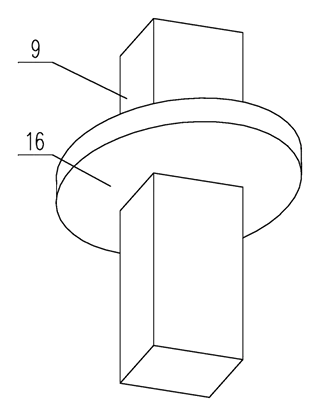
Claim 3 introduces a plug shaft with a non-circular cross-section connecting the upper and lower shafts, ensuring torque transfer through matching insertion holes.
Claim 4 adds a buffer spring (cylindrical helical compression) between the plug shaft and the lower shaft’s hole bottom to absorb axial impact.
Claim 5 onward describe a shaft collar, and a dismounting assembly involving a hinged arm, block, and push rod to release the turner, along with return springs.
This is a simplified reading for orientation only. The legal scope is defined by the exact claim wording in the official Chinese document.
What this means for US production
This patent was filed only in China and is currently in force. Therefore, making, using, or selling this specific mechanical arrangement in China requires the owner’s permission. However, since there are no US patents in this family, the design itself is not restricted by this patent in the United States.
Two points to settle early:
- Other patents may exist. Automated cooking devices and motorized utensils are competitive fields. While this specific lift-and-lock shaft coupling is unique to this filing, broader concepts of “motorized stirring lids” may be covered by other US or international patents held by major appliance manufacturers. A freedom-to-operate (FTO) review focusing on the engagement mechanism and heat-isolation layout is recommended before mass production in the US.
- Component Sourcing. The design relies on standard mechanical parts (bearings, belts, motors). Ensure your supply chain can source food-safe plastics and stainless steel components that meet US FDA requirements for food contact surfaces.
Customization and manufacturing
What can be customized
| Area | Options |
|---|---|
| Material | Lid: Stainless steel, glass, or silicone-coated metal. Turner: Silicone, nylon, or wood. |
| Motor Type | DC brushed vs. brushless; voltage (12V/24V); speed control modules. |
| Drive Ratio | Pulley sizes can be adjusted to change stirring speed. |
| Engagement Interface | Cross-section of the plug shaft (square, hex, spline) for different torque needs. |
| Form Factor | Size of the lid (matching common wok diameters: 24cm, 28cm, 32cm). |
Things to plan for (US market)
- FDA 21 CFR Food Contact: All materials touching food (turner, inner lid surface) must comply with FDA regulations for food-contact substances.
- Motor-operated food preparation safety: Ask the testing laboratory whether UL 982, Motor-Operated Household Food Preparing Machines, covers the finished motorized lid. Evaluate motor exposure to cooking heat, electrical insulation and accessible moving parts; the patent itself establishes no certification.
- Controls and electromagnetic compatibility: Define the actual power supply and controller before deciding applicable tests. Wireless connectivity is a proposed option, not a feature established by this patent.
- California Proposition 65 exposure assessment: Evaluate the chosen coatings, seals and handles against the anticipated cooking and handling conditions before deciding on warnings.
How a project runs
- Inquiry - Define lid size, motor specs, and material preferences.
- Design - CAD modeling of the lift mechanism and thermal analysis for motor placement.
- Prototype - 3D printed or machined samples to test shaft engagement and stirring torque.
- Pilot Run - Small batch production to validate assembly tolerances and electrical safety.
- Production - Injection molding for plastic parts, stamping for metal lids, motor integration, and final QC.
Quantities & timeline
The arm housing, shaft interfaces and lid geometry need a coordinated tooling plan. Choose the motor and seals after defining the pan dimensions and cooking temperatures, then allow for food-contact and electrical testing before setting a shipment schedule. Send us your target lid diameter, desired stirring speed, material specs, and estimated volume and we will reply with options.
Patent drawings
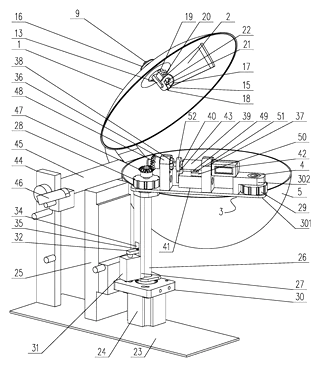
Drawings reproduced from the public patent document for reference.