
Patent CN213216563U
Updated November 2, 2026Heat Superconducting Container with Composite Metal Layers for Electric Cooking
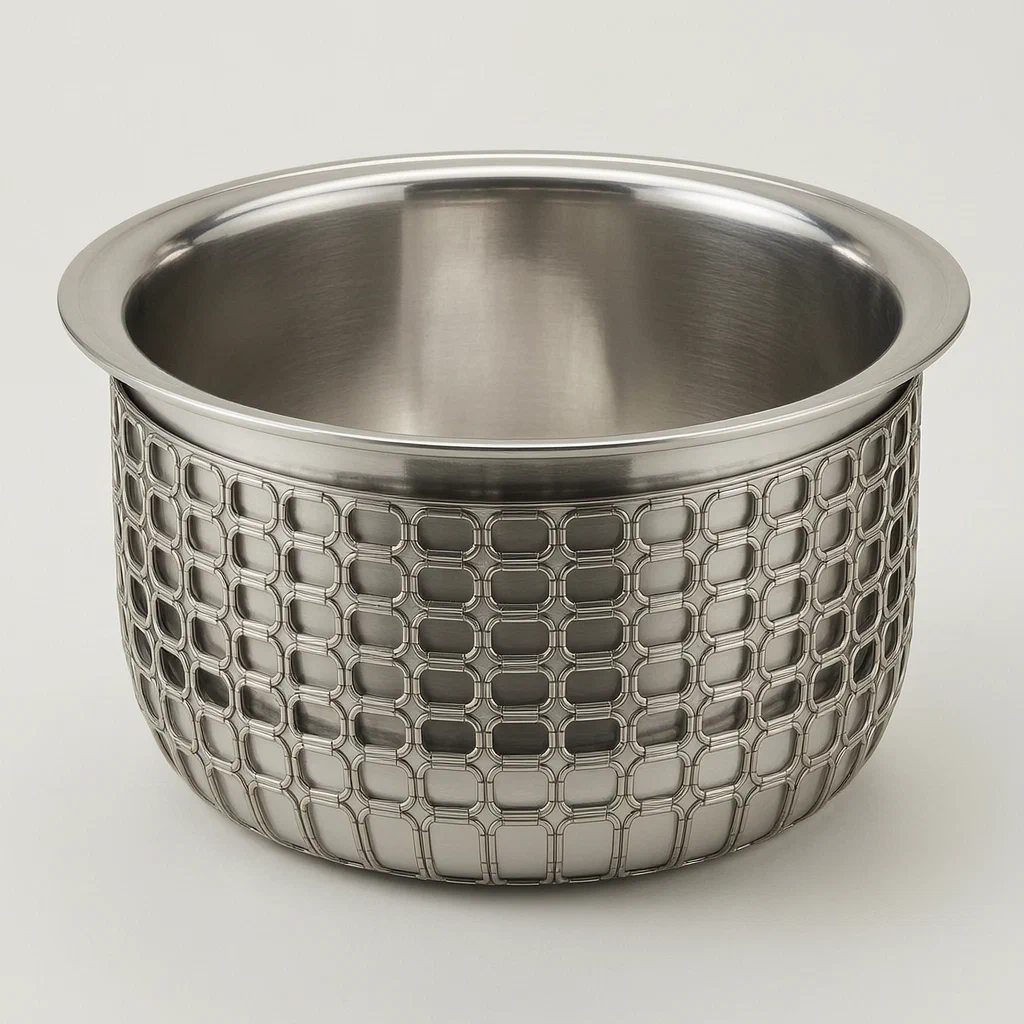
Traditional pots often suffer from uneven heating, where hot spots form at the base while sides remain cool, leading to burnt food or slow cook times. This utility model introduces a 'heat superconducting' container. By bonding two metal layers together but keeping a specific path separated during hot-press compounding, it creates a sealed channel inside the wall. This channel holds a refrigerant medium. When heated, the medium transfers thermal energy rapidly throughout the container's surface area, ensuring the entire pot heats up more evenly than standard single-layer designs.
- China utility model - active
- No filings outside China
- Electric kitchen appliances
- Composite metal layers, refrigerant medium
Splat! What let you down?
🔥
Superconducting Heat Transfer
Uses a refrigerant in a sealed vessel to move heat quickly across the pot walls.
🏗️
Deep-Drawn Structure
Formed as a cylindrical container with two inseparable metal layers.
🛡️
Insulated Forming Path
Temperature-resistant insulation keeps the heat channel open during manufacturing.
⚡
Bulk Heating
Designed to improve cooking quality by heating the entire container volume.
Bring this product to market
- ✓ Patent vetted China-only family and legal status checked
- 2 Product brief · now How it works, uses and options written up
- 3 Prototype First samples for buyers to review
- 4 Pilot run Small first batch for launch customers
- 5 Volume production Repeat orders at scale
Buyer interest
– of 100 buyers needed to start prototyping
One click, no sign-up. Each vote is one real visitor, and products with the most interest go to prototyping first.
Build team: no members yet. Need a partner, co-funding or skills to build this? Join and we introduce the team once it forms.
The problem
Standard electric cooking vessels often rely on direct contact between a heating element and the bottom of the pot. This can create localized hot spots, causing food to stick or burn before the rest of the contents reach temperature. Additionally, traditional multi-layer clad pots require complex bonding processes that may fail under high thermal stress, or they simply lack the mechanism to distribute heat laterally through the side walls efficiently. There is a need for a container structure that ensures uniform temperature distribution without requiring external fans or complex electronic controls.
The solution
The patent describes a heat superconducting container made by deep drawing. It consists of a container body with at least two metal layers: a first metal layer (inner) and a second metal layer (outer). These layers are constructed into an inseparable composite structure via hot-press compounding. However, a specific forming path is protected by a temperature-resistant insulating layer, preventing the two metals from fusing completely along this path. This leaves a hollow heat transfer vessel between the layers. This vessel is filled with a heat superconducting medium (such as a refrigerant), which allows heat to conduct rapidly across the container body, achieving bulk heating.
Who it is for
- Small appliance manufacturers looking to differentiate electric kettles, rice cookers, or soup makers with better thermal performance.
- Kitchenware brands seeking premium pot designs that claim faster boiling or more even simmering capabilities.
- OEM/ODM suppliers needing structural patents for new product lines in the home appliance sector.
- Product designers interested in passive heat distribution technologies that do not require additional electronics.
How it works
The main parts
| No. | Part | What it does |
|---|---|---|
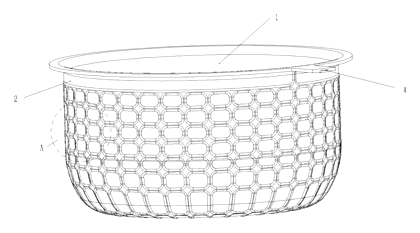
| 1 | First Metal Layer | Inner layer of the container, contacts food. |
| 2 | Second Metal Layer | Outer layer, exposed to the heating element. |
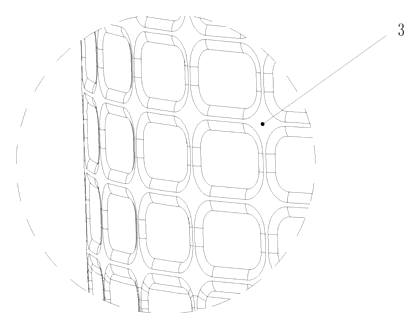
| 3 | Heat Transfer Vessel | Channel between layers containing the medium. |
| N/A | Insulating Layer | Prevents fusion of layers along the forming path. |
| N/A | Blowing Inlet | Port used to inject gas/liquid and seal the vessel. |
Note: Specific reference numbers for sub-components like handles or rims are described in claims but detailed numbering varies by figure; refer to patent drawings for exact placement.
Operating steps
- Fabrication: Two metal sheets are stacked. A temperature-resistant insulating material is placed along the desired path of the heat channel.
- Compounding: The sheets undergo hot-press compounding. The areas without insulation fuse into an inseparable composite; the insulated area remains separate, creating the void.
- Filling: A blowing inlet is used to inject a high-pressure gas or liquid (the heat superconducting medium) into the vessel. The vessel may be evacuated to a vacuum state before filling.
- Sealing: The inlet is closed (e.g., welded or capped), trapping the medium inside.
- Usage: When the outer layer is heated, the medium vaporizes or moves, transferring thermal energy to the inner layer across the entire surface area defined by the helical or grid-like vessel pattern.
Applications
Electric Rice Cookers
Rice requires consistent temperature to cook evenly without burning the bottom crust. The superconducting vessel spreads heat from the bottom heater up the sides, reducing the risk of localized overheating and improving grain texture.
Soup Makers and Slow Cookers
Long-duration cooking benefits from stable, gentle heat. The passive heat transfer system maintains a uniform temperature throughout the broth, preventing stratification where the top remains cooler than the bottom.
Electric Kettles
Boiling water efficiently requires maximizing surface area contact with heat. The dual-layer design with internal circulation helps transfer energy quickly to the water volume, potentially reducing boil times compared to single-wall stainless steel.
Premium Sauce Pans
For delicate sauces that scorch easily, even heating is critical. Brands can market these pans as having “superconducting” properties that eliminate hot spots, appealing to chefs who need precise control over low-heat reductions.
Where it is less suitable
- Induction Cooktops: Induction relies on magnetic coupling directly with the base metal. The added complexity of the outer layer and potential material choices (non-magnetic alloys for the outer shell) might interfere with induction compatibility unless specifically designed for it.
- Extreme High-Temperature Industrial Use: The refrigerant medium has a specific operating range; exceeding this could damage the vessel integrity or reduce efficiency.
- Low-Cost Disposable Ware: The manufacturing process involves precision hot-pressing and sealing, making it unsuitable for cheap, single-use containers.
Frequently asked questions
How does the “heat superconducting” feature work?
It uses a passive phase-change or convection mechanism. A refrigerant is sealed in a thin channel between two metal layers. When the outer layer gets hot, the medium absorbs the heat and distributes it rapidly to the inner layer, ensuring the whole pot heats up evenly rather than just the bottom.
Is the refrigerant safe for food?
The patent specifies the medium is inside a sealed vessel between metal layers, not in direct contact with food. However, for US sales, all materials must comply with FDA food contact regulations. We recommend verifying the specific chemical properties of the chosen refrigerant for migration risks.
Can this pot be used on induction cooktops?
Induction requires a ferromagnetic material in the base. Since the design uses a composite of two layers, the choice of metals is critical. You would likely need a magnetic stainless steel or iron layer on the outside to couple with the induction coil, while the inside could be different. This needs custom material selection.
Why is the channel size limited to 8.0 mm²?
Claim 9 restricts the cross-sectional area to less than 8.0 mm². This small size helps maintain structural integrity of the bonded metal layers and optimizes the capillary action or flow dynamics of the heat transfer medium.
Is the patent active?
Yes, CN213216563U is a China utility model granted in 2021. It is in force until at most June 2030, assuming annual maintenance fees are paid. It has no US counterpart, so it does not block US imports, but manufacturing in China requires respecting the owner’s rights.
Can this design be made and sold in the US?
The patent is only registered in China. Therefore, selling this design in the US does not infringe this specific Chinese patent. However, because large appliance companies like Joyoung cite this patent, there may be related IP families or US patents covering similar technology. A freedom-to-operate search is strongly advised before mass production.
Are you affiliated with the patent owner?
No. IP2M is an independent design and manufacturing service working from the public patent document. We are not licensed by Anhui Yongyao Electric Appliance Co ltd.
Request a quote
Click Request a Quote below to see our email address - copy it, or open your email app with a ready-made message. Please mention patent CN213216563U in the subject.
Helpful details to include:
- Your company and product type (rice cooker, kettle, sauce pan, etc.)
- Dimensions (diameter, height, capacity)
- Heating method (resistance heater, induction, halogen)
- Material preference (e.g., 304 SS inner, Aluminum outer)
- Estimated quantity and target price
- Timeline - when you would like samples and the first shipment
You can also reach us at (332) 203-9997.
Explore this product
Interested in building this?
Tell us your target market, quantity and timeline. We reply with options for prototyping, small-batch runs or volume production.
Send your inquiry to
Please put CN213216563U in the subject line and tell us your company, country, estimated quantity and timeline.
Prefer to talk? Call (332) 203-9997.
More product-ready patents
All Home, Kitchen & Cleaning patents →
Home, Kitchen & Cleaning
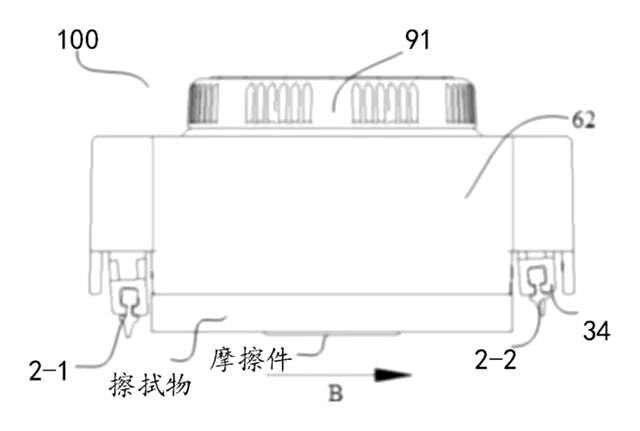
Self-Wringing Flat Mop with Fold-Away Wringer
Flat mop with a built-in wringer that opens only when you wring and folds flat against the pole when you mop.
Patent CN207734114U
Home, Kitchen & Cleaning
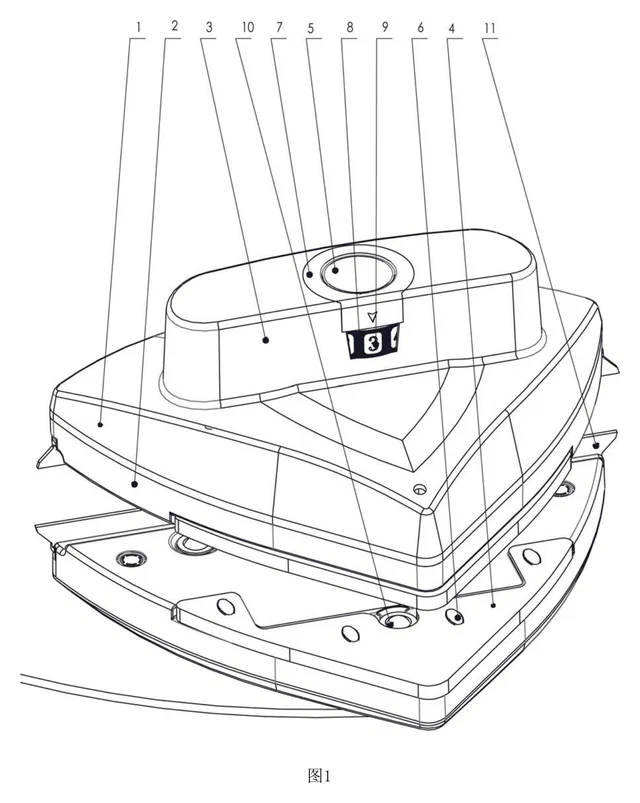
Magnetic Double-Sided Window Cleaner with Dial-Set Magnet Strength
Magnetic window cleaner with a sealed, sliding magnet, dial-set strength for different glass thicknesses and a spring-held idle position.
Patent CN209360543U
Home, Kitchen & Cleaning
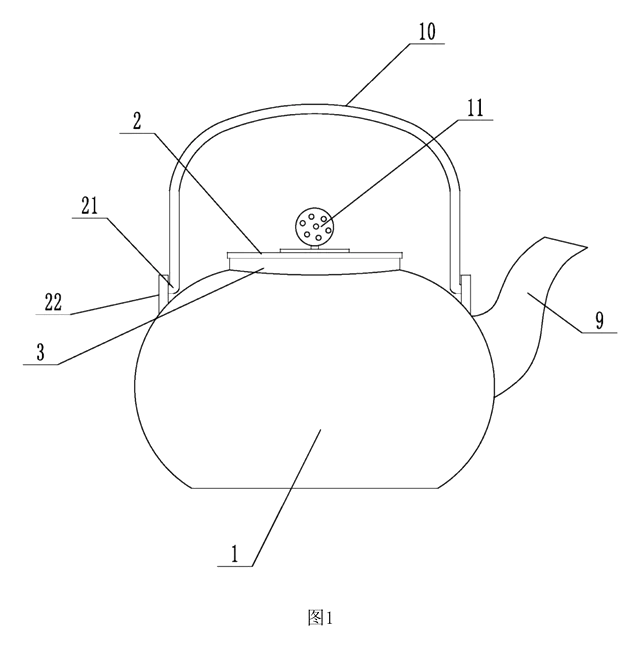
Metal Kettle with Magnetic Lid That Stays On When Pouring
Metal teapot/kettle with a magnet-held lid that does not fall off when pouring, and an insulated, vented lid knob.
Patent CN210540477U
Home, Kitchen & Cleaning
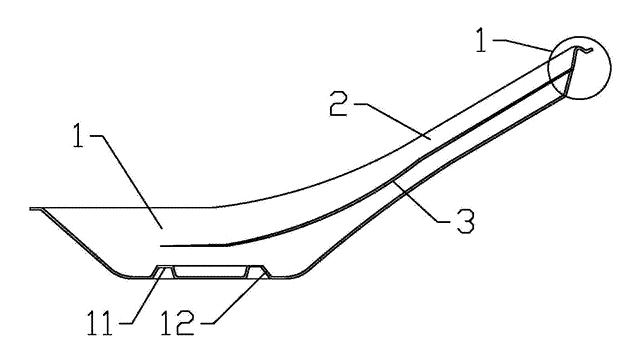
Reinforced Disposable Soup Spoon
Disposable soup spoon with a handle-to-bowl rib, stiffened edges and a ring foot to resist breaking.
Patent CN206964482U
Home, Kitchen & Cleaning
Self-Switching Double-Squeegee Window Cleaner
Cleaning head with two squeegee blades that switch automatically with the direction of movement.
Patent CN212630655U
Home, Kitchen & Cleaning
Self-Rinsing Roller Scrub Brush with Dirty-Water Tank
Powered roller brush that rinses and spins its bristles clean inside the body and stores the dirty water.
Patent CN210076909U
Browse by category
- Apparel & Accessories (30)
- Baby & Kids (21)
- Bags & Luggage (13)
- Bath & Personal Care (22)
- Car Accessories (16)
- Furniture, Bedding & Storage (16)
- Garden & Outdoor (23)
- Health & Wellness (10)
- Home, Kitchen & Cleaning (35)
- Lighting (16)
- Packaging & Containers (8)
- Pet Products (8)
- Phone & Camera Accessories (6)
- Retail Display (17)
- School, Office & Art (24)
- Sports & Recreation (31)
- Tools & Workshop (37)
- Toys & Games (16)
This page is based on the public patent document CN213216563U, assigned to Anhui Yongyao Electric Appliance Co ltd. IP2M is an independent manufacturing service and is not affiliated with, endorsed by or licensed by the patent owner. Images marked as concept renderings are illustrations, not photos of an existing product. Patent status information is provided for reference only and is not legal advice; confirm freedom to operate for your market before production. Full disclaimer.