At a glance
| Patent number | CN213216563U (application CN202021188786) |
| Type | China utility model (实用新型) - protects product shape and structure |
| Original title | Heat superconducting container, cooking pot and electric heating cooking utensil (一种热超导容器、烹饪锅具和电加热烹饪器具) |
| Patent owner | Anhui Yongyao Electric Appliance Co ltd |
| Inventors | Yi Lijun, Jia Qingfu |
| Filing date | 2020-06-24 |
| Grant date | 2021-05-18 |
| Status (China) | In force - valid until at most 2030-06-24, provided annual fees are paid |
| Patent family | Chinese filings only - no US, European, Japanese, PCT or other filings listed |
| Cited by | 2 later documents (including WO2024001527A1 by Joyoung Co., Ltd.) |
| Source | Google Patents (search for CN213216563U) |
What the claims cover, in plain language
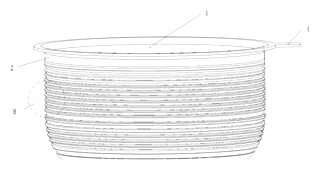
Claim 1 defines a thermal superconducting container formed by drawing, comprising a container body with at least a first metal layer and a second metal layer. The second layer is outside the first, and they form an inseparable composite structure. A heat transfer vessel exists between them, containing a heat superconducting medium for rapid heat conduction.
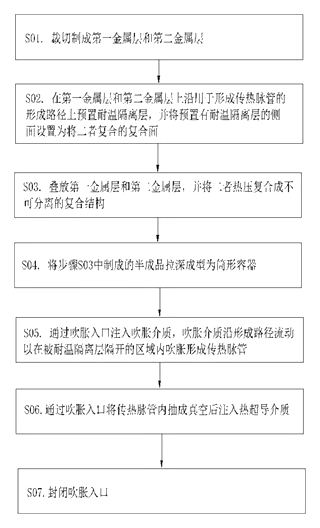
Claims 2-4 specify the manufacturing method: a forming path is preset between the layers, protected by a temperature-resistant insulating layer so that the path does not fuse during hot-press compounding.
Claims 5-6 describe a blowing inlet on the container wall connected to the forming path. A blowing medium (high pressure gas or liquid) is injected to create the vessel, and the final thermal superconducting medium is identified as a refrigerant.
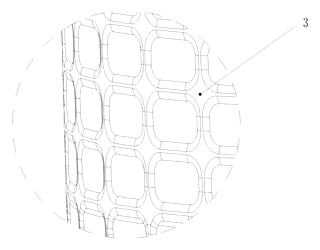
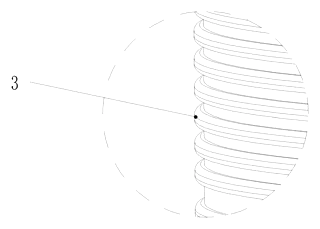
Claim 7 states the heat transfer vessel can wrap helically or in a grid-like manner around the side and/or bottom walls.
Claim 8 mentions the vessel may be configured to a vacuum state before injecting the medium.
Claim 9 limits the cross-sectional area of the heat transfer vessel to less than 8.0 mm².
Claim 10 notes the thickness of the second metal layer is less than the first, such that the vessel is highlighted on the second layer.
Claims 11-13 extend protection to a cookware utilizing this container, including features like an outwardly turned rim with a closed inflation inlet and an anti-burn handle, and finally an electric heating cooking appliance containing this pot.
This is a simplified reading for orientation only. The legal scope is defined by the exact claim wording in the official Chinese document.
What this means for US production
This patent was filed only in China and is currently in force. Making, using, selling, or importing this specific heat superconducting container design into the United States does not infringe this Chinese patent directly, as patents are territorial. However, if you manufacture in China for export, you must respect the rights of the patent owner within China.
Two points to settle early:
- Other patents may exist. Joyoung Co., Ltd. cites this patent in WO2024001527A1, indicating activity in this field. A freedom-to-operate (FTO) review is recommended to check for any US patents covering similar “vapor chamber” or “heat pipe” integrated cookware structures.
- Material Safety. The use of a “refrigerant” inside a food-contact adjacent layer requires strict verification against FDA regulations for indirect food additives and materials in contact with food.
Customization and manufacturing
What can be customized
| Area | Options |
|---|---|
| Vessel Pattern | Helical winding vs. Grid-like network for heat distribution |
| Medium Type | Choice of refrigerant compatible with operating temperatures |
| Layer Materials | Stainless steel, aluminum, or copper combinations |
| Thickness Ratio | Adjusting outer vs. inner layer thickness per Claim 10 |
| Handle/Rim | Integration of anti-burn handles and sealed inflation ports |
Things to plan for (US market)
- FDA 21 CFR Food Contact Substances: Any material used in the inner layer or potentially migrating from the outer structure must comply with US food safety standards.
- UL / ETL Certification: If sold as part of an electric appliance, the whole unit must meet electrical safety standards for heating elements and insulation.
- California Prop 65: Screening of metals and chemicals used in the refrigerant and coatings for potential toxicity warnings.
How a project runs
- Inquiry - Define pot size, heating method (induction/resistance), and target retail price.
- Design - Select metal pairs, define the insulating path geometry, and choose the refrigerant.
- Prototype - Create sample containers via hot-press and blow-forming; test heat transfer rates.
- Pilot run - Validate sealing integrity and perform thermal cycling tests.
- Production - Mass produce layered blanks, press compound, blow fill, and assemble.
Quantities & timeline
Manufacturing requires specialized hot-press equipment and precision blowing machinery to maintain the <8.0mm² channel cross-section. Tooling costs are significant due to the multi-step bonding process. Send us your dimensions, material preferences, and estimated quantity and we will reply with options.
Patent drawings
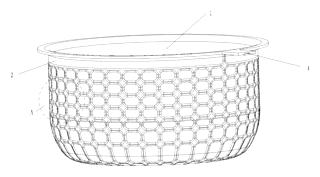
Drawings reproduced from the public patent document for reference.