
Patent CN213237054U
Updated November 4, 2026Folding LED Plant Lamp with Rotating Brackets
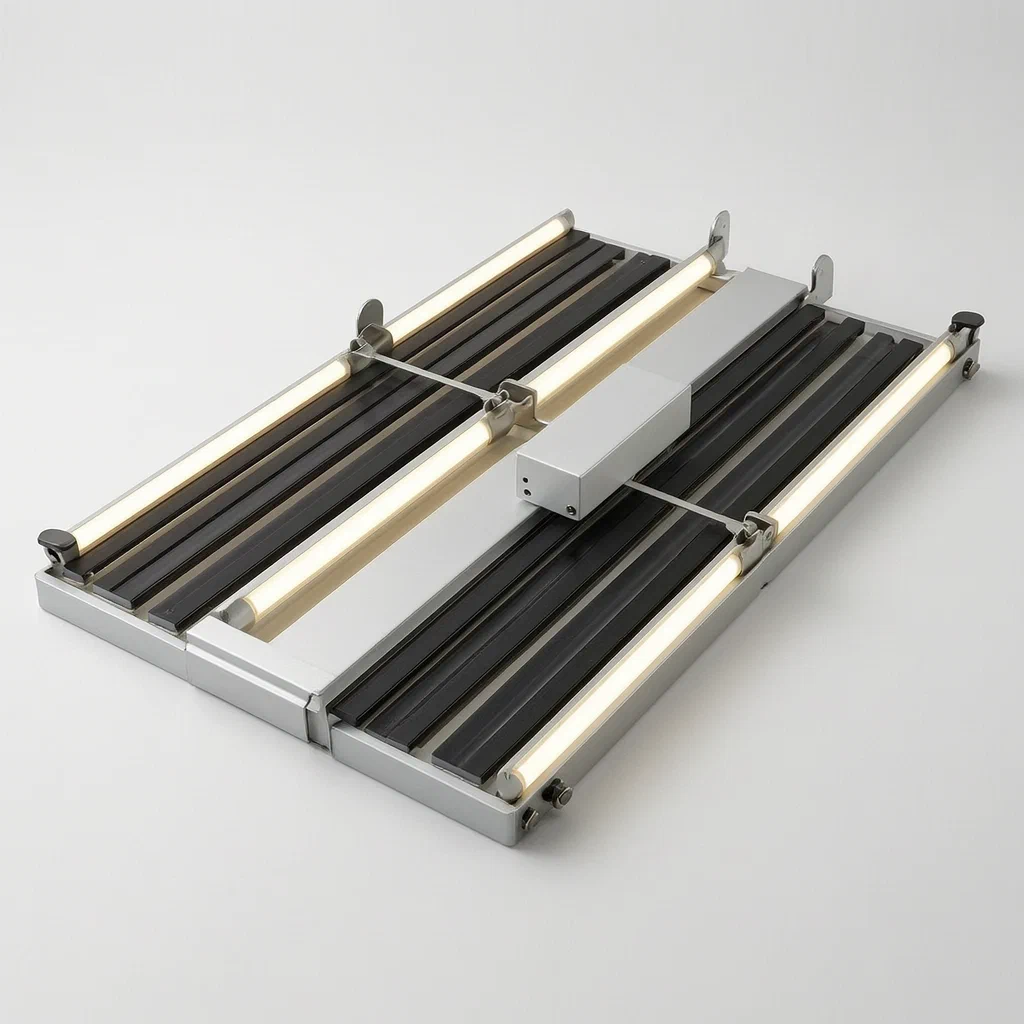
Traditional grow lights are bulky and hard to store when not in use. This design uses a central hub with two arms that swing like wings. When you need light, you unfold the arms; when you don't, they fold tight against the body. The rotation is controlled by pins sliding in curved slots, so you can set the width of the light spread. Wires run through hollow channels inside the arms, keeping them safe from pinching as the mechanism moves.
- China utility model - lapsed
- No filings outside China
- Indoor gardening hardware
- Rotating dual-arm structure
Splat! What let you down?
🔄
Dual Rotation
Two brackets rotate independently around a central power box.
📐
Angle Control
Limiting columns in arc-shaped holes set the opening width.
🔌
Internal Wiring
Cavities in the brackets protect wires during folding movements.
📦
Compact Storage
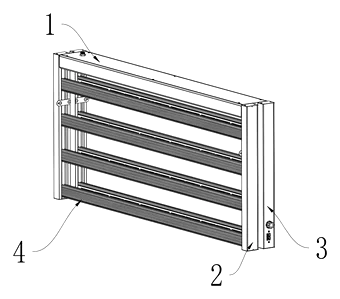
Arms fold flat against the center unit to save space.
Bring this product to market
- ✓ Patent review Patent family and legal status reviewed in the relevant jurisdictions.
- 2 Product brief · now How it works, uses and options written up
- 3 Prototype First samples for buyers to review
- 4 Pilot run Small first batch for launch customers
- 5 Volume production Repeat orders at scale
Buyer interest
– of 100 buyers needed to start prototyping
One click, no sign-up. Each vote is one real visitor, and products with the most interest go to prototyping first.
Build team: no members yet. Need a partner, co-funding or skills to build this? Join and we introduce the team once it forms.
Patent Rights & Team Participation
Before joining a development team, participants should ensure they have the necessary rights or authorization to participate in the project.
Participation is generally appropriate where:
- You own the relevant patent rights or have obtained permission or a license from the rights holder.
- The relevant patent rights have expired or have been legally invalidated in the jurisdictions where the planned activities will take place.
- The planned development, manufacturing, and commercialization activities have been independently assessed and do not infringe applicable patent rights in the relevant jurisdictions.
Important: Being located outside a country where a patent is protected does not automatically exempt you from patent infringement risks. Patent rights may apply based on where development, manufacturing, use, sale, or import activities take place.
IP2M does not grant any patent license or authorization through team participation. Joining a project does not provide permission to use, manufacture, or commercialize patented technology.
The problem
Grow lights often have fixed shapes or complex hinges that take up significant shelf space when stored. If the arms are too wide, they may not fit on standard shelving; if they are narrow, they cannot cover large plant areas. Additionally, moving parts in lighting fixtures frequently pinch or wear out the electrical cables connecting the power source to the LEDs, leading to early failure. Users want a light that expands to cover a broad area but collapses into a small footprint without requiring disassembly or careful cable management every time it is moved.
The solution
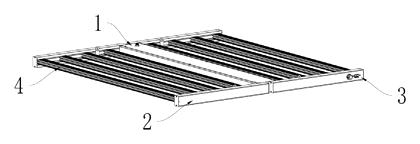
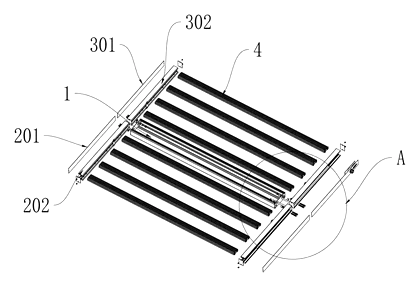
- A central power box (1) acts as the hub, containing the power supply and mounting points.
- Two support brackets (first bracket 2, second bracket 3) attach to the power box via rotating shafts (7, 8).
- Each bracket holds an LED light source (bar or beads) mounted on a heat sink (4).
- Limiting columns (9, 10) fixed to the brackets slide through arc-shaped holes (101, 102) on the end faces of the power box. This restricts the rotation range, preventing over-extension and setting the maximum open angle.
- Wire protection tubes (5, 6) and internal cavities within the brackets route the electrical connections safely, allowing the arms to swing without tangling or pinching the cords.
Who it is for
- Indoor farming suppliers needing space-efficient equipment for vertical racks where depth is limited.
- Home garden retailers selling units that require simple assembly and compact packaging for e-commerce shipping.
- Commercial greenhouse operators looking for modular lighting solutions that can be adjusted for different bed widths.
- DIY hydroponic kit manufacturers who value a robust hinge mechanism that protects internal wiring from user error.
How it works
The main parts
| No. | Part | What it does |
|---|---|---|
| 1 | Power Box | Central hub housing the power supply and pivot points. |
| 2, 3 | Support Brackets | Arms that hold the lights; rotate around the hub. |
| 4 | Heat Sink | Mounted on brackets to dissipate heat from LEDs. |
| 7, 8 | Rotating Shafts | Screws or pins acting as pivots for the brackets. |
| 9, 10 | Limiting Columns | Pins on brackets that slide in the power box holes. |
| 101, 102 | Arc Holes | Curved slots on the power box that define rotation limits. |
| 5, 6 | Wire Tubes | Protective sleeves guiding cables into the brackets. |
Opening and closing
- Unfold: Rotate the first bracket (2) and second bracket (3) away from the center. The limiting columns (9, 10) move along the arc holes (101, 102).
- Lock Position: Continue rotating until the columns reach the end of the arc holes. This sets the brackets at the desired horizontal plane or angled position.
- Operate: Turn on the power. The LEDs on the heat sinks illuminate the plant area below.
- Fold: To store, rotate the brackets inward toward each other. They will meet when the limiting columns reach the opposite ends of the arc holes, creating a compact, flat profile.
Applications
Vertical Farming Racks
In stacked growing systems, ceiling height is often restricted. This lamp’s ability to fold flat allows operators to adjust the distance between shelves easily or store unused units without removing them from the rack entirely.
Home Hydroponics Kits
Retailers ship kits to consumers who may lack dedicated grow rooms. The compact folded size reduces packaging volume and shipping costs, while the simple rotation mechanism requires no tools for setup, appealing to beginner growers.
Greenhouse Supplemental Lighting
For wide planting beds, the dual-arm design spreads light coverage evenly. Growers can adjust the opening angle to match the specific width of their crop rows, optimizing light intensity distribution across the surface.
Retail Display Units
Stores displaying live plants often use lighting to enhance visual appeal. These lamps can be turned off and folded away during restocking or cleaning, clearing workspace quickly without unplugging or moving heavy fixtures.
Where it is less suitable
- Fixed High-Bay Installations: Industrial settings requiring permanent, high-intensity overhead lighting typically use rigid, non-folding fixtures for stability and thermal management.
- Extreme Wind Environments: While designed for indoor or greenhouse use, the folding joints may not withstand sustained high wind loads compared to welded, single-piece structures.
- Very Large Areas: The dual-arm span is limited by the mechanical leverage of the central box; larger areas would require multiple units or a different structural approach.
Patent & Production
At a glance
| Patent number | CN213237054U (application CN202022517413) |
| Type | China utility model (实用新型) - protects product shape and structure |
| Original title | Foldable LED Plant Lamp (一种可折叠的LED植物灯) |
| Patent owner | Ble Shenzhen Semiconductor Lighting Co ltd |
| Inventors | Lin Zhiqiang |
| Filing date | 2020-11-04 |
| Grant date | 2021-05-18 |
| Status (China) | Lapsed - terminated for non-payment of annual fees (recorded 2024-06-21) |
| Patent family | Public record shows Chinese filings only - no US, European, Japanese, PCT or other filings listed |
| Cited by | 3 later documents |
| Source | Google Patents (search for CN213237054U) |
What the claims cover, in plain language
Claim 1 - a foldable LED plant lamp comprising a first support, a second support, and a power pack. Light sources are installed on both supports. The power pack is rotatably connected to both supports.
Claim 2 - specifies the connection method: the power pack connects to the first support via a first rotating shaft and to the second support via a second rotating shaft, allowing independent rotation.
Claim 3 - adds damping rubber rings sleeved on the outer sides of the rotating shafts to control friction and noise.
Claim 4 - notes the shafts may be screws matched with nuts for assembly.
Claim 5 - introduces limiting columns fixed to the supports and limiting holes on the power pack’s end face. One end of the column extends into the hole, restricting the rotation range.
Claim 6 - describes cavities in the supports for passing wires.
Claim 7 - details wire protection tubes extending from the power pack into the supports through threading holes.
Claim 8 - states the limiting holes and threading holes are symmetrical about the axial centers of the rotating shafts.
Claim 9 - places a heat sink on each support, with the light source fixed to it.
Claim 10 - positions wire outlets at the joint between the heat sink and the support.
This is a simplified reading for orientation only. The legal scope is defined by the exact claim wording in the official Chinese document.
What this means for US production
This patent was filed in China and has lapsed, so it no longer restricts anyone in China either. The public record shows no US or other foreign counterpart.
Two points to settle early:
- Other patents may exist. Indoor lighting mechanisms are a crowded field. Notably, Shenzhen Yuxing Technology Co., Ltd. holds WO2022257206A1, which cites this patent. A freedom-to-operate (FTO) review is recommended to ensure the specific arc-hole limiting mechanism and wire routing do not infringe on other active patents in the target market.
- Electrical Safety. As an electrical device, the primary hurdle in the US is UL/ETL certification for the driver and overall assembly, rather than just the mechanical folding structure.
Customization and manufacturing
What can be customized
| Area | Options |
|---|---|
| Arm Length | Adjusted based on required coverage area (e.g., 30cm to 60cm per arm). |
| Light Source | LED bar strips vs. individual bead arrays; color spectrum (full spectrum, red/blue mix). |
| Rotation Angle | Arc hole geometry determines max opening angle (e.g., 90°, 120°, 180°). |
| Finish | Powder-coated aluminum, UV-stabilized plastic housings. |
| Mounting | Clamp mounts, hanging chains, or magnetic bases added to the power box. |
Things to plan for (US market)
- UL 8750 / UL 153 - Standard for LED equipment and portable lamps. Critical for retail sales.
- FCC Part 15 - Electromagnetic interference testing for electronic devices.
- Energy Star - Optional but valuable for commercial buyers seeking efficiency certifications.
- Prop 65 - Screening for lead and phthalates in plastics and solder.
How a project runs
- Inquiry - Define arm length, wattage, and IP rating requirements.
- Design - Finalize arc hole dimensions for desired folding angle; select LED drivers.
- Prototype - 3D-printed mechanics + functional electronics sample.
- Pilot Run - Cycle testing (opening/closing), thermal testing, safety pre-checks.
- Production - Injection molding for housings, extrusion for arms, assembly, potting.
Quantities & timeline
Molds for the power box and bracket housings are the initial cost driver. Lead times depend on the availability of custom LED boards and certified drivers. Send us your target wattage, arm length, and quantity and we will reply with options.
Production notes
Tooling and process
The core structure likely relies on UV-stabilized injection molding for the power box and bracket housings to resist degradation under intense grow-light spectra. Aluminum extrusion is typically used for the heat sinks attached to the brackets. Assembly involves snap-fit connections for covers and screws for securing the rotating shafts.
Cost drivers
Material selection is key: UV grade polymers typically raise resin costs but prevent brittleness. Corrosion protection on any metal fasteners or exposed extrusions usually adds processing steps. Packaging volume impacts freight costs due to the folding nature, though the design optimizes this.
Prototyping path
Prototyping typically starts with 3D-printed parts to validate the arc-hole limiting mechanism and wire routing. Follow with a coated tube sample if using tubular arms. Conduct a UV and spray test on material samples before finalizing tooling. Build a functional sample with real LEDs to check thermal clearance.
What we would change before tooling
We would verify the wall thickness and joint design of the arc holes to ensure they withstand repeated stress without cracking. Confirming the thread engagement of the screw-based shafts is critical to prevent loosening over time.
Common failure points
Primary risks include UV degradation and color fade of external plastics. Water ingress in electronics is a concern if the unit is used in humid greenhouses, requiring proper sealing. Weld rust on metal brackets or seam failure in molded parts can occur if material grades are insufficient.
Patent drawings
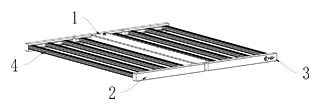
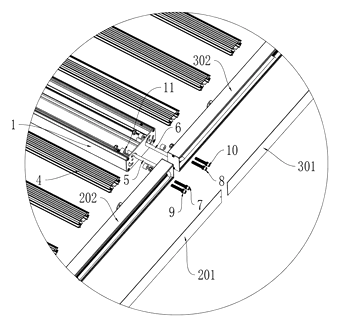
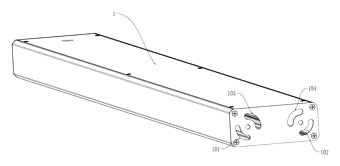
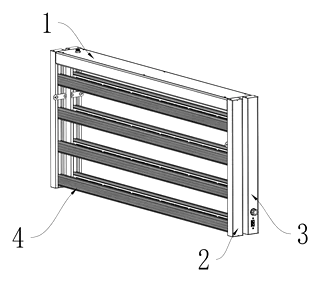
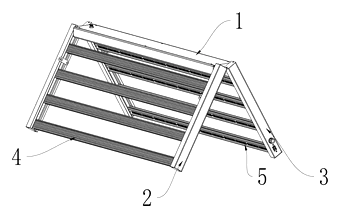
Drawings reproduced from the public patent document for reference.
Frequently asked questions
How does the folding mechanism work?
The two arms rotate around a central power box. Instead of free-spinning hinges, the arms have pins that slide through curved slots (arc holes) on the box. This guides the movement and stops the arms at specific angles, such as fully open or fully closed.
Does the wire get pinched when folding?
No. The patent describes internal cavities within the arms and protective tubes that guide the wires. The wires exit the power box through designated holes and enter the arms’ channels, keeping them shielded from the moving parts.
Can I adjust the light spread?
Yes. The arc-shaped holes allow the arms to stop at various angles between the folded and fully extended positions. You can widen or narrow the gap between the arms depending on the plant bed size.
Is it difficult to assemble?
It depends on the final design. The patent mentions screws and nuts for the shafts, suggesting a simple bolt-on assembly. Many versions would likely come pre-assembled, requiring only the attachment of the power cord or mounting hardware.
What materials are used?
The patent specifies a power box, supports, and heat sinks. Typically, these are made from aluminum (for heat dissipation) and durable plastics or coated metals. For outdoor or greenhouse use, UV-stabilized materials are recommended to prevent fading.
Can this design be made and sold in the US?
The patent was filed in China and has lapsed, and the public record shows no US counterpart, so it does not restrict the design in the US or in China. However, indoor lighting mechanisms may be covered by other US patents - see Patent & Production - so we recommend a freedom-to-operate check before volume production.
Are you affiliated with the patent owner?
No. IP2M is an independent design and manufacturing service working from the public patent document.
Request a quote
Click Request a Quote below to see our email address - copy it, or open your email app with a ready-made message. Please mention patent CN213237054U in the subject.
Helpful details to include:
- Your company and channel (greenhouse supplier, home garden retailer, hydroponics brand)
- Target wattage and LED spectrum preference
- Arm length and desired opening angle
- IP Rating needed (e.g., IP44 for humid environments)
- Estimated quantity and target price
- Timeline - when you would like samples and the first shipment
You can also reach us at (332) 203-9997.
Page editor: Daniel Chen, Product Research Editor · IP2M
Last updated November 4, 2026. If something on this page looks wrong, email [email protected] and we will check it against the patent.
Interested in building this?
Tell us your target market, quantity and timeline. We reply with options for prototyping, small-batch runs or volume production.
Send your inquiry to
Please put CN213237054U in the subject line and tell us your company, country, estimated quantity and timeline.
Prefer to talk? Call (332) 203-9997.
More product-ready patents
All Garden & Outdoor patents →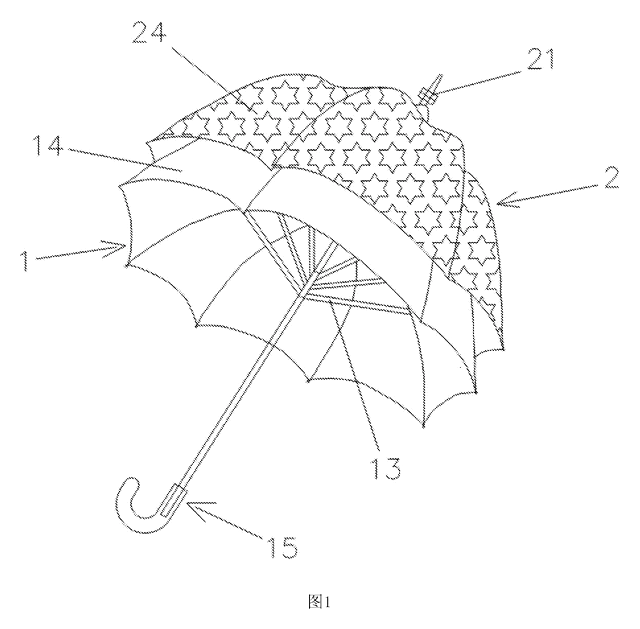
Garden & Outdoor
2-in-1 Parent & Child Umbrella
Full-size umbrella with a nested smaller umbrella on top - a rotating decorative layer that detaches into a kid-size umbrella.
Patent CN205611962U
Garden & Outdoor
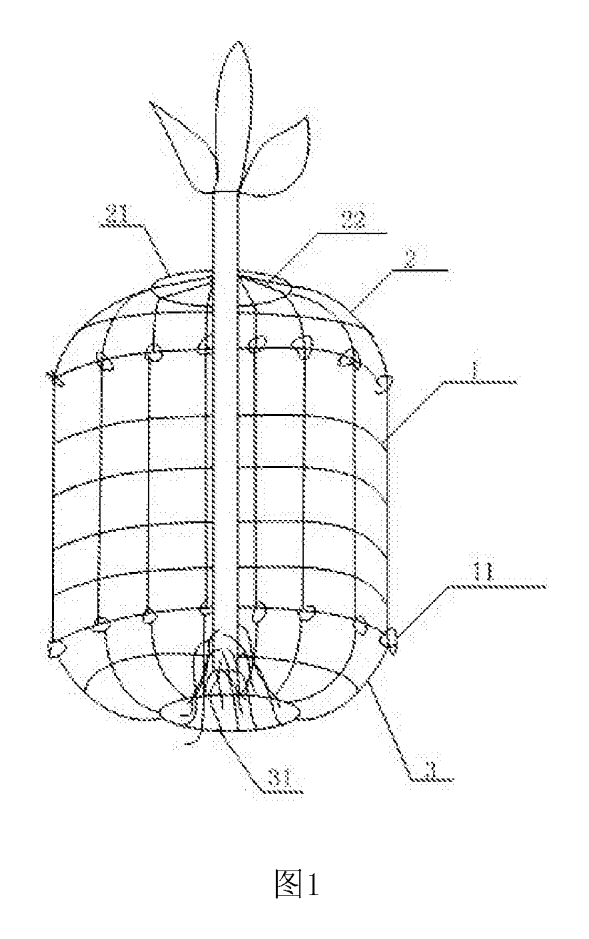
Wire-Mesh Tree Root & Trunk Guard Against Rodents
Three-part wire-mesh guard that protects the roots and lower trunk of young trees from burrowing and gnawing animals.
Patent CN206808261U
Garden & Outdoor
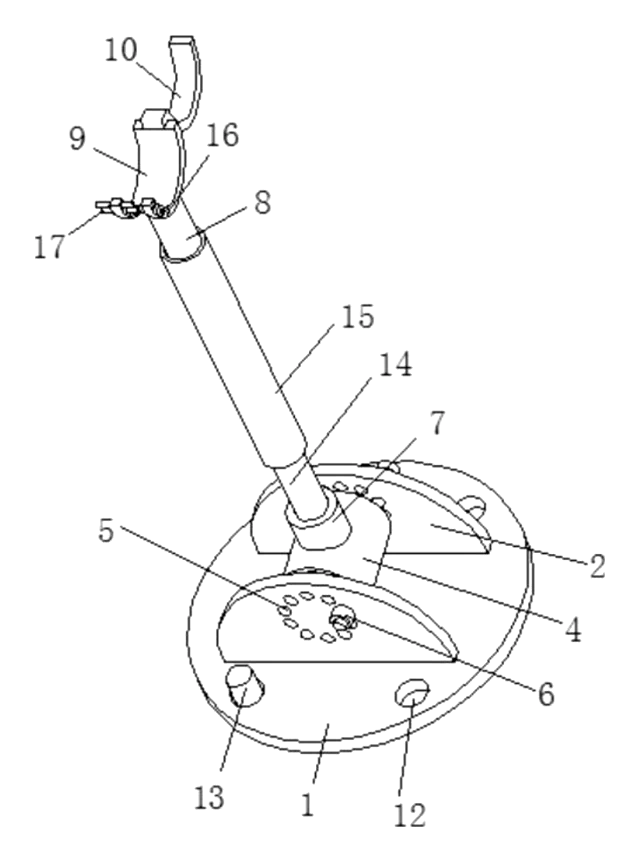
Adjustable-Angle Tree Support Prop
Tree prop with a pinned base, angle-locking hinge, twist-adjust tube and a locking trunk ring.
Patent CN208370491U
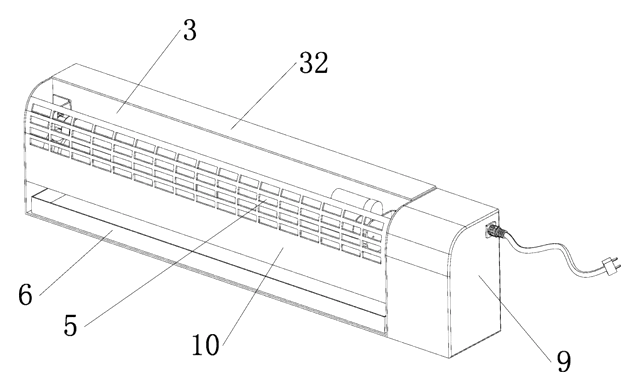
Garden & Outdoor
Self-Renewing Glue-Roller Mosquito Trap
UV insect trap with a glue roller that re-coats itself and scrapes the catch into a tray - no glue boards.
Patent CN217038569U
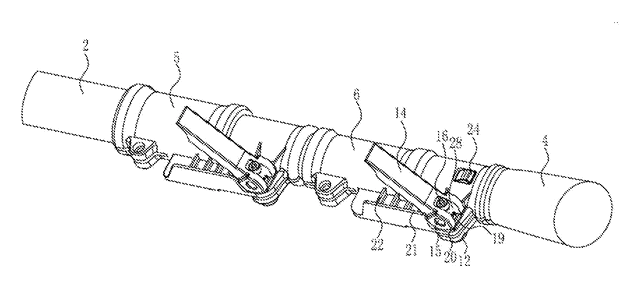
Garden & Outdoor
Cam-Lock Telescopic Pole for Garden Power Tools
Telescopic pole for garden power tools with cam-lever locks and a spring-button, tear-drop head socket.
Patent CN205812889U
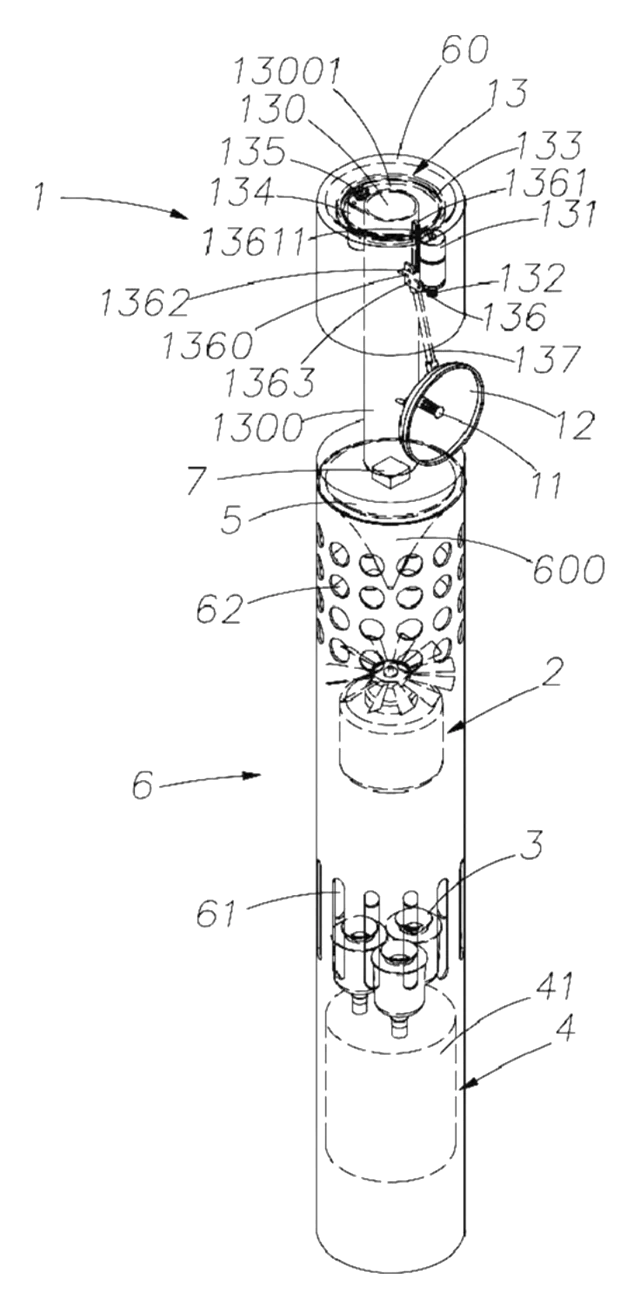
Garden & Outdoor
Mosquito Fan That Listens for Mosquitoes Before It Sprays
Fan with a scanning microphone dish that mists repellent only when it hears mosquitoes.
Patent CN208708542U
Browse by category
- Apparel & Accessories (38)
- Baby & Kids (26)
- Bags & Luggage (15)
- Bath & Personal Care (26)
- Car Accessories (21)
- Furniture, Bedding & Storage (20)
- Garden & Outdoor (28)
- Health & Wellness (12)
- Home, Kitchen & Cleaning (43)
- Lighting (20)
- Packaging & Containers (10)
- Pet Products (9)
- Phone & Camera Accessories (8)
- Retail Display (21)
- School, Office & Art (30)
- Sports & Recreation (37)
- Tools & Workshop (46)
- Toys & Games (19)
This page is based on the public patent document CN213237054U, assigned to Ble Shenzhen Semiconductor Lighting Co ltd. IP2M is an independent manufacturing service and is not affiliated with, endorsed by or licensed by the patent owner. Images marked as concept renderings are illustrations, not photos of an existing product. Patent status information is provided for reference only and is not legal advice; confirm freedom to operate for your market before production. Full disclaimer.