
Patent CN213523924U
Updated November 4, 2026Compressible Bladder-Sealed Face Mask
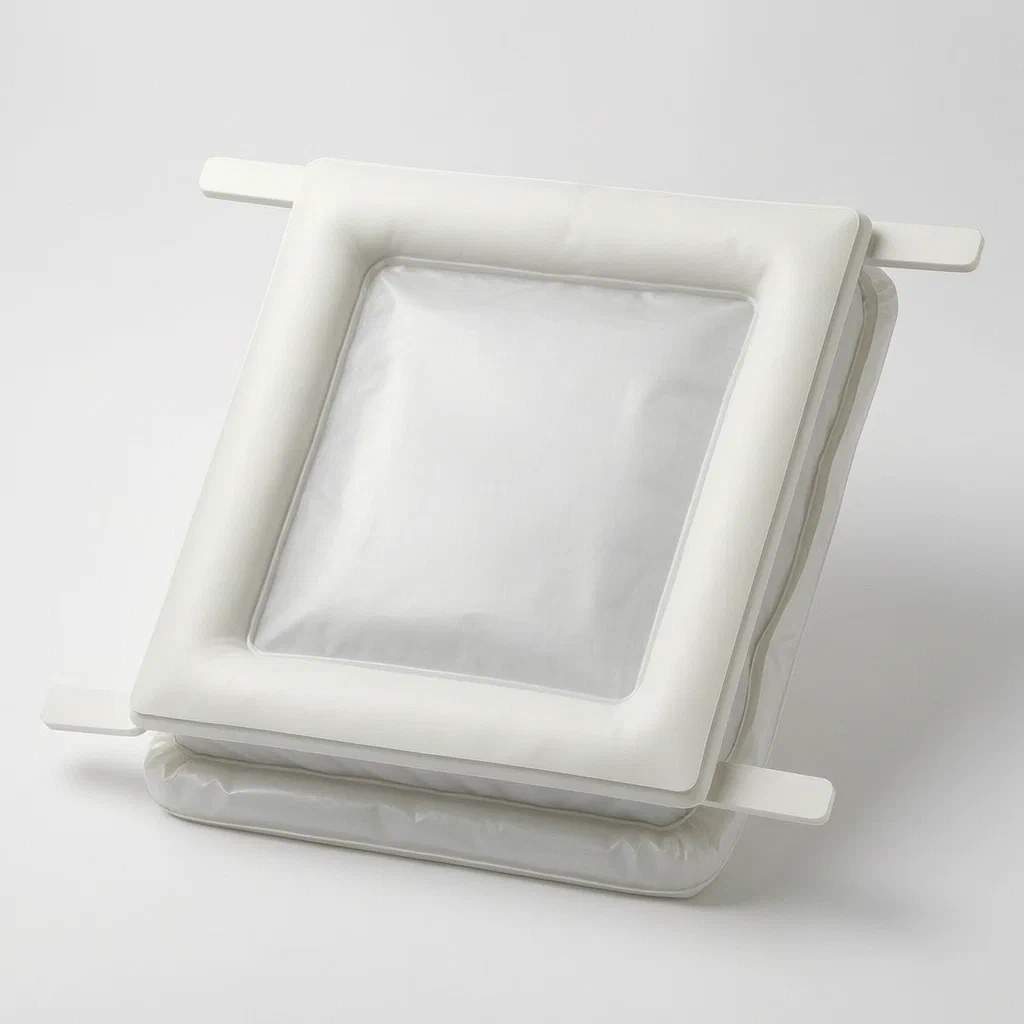
Standard disposable masks often leak air at the nose bridge and cheeks because faces vary in shape. This patent describes a mask with a built-in inflatable bladder seal. By filling the bladder with a controlled amount of gas or liquid, the edge presses gently against the skin, closing gaps without rigid frames. The system uses simple plastic films, keeping weight and cost low while improving the seal on diverse face shapes.
- China utility model - lapsed
- No filings outside China
- Inflatable seal technology
- Plastic film bladders, elastic straps
Splat! What let you down?
💨
Air-Bladder Seal
An internal cavity filled with gas or liquid creates a soft, compressible barrier against the face.
📐
Conforms to Contours
The flexible bladder adapts to uneven facial features like the nose bridge and cheeks automatically.
⚖️
Low Weight & Cost
Uses standard plastic film materials instead of rigid frames or expensive silicone components.
🔗
Integrated Straps
Anti-drawstring bands connect directly to the bladder structure to maintain seal integrity.
Bring this product to market
- ✓ Patent review Patent family and legal status reviewed in the relevant jurisdictions.
- 2 Product brief · now How it works, uses and options written up
- 3 Prototype First samples for buyers to review
- 4 Pilot run Small first batch for launch customers
- 5 Volume production Repeat orders at scale
Buyer interest
– of 100 buyers needed to start prototyping
One click, no sign-up. Each vote is one real visitor, and products with the most interest go to prototyping first.
Build team: no members yet. Need a partner, co-funding or skills to build this? Join and we introduce the team once it forms.
Patent Rights & Team Participation
Before joining a development team, participants should ensure they have the necessary rights or authorization to participate in the project.
Participation is generally appropriate where:
- You own the relevant patent rights or have obtained permission or a license from the rights holder.
- The relevant patent rights have expired or have been legally invalidated in the jurisdictions where the planned activities will take place.
- The planned development, manufacturing, and commercialization activities have been independently assessed and do not infringe applicable patent rights in the relevant jurisdictions.
Important: Being located outside a country where a patent is protected does not automatically exempt you from patent infringement risks. Patent rights may apply based on where development, manufacturing, use, sale, or import activities take place.
IP2M does not grant any patent license or authorization through team participation. Joining a project does not provide permission to use, manufacture, or commercialize patented technology.
The problem
Traditional disposable face masks rely on static folds and wire nose clips to fit the face. However, human faces vary significantly in shape, particularly around the nose bridge and cheeks. Gaps between the flat mask material and the curved face allow unfiltered air to enter and exit, reducing filtration efficiency. Rigid solutions exist but add weight, cost, and discomfort. There is a need for a lightweight, low-cost sealing mechanism that actively closes these gaps without complex hardware.
The solution
- A mask body forms the central filtration layer.
- A main body bladder is positioned along the edges of the mask body. This bladder has an internal cavity.
- The cavity is filled with gas or liquid to a volume smaller than its maximum capacity, allowing it to remain compressible.
- Anti-drawstring straps connect the bladder to the mask body and/or extend outward as head loops. These straps prevent the bladder from stretching excessively during inflation.
- When worn, the inflated bladder presses against the face, filling irregularities and creating a continuous seal.
- Optional hump-shaped bladders can be placed near the nose bridge to provide additional lift and sealing for users with high nasal profiles.
Who it is for
- PPE manufacturers looking to differentiate their disposable mask lines with improved fit and seal performance.
- Healthcare suppliers seeking lightweight alternatives to rigid respirators for general medical use.
- Consumer goods brands entering the hygiene market who want a unique selling point based on comfort and adaptability.
- Industrial safety distributors needing masks that seal well against facial hair or irregular contours without heavy equipment.
How it works
The main parts
| No. | Part | What it does |
|---|---|---|
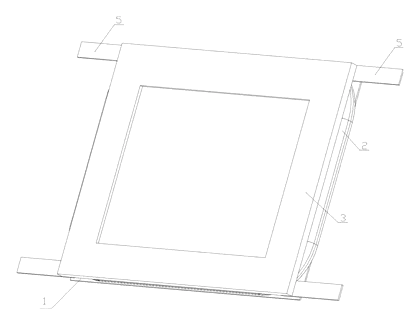
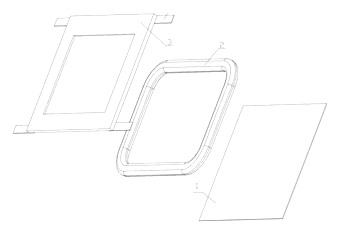
| 1 | Mask Body | The central filter media layer. |
| 2 | Main Body Bladder | Peripheral tube with a cavity; holds gas/liquid to form the seal. |
| 3 | Anti-Drawstring | Straps that limit bladder expansion and serve as head ties. |
| 8 | Hump Bladder | Optional raised sections near the nose bridge for extra clearance. |
| 9 | Iron Clip | Stiffener element sometimes paired with hump bladders. |
| 12 | Inflation Port | Opening used to fill the bladder cavity. |
Operating steps
- Preparation: The bladder is either pre-filled at the factory or inflated by the user via the port before wearing.
- Application: The mask is placed over the nose and mouth. The straps are looped behind the ears or head.
- Compression: As the straps hold the mask in place, the bladder is compressed against the face. Because the cavity volume is less than the maximum possible volume, the fluid/gas shifts to fill gaps.
- Sealing: The bladder conforms to the cheekbones and nose bridge, blocking airflow through side gaps.
- Removal: The bladder can be deflated or discarded if the mask is single-use.
Applications
Medical examination rooms
Doctors and nurses wear these masks for extended periods. The soft bladder reduces pressure points compared to hard plastic seals, improving comfort during long shifts while maintaining a better seal against airborne particles.
Industrial dust protection
Workers in woodworking or mining environments often have facial hair or sweat that breaks traditional mask seals. The compliant bladder adapts to these changes throughout the day, ensuring consistent protection against particulate matter.
Public transport commuting
In crowded subways or buses, passengers seek masks that stay put and don’t slip down. The snug fit provided by the inflated edges helps keep the mask positioned correctly over the nose and chin without constant adjustment.
High-altitude or cold weather use
Cold air can make standard masks stiff and uncomfortable. The air layer inside the bladder provides slight insulation against the face, reducing the chill factor while still filtering out snow or wind-blown debris.
Where it is less suitable
- High-pressure environments: The thin plastic film may not withstand significant external pressure differentials compared to molded rubber respirators.
- Extreme heat sources: Plastic films degrade quickly near open flames or very hot surfaces, unlike specialized heat-resistant materials.
- Heavy-duty chemical handling: Without specific chemical-resistant coatings, standard films may permeate or dissolve when exposed to harsh solvents.
Patent & Production
At a glance
| Patent number | CN213523924U (application CN202020327736) |
| Type | China utility model (实用新型) - protects product shape and structure |
| Original title | Mask sealed by compression of the bag body (一种用囊体压紧来密封的口罩) |
| Patent owner | Shenzhen Nateni Technology Co ltd |
| Inventors | Xiong Changlun |
| Filing date | 2020-03-15 |
| Grant date | 2021-06-25 |
| Status (China) | Lapsed - terminated for non-payment of annual fees (recorded 2024-03-26) |
| Patent family | Public record shows Chinese filings only - no US, European, Japanese, PCT or other filings listed |
| Cited by | 0 later documents |
| Source | Google Patents (search for CN213523924U) |
What the claims cover, in plain language
Claim 1 defines a mask comprising a mask body and a main body bladder. The bladder has an internal cavity and is equipped with an anti-drawstring strap connected to the mask body and/or the bladder itself. The strap extends outward to form a rope or elastic cord for the head. The key feature is the arrangement where the anti-drawstring is placed on both sides of the main body bladder and the mask body.
Dependent claims elaborate on variations:
- Claims 2-3: Describe hump-shaped bladders or protrusions specifically located at the nose bridge area to accommodate higher nasal profiles.
- Claims 4: Details ring-shaped or tire-like configurations for the peripheral bladder.
- Claims 5-7: Specify that the cavity is filled with gas or liquid, with the volume being less than the maximum capacity (often one-third to one-half) to ensure compressibility.
- Claims 11-13: Include optional iron clips for stiffness and inflation ports for filling the cavity.
- Claims 17-19: Describe connection methods such as sewing, bonding, or welding for attaching the bladder to the mask body or straps.
This is a simplified reading for orientation only. The legal scope is defined by the exact claim wording in the official Chinese document.
What this means for US production
This patent was filed in China and has lapsed, so it no longer restricts anyone in China either. The public record shows no US or other foreign counterpart.
Two points to settle early:
- Other patents may exist. Face masks and respiratory protective devices are a densely patented field globally, including many US patents covering inflatable seals, valve systems, and ergonomic fits. Notably, Shenzhen Nateni Technology Co ltd has a related WO application (WO2021151400A1) citing this work, indicating active IP development in this specific niche. A freedom-to-operate (FTO) review is essential before tooling to avoid infringing on existing US utility patents regarding mask sealing mechanisms.
- Material compatibility. The design relies on thin plastic films holding gas/liquid. Selecting films that are safe for skin contact, durable enough to hold pressure, and compatible with sterilization processes (if required) is a critical engineering challenge distinct from the patent landscape.
Customization and manufacturing
What can be customized
| Area | Options |
|---|---|
| Bladder Shape | Continuous ring, segmented rows, or localized humps at the nose bridge. |
| Fill Medium | Air (pre-filled or user-filled) or viscous gel/liquid. |
| Strap Integration | Elastic ear loops, adjustable head ties, or fixed bands. |
| Mask Media | Standard melt-blown layers, activated carbon, or antibacterial coatings. |
| Connection Method | Ultrasonic welding, thermal bonding, or adhesive stitching. |
Things to plan for (US market)
- FDA Registration: While this is a structural device, if marketed for medical use, FDA registration and listing are required. If sold as general consumer goods, labeling must comply with FTC truth-in-advertising rules.
- Biocompatibility: Materials contacting the face should meet ISO 10993 standards for cytotoxicity and sensitization, especially since the bladder sits close to the skin.
- Flammability: CPSC 16 CFR 1610 applies to textile apparel; mask bodies often fall under similar scrutiny depending on material composition.
- Labeling: Clear instructions on inflation/deflation and disposal are necessary to prevent misuse.
How a project runs
- Inquiry - Define target market (medical vs. industrial), size range, and fill type.
- Design - CAD modeling of the bladder geometry and strap attachment points.
- Prototype - Sample production using standard film welding techniques.
- Testing - Fit testing on diverse mannequins and volunteers; leakage rate measurement.
- Production - Automated roll-forming of bladders, ultrasonic welding to mask body, packaging.
Quantities & timeline
Tooling for ultrasonic welders and die-cutting blades is relatively quick. Injection molding is only needed if rigid clips or valves are added. Lead times depend heavily on sourcing certified medical-grade films. Send us your target quantity, material preferences, and intended certification level and we will reply with options.
Production notes
Tooling and process
Likely heat pressing for joining plastic films, with cutting and sewing for the straps. TPU injection molding might be required for valves or clips. Bond strength is typically checked on first articles.
Cost drivers
Fabric grade usually dominates costs; high-barrier films are pricier. Stitch density affects durability. Seal die complexity typically matters more than the film, and the number of sizes increases inventory needs. Packaging adds bulk.
Prototyping path
A sewn first sample typically validates strap tension. 3D-printed or cast components test rigid interfaces. Wear trials check comfort, and fit grading confirms size accuracy before production patterns finalize cutting layouts.
What we would change before tooling
We would likely adjust bladder thickness to balance seal against comfort. Test alternative adhesives if the bond fails. Verify inflation port placement for ease of use. Check strap elasticity limits. Refine the nose bridge contour.
Common failure points
Seam slippage at strap connections is a typical failure. Color may fade from UV exposure. Sealing surface leaks can come from pinholes. Size deviation in film cutting, hardware corrosion if metal clips are used, and edge hardness causing skin irritation are the other points to watch.
Patent drawings
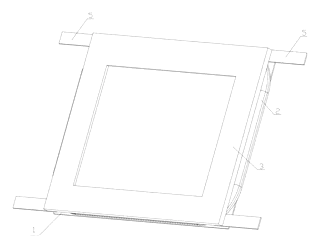
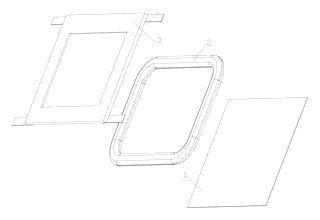
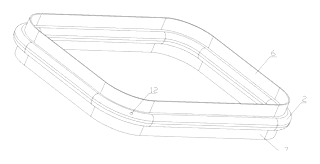
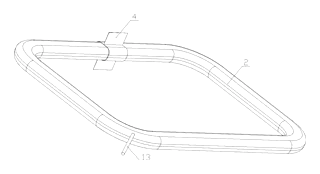
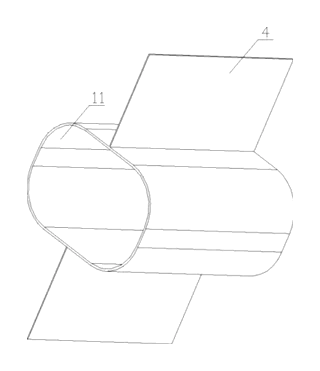
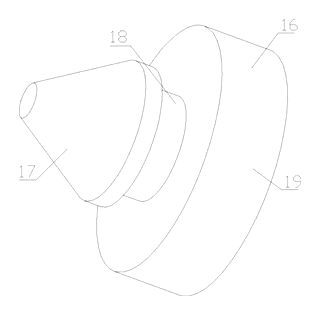
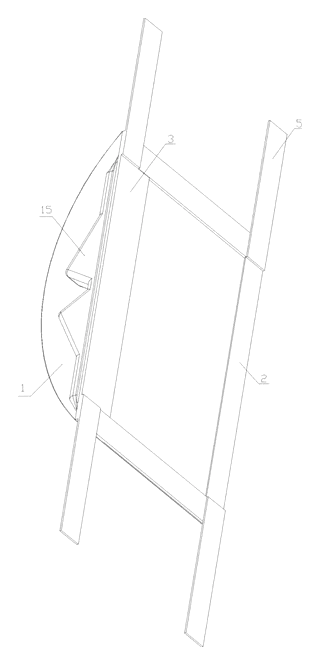
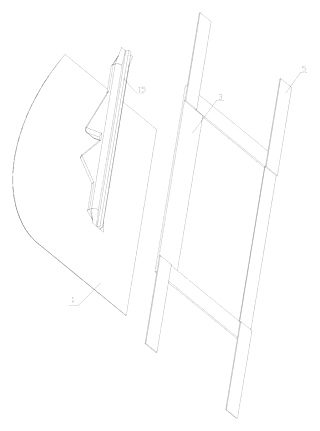
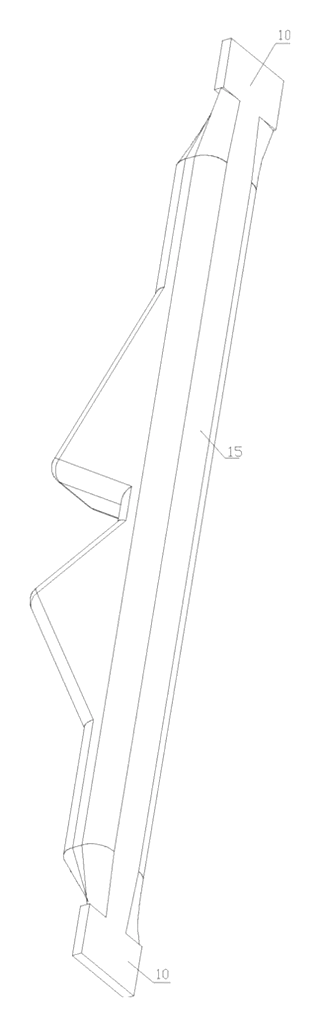
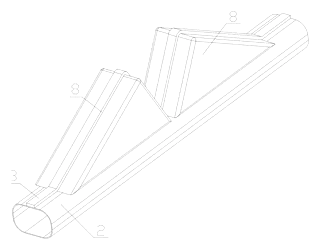
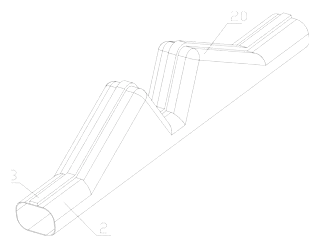
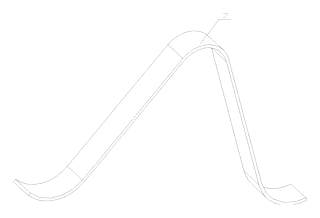
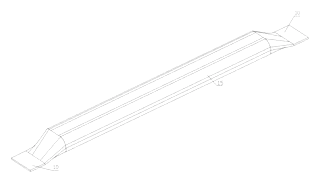
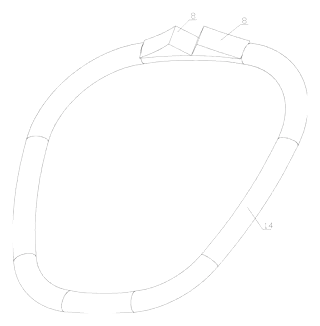
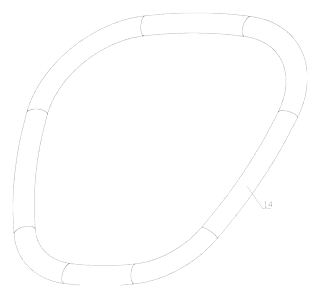
Drawings reproduced from the public patent document for reference.
Frequently asked questions
How does the bladder create a seal?
The bladder is a tube with an internal cavity filled with gas or liquid. Because the fill volume is less than the maximum capacity, the bladder remains compressible. When pressed against the face, the fluid shifts to fill gaps between the mask and the skin, adapting to curves like the nose and cheeks.
Is it reusable?
The patent describes it primarily as a disposable item (“the mask is disposable”). However, the bladder structure could theoretically be reused if the film is durable enough and cleaned properly. Most designs assume single-use to maintain hygiene and low cost.
What materials are used?
The patent mentions plastic films for the bladder and standard mask media for the body. It also references silica gel or other soft materials as alternatives, though plastic film is preferred for cost. Metal clips may be used for structural support at the nose bridge.
Do I need to inflate it myself?
It depends on the version. Some are pre-filled at the factory. Others include an inflation port (claim 12) allowing the user to blow into the mask to adjust firmness. The patent notes that leaving it partially deflated can help with storage volume.
Will it fit children?
The patent focuses on adult structures but mentions customizable sizes. Child versions would require scaled-down bladders and shorter straps. Fit testing is crucial because small faces have different gap geometries.
Does it interfere with glasses?
The patent includes hump-shaped bladders near the nose bridge (claim 2). These can lift the mask slightly away from the eyes, potentially reducing fogging compared to flat-nose masks, though specific anti-fog vents are not detailed in this patent.
Can this design be made and sold in the US?
The patent was filed in China and has lapsed, and the public record shows no US counterpart, so it does not restrict the design in the US or in China. However, face masks are subject to numerous other patents and regulatory standards. We recommend a freedom-to-operate check and FDA consultation before volume production.
Are you affiliated with the patent owner?
No. IP2M is an independent design and manufacturing service working from the public patent document.
Request a quote
Click Request a Quote below to see our email address - copy it, or open your email app with a ready-made message. Please mention patent CN213523924U in the subject.
Helpful details to include:
- Your company and channel (PPE supplier, medical distributor, consumer brand)
- Target market (adult, child, industrial, medical)
- Material preferences (film type, strap style)
- Inflation method (pre-filled, manual port, none)
- Estimated quantity and target price
- Timeline - when you would like samples and the first shipment
You can also reach us at (332) 203-9997.
Page editor: Emily Zhang, Product Editor · IP2M
Last updated November 4, 2026. If something on this page looks wrong, email [email protected] and we will check it against the patent.
Interested in building this?
Tell us your target market, quantity and timeline. We reply with options for prototyping, small-batch runs or volume production.
Send your inquiry to
Please put CN213523924U in the subject line and tell us your company, country, estimated quantity and timeline.
Prefer to talk? Call (332) 203-9997.
More product-ready patents
All Apparel & Accessories patents →
Apparel & Accessories
Stacked Zipper with Teeth That Mesh Top-to-Bottom
Zipper whose two identical tooth rows mesh on top of each other, closed by a simplified slider.
Patent CN205795062U
Apparel & Accessories
Impact-Resistant Glove with a 3D-Printed Lattice Layer
Work glove with a 3D-printed lattice impact layer, TPU knuckle guards and a light mounting area.
Patent CN213785583U
Apparel & Accessories
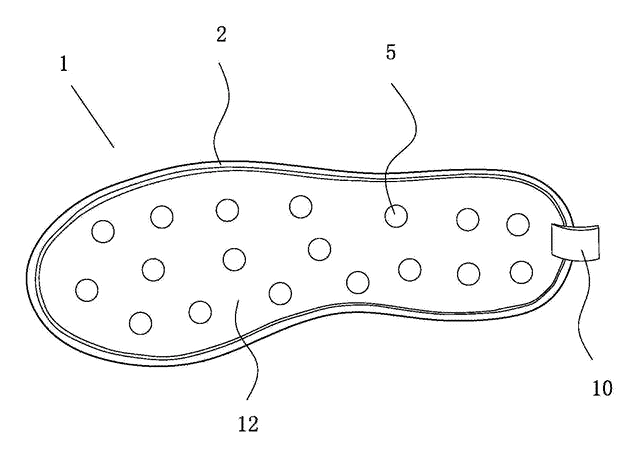
Massage Insole with Spring-Back Silicone Nubs and a Removable Top Layer
Layered insole: silicone nubs rise through a removable perforated top sheet and sink under each step.
Patent CN208286505U
Apparel & Accessories
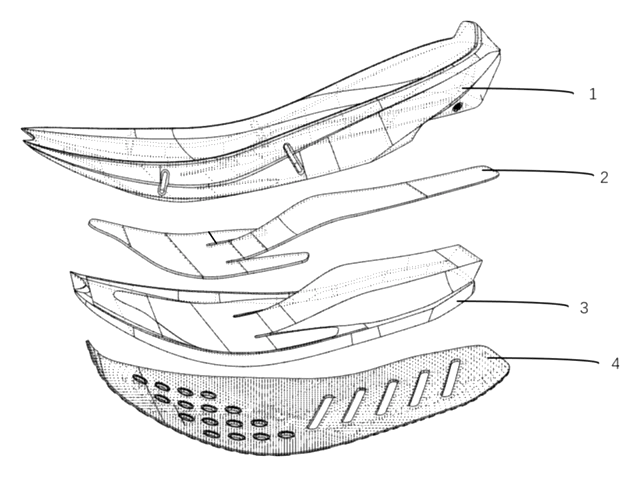
Heel-Less Carbon Plate Running Shoe Sole for Forefoot Strikers
Running sole for forefoot strikers: no ground-touching heel, winged carbon plate between two midsoles.
Patent CN216723354U
Apparel & Accessories
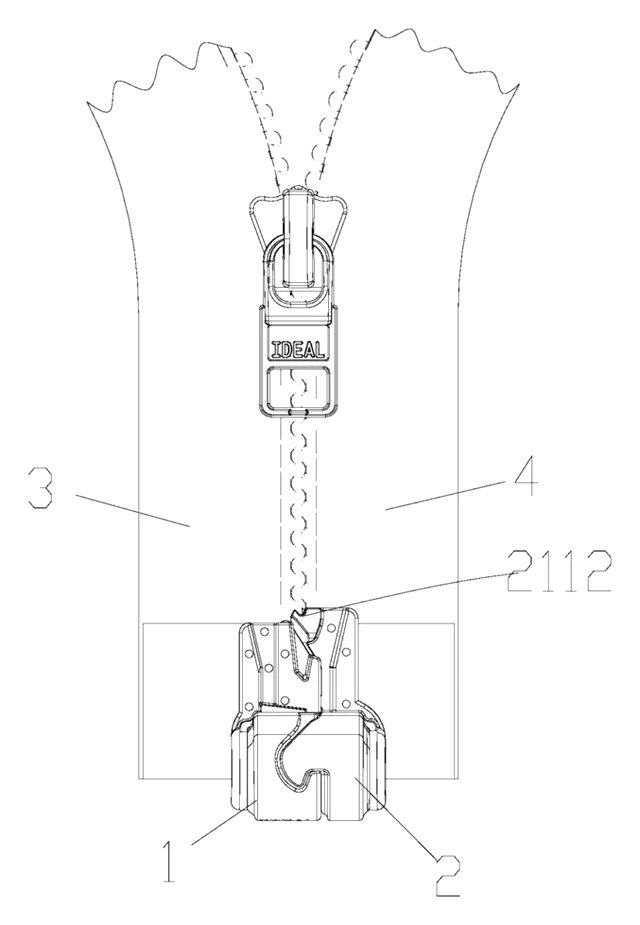
Waterproof Magnetic Zipper Stop That Snaps the Two Halves Together
Separating-zipper stop with sealed magnets: pin and box snap together one-handed, safe in rain and wash.
Patent CN215075936U
Apparel & Accessories
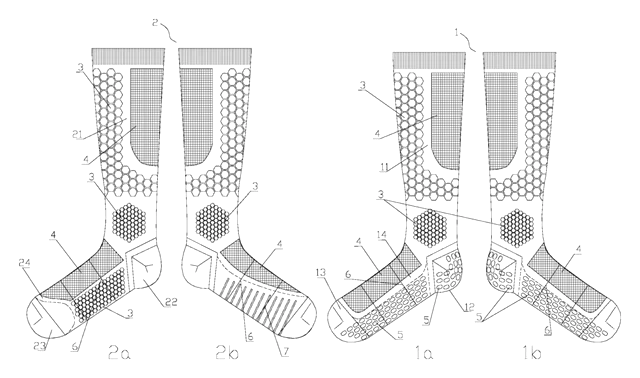
Left-Right Specific Soccer Socks: Grip for the Plant Foot, Touch Pads for the Kicking Foot
Soccer socks knitted as a left-right pair: grip zones for the plant foot, pads for the kicking foot.
Patent CN212728807U
Browse by category
- Apparel & Accessories (38)
- Baby & Kids (26)
- Bags & Luggage (15)
- Bath & Personal Care (26)
- Car Accessories (21)
- Furniture, Bedding & Storage (20)
- Garden & Outdoor (28)
- Health & Wellness (12)
- Home, Kitchen & Cleaning (43)
- Lighting (20)
- Packaging & Containers (10)
- Pet Products (9)
- Phone & Camera Accessories (8)
- Retail Display (21)
- School, Office & Art (30)
- Sports & Recreation (37)
- Tools & Workshop (46)
- Toys & Games (19)
This page is based on the public patent document CN213523924U, assigned to Shenzhen Nateni Technology Co ltd. IP2M is an independent manufacturing service and is not affiliated with, endorsed by or licensed by the patent owner. Images marked as concept renderings are illustrations, not photos of an existing product. Patent status information is provided for reference only and is not legal advice; confirm freedom to operate for your market before production. Full disclaimer.