
Patent CN214369629U
Updated November 7, 2026Foldable LED Plant Light with Detachable Bar Assemblies
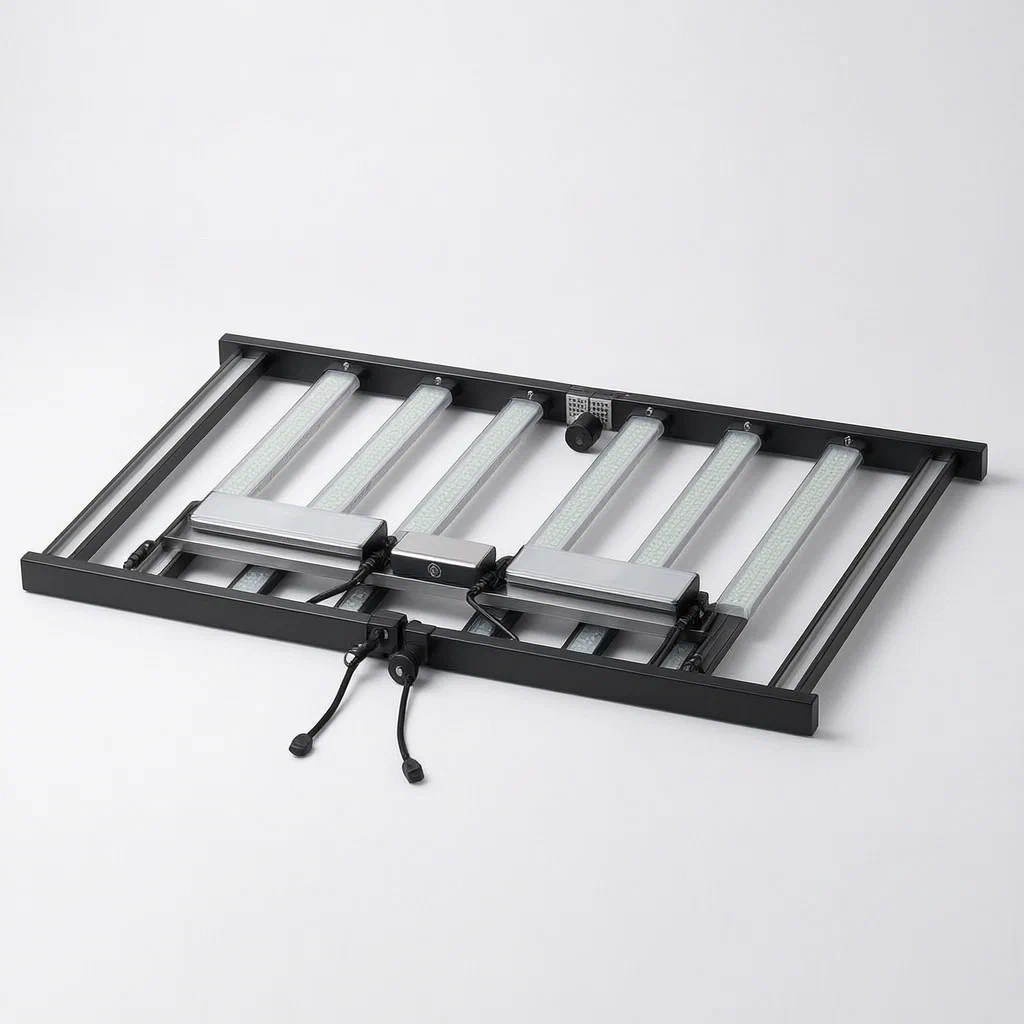
Traditional grow lights are bulky, hard to store, and difficult to assemble on-site. This design solves those issues by using a folding mechanism and modular components. Two lamp bodies connect via rotatable parts, allowing them to swing open into a single long line for coverage or fold back-to-back for shipping. Inside each body, LED strips sit on heat dissipation plates within hollow aluminum-style frames. The frames use snap-on covers and end caps. Hanging is handled by four telescopic ropes anchored to the corners, forming a stable V-shape when unfolded. Power supplies mount directly onto the outer frames, keeping wiring short and hidden.
- China utility model - lapsed
- No filings outside China
- LED horticulture lighting
- Aluminum extrusion, injection molding, potting
Splat! What let you down?
📐
Folding Design
Two bodies rotate around hinges to form a straight line or fold flat for storage.
🔧
Modular Bars
LED strips on heat sinks fit into frames; bars are detachable for service.
🪝
Telescopic Hangers
Four adjustable ropes create a stable suspension angle greater than 90 degrees.
⚡
Integrated Control
Power modules mount on frames; controller adjusts brightness per section.
Bring this product to market
- ✓ Patent review Patent family and legal status reviewed in the relevant jurisdictions.
- 2 Product brief · now How it works, uses and options written up
- 3 Prototype First samples for buyers to review
- 4 Pilot run Small first batch for launch customers
- 5 Volume production Repeat orders at scale
Buyer interest
– of 100 buyers needed to start prototyping
One click, no sign-up. Each vote is one real visitor, and products with the most interest go to prototyping first.
Build team: no members yet. Need a partner, co-funding or skills to build this? Join and we introduce the team once it forms.
Patent Rights & Team Participation
Before joining a development team, participants should ensure they have the necessary rights or authorization to participate in the project.
Participation is generally appropriate where:
- You own the relevant patent rights or have obtained permission or a license from the rights holder.
- The relevant patent rights have expired or have been legally invalidated in the jurisdictions where the planned activities will take place.
- The planned development, manufacturing, and commercialization activities have been independently assessed and do not infringe applicable patent rights in the relevant jurisdictions.
Important: Being located outside a country where a patent is protected does not automatically exempt you from patent infringement risks. Patent rights may apply based on where development, manufacturing, use, sale, or import activities take place.
IP2M does not grant any patent license or authorization through team participation. Joining a project does not provide permission to use, manufacture, or commercialize patented technology.
The problem
Grow lights often come as fixed units that are too large to ship efficiently or too awkward to install in tight spaces like greenhouses or indoor shelves. Assembly usually requires tools and complex wiring, which slows down deployment. Furthermore, if one LED strip fails, replacing it can mean dismantling the whole fixture. Users need a light that packs small, sets up quickly without heavy labor, and allows individual component replacement. Standard rigid fixtures also lack flexibility in how they hang; they typically require a single point attachment, which can lead to tipping or uneven illumination angles.
The solution
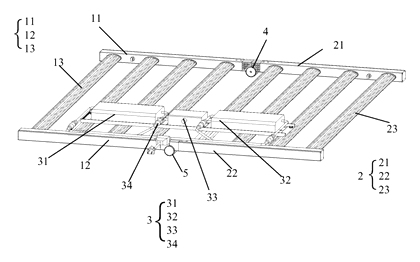
The patent describes a plant lamp composed of two distinct lamp bodies: a first lamp body and a second lamp body. Each body features a frame structure made of parallel side rails (e.g., first and second borders). Between these rails, multiple light bar assemblies are installed. These assemblies consist of an LED strip mounted on a heat dissipation plate, capped at both ends. Crucially, these bars are detachably connected, meaning they can be slid out or snapped out for repair.
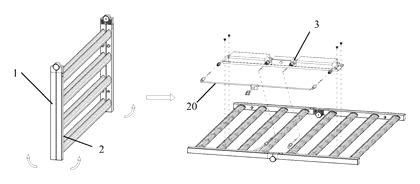
The two bodies are joined by rotatable parts (hinges) at corresponding ends. This allows the fixture to operate in two modes:
- Expanded Mode: The bodies align in a straight line, creating a long, continuous light source suitable for wide planting beds.
- Folded Mode: The bodies fold against each other, reducing the footprint significantly for packaging and storage.
Suspension is managed by telescopic hanging ropes attached to the four corners of the expanded frame. When unfolded, the ropes from adjacent corners meet at a central hook or ceiling point, forming a V-shape with an angle between 90° and 180°, ensuring stability. The power control module includes separate power supplies and a controller, mounted directly onto the outer frames, eliminating long dangling cables.
Who it is for
- Greenhouse Equipment Suppliers: Needing lightweight, space-saving lighting solutions that can be shipped in bulk boxes rather than assembled crates.
- Indoor Farming Startups: Requiring quick-install systems where staff can swap failed LED bars without specialized technicians or downtime.
- Home Garden Retailers: Selling DIY kits to consumers who value easy assembly and the ability to store lights away during off-seasons.
- Vertical Farming Integrators: Looking for modular light sources that can be adjusted in length or intensity via a centralized controller.
How it works
The main parts
| No. | Part | What it does |
|---|---|---|
| Body 1/2 | Lamp Bodies | Two identical halves that fold together. |
| Frames | Side Borders | Hollow profiles holding the LED bars; include top covers and end caps. |
| Light Bars | LED Assemblies | Strips with heat sinks, detachable from the frame. |
| Hinges | Rotatable Parts | Connect Body 1 and Body 2, allowing 180° rotation. |
| Ropes | Telescopic Hangers | Adjustable cords attached to all four corners. |
| Control | Power Module | Brackets holding PSUs and controller on the outer frame. |
Operating Steps
- Unfold: Pull the two bodies apart until they lie flat in a single plane. The hinges lock them in position.
- Hang: Attach the four telescopic ropes to the ceiling hooks. Adjust the rope lengths so the light hangs level. The geometry ensures a stable V-shape distribution.
- Power On: Connect the mains input to the central control module. Use the controller to set brightness levels for the left and right sections independently or together.
- Maintenance: If an LED bar fails, remove the top cover of the frame (if applicable) or slide the specific bar assembly out from the side rails. Replace with a new pre-assembled bar.
Applications
Greenhouse Supplemental Lighting
In commercial greenhouses, plants are often arranged in long rows. This light unfolds to span several meters, providing uniform coverage. Its folding nature means suppliers can stack many units on pallets, reducing freight costs compared to rigid fixtures.
Indoor Grow Tents
Space inside grow tents is limited. Users can fold the light to insert it through narrow doorways, then unfold it once inside. The telescopic ropes allow precise height adjustment to match plant growth stages, preventing leaf burn while maximizing canopy penetration.
Vertical Shelving Units
For vertical farming racks, lights need to be slim and low-profile. The hollow frame design keeps the unit thin. Because the bars are detachable, cleaning dust off the LEDs is easier—simply pull the bars out, wipe them, and reinsert.
Home Hydroponic Systems
Home growers often lack professional installation skills. The modular design reduces assembly complexity. The integrated power bracket hides wires, making the setup look tidy and safe in living spaces.
Where it is less suitable
- High-Humidity Mist Zones: While the electronics are potted, prolonged exposure to direct water mist may exceed the protection rating unless specifically sealed beyond the patent’s description.
- Extreme Wind Loads: Designed primarily for indoor or sheltered greenhouse use; the telescopic ropes may not provide sufficient stability for outdoor high-wind environments without additional anchoring.
Patent & Production
At a glance
| Patent number | CN214369629U (application CN202120673433) |
| Type | China utility model (实用新型) - protects product shape and structure |
| Original title | Easily detachable and foldable plant lamp (一种易拆装可折叠的植物灯) |
| Patent owner | Shenzhen Weimer Technology Co., Ltd. |
| Inventors | Xiao Youyang, Pan Qiliang, Zhang Qingyun, Yang Chao, Wang Jinhui |
| Filing date | 2021-04-01 |
| Grant date | 2021-10-08 |
| Status (China) | Lapsed - terminated for non-payment of annual fees (recorded 2023-03-17) |
| Patent family | Public record shows Chinese filings only - no US, European, Japanese, PCT or other filings listed |
| Cited by | 1 later document |
| Source | Google Patents (search for CN214369629U) |
What the claims cover, in plain language
Claim 1 defines a plant lamp with two bodies (First and Second), each having parallel frame borders and multiple detachable light bar assemblies between them. The bodies are connected by rotatable parts, allowing folding or expansion. A power control module connects to both. Claim 2 specifies the frame structure: a hollow body with an inner opening, removable end caps, and a removable top cover. Claim 3 details the alignment: when unfolded, the frames form a straight line. Claim 4 describes the light bar assembly: LED strip + heat sink + plugs at ends. Bars are wired in parallel. Claims 5-7 introduce the suspension system: telescopic ropes attached to the four corners. When unfolded, the angle between opposing ropes is between 90° and 180°. Claims 8-10 describe the layout: equal spacing of bars, and the mounting of power supplies/controllers on the outer frames for independent brightness control.
This is a simplified reading for orientation only. The legal scope is defined by the exact claim wording in the official Chinese document.
What this means for US production
This patent was filed in China and has lapsed due to non-payment of fees. The public record shows no US or other foreign counterpart. Consequently, the specific structural arrangement described here is not currently protected by active patents in China or elsewhere based on this filing.
Two points to settle early:
- Other patents may exist. LED grow light structures, folding mechanisms, and thermal management designs are heavily patented globally. Companies like Philips, Osram, and various US startups hold broad patents on modular lighting and suspension systems. A freedom-to-operate (FTO) review is essential before tooling to ensure no infringement of active US patents regarding the hinge mechanism or electrical integration.
- Safety Standards. Electrical products sold in the US must comply with strict safety codes. The folding joint and cable routing must be designed to prevent pinch hazards and wire fatigue over thousands of cycles.
Customization and manufacturing
What can be customized
| Area | Options |
|---|---|
| Length | Total span depends on number of bars; custom frame extrusions available. |
| Spectrum | Full spectrum, red/blue mix, or far-red enhanced LEDs. |
| Heat Sink | Aluminum profile size affects weight and cooling capacity. |
| Controls | Dimmable drivers, smart Wi-Fi controllers, or simple manual knobs. |
| Hanging System | Rope material (steel vs. nylon), adjuster type (ratchet vs. friction). |
| Finish | Powder-coated black, white, or silver for reflectivity/aesthetics. |
Things to plan for (US market)
- UL 153 / UL 8750: Standard for portable lamps and LED equipment. Requires rigorous testing of insulation, fire resistance, and electrical shock protection.
- FCC Part 15: Electromagnetic interference certification for digital controls and drivers.
- Energy Star: Optional but beneficial for commercial buyers seeking efficiency rebates.
- California Prop 65: Warning labels required if certain chemicals (e.g., in plastics or solder) are present above threshold limits.
How a project runs
- Inquiry - Define target wattage, spectrum, and physical dimensions.
- Design - CAD modeling of the hinge, frame extrusion, and PCB layout.
- Prototype - 3D printed housings, sample aluminum extrusions, initial LED stringing.
- Pilot Run - Small batch assembly, drop tests, thermal imaging, and UL preliminary checks.
- Production - Extrusion cutting, CNC machining of joints, injection molding of caps, final assembly and aging tests.
Quantities & timeline
Tooling for aluminum extrusion dies takes 4-6 weeks. Injection molds for end caps and connectors take 6-8 weeks. Electronics prototyping is faster but requires safety certification time. Send us your target wattage, spectrum requirements, quantity, and desired certifications and we will reply with options.
Patent drawings
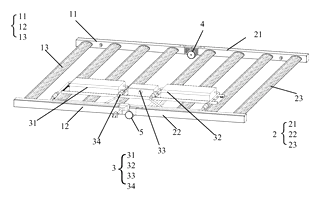
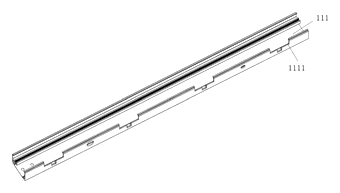
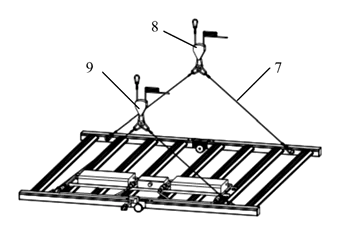
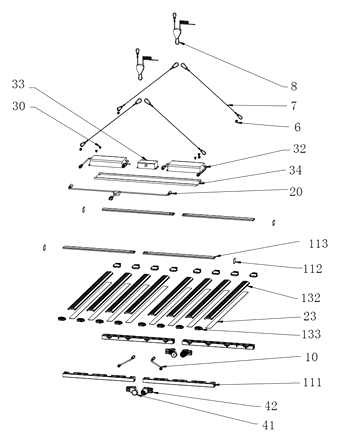
Drawings reproduced from the public patent document for reference.
Production notes
Tooling and process
The primary structural components rely on aluminum extrusion for the frame profiles, requiring custom dies. End caps and internal brackets are likely produced via UV-stabilized injection molding to withstand greenhouse conditions. Electrical connections involve screws for secure grounding and snap-fit mechanisms for the detachable light bars to facilitate user serviceability.
Cost drivers
Key cost factors include the grade of UV grade plastic used for external parts to prevent degradation. Corrosion protection treatments on the aluminum and steel hardware add processing steps. Packaging volume is significant due to the folding design, though it saves freight compared to rigid units. High-performance heat path and thermal clearance designs may increase the cost of the heat sink profiles.
Prototyping path
Initial prototypes should use 3D-printed parts for the hinge and cap geometries to verify fit. Coated tube samples or short extrusion pieces can test the sliding mechanism for the light bars. A functional sample with actual LEDs is needed to validate thermal performance and electrical safety before moving to full tooling.
What we would change before tooling
Before committing to expensive dies, we would recommend optimizing the wall thickness and joint design of the injection molded caps to reduce material usage while maintaining strength. Testing different seam failure resistant materials for the hanging ropes could improve longevity. Ensuring the water ingress in electronics is mitigated by better gasket design in the power module housing is critical.
Common failure points
Potential issues include UV degradation and color fade of exposed plastics over time. Weld rust might occur if any steel brackets are not properly coated. Wind load tipping is a risk if the hanging angle is not correctly calculated for the center of gravity. Finally, heat path inefficiencies could shorten LED lifespan if the contact between the strip and heat sink is inconsistent.
Frequently asked questions
How do I assemble this light?
The unit comes in two folded sections. You simply pull them apart until they click into a straight line. Then, you attach the four telescopic ropes to the corners and hang the fixture. The power module mounts automatically or snaps into place on the frame, minimizing loose cables.
Can I replace just one broken LED strip?
Yes. The patent describes “detachable” light bar assemblies. Each strip sits on its own heat sink and slides or snaps into the frame. If one fails, you remove the end cap or slide the specific bar out and replace it, without needing to disassemble the entire fixture.
Is it safe for wet environments?
The design includes outdoor electronics potting for the driver and controller modules to resist moisture. However, standard IP ratings apply. It is suitable for greenhouses with high humidity but should not be submerged or exposed to direct heavy rain unless specified with a higher IP rating in custom orders.
How much energy does it save compared to old lights?
While the patent focuses on structure, the use of modern LED strips on dedicated heat sinks typically offers higher efficacy than older fluorescent or HID systems. Specific lumens-per-watt numbers depend on the chosen LED chips and drivers, which are selected during the customization phase.
Does the folding mechanism wear out?
The rotatable parts are designed for repeated folding. To maximize life, we use durable materials for the hinge interface. In most designs, the pivot points are reinforced to handle the weight of the two sections. Regular inspection of the screw tension is recommended.
Can I control the brightness of each side separately?
Yes. Claim 9 and 10 describe a controller that can manage the first and second lamp bodies independently. This allows you to dim one side if it’s closer to sensitive plants or boost the other side for aggressive growth phases.
Can this design be made and sold in the US?
The patent was filed in China and has lapsed due to non-payment of fees. The public record shows no US counterpart, so this specific patent does not restrict manufacturing or sales in the US. However, other active US patents may cover similar folding or LED mounting technologies. We strongly recommend a freedom-to-operate (FTO) review before mass production.
Are you affiliated with the patent owner?
No. IP2M is an independent design and manufacturing service working from the public patent document.
Request a quote
Click Request a Quote below to see our email address - copy it, or open your email app with a ready-made message. Please mention patent CN214369629U in the subject.
Helpful details to include:
- Your company and channel (greenhouse supplier, indoor farm integrator, retail brand)
- Target Length and total wattage
- Spectrum preferences (full spectrum, red/blue, etc.)
- Control Type (manual, digital, smart app)
- Estimated quantity and target price
- Timeline - when you would like samples and the first shipment
You can also reach us at (332) 203-9997.
Page editor: Daniel Chen, Product Research Editor · IP2M
Last updated November 7, 2026. If something on this page looks wrong, email [email protected] and we will check it against the patent.
Interested in building this?
Tell us your target market, quantity and timeline. We reply with options for prototyping, small-batch runs or volume production.
Send your inquiry to
Please put CN214369629U in the subject line and tell us your company, country, estimated quantity and timeline.
Prefer to talk? Call (332) 203-9997.
More product-ready patents
All Garden & Outdoor patents →
Garden & Outdoor
2-in-1 Parent & Child Umbrella
Full-size umbrella with a nested smaller umbrella on top - a rotating decorative layer that detaches into a kid-size umbrella.
Patent CN205611962U
Garden & Outdoor
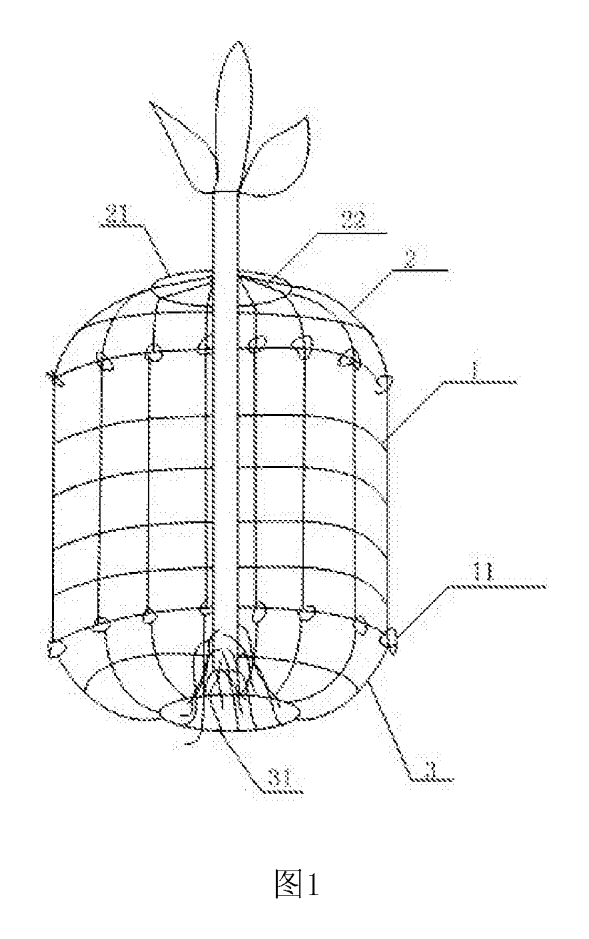
Wire-Mesh Tree Root & Trunk Guard Against Rodents
Three-part wire-mesh guard that protects the roots and lower trunk of young trees from burrowing and gnawing animals.
Patent CN206808261U
Garden & Outdoor
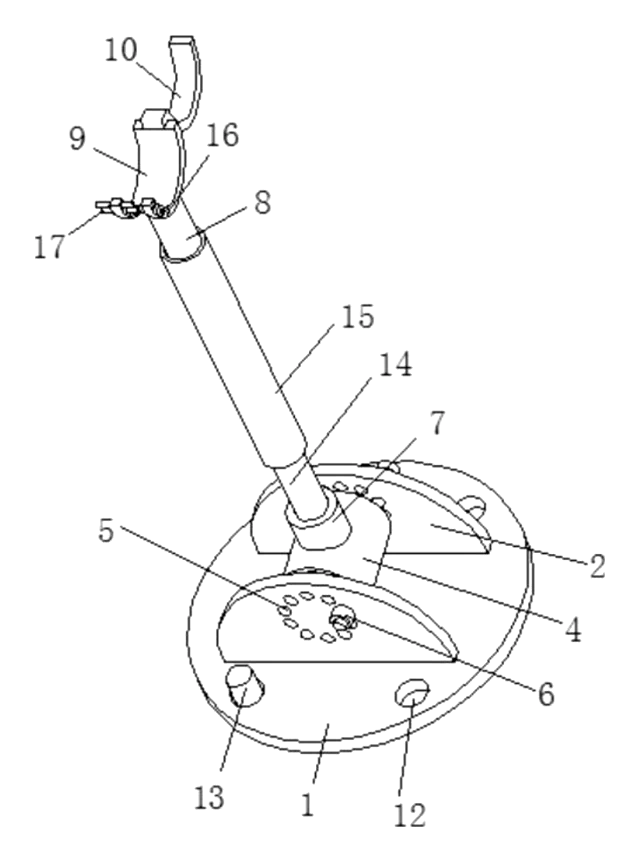
Adjustable-Angle Tree Support Prop
Tree prop with a pinned base, angle-locking hinge, twist-adjust tube and a locking trunk ring.
Patent CN208370491U
Garden & Outdoor
Self-Renewing Glue-Roller Mosquito Trap
UV insect trap with a glue roller that re-coats itself and scrapes the catch into a tray - no glue boards.
Patent CN217038569U
Garden & Outdoor
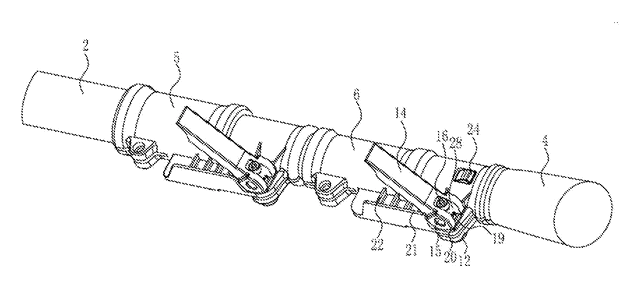
Cam-Lock Telescopic Pole for Garden Power Tools
Telescopic pole for garden power tools with cam-lever locks and a spring-button, tear-drop head socket.
Patent CN205812889U
Garden & Outdoor
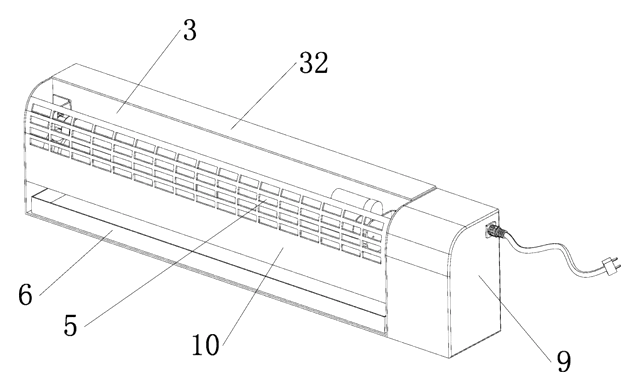
Mosquito Fan That Listens for Mosquitoes Before It Sprays
Fan with a scanning microphone dish that mists repellent only when it hears mosquitoes.
Patent CN208708542U
Browse by category
- Apparel & Accessories (49)
- Baby & Kids (29)
- Bags & Luggage (17)
- Bath & Personal Care (32)
- Car Accessories (25)
- Furniture, Bedding & Storage (25)
- Garden & Outdoor (34)
- Health & Wellness (14)
- Home, Kitchen & Cleaning (51)
- Lighting (23)
- Packaging & Containers (12)
- Pet Products (12)
- Phone & Camera Accessories (9)
- Retail Display (25)
- School, Office & Art (37)
- Sports & Recreation (47)
- Tools & Workshop (55)
- Toys & Games (23)
This page is based on the public patent document CN214369629U, assigned to Shenzhen Weimer Technology Co., Ltd.. IP2M is an independent manufacturing service and is not affiliated with, endorsed by or licensed by the patent owner. Images marked as concept renderings are illustrations, not photos of an existing product. Patent status information is provided for reference only and is not legal advice; confirm freedom to operate for your market before production. Full disclaimer.