At a glance
| Patent number | CN215077006U (application CN202121246326) |
| Type | China utility model (实用新型) - protects product shape and structure |
| Original title | Hardness Adjustable Latex Sponge Pad (一种硬度可调节型乳胶海绵垫) |
| Patent owner | Dongguan Yaxin Polymer Materials Co., Ltd. |
| Inventors | Xu Ya |
| Filing date | 2021-06-04 |
| Grant date | 2021-12-10 |
| Status (China) | Lapsed - terminated for non-payment of annual fees (recorded 2025-05-30) |
| Patent family | Chinese filings only - no US, European, Japanese, PCT or other filings listed |
| Cited by | 0 later documents |
| Source | Google Patents (search for CN215077006U) |
What the claims cover, in plain language
Claim 1 defines a latex foam-rubber cushion comprising a body (1) with sequential inner layers: sweat-absorbing (2), waterproof (3), flame-retardant (4), fire-proof (5), insect-repelling (6), and base (7). A keel (8) supports a mechanism of first/second pressing sheets/blocks (9-12) connected by springs (16). A movable groove (13) houses a support block (14) driven by a connecting rod (15), internal thread sleeve (17), external thread rod (18), worm (19), and adjusting knob (20). Rotating the knob moves the block to alter the compression resistance of the pressing blocks, thus adjusting hardness.
Claim 2 specifies that connecting seats (21) and a rotating shaft (22) facilitate the movement of the pressing blocks. Claim 3 states there are four springs (16) arranged in a rectangular position. Claim 4 details that the flame-retardant layer (4) is filled with flame-retardant fabrics. Claim 5 notes that mosquito repellent incense grass bags are fixed inside the insect-repelling layer (6).
This is a simplified reading for orientation only. The legal scope is defined by the exact claim wording in the official Chinese document.
What this means for US production
This patent was filed only in China and has lapsed, so it no longer restricts anyone in China either. It has no US or other foreign counterpart.
Two points to settle early:
- Other patents may exist. Adjustable furniture mechanisms and specialized foam composites are active fields in the US. A freedom-to-operate (FTO) review is recommended to check for existing US patents covering similar worm-gear adjustments in cushions or specific layered material constructions.
- Material Compliance. The claims specify functional layers like flame retardants and insect repellents. These materials must be sourced carefully to meet US regulatory standards for flammability and chemical safety.
Customization and manufacturing
What can be customized
| Area | Options |
|---|---|
| Pad Dimensions | Length, width, and total thickness based on application. |
| Layer Materials | Type of latex, fabric blends for waterproofing, specific flame-retardant agents. |
| Mechanism Ratio | Thread pitch and lever arm length to fine-tune the effort needed to turn the knob. |
| Knob Design | Material (plastic/metal), grip texture, and locking feature. |
| Repellent Agents | Choice of natural vs. synthetic insect-repelling materials within the allowed layer. |
Things to plan for (US market)
- CPSC 16 CFR 1633 / 1632 - Flammability standards for upholstered furniture. The flame-retardant and fire-proof layers must pass these tests.
- EPA Registration - If the insect-repelling layer contains pesticides (e.g., treated fabrics or chemicals), EPA registration requirements apply. Natural alternatives like cedar or specific herbs may bypass some restrictions but still need labeling compliance.
- Proposition 65 (California) - Warning labels may be required if certain flame retardants or latex additives are present above safe harbor levels.
- ASTM D6866 - For verifying bio-based content if marketing the latex component as eco-friendly.
How a project runs
- Inquiry - Define target dimensions, desired firmness range, and specific layer requirements.
- Design - CAD modeling of the keel and gear mechanism; selection of compliant materials for layers.
- Prototype - 3D print mechanism parts; assemble sample pads with test materials.
- Pilot Run - Small batch production; conduct flammability and durability testing.
- Production - Injection molding for plastic parts; cutting and laminating of foam/fabric layers; assembly.
Quantities & timeline
Tooling for the injection-molded mechanism parts (knobs, gears, blocks) takes 4-6 weeks. Laminated layer production depends on material sourcing lead times. Testing for flammability and chemical compliance can take 2-4 weeks. Send us your dimensions, target firmness range, material preferences, quantity and target price and we will reply with options.
Patent drawings
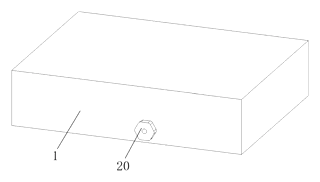
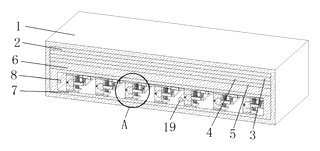
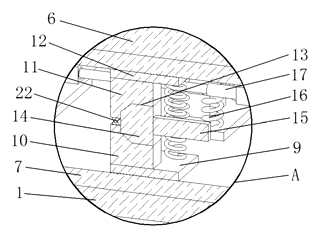
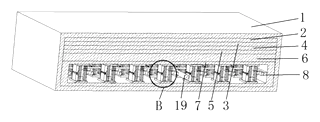
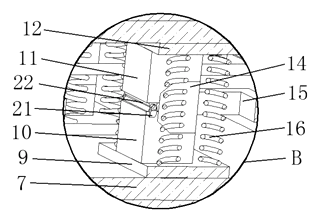
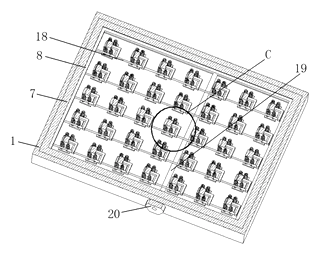
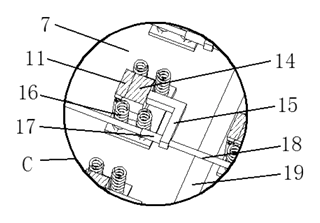
Drawings reproduced from the public patent document for reference.