
Patent CN215270895U
Updated November 6, 2026Carbon Fiber Insole Plate with Zoned Thickness and Toe Split
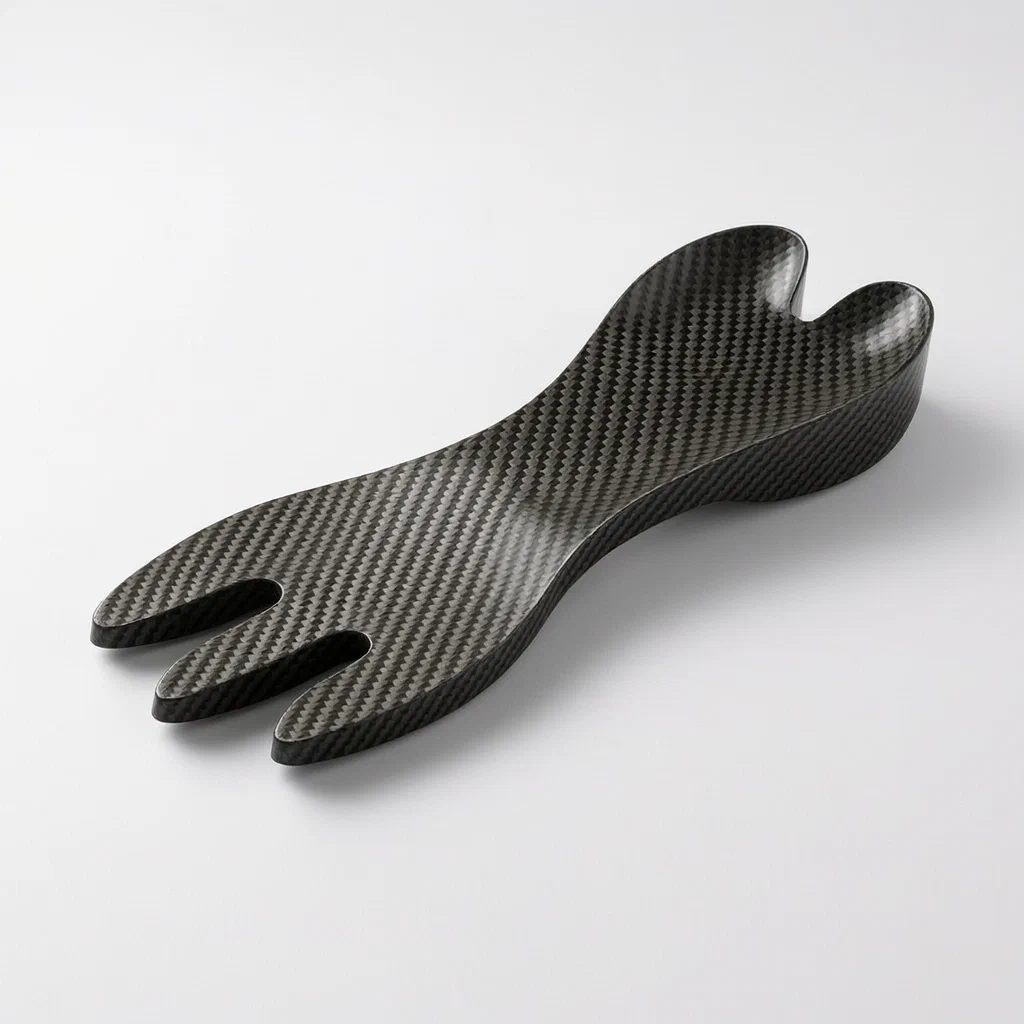
Standard full-length carbon plates often feel too stiff under the toes, causing discomfort or inefficient energy transfer during the final phase of a stride. This design addresses that by splitting the function zones: a highly elastic, thin forefoot with cut-outs for toe articulation, paired with a thick, stable rear foot. The result is a plate that guides energy forward without locking the toes down, reducing material usage in the arch area while keeping the heel firm.
- China utility model - active
- No filings outside China
- Running shoe inserts
- Variable thickness carbon fiber
Splat! What let you down?
🦶
Toe Articulation
Two front notches create three flexible finger zones, allowing natural toe bending.
⚖️
Dual Density
Thinner, elastic forefoot contrasts with thicker, rigid rear for targeted support.
📏
Precise Transition
Vertical step located about 8-10 mm behind the metatarsal heads to align with foot anatomy.
🪶
Weight Saving
Narrowed waist structure reduces material use in the arch while keeping stability.
Bring this product to market
- ✓ Patent review Patent family and legal status reviewed in the relevant jurisdictions.
- 2 Product brief · now How it works, uses and options written up
- 3 Prototype First samples for buyers to review
- 4 Pilot run Small first batch for launch customers
- 5 Volume production Repeat orders at scale
Buyer interest
– of 100 buyers needed to start prototyping
One click, no sign-up. Each vote is one real visitor, and products with the most interest go to prototyping first.
Build team: no members yet. Need a partner, co-funding or skills to build this? Join and we introduce the team once it forms.
Patent Rights & Team Participation
Before joining a development team, participants should ensure they have the necessary rights or authorization to participate in the project.
Participation is generally appropriate where:
- You own the relevant patent rights or have obtained permission or a license from the rights holder.
- The relevant patent rights have expired or have been legally invalidated in the jurisdictions where the planned activities will take place.
- The planned development, manufacturing, and commercialization activities have been independently assessed and do not infringe applicable patent rights in the relevant jurisdictions.
Important: Being located outside a country where a patent is protected does not automatically exempt you from patent infringement risks. Patent rights may apply based on where development, manufacturing, use, sale, or import activities take place.
IP2M does not grant any patent license or authorization through team participation. Joining a project does not provide permission to use, manufacture, or commercialize patented technology.
The problem
Many runners experience discomfort when using stiff carbon-fiber plates because the entire sole locks up, preventing natural toe flexion during the push-off phase. Additionally, uniform-thickness plates can be heavy or overly rigid in the arch, leading to strain on the metatarsals if the bend point does not align correctly with the foot’s anatomy. There is a need for a plate that provides propulsion through the forefoot while ensuring stability and protection for the toes and arch.
The solution
The patent describes a carbon fiber board with distinct functional zones.
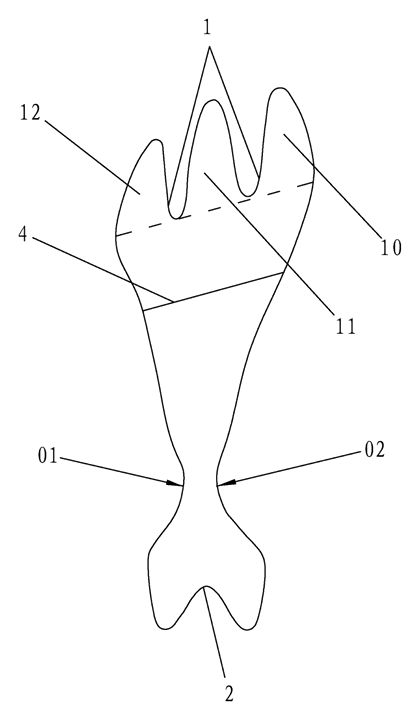
- Front Section: Thinner (about 0.4-0.8 mm) and more elastic. It features two side-by-side notches at the tip, dividing the end into three “finger” parts. These parts form a toe guard area that bends easily.
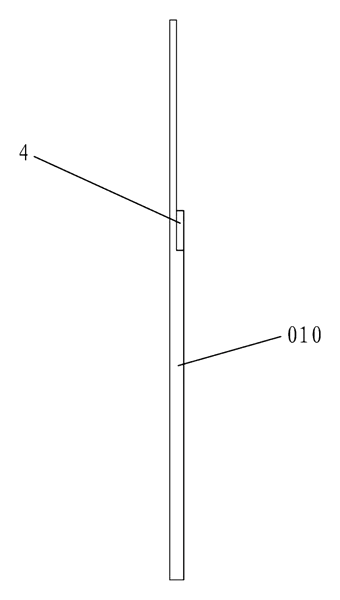
- Transition Zone: A vertical surface separates the front and rear sections. This step is positioned about 8-10 mm behind the metatarsophalangeal joints (the ball of the foot).
- Palm Guard Area: Located between the toe guards and the transition zone, this part offers intermediate elasticity to absorb impact.
- Rear Section: Thicker (about 0.9-1.1 mm) and less elastic. It narrows at the arch (waist structure) and widens toward the heel, providing firm support and stability.
Who it is for
- Performance Running Brands: Companies developing marathon or trail shoes needing specific stiffness profiles.
- Orthopedic Insole Manufacturers: Businesses creating custom inserts that require anatomical alignment with the metatarsals.
- Footwear Component Suppliers: Distributors looking for specialized carbon plates for OEM clients.
- Rehabilitation Product Developers: Creators of assistive footwear where toe flexibility is critical for gait correction.
How it works
The main parts
| No. | Part | What it does |
|---|---|---|
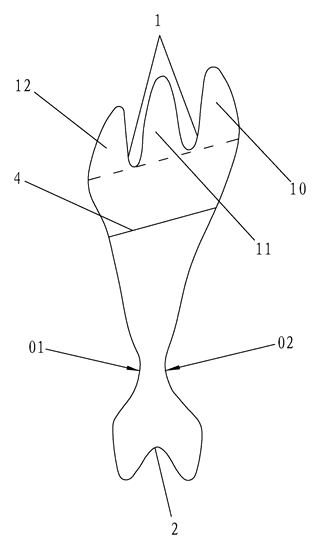
| 1 | First Notch | Two cutouts at the front edge creating three separate toe tips. |
| 10-12 | Finger Parts | The three segments formed by the notches; they articulate independently. |
| 4 | Transition Surface | Vertical step separating the flexible front from the rigid back. |
| 2 | Second Notch | Cutout at the rear edge, likely for heel clearance or shape fitting. |
| Front | Forefoot Zone | Thin, high-elasticity area for energy return and toe bending. |
| Rear | Heel/Arch Zone | Thick, low-elasticity area for stability and arch support. |
Operating Steps
- Impact Phase: The foot lands. The palm guard area absorbs shock due to its intermediate elasticity.
- Mid-Stance: The foot rolls over the transition surface. The rear section remains rigid, supporting the arch and heel.
- Push-Off: The forefoot bends. The three finger parts flex independently, matching the natural spread of the toes, while the rest of the plate stores and releases energy.
Applications
Marathon Racing Shoes
Runners benefit from the combination of propulsive stiffness in the rear and flexible toe-off in the front, potentially improving efficiency over long distances.
Trail Running Inserts
The toe guard areas protect against rock strikes while allowing the foot to grip uneven terrain naturally, unlike fully rigid plates.
Custom Orthotics
The precise placement of the transition zone (about 8-10 mm behind the metatarsals) helps clinicians align the plate with patient-specific foot geometry for better gait control.
Daily Training Cushions
For users who find standard carbon plates too harsh, the split-toe design offers a softer ride under the toes while maintaining overall shoe stability.
Where it is less suitable
- Minimalist Barefoot Shoes: These designs typically avoid any rigid plate structures to maximize ground feedback.
- Heavy Load Hiking Boots: The thin forefoot section may not provide sufficient protection against sharp rocks compared to full-thickness steel shanks.
- Winter Sports Boots: The specific anatomical alignment might conflict with the fixed geometry of ski or snowboard boot liners.
Patent & Production
At a glance
| Patent number | CN215270895U (application CN202020937678) |
| Type | China utility model (实用新型) - protects product shape and structure |
| Original title | A Carbon Fiber Board Structure (一种碳纤维板结构) |
| Patent owner | Xiamen Huayulipin Trading Co ltd |
| Inventors | Zhang Jiesheng |
| Filing date | 2020-05-28 |
| Grant date | 2021-12-24 |
| Status (China) | In force - valid until at most 2030-05-28, provided annual fees are paid |
| Patent family | Public record shows Chinese filings only - no US, European, Japanese, PCT or other filings listed |
| Cited by | 6 later documents |
| Source | Google Patents (search for CN215270895U) |
What the claims cover, in plain language
Claim 1 defines a carbon fiber board with a front section and a rear section. The front section is thinner and more elastic than the rear. A vertical transition surface exists between them, located 8-10mm behind the metatarsophalangeal joints. The front edge has two notches forming three finger-like parts (toe guard area), followed by a palm guard area. The rear section features a narrowed waist at the arch and a widened heel, with a second notch at the rear edge.
Claim 2 specifies the transition surface location as exactly 10mm behind the metatarsophalangeal joints. Claim 3 describes the first notches as arc-shaped, with the three finger parts arranged left-to-right, increasing in length from left to right. Claim 4 details the edges of the narrowed and widened sections as arc-shaped, forming an outward-facing arc notch at the waist. Claim 5 sets the front thickness at 0.4-0.8mm and the rear thickness at 0.9-1.1mm.
This is a simplified reading for orientation only. The legal scope is defined by the exact claim wording in the official Chinese document.
What this means for US production
This patent was filed in China and is currently in force there. The public record shows no US counterpart. Consequently, making or selling this specific design in China requires the owner’s permission. However, since there is no US patent listed, the design itself is not restricted by this specific Chinese utility model in the United States.
Two points to settle early:
- Other patents may exist. Carbon fiber footwear components are a competitive field with numerous existing patents covering various plate geometries, materials, and integration methods. A freedom-to-operate (FTO) review is recommended before launching products in the US market to ensure no other US patents cover similar functional aspects like variable-thickness plates or toe-split mechanisms.
- Material sourcing. The patent specifies carbon fiber but does not detail the weave or resin system. Sourcing consistent, high-modulus carbon sheets that maintain the specified thickness tolerances after cutting is a key technical challenge.
Customization and manufacturing
What can be customized
| Area | Options |
|---|---|
| Thickness Profile | Adjust front/rear ratios within patent limits (e.g., 0.5mm vs 1.0mm) for different stiffness needs. |
| Notch Geometry | Modify the size and depth of the toe splits to fit specific last shapes or user preferences. |
| Contour Shape | Adapt the overall outline to match different shoe models (running, hiking, casual). |
| Surface Finish | Apply anti-slip coatings or fabric lamination to the top/bottom surfaces. |
| Placement Offset | Fine-tune the transition line position relative to the shoe’s internal geometry. |
Things to plan for (US market)
- Consumer Product Safety Commission (CPSC): While not a toy or hazardous item, general safety guidelines apply regarding sharp edges or delaminating materials.
- California Prop 65: If resins or coatings contain listed chemicals, warnings may be required.
- Textile/Footwear Labeling: Ensure accurate labeling of materials if the plate is exposed or marketed as a primary component.
How a project runs
- Inquiry - Define target shoe model, desired stiffness, and volume.
- Design - Create CAD files based on patent constraints and shoe lasts.
- Prototype - CNC-cut samples from carbon sheets for fit and flex testing.
- Testing - Wear trials to validate toe articulation and arch support.
- Production - Die-cutting, surface treatment, and assembly into footwear.
Quantities & timeline
Tooling involves precision dies for die-cutting complex shapes with internal notches. Lead times depend on carbon sheet availability and curing processes if laminated. Send us your target shoe model, desired flex rating, quantity and timeline and we will reply with options.
Production notes
Tooling and process
Die-cutting is likely the primary method for shaping the carbon fiber boards, given the complexity of the notches and curved edges. Laser cutting may also be used for prototyping or smaller batches to avoid tooling costs. Adhesive bonding is typically required to integrate the plate into the shoe’s midsole stack.
Cost drivers
The grade of carbon fiber sheet typically has a significant impact on cost, as does the number of sizes needed, which multiplies the die requirements. Stitch density is irrelevant here as this is a plate component, but packaging must protect brittle edges during shipping.
Prototyping path
This is a rigid component, so 3D-printed or cast samples would come first for initial shape validation, followed by a wear trial to assess comfort. Fit grading then confirms the plate aligns correctly across different shoe sizes.
What we would change before tooling
We would verify the durability of the thin toe sections under repeated flexing. Adjustments to the notch radius might be needed to prevent stress concentration cracks. We would also test adhesive compatibility with the specific carbon surface finish.
Common failure points
Sole delamination is a risk if the plate does not bond well to surrounding foam. Size deviation could cause the transition zone to misalign with the wearer’s metatarsals. Spring fatigue is unlikely in carbon, but wall thickness variation in the raw sheet could lead to inconsistent performance.
Patent drawings
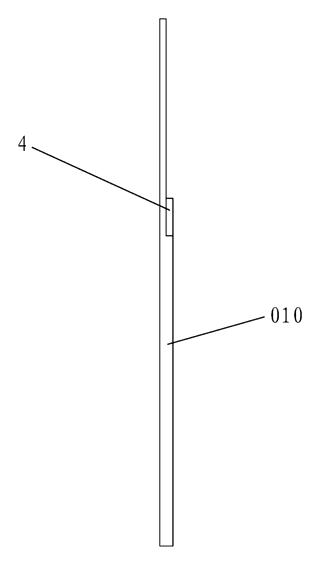
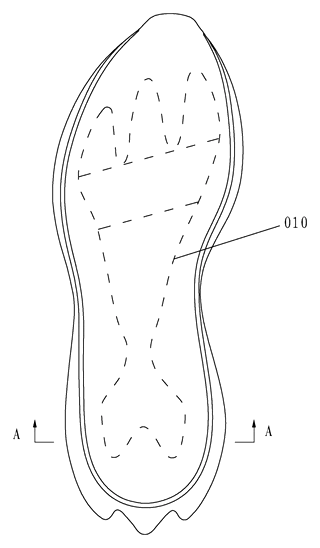
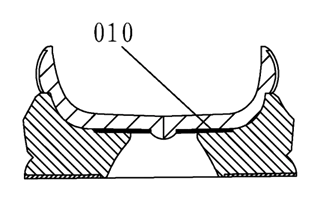
Drawings reproduced from the public patent document for reference.
Frequently asked questions
Why are there splits in the toes?
The patent describes two notches at the front edge that create three separate “finger” parts. This allows the toes to bend and spread naturally during walking or running, reducing the stiffness felt in traditional full-plate designs.
How thick is the plate?
According to the patent, the front section (forefoot) is about 0.4-0.8 mm thick, while the rear section (heel/arch) is about 0.9-1.1 mm thick. This gradient provides flexibility where needed and rigidity for support.
Where is the transition between flexible and rigid?
The vertical transition surface is located 8-10 mm behind the metatarsophalangeal joints (the ball of the foot). Claim 2 specifically mentions a 10 mm offset for optimal alignment.
Does this replace medical orthotics?
No. While the design considers anatomical alignment, it is a footwear component. Serious foot conditions should be evaluated by a healthcare professional.
Can I get custom shapes for my shoe brand?
Yes. The outline, notch sizes, and overall dimensions can be adapted to fit specific shoe lasts, provided the core functional zones (flexible forefoot, rigid rear) remain intact.
Is the carbon fiber durable enough for daily use?
Carbon fiber is strong and lightweight. Durability depends on the quality of the sheet and the protective layers around it. Proper encapsulation in the shoe midsole prevents direct impact damage.
Can this design be made and sold in the US?
The patent is a Chinese utility model. The public record shows no US counterpart, so this specific Chinese patent does not restrict sales in the US. However, other US patents may exist in this field, so a freedom-to-operate check is advised.
Are you affiliated with the patent owner?
No. IP2M is an independent design and manufacturing service working from the public patent document.
Request a quote
Click Request a Quote below to see our email address - copy it, or open your email app with a ready-made message. Please mention patent CN215270895U in the subject.
Helpful details to include:
- Your company and channel (shoe brand, orthotic supplier, distributor)
- Target shoe model or last specifications
- Desired stiffness or thickness preferences
- Estimated quantity and target price
- Timeline - when you would like samples and the first shipment
You can also reach us at (332) 203-9997.
Page editor: Daniel Chen, Product Research Editor · IP2M
Last updated November 6, 2026. If something on this page looks wrong, email [email protected] and we will check it against the patent.
Interested in building this?
Tell us your target market, quantity and timeline. We reply with options for prototyping, small-batch runs or volume production.
Send your inquiry to
Please put CN215270895U in the subject line and tell us your company, country, estimated quantity and timeline.
Prefer to talk? Call (332) 203-9997.
More product-ready patents
All Apparel & Accessories patents →
Apparel & Accessories
Stacked Zipper with Teeth That Mesh Top-to-Bottom
Zipper whose two identical tooth rows mesh on top of each other, closed by a simplified slider.
Patent CN205795062U
Apparel & Accessories
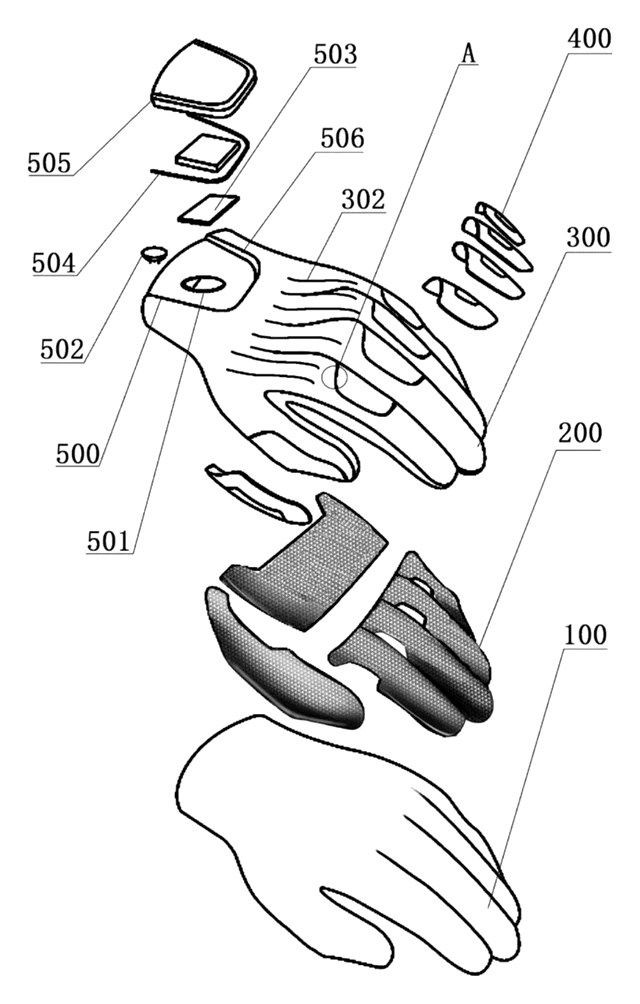
Impact-Resistant Glove with a 3D-Printed Lattice Layer
Work glove with a 3D-printed lattice impact layer, TPU knuckle guards and a light mounting area.
Patent CN213785583U
Apparel & Accessories
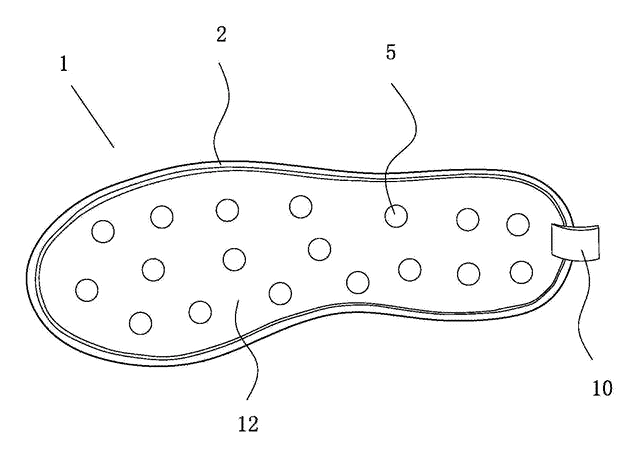
Massage Insole with Spring-Back Silicone Nubs and a Removable Top Layer
Layered insole: silicone nubs rise through a removable perforated top sheet and sink under each step.
Patent CN208286505U
Apparel & Accessories
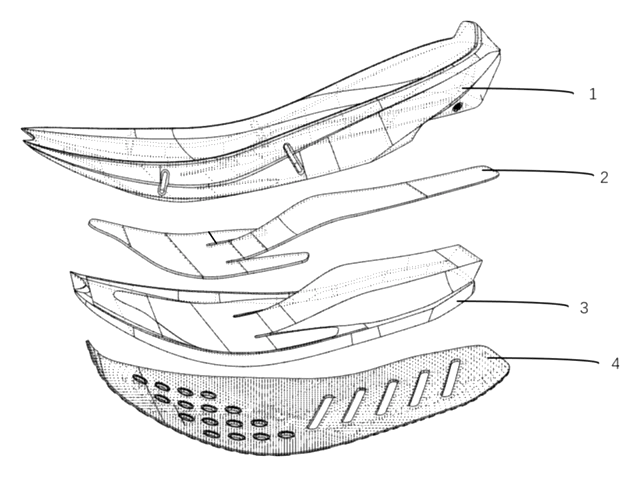
Heel-Less Carbon Plate Running Shoe Sole for Forefoot Strikers
Running sole for forefoot strikers: no ground-touching heel, winged carbon plate between two midsoles.
Patent CN216723354U
Apparel & Accessories
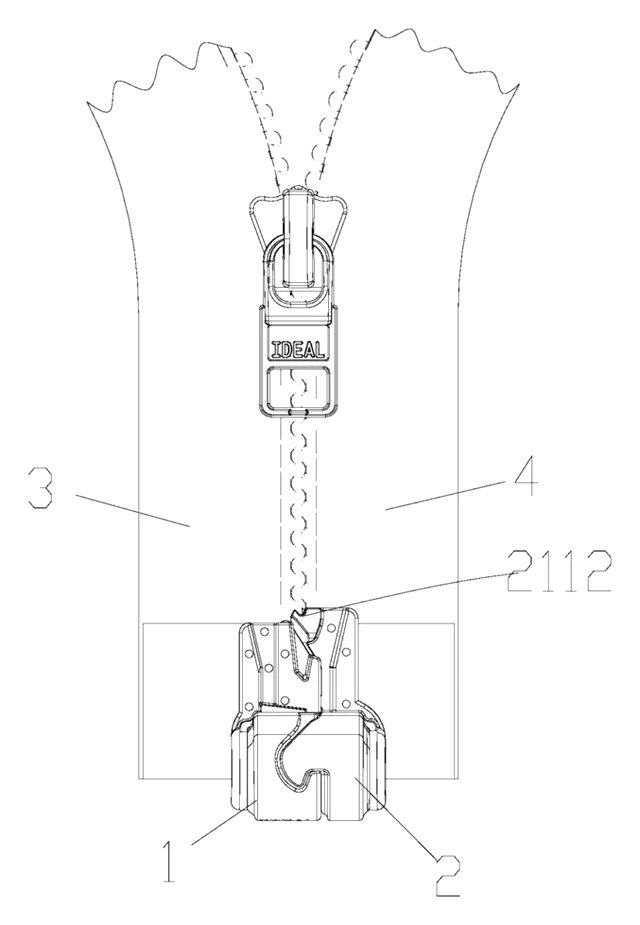
Waterproof Magnetic Zipper Stop That Snaps the Two Halves Together
Separating-zipper stop with sealed magnets: pin and box snap together one-handed, safe in rain and wash.
Patent CN215075936U
Apparel & Accessories
Left-Right Specific Soccer Socks: Grip for the Plant Foot, Touch Pads for the Kicking Foot
Soccer socks knitted as a left-right pair: grip zones for the plant foot, pads for the kicking foot.
Patent CN212728807U
Browse by category
- Apparel & Accessories (43)
- Baby & Kids (28)
- Bags & Luggage (16)
- Bath & Personal Care (29)
- Car Accessories (23)
- Furniture, Bedding & Storage (22)
- Garden & Outdoor (29)
- Health & Wellness (13)
- Home, Kitchen & Cleaning (46)
- Lighting (22)
- Packaging & Containers (11)
- Pet Products (10)
- Phone & Camera Accessories (9)
- Retail Display (23)
- School, Office & Art (33)
- Sports & Recreation (41)
- Tools & Workshop (50)
- Toys & Games (21)
This page is based on the public patent document CN215270895U, assigned to Xiamen Huayulipin Trading Co ltd. IP2M is an independent manufacturing service and is not affiliated with, endorsed by or licensed by the patent owner. Images marked as concept renderings are illustrations, not photos of an existing product. Patent status information is provided for reference only and is not legal advice; confirm freedom to operate for your market before production. Full disclaimer.