
Patent CN215502186U
Updated November 6, 2026Bird's Nest Style Nursing Pillow with Waist Support and Bolster
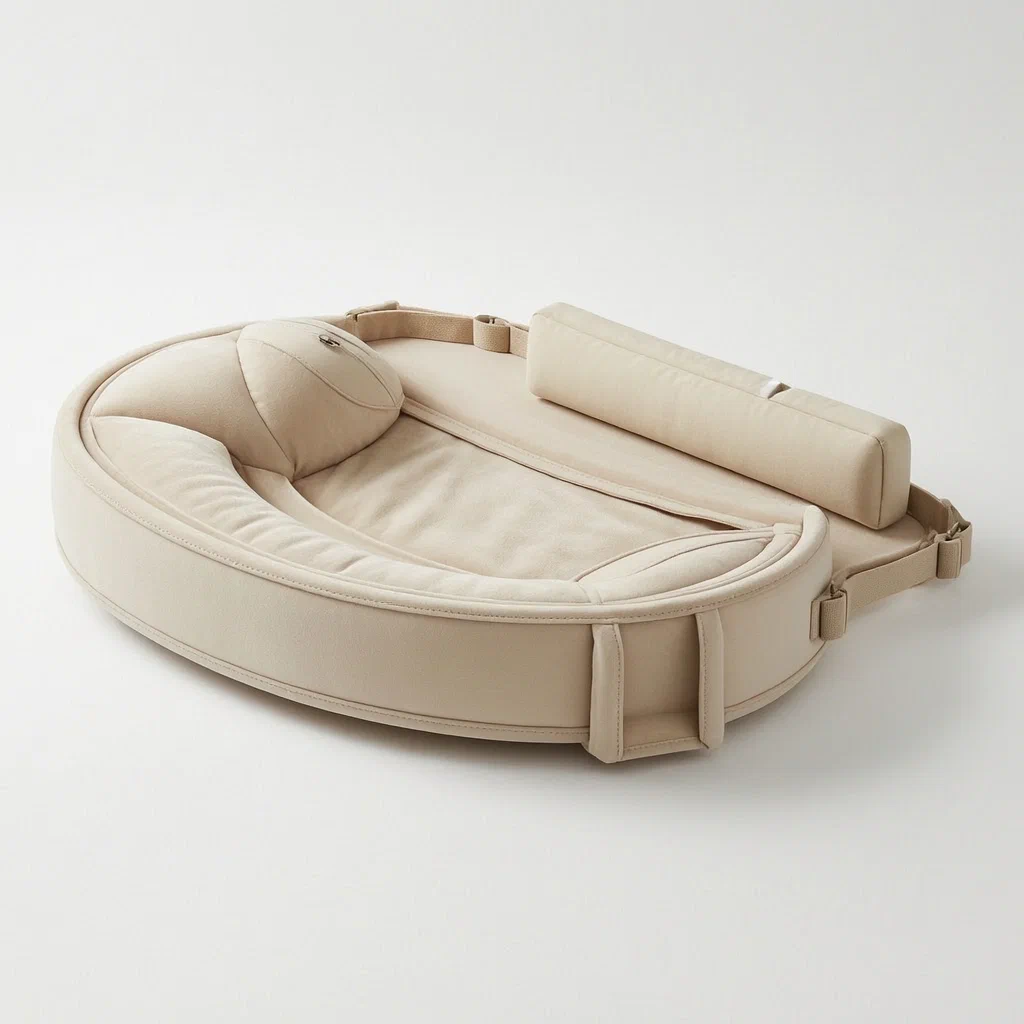
Standard nursing pillows often leave mothers straining their backs or arms to hold the baby at the right angle. This design integrates a waist-secured pillow that holds the infant in a stable, elevated position while providing lumbar support for the mother. The 'bird's nest' shape cradles the baby securely, reducing arm fatigue and allowing hands-free positioning for better comfort during long feeding sessions.
- China utility model - In force
- No filings outside China
- Maternity & Infant Care
- Foam/Plastic structure, Adjustable straps, Inflatable bolster
Splat! What let you down?
🤱
Hands-Free Positioning
Waist belt secures the pillow, holding the baby at optimal height without arm strain.
🛡️
Guarded Nest Design
Raised guard plate surrounds the concave groove to keep the infant contained and safe.
🎈
Adjustable Lumbar Support
Optional inflatable bolster fits behind the waist to support the mother's lower back.
🧘
Ergonomic Curves
Arc-shaped grooves and C-notches align with body curves and facilitate easy latching.
Bring this product to market
- ✓ Patent review Patent family and legal status reviewed in the relevant jurisdictions.
- 2 Product brief · now How it works, uses and options written up
- 3 Prototype First samples for buyers to review
- 4 Pilot run Small first batch for launch customers
- 5 Volume production Repeat orders at scale
Buyer interest
– of 100 buyers needed to start prototyping
One click, no sign-up. Each vote is one real visitor, and products with the most interest go to prototyping first.
Build team: no members yet. Need a partner, co-funding or skills to build this? Join and we introduce the team once it forms.
Patent Rights & Team Participation
Before joining a development team, participants should ensure they have the necessary rights or authorization to participate in the project.
Participation is generally appropriate where:
- You own the relevant patent rights or have obtained permission or a license from the rights holder.
- The relevant patent rights have expired or have been legally invalidated in the jurisdictions where the planned activities will take place.
- The planned development, manufacturing, and commercialization activities have been independently assessed and do not infringe applicable patent rights in the relevant jurisdictions.
Important: Being located outside a country where a patent is protected does not automatically exempt you from patent infringement risks. Patent rights may apply based on where development, manufacturing, use, sale, or import activities take place.
IP2M does not grant any patent license or authorization through team participation. Joining a project does not provide permission to use, manufacture, or commercialize patented technology.
The problem
Traditional breastfeeding positions often require the mother to use her arms to support the baby’s weight and position, leading to shoulder, neck, and wrist fatigue. Many standard nursing pillows sit loosely on the lap, requiring constant adjustment to keep the baby aligned with the breast. For mothers recovering from C-sections or experiencing back pain, finding a stable, supportive position that does not put pressure on the abdomen or spine is difficult. Additionally, infants may slip or roll if the pillow surface is too flat or lacks containment, posing safety risks and disrupting feeding.
The solution
The patent introduces a “bird’s nest” style pillow that combines infant containment with maternal postural support through a structured, wearable design.
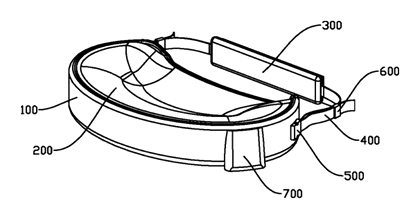
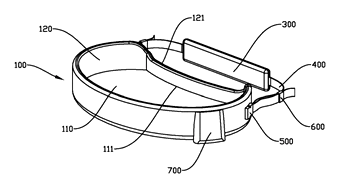
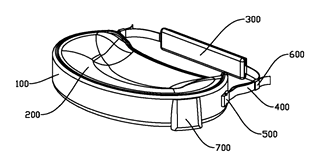
- Core Structure: The body consists of a support plate (110) and a surrounding guard plate (120). Together, they form a concave placement groove filled with a flexible pad (200) for the baby to lie in.
- Attachment System: A waist protection belt (300) connects to the pillow via rope belts (400) and a buckle assembly (500). This allows the pillow to be wrapped around the mother’s abdomen and secured, keeping it stationary relative to her body.
- Ergonomic Features: The support plate includes an arc-shaped groove (111) facing the human body to match abdominal curves. The top of the guard plate has a C-shaped groove (121) to allow the baby’s head to extend forward easily for sucking.
- Lumbar Support Option: A detachable bolster (800), which can be an inflatable pillow with an air valve (810), attaches behind the waist belt to fill gaps between the mother’s back and chairs or beds.
- Additional Comfort: A protective plate (900) with massage protrusions (920) and a neck protecting pillow (910) can be inserted between the waist belt and the bolster for further support and breathability.
Who it is for
- Maternity Brands: Companies looking to expand their nursing accessory lines with functional, posture-supporting designs that differentiate from basic donut pillows.
- Hospital & Clinical Suppliers: Institutions needing equipment that supports post-C-section recovery and reduces physical strain for new mothers during lactation consultations.
- Direct-to-Consumer Sellers: Online retailers targeting parents seeking solutions for back pain and hand fatigue associated with prolonged breastfeeding sessions.
- Product Designers: Teams interested in integrating adjustable, multi-component systems (belts, inflatables, foam structures) into infant care products.
How it works
The main parts
| No. | Part | What it does |
|---|---|---|
| 100 | Body | Main structure comprising support and guard plates. |
| 110 | Support Plate | Base of the nest; contains arc-shaped groove (111). |
| 120 | Guard Plate | Surrounds the groove; contains C-shaped notch (121) and storage bag (700). |
| 200 | Flexible Pad | Cushion inside the placement groove for the baby. |
| 300 | Waist Protection Belt | Wraps around the mother to secure the pillow. |
| 400, 500 | Rope Belts & Buckle | Connects the waist belt to the body; adjustable length. |
| 800, 810 | Bolster & Air Valve | Optional inflatable support for the lower back. |
| 900, 910, 920 | Protective Plate Assembly | Optional layer with neck support and massage bumps. |
Operating steps
- Preparation: Inflate the bolster (800) to the desired firmness using the air valve (810) if included. Adjust the rope belts (400) using the adjusting buckle (600) to fit the mother’s waist size.
- Securing: Wrap the waist protection belt (300) around the mother’s abdomen and fasten the buckle assembly (500). The pillow body (100) sits in front, held firmly against the torso.
- Positioning Baby: Place the infant in the concave placement groove on the flexible pad (200). The guard plate (120) prevents rolling, while the C-shaped groove (121) allows the baby’s head to move freely toward the breast.
- Posture Adjustment: If seated or reclining, the bolster (800) behind the waist supports the lumbar region. The protective plate (900) adds breathable contact and neck support.
Applications
Post-C-Section Recovery
Mothers recovering from surgery often cannot bear weight on their abdomen or strain their core muscles. This pillow’s waist-belt system holds the baby without requiring the mother to lift or lean forward, reducing pressure on the incision site and minimizing upper body exertion.
Back Pain Relief During Feeding
Prolonged sitting for nursing can aggravate lower back pain. The optional inflatable bolster fills the gap between the mother’s back and the chair, maintaining natural spinal curvature. This provides continuous lumbar support, helping to alleviate discomfort during long feeding sessions.
Hands-Free Latching Assistance
Newborns can be difficult to position correctly for latching. The fixed height and angle provided by the secured pillow allow the mother to focus on guiding the baby’s mouth rather than supporting their entire body weight, making the latching process smoother and less physically demanding.
Multi-Position Nursing
Whether sitting upright, reclining, or lying down, the adjustable straps and modular components allow the pillow to adapt to different postures. The waist belt ensures the pillow stays in place even when the mother shifts positions, unlike loose-lap pillows that slide away.
Where it is less suitable
- Very Small Infants: Premature babies or very small newborns might need additional padding or smaller nest dimensions not specified in the general patent claims.
- Highly Active Toddlers: Older children who resist being confined in a groove may find the structure restrictive compared to open-style pillows.
Patent & Production
At a glance
| Patent number | CN215502186U (application CN202121507364) |
| Type | China utility model (实用新型) - protects product shape and structure |
| Original title | Bird’s nest formula breast-feed pillow (一种鸟巢式哺乳枕) |
| Patent owner | Tongxiang Maternal And Child Health Hospital |
| Inventors | Lü Xiaoyan |
| Filing date | 2021-07-05 |
| Grant date | 2022-01-14 |
| Status (China) | In force - valid until at most 2031-07-05, subject to annual fee payments |
| Patent family | Public record shows Chinese filings only - no US, European, Japanese, PCT or other filings listed |
| Cited by | 0 later documents |
| Source | Google Patents (search for CN215502186U) |
What the claims cover, in plain language
Claim 1 defines the base structure: a body with a support plate and a surrounding guard plate forming a concave placement groove. A flexible pad fills the groove. A waist protection belt is attached via rope belts and a buckle assembly, allowing the device to wrap around the user’s abdomen.
Claims 2-3 add specific ergonomic shapes: an arc-shaped groove on the support plate matching the body curve, and a C-shaped groove on the guard plate for the baby’s head.
Claims 4-5 introduce adjustability and storage: an adjusting buckle on the rope belt for length control, and a storage bag on the guard plate.
Claims 6-7 describe the lumbar support option: a detachable bolster behind the waist belt, specifically an inflatable pillow with an air valve for volume adjustment.
Claims 8-9 detail an enhanced back support module: a protective plate inserted between the waist belt and bolster, featuring a neck pillow and massage protrusions for comfort and breathability.
This is a simplified reading for orientation only. The legal scope is defined by the exact claim wording in the official Chinese document.
What this means for US production
This patent was filed in China and is currently in force. Making or selling this specific configuration in China requires the owner’s permission. However, the public record shows no US or other foreign counterpart, so this specific Chinese patent does not restrict manufacturing or sales in the United States based on its own rights.
Two points to settle early:
- Other patents may exist. The maternity and infant care field is heavily patented globally. While this specific utility model has no US counterpart, similar structural concepts (wearable nursing pillows, integrated lumbar supports) may be covered by existing US design or utility patents. A freedom-to-operate (FTO) review is essential before tooling to ensure no infringement of third-party IP.
- Safety Standards Compliance. Products intended for infant use must meet strict safety regulations (e.g., flammability, small parts). The design’s reliance on straps, buckles, and soft materials requires careful engineering to pass these tests, which can influence material choices and construction methods beyond what the patent strictly describes.
Customization and manufacturing
What can be customized
| Area | Options |
|---|---|
| Materials | Foam density/type for plates; fabric blend for pads/covers; plastic grade for buckles. |
| Dimensions | Groove depth and width for different baby sizes; waist belt length ranges. |
| Features | Include/exclude inflatable bolster; add/remove massage protrusions; modify storage bag size. |
| Colors/Patterns | Fabric prints, color-matched plastic components. |
| Packaging | Retail box, hanging display, eco-friendly materials. |
Things to plan for (US market)
- CPSC Safety Rules: General requirements for children’s products, including tracking labels and third-party testing.
- Flammability Standards: Fabrics and foams must meet relevant flammability criteria (e.g., 16 CFR Part 1610 for textiles, though nursing pillows have specific interpretations).
- Small Parts Regulations: Buckles and valves must not pose choking hazards if detached; secure attachment methods are critical.
- Phthalate Restrictions: Plastic components (buckles, valves) must comply with CPSIA limits on phthalates.
How a project runs
- Inquiry - Define target age range, feature set (with/without bolster), and material preferences.
- Design Refinement - CAD modeling of the nest geometry and strap mechanics; FTO check.
- Prototyping - 3D printed fit samples for ergonomics; sewn fabric mock-ups.
- Testing - Load tests for straps/buckles; flammability screening; pinch/small parts assessment.
- Production - Injection molding for hard parts; foam cutting/molding; textile sewing and assembly.
Quantities & timeline
Tooling costs depend on the complexity of the injection molds for the support/guard plates and the durability of the stitching for the fabric components. Certification testing for infant safety standards typically takes 4-6 weeks. Initial production runs require validation of the inflatable bolster’s leak-proof integrity and the buckle’s retention strength. Send us your target retail price, estimated annual volume, and required certifications, and we will reply with options.
Production notes
Tooling and process
Hard components like the support plate, guard plate, and buckles likely require PP or ABS injection molding. The foam elements would use foam molding or cutting processes. Textile parts involve fabric sewing. Steel tube forming is not indicated in the patent but could be used for internal structure if needed for rigidity.
Cost drivers
Part count is typically significant due to the modular nature (plates, pads, belts, buckles, bolsters). Material certification for infant-safe plastics and fabrics adds cost. Safety testing is a major expense driver given the regulatory environment for baby products.
Prototyping path
We would start with a 3D-printed fit sample to validate the nest geometry and strap reach. Proceed to material certificates for chosen fabrics and foams. Conduct a small-parts and pinch test on prototypes. Build a load sample to stress-test the waist belt connections. Finally, prepare for tooling once design is locked.
What we would change before tooling
Ensure all edges are rounded to prevent injury and aid mold release. Verify that wall thickness and joint design of plastic parts can withstand repeated tension from the waist belt without cracking. Confirm that fabric seams are reinforced to handle the weight of the baby and dynamic movements.
Common failure points
Small parts detaching is a risk if buckles or valves are not securely anchored. Pinch points can occur in folding mechanisms or tight strap adjustments. Tipping stability depends on the center of gravity when the baby is placed. Flammability of fabric and phthalate content in plastics are critical compliance failures if not sourced correctly.
Patent drawings
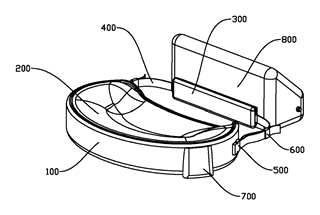
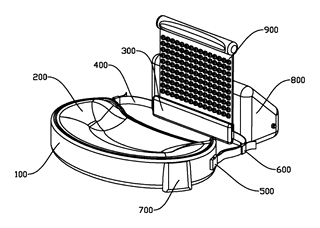
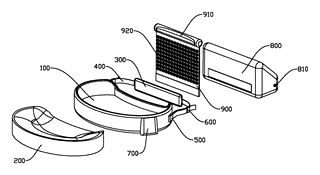
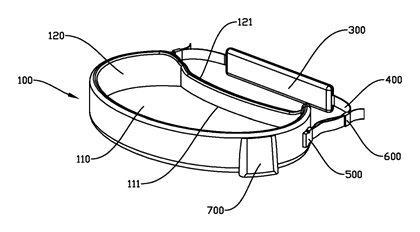
Drawings reproduced from the public patent document for reference.
Frequently asked questions
Is this pillow safe for newborns?
The patent describes a concave groove with raised guards to contain the baby. However, safe sleep guidelines generally recommend a flat, firm surface for unsupervised sleep. This product is designed for supervised feeding, not sleeping. Always supervise the infant and consult pediatricians regarding positioning.
How does the waist belt work?
The belt wraps around the mother’s abdomen and connects to the pillow body via adjustable ropes and a buckle. This secures the pillow in place relative to the mother’s body, preventing it from sliding off the lap and reducing the need to support the baby’s weight with arms.
Can the size be adjusted for different mothers?
Yes. The rope belts include an adjusting buckle to change the effective length, accommodating various waist sizes. The inflatable bolster (if included) can also be adjusted by adding or releasing air to fit the gap between the back and the chair.
What materials are used?
The patent mentions foam or rubber for the plates, cotton or latex for the pad, and plastic for buckles. Specific material grades for commercial production would be selected to meet safety standards for skin contact and durability.
Does it help with back pain?
According to the patent, the design includes an optional inflatable bolster positioned behind the waist to support the lumbar region, aiming to reduce pressure on the spine during prolonged sitting.
Can this design be made and sold in the US?
The patent was filed in China and is in force there. The public record shows no US counterpart, so this specific Chinese patent does not restrict US manufacturing or sales. However, you must verify freedom-to-operate against existing US patents in the infant care category and ensure compliance with CPSC safety regulations.
Are you affiliated with the patent owner?
No. IP2M is an independent design and manufacturing service working from the public patent document.
Request a quote
Click Request a Quote below to see our email address - copy it, or open your email app with a ready-made message. Please mention patent CN215502186U in the subject.
Helpful details to include:
- Your company and channel (maternity brand, hospital supplier, e-commerce seller)
- Target age group and baby size range
- Feature set (with/without bolster, with/without massage plate)
- Material preferences (fabric types, foam density)
- Estimated quantity and target price
- Timeline - when you would like samples and the first shipment
You can also reach us at (332) 203-9997.
Page editor: Daniel Chen, Product Research Editor · IP2M
Last updated November 6, 2026. If something on this page looks wrong, email [email protected] and we will check it against the patent.
Interested in building this?
Tell us your target market, quantity and timeline. We reply with options for prototyping, small-batch runs or volume production.
Send your inquiry to
Please put CN215502186U in the subject line and tell us your company, country, estimated quantity and timeline.
Prefer to talk? Call (332) 203-9997.
More product-ready patents
All Baby & Kids patents →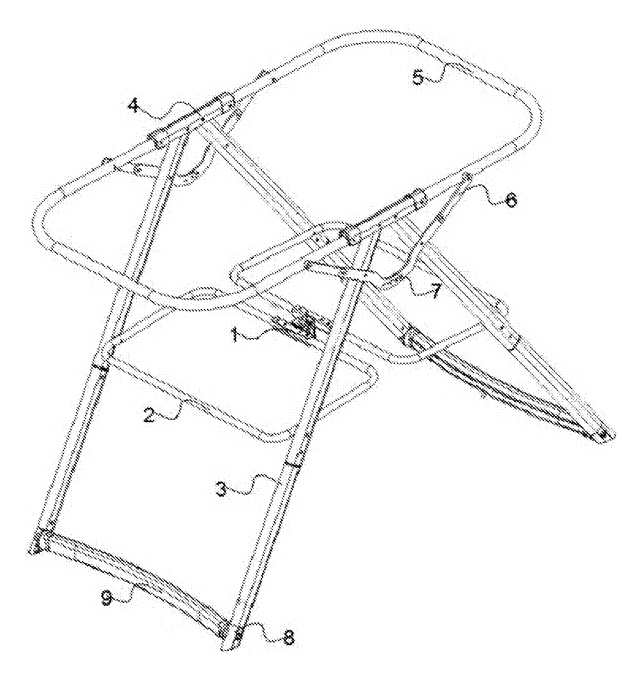
Baby & Kids
Portable Folding Rocking Bassinet Frame
Rocking bassinet frame that folds flat: telescopic hub, folding rails, two-part legs, curved rockers.
Patent CN206910143U
Baby & Kids
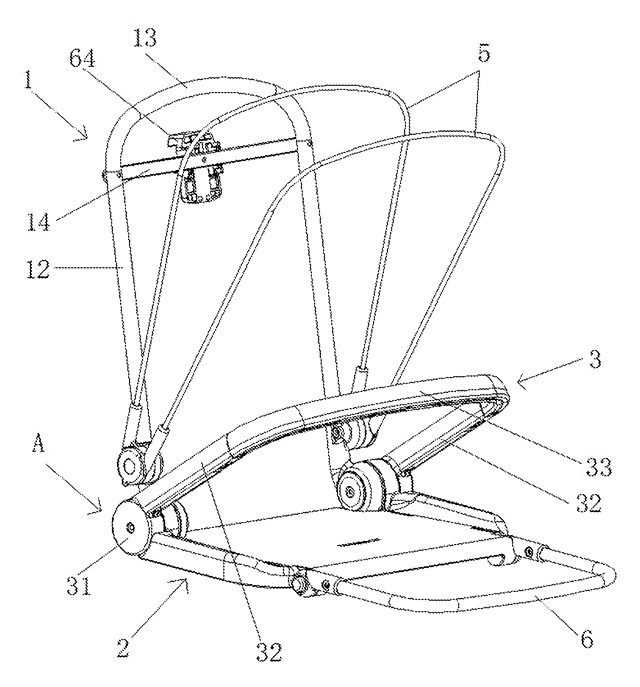
Stroller Seat with Linked Fold-Away Armrest
Stroller seat whose armrest unlocks and folds automatically when the backrest is folded forward.
Patent CN206856772U
Baby & Kids
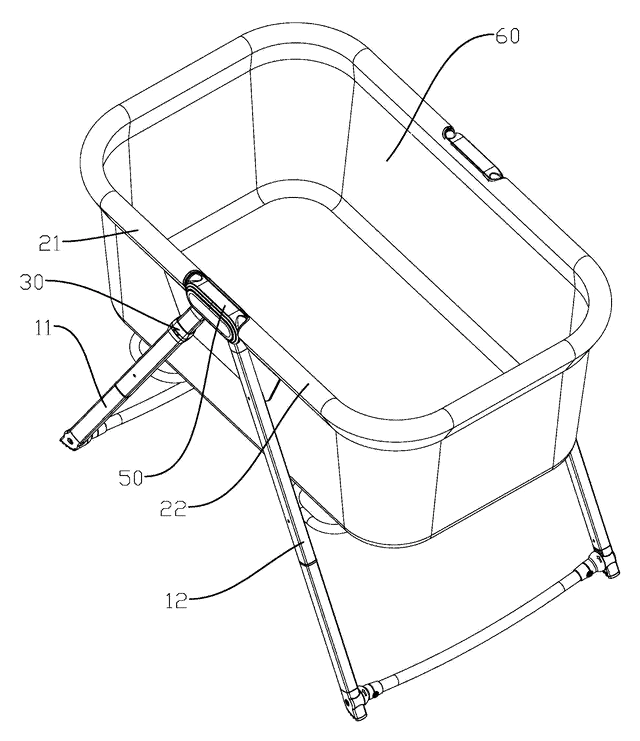
One-Motion Folding Baby Crib with Linked Frame
Portable baby crib whose top rails fold down automatically as the A-frame legs are closed.
Patent CN207202585U
Baby & Kids
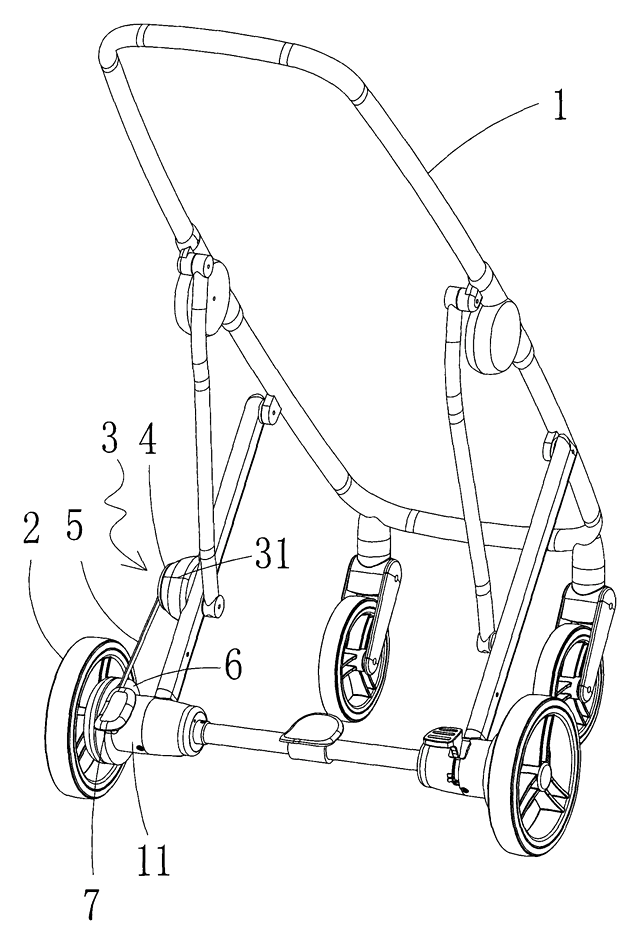
Motorized Rocking Stroller That Rocks by Turning Its Wheels
Baby rocker or stroller whose motor turns the wheels back and forth; a clutch switches to pushing.
Patent CN208119238U
Baby & Kids
Bedside Crib Base with Spring-Loaded Telescoping Caster Legs
Bedside crib feet with spring-loaded sliding casters: wide when alone, short to sit flush at the bed.
Patent CN207168269U
Baby & Kids
Compact-Fold Stroller with a Four-Bar Side Frame and Telescoping Handle
Stroller with four-bar side frames: handle and rear leg fold onto the front leg, handle telescopes.
Patent CN213799844U
Browse by category
- Apparel & Accessories (43)
- Baby & Kids (28)
- Bags & Luggage (16)
- Bath & Personal Care (29)
- Car Accessories (23)
- Furniture, Bedding & Storage (22)
- Garden & Outdoor (29)
- Health & Wellness (13)
- Home, Kitchen & Cleaning (46)
- Lighting (22)
- Packaging & Containers (11)
- Pet Products (10)
- Phone & Camera Accessories (9)
- Retail Display (23)
- School, Office & Art (33)
- Sports & Recreation (41)
- Tools & Workshop (50)
- Toys & Games (21)
This page is based on the public patent document CN215502186U, assigned to Tongxiang Maternal And Child Health Hospital. IP2M is an independent manufacturing service and is not affiliated with, endorsed by or licensed by the patent owner. Images marked as concept renderings are illustrations, not photos of an existing product. Patent status information is provided for reference only and is not legal advice; confirm freedom to operate for your market before production. Full disclaimer.