
Patent CN215636973U
Updated November 5, 2026Running Water Light Guide Turn Signal for Rearview Mirrors
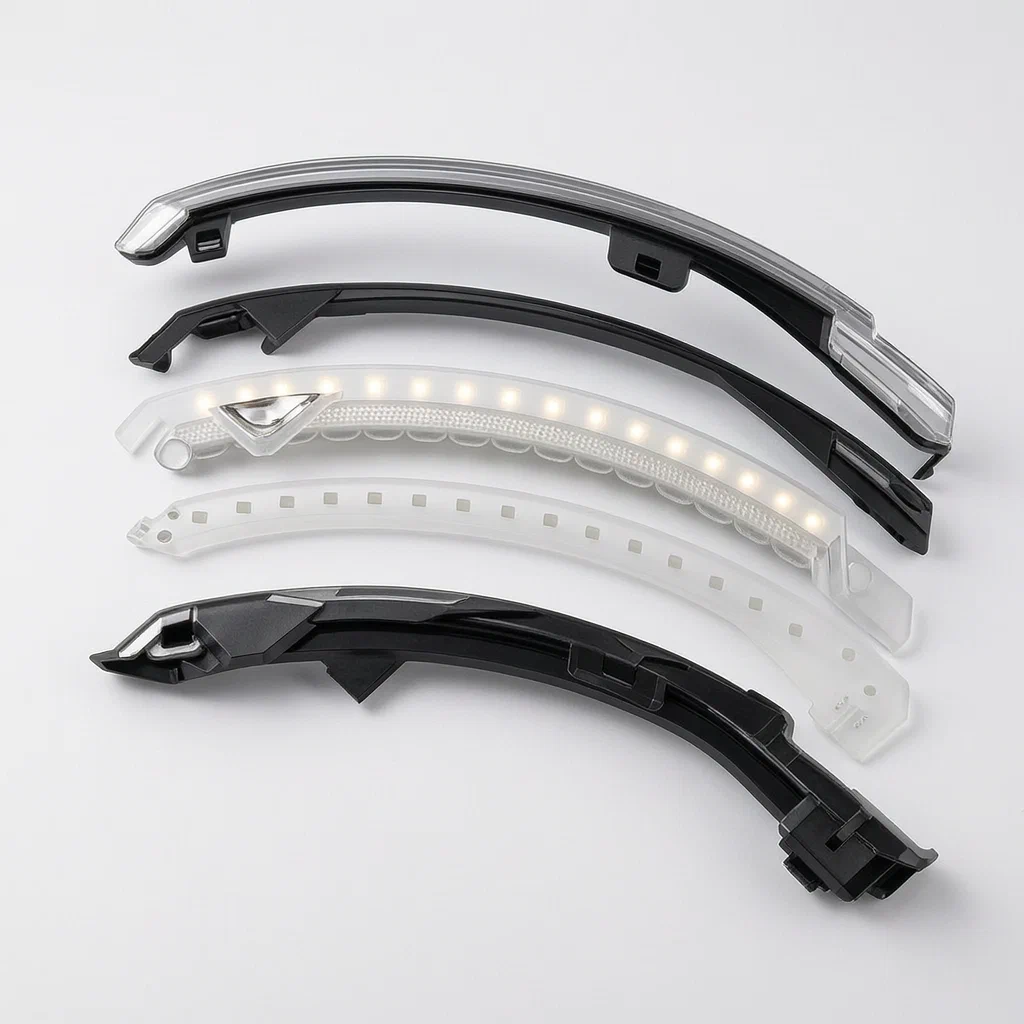
Traditional mirror indicators often show uneven brightness or distinct points of light, which can look dated and fail to capture attention effectively. This design solves that by hiding the source behind a sophisticated light guide. Instead of direct glare, LEDs feed light into a collimating lens and a textured reflector inside the housing. This structure spreads the illumination evenly across the entire transparent surface. Furthermore, the driver circuit allows the lights to activate in sequence, creating a smooth, flowing animation that is both eye-catching and compliant with vehicle lighting regulations.
- China utility model - in force
- No filings outside China
- Automotive exterior lighting
- PCB drivers, injection molded guides, LED arrays
Splat! What let you down?
💡
Uniform Diffusion
A light guide with a reflective surface spreads LED light evenly, avoiding hot spots.
🌊
Sequential Flow
LEDs activate in a circulating pattern to create a dynamic 'running water' effect.
🛡️
Hidden Source
The light source is positioned away from the viewer, reducing glare and hiding components.
🔧
Mirror Integration
Designed to fit directly into rearview mirror housings via a decorative frame and through-hole.
Bring this product to market
- ✓ Patent review Patent family and legal status reviewed in the relevant jurisdictions.
- 2 Product brief · now How it works, uses and options written up
- 3 Prototype First samples for buyers to review
- 4 Pilot run Small first batch for launch customers
- 5 Volume production Repeat orders at scale
Buyer interest
– of 100 buyers needed to start prototyping
One click, no sign-up. Each vote is one real visitor, and products with the most interest go to prototyping first.
Build team: no members yet. Need a partner, co-funding or skills to build this? Join and we introduce the team once it forms.
Patent Rights & Team Participation
Before joining a development team, participants should ensure they have the necessary rights or authorization to participate in the project.
Participation is generally appropriate where:
- You own the relevant patent rights or have obtained permission or a license from the rights holder.
- The relevant patent rights have expired or have been legally invalidated in the jurisdictions where the planned activities will take place.
- The planned development, manufacturing, and commercialization activities have been independently assessed and do not infringe applicable patent rights in the relevant jurisdictions.
Important: Being located outside a country where a patent is protected does not automatically exempt you from patent infringement risks. Patent rights may apply based on where development, manufacturing, use, sale, or import activities take place.
IP2M does not grant any patent license or authorization through team participation. Joining a project does not provide permission to use, manufacture, or commercialize patented technology.
The problem
Standard automotive turn signals mounted on rearview mirrors often rely on simple bulb or LED placements that result in uneven illumination. When viewed from behind or the side, these traditional designs can appear as isolated bright points rather than a cohesive light bar, leading to a less premium aesthetic. Additionally, many basic units suffer from glare if the light source is not properly shielded, or they fail to provide the dynamic visual cues that modern drivers expect from high-end vehicles. There is a need for a compact, efficient lighting solution that integrates seamlessly into the mirror body while providing uniform, soft light distribution and the ability to display sequential animations without complex external optics.
The solution
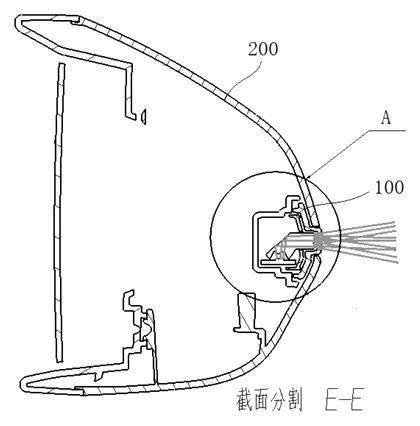
This patent describes a running water light guide-type turn signal specifically engineered for vehicle rearview mirrors. The core of the design is a lamp shell assembly that encloses a light guide piece and a light source assembly. Unlike direct-view LEDs, the light source here feeds into a specialized optical path. The light guide piece includes a collimating lens that receives light from the LEDs and directs it into a light guide body. This body features a reflective surface, often obliquely arranged, which redirects the light toward the light exit portion. By positioning the light source assembly on one side of the guide, the design hides the raw LEDs from direct view, eliminating harsh glare. The light is then emitted through a transparent lamp cover, ensuring a uniform and soft appearance across the entire illuminated area.
Who it is for
- Automotive accessory manufacturers: Companies producing aftermarket mirror covers or complete mirror assemblies who want to add premium sequential lighting features without redesigning the entire mirror housing.
- OEM tier-1 suppliers: Suppliers looking for cost-effective, modular lighting solutions that meet strict uniformity and regulatory standards for new vehicle models.
- Vehicle customization shops: Businesses specializing in retrofitting older cars with modern, animated turn signals that integrate cleanly into existing mirror structures.
- Industrial design firms: Agencies seeking a proven structural concept for integrating hidden LED sources into curved, compact automotive exteriors.
How it works
The main parts
The device consists of several key components that work together to manage light transmission and aesthetics. The lamp shell assembly forms the outer boundary, comprising a housing base, a transparent lamp cover, and a decorative frame. Inside this shell sits the light guide piece, which is inserted through a through-hole in the decorative frame. This guide is composed of a collimating lens and a light guide body with a specific reflective surface. The light source assembly is mounted on a driving board (PCB) and positioned adjacent to the light guide’s inlet. Multiple LED light sources are spaced out along the length of the driving board to facilitate sequential activation.
| No. | Part | What it does |
|---|---|---|
| 1 | Lamp Shell Assembly | Houses the components; includes base, cover, and frame. |
| 2 | Light Guide Piece | Transports and diffuses light; contains lens and body. |
| 3 | Collimating Lens | Collects LED light and directs it into the guide body. |
| 4 | Reflective Surface | Redirects light internally to ensure even exit. |
| 5 | Light Source Assembly | PCB with LEDs; provides the initial light input. |
| 6 | Transparent Lamp Cover | Allows light to escape while protecting internals. |
| 7 | Decorative Frame | Structural interface; holds the guide in place. |
Operating steps
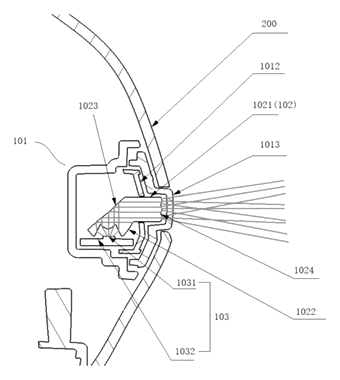
- Light Emission: The LED light sources on the driving board emit light directed toward the collimating lens.
- Collimation and Entry: The lens converts the diverging light into parallel beams and channels them into the light guide body.
- Internal Reflection: The light travels through the guide body, hitting the reflective surface. This surface, often textured or angled, reflects the light toward the light exit portion.
- Diffusion and Exit: As the light reaches the exit, it passes through the transparent lamp cover. The texture of the guide and the reflection process ensure the light is spread uniformly, creating a soft, continuous glow.
- Sequential Activation: The driver controls the LEDs to light up in a sequence. Because the light is guided, the transition appears as a smooth flow rather than individual blinking dots.
Applications
Aftermarket mirror upgrades
Owners of older vehicles can replace standard mirror caps with this unit to instantly modernize their car’s appearance. The sequential lighting provides a high-end look typically reserved for luxury brands, improving visibility and style without major electrical rewiring.
New energy vehicle styling
Electric vehicles often feature sleek, minimalist designs. This compact, hidden-source lighting solution fits well into the aerodynamic shapes of EV mirrors, offering a clean aesthetic that complements the vehicle’s futuristic profile while maintaining necessary safety signaling.
Commercial fleet branding
Delivery vans and commercial trucks benefit from the increased visibility of the uniform light field. The distinct “running water” effect draws more attention from surrounding traffic than static amber lights, potentially enhancing safety during lane changes in busy urban environments.
Custom motorcycle mirrors
While primarily for cars, the compact form factor allows adaptation for larger motorcycle fairings or custom side mirrors. Riders seeking unique, animated lighting signatures for their bikes can use this module to create standout visual effects that comply with general lighting intensity norms.
Where it is less suitable
- Extreme heat environments: While the design manages glare, the close proximity of electronics to the mirror housing may require additional thermal management in very hot climates compared to simpler bulb-based systems.
- High-vibration off-road use: The delicate alignment of the light guide and lens might be susceptible to misalignment under severe vibration unless reinforced mounting is used.
- Low-cost economy replacements: The complexity of the injection-molded guide and PCB driver makes this more expensive than basic single-LED or filament bulb alternatives.
Patent & Production
At a glance
| Patent number | CN215636973U (application CN202122225338) |
| Type | China utility model (实用新型) - protects product shape and structure |
| Original title | Running water light guide type turn signal and its rearview mirror (一种流水光导式转向灯及其后视镜) |
| Patent owner | Guangzhou Wei Si Automobile Parts Co ltd |
| Inventors | Chen Siyuan, Du Boren |
| Filing date | 2021-09-14 |
| Grant date | 2022-01-25 |
| Status (China) | In force - valid until at most 2031-09-14, provided annual fees are paid |
| Patent family | Public record shows Chinese filings only - no US, European, Japanese, PCT or other filings listed |
| Cited by | 3 later documents |
| Source | Google Patents (search for CN215636973U) |
What the claims cover, in plain language
Claim 1 defines a turn signal with a lamp shell assembly containing a cavity and a light-transmitting area. Inside is a light guide piece with an inlet and outlet, where the outlet direction deviates from the inlet. A light source assembly emits light into the inlet, which passes through the guide and exits through the transmitting area.
Claims 2-4 specify the guide’s structure: a collimating lens connected to a guide body with a reflective surface (often oblique). The side near the transmitting area may be textured to diffuse light.
Claims 5-6 describe the source: a driving board with multiple LEDs spaced apart along its length, enabling sequential lighting.
Claims 7-9 detail the housing: a base, transparent cover, and decorative frame with a through-hole for the guide. The cover may be convex to fit the mirror housing.
Claim 10 claims a rearview mirror incorporating any of the above turn signal configurations.
This is a simplified reading for orientation only. The legal scope is defined by the exact claim wording in the official Chinese document.
What this means for US production
This patent was filed in China and is currently in force there. The public record shows no US or other foreign counterpart. Therefore, making or selling this specific configuration in China requires the owner’s permission. However, since there is no US patent, this specific design does not restrict manufacturing or sales in the United States based on this patent alone.
Two points to settle early:
- Other patents may exist. Automotive lighting, particularly sequential/animated turn signals, is a heavily patented field globally. Major automotive suppliers and tech companies hold numerous patents on light guiding structures, LED sequencing algorithms, and mirror-integrated electronics. A freedom-to-operate (FTO) review is essential to ensure your implementation does not infringe on existing US or international patents unrelated to this specific Chinese utility model.
- Regulatory compliance. US federal motor vehicle safety standards (FMVSS) dictate color, intensity, and flash rate for turn signals. The design must be tested against these standards, not just the mechanical structure described here.
Customization and manufacturing
What can be customized
| Area | Options |
|---|---|
| Housing Shape | Curved or flat profiles to match specific mirror models. |
| LED Count/Pitch | Number of LEDs and spacing to adjust the smoothness of the “flow” effect. |
| Color Temperature | Amber (standard) or white/red combinations depending on regional rules. |
| Guide Texture | Micro-structures on the reflective surface to fine-tune light diffusion and uniformity. |
| Driver Logic | Speed and direction of the sequential animation; integration with CAN bus signals. |
| Materials | UV-resistant polycarbonate for the cover; PC or PMMA for the light guide. |
Things to plan for (US market)
- FMVSS 108 - Lamps, reflective devices, and associated equipment. This is the critical standard for all automotive lighting sold in the US. It specifies photometric requirements, color, and durability.
- IP Rating - Exterior mirrors face rain, car washes, and dust. IP67 or higher sealing is typically required for longevity.
- Thermal Management - LEDs generate heat. The housing must dissipate this to prevent lens yellowing or electronic failure, especially in enclosed mirror cavities.
- Electromagnetic Compatibility (EMC) - The driver board must not interfere with other vehicle electronics (ISO 11452 / CISPR 25 equivalents).
How a project runs
- Inquiry - Define mirror compatibility, desired animation speed, and quantity.
- Design - CAD modeling of the light guide and housing; PCB layout for the LED array.
- Prototype - 3D-printed housings and CNC-machined guides to test light uniformity and fit.
- Testing - Photometric testing for FMVSS 108 compliance; environmental stress screening.
- Production - Injection molding for plastic parts; SMT assembly for PCBs; final assembly and QC.
Quantities & timeline
Tooling for injection molds is the primary lead time item. PCB prototyping is fast, but certification testing (FMVSS) can take several weeks. High-volume production relies on automated SMT lines and mold cycle times. Send us your mirror model specs, animation preferences, target price, and estimated annual volume and we will reply with options.
Production notes
Tooling and process
Injection molding is the likely method for the light guide and housing, requiring precision molds to maintain optical clarity. PCB assembly involves SMT placement of LEDs and drivers. Die-cast aluminum might be used for heat sinks if thermal loads are high.
Cost drivers
LED count and binning typically affect consistency and cost. Driver quality determines reliability and animation smoothness. Heat sink size impacts material costs. IP sealing adds assembly complexity.
Prototyping path
We would typically start with 3D-printed housings to verify fit. Use off-the-shelf drivers for initial functional tests. Conduct thermal tests on prototypes before tooling. Create IP samples to validate sealing methods.
What we would change before tooling
We would likely optimize wall thickness to reduce weight and material cost while maintaining rigidity. Improve joint design for better snap-fit retention. Adjust the reflective surface angle to maximize light uniformity based on prototype results.
Common failure points
Heat buildup can degrade LEDs or warp plastics. Water ingress at seals causes short circuits. Flicker at low dimming levels (if applicable) indicates poor driver tuning. Lens yellowing occurs from UV exposure if materials are not stabilized.
Patent drawings
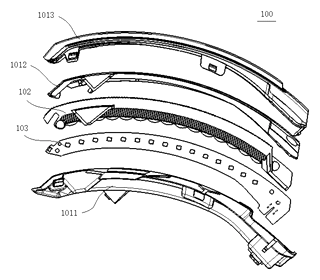
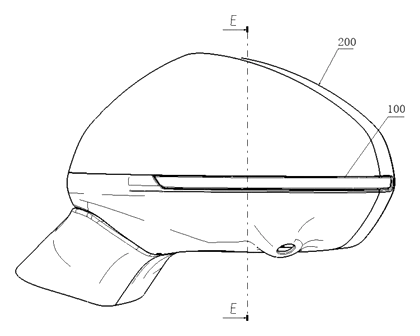
Drawings reproduced from the public patent document for reference.
Frequently asked questions
How does the “running water” effect work?
The effect is created by a series of LEDs arranged along a driving board. The driver circuit activates these LEDs in a specific sequence, one after another. The light guide then diffuses and transports this light, so instead of seeing individual dots, you see a smooth wave of light moving across the mirror surface.
Why is the light source hidden?
Hiding the LEDs behind the light guide reduces glare for following drivers and gives the mirror a cleaner, more premium look. It also helps protect the sensitive electronic components from weather and debris, extending the lifespan of the unit.
Does it meet US safety standards?
The mechanical design alone does not ensure compliance. To sell in the US, the finished product must pass FMVSS 108 tests for color, intensity, and flash timing. We recommend working with a certified lab to validate your specific configuration.
Can I install this on any mirror?
No. The housing dimensions and the curvature of the transparent cover are specific to certain mirror models. You need to confirm that the physical footprint matches your vehicle’s mirror assembly before ordering.
What happens if the LEDs fail?
Since the LEDs are on a shared driver board, individual failures usually do not stop the whole unit from working, though the animation may have a gap. Consistent binning and thermal management help minimize early failures.
Is the light uniform?
Yes, the patent emphasizes a collimating lens and a textured reflective surface to distribute light evenly. This prevents the “hot spot” issue common in cheaper direct-LED designs, resulting in a softer, consistent glow across the entire lens.
Can this design be made and sold in the US?
The patent is in force in China, but the public record shows no US counterpart. This means you can manufacture and sell this specific design in the US without infringing this patent. However, because automotive lighting is a crowded patent field, you should conduct a freedom-to-operate search to check for other relevant US patents before launching.
Are you affiliated with the patent owner?
No. IP2M is an independent design and manufacturing service working from the public patent document.
Request a quote
Click Request a Quote below to see our email address - copy it, or open your email app with a ready-made message. Please mention patent CN215636973U in the subject.
Helpful details to include:
- Your company and channel (auto parts supplier, customization shop, OEM integrator)
- Target mirror models and dimensions
- Animation preference (speed, direction, color)
- Quantity needed for pilot and mass production
- Certification needs (e.g., FMVSS 108 assistance)
- Timeline - when you would like samples and the first shipment
You can also reach us at (332) 203-9997.
Page editor: Daniel Chen, Product Research Editor · IP2M
Last updated November 5, 2026. If something on this page looks wrong, email [email protected] and we will check it against the patent.
Interested in building this?
Tell us your target market, quantity and timeline. We reply with options for prototyping, small-batch runs or volume production.
Send your inquiry to
Please put CN215636973U in the subject line and tell us your company, country, estimated quantity and timeline.
Prefer to talk? Call (332) 203-9997.
More product-ready patents
All Lighting patents →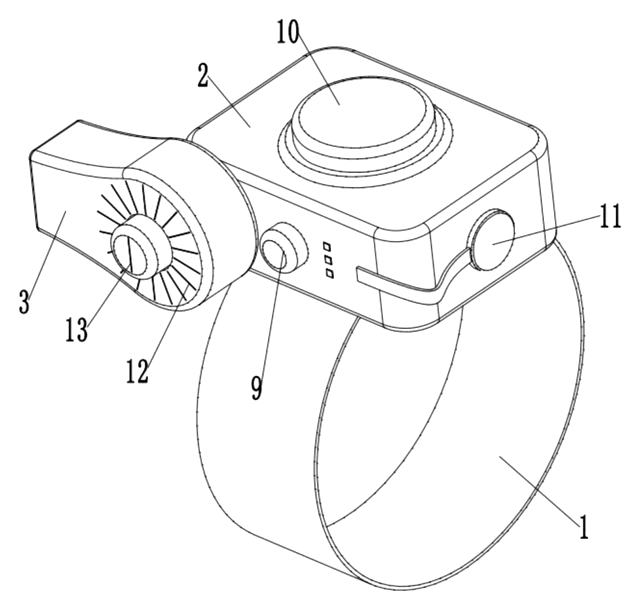
Lighting
Wrist-Worn Flashlight with Click-Lock Angle Adjustment
Rechargeable wrist flashlight whose lamp turns and locks at an angle with a push button.
Patent CN113915544B
Lighting
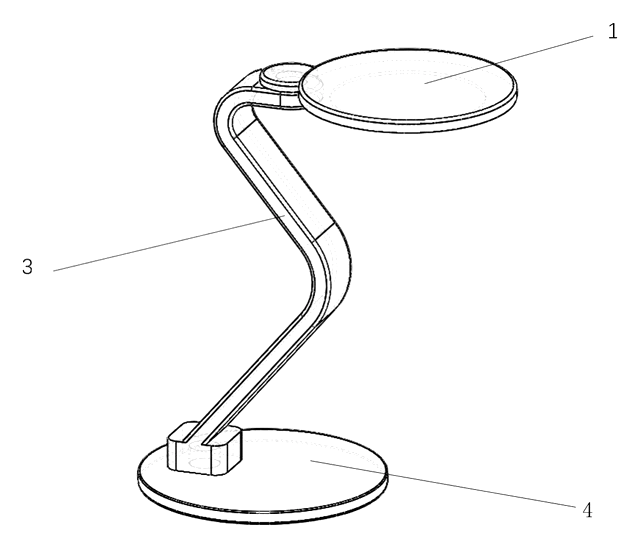
Self-Folding Desk Lamp That Turns into a Phone Stand
Desk lamp with a shape-memory stem that unfolds when warm and folds into a phone stand.
Patent CN213237087U
Lighting
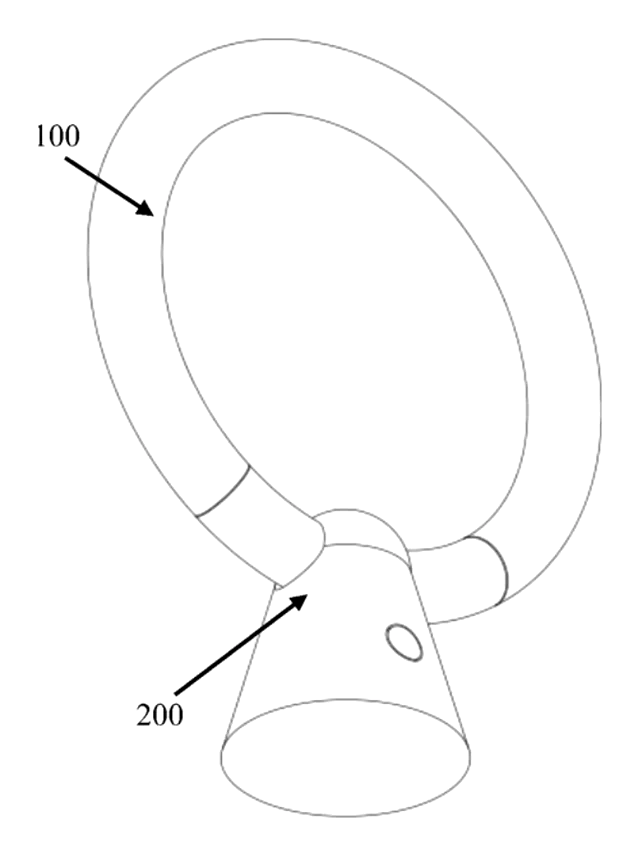
Ring-Shaped Outdoor Lantern That Lifts Off a Power-Bank Charging Base
Ring lantern with a battery handle that docks in a cone base with its own battery, clamp and charging plug.
Patent CN212408329U
Lighting
LED Flameless Candle with an Outside Flame Shade and Wax Dish Top
Battery LED candle: flame shade stands above a dished wax top, angled LEDs light a printed wick.
Patent CN205424561U
Lighting
Telescoping Tripod Portable Work Light with Fold-In Light Panels
Telescoping tripod work light with dual light panels that fold flat into the base.
Patent CN207298471U
Lighting
Self-Cooling and Self-Cleaning LED Street Light with Rainwater Harvesting
LED street lamp that harvests rain to cool its heat sink and spray-wash the lens automatically.
Patent CN205480639U
Browse by category
- Apparel & Accessories (41)
- Baby & Kids (26)
- Bags & Luggage (15)
- Bath & Personal Care (27)
- Car Accessories (22)
- Furniture, Bedding & Storage (21)
- Garden & Outdoor (29)
- Health & Wellness (12)
- Home, Kitchen & Cleaning (44)
- Lighting (21)
- Packaging & Containers (11)
- Pet Products (10)
- Phone & Camera Accessories (8)
- Retail Display (22)
- School, Office & Art (31)
- Sports & Recreation (40)
- Tools & Workshop (49)
- Toys & Games (20)
This page is based on the public patent document CN215636973U, assigned to Guangzhou Wei Si Automobile Parts Co ltd. IP2M is an independent manufacturing service and is not affiliated with, endorsed by or licensed by the patent owner. Images marked as concept renderings are illustrations, not photos of an existing product. Patent status information is provided for reference only and is not legal advice; confirm freedom to operate for your market before production. Full disclaimer.