
Patent CN216612061U
Updated November 5, 2026Bottle Cap with Integrated Water-Soluble Flavor Chamber
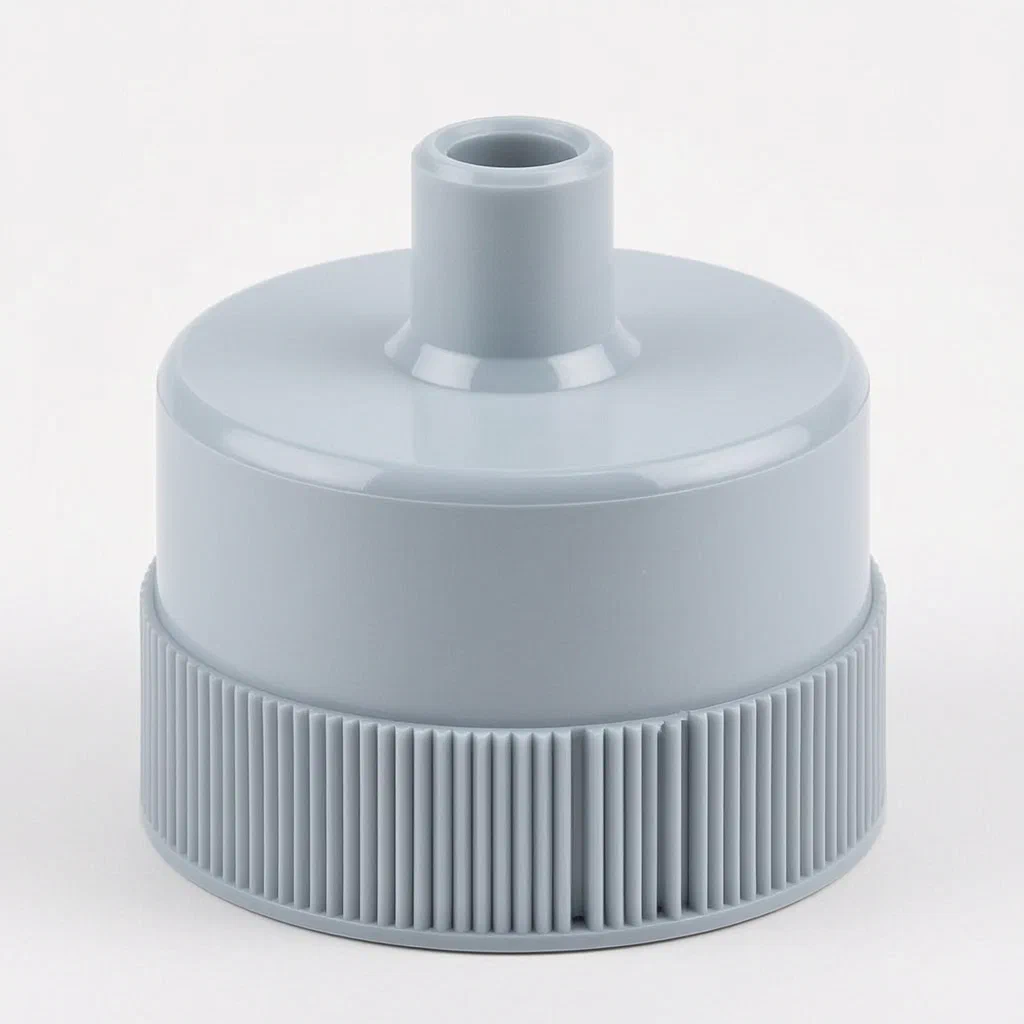
Standard caps seal bottles but offer no way to mix flavors without opening, pouring, and stirring. This design embeds a flavor chamber within the cap itself. Water-soluble granules sit in a protected space between the cap's top and bottom plates. When liquid enters from the bottle, it passes through blocking filters, dissolves the granules, and exits ready to drink. It turns any compatible bottle into a self-mixing container.
- China utility model - withdrawn
- No filings outside China
- Food contact packaging
- Integrated flavor chamber design
Splat! What let you down?
🧊
Internal Flavor Chamber
A dedicated space within the cap holds water-soluble granules safely away from the main liquid until use.
🚰
Two-Way Flow Path
Liquid enters from the bottle, mixes with the flavor, and exits through the top opening in one continuous path.
🛡️
Blocking Structures
Filters on the top and bottom plates keep solid granules inside while allowing liquid to pass through freely.
🔩
Modular Assembly
The bottom plate can be detachable or integrally formed, offering flexibility in manufacturing and assembly.
Bring this product to market
- ✓ Patent review Patent family and legal status reviewed in the relevant jurisdictions.
- 2 Product brief · now How it works, uses and options written up
- 3 Prototype First samples for buyers to review
- 4 Pilot run Small first batch for launch customers
- 5 Volume production Repeat orders at scale
Buyer interest
– of 100 buyers needed to start prototyping
One click, no sign-up. Each vote is one real visitor, and products with the most interest go to prototyping first.
Build team: no members yet. Need a partner, co-funding or skills to build this? Join and we introduce the team once it forms.
Patent Rights & Team Participation
Before joining a development team, participants should ensure they have the necessary rights or authorization to participate in the project.
Participation is generally appropriate where:
- You own the relevant patent rights or have obtained permission or a license from the rights holder.
- The relevant patent rights have expired or have been legally invalidated in the jurisdictions where the planned activities will take place.
- The planned development, manufacturing, and commercialization activities have been independently assessed and do not infringe applicable patent rights in the relevant jurisdictions.
Important: Being located outside a country where a patent is protected does not automatically exempt you from patent infringement risks. Patent rights may apply based on where development, manufacturing, use, sale, or import activities take place.
IP2M does not grant any patent license or authorization through team participation. Joining a project does not provide permission to use, manufacture, or commercialize patented technology.
The problem
Traditional bottled beverages require consumers to open the cap, add powder or concentrate, shake vigorously, and often spill during the process. Alternatively, pre-mixed drinks have limited shelf life because the flavor degrades once combined with the liquid. There is a gap in the market for a simple, single-container solution that keeps the flavor component isolated from the liquid until the moment of consumption, yet allows instant mixing without additional tools or complex mechanisms. Existing flip-top caps do not provide a secure, sealed environment for dry ingredients, leading to moisture absorption and clumping before use.
The solution
The patented design solves this by integrating a secondary compartment directly into the cap structure.
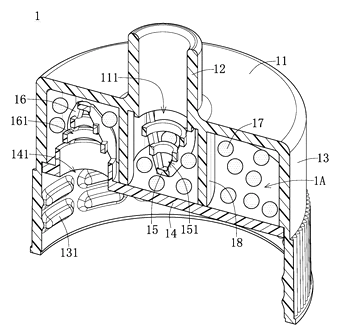
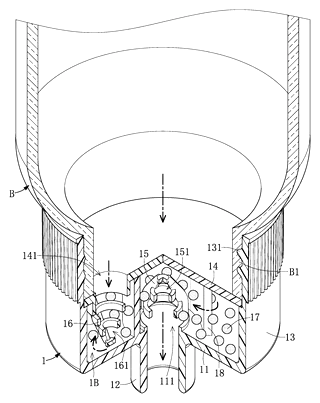
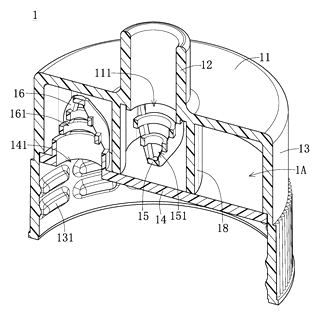
- Top Plate: Features a first opening extending through it, serving as the final exit point for the mixed beverage.
- Annular Side Wall: Connects to the top plate and contains locking structures on its inner side to engage with the bottle mouth.
- Bottom Plate: Connected to the inner side of the annular wall, forming a sealed “accommodating space” with the top plate. It has a second opening for liquid intake.
- Blocking Structures: A first blocking structure on the top plate and a second on the bottom plate act as barriers. They are positioned to block solid flavor granules from leaving the chamber while permitting liquid flow.
- Water-Soluble Components: Granules or capsules are placed in the accommodating space. They remain dry until liquid enters.
- Flow Guide: Optional structures can direct the liquid path to ensure thorough mixing before exiting.
Who it is for
- Functional Beverage Brands: Companies selling electrolyte waters, vitamin-infused drinks, or coffee concentrates who want to differentiate their product with a “freshly mixed” experience.
- Outdoor and Travel Gear Manufacturers: Sellers of portable hydration systems where users need to add flavor packets without carrying extra containers or spoons.
- Private Label Retailers: Supermarkets and convenience store chains looking for exclusive SKUs that stand out on shelves due to the unique cap mechanism.
- Health Supplement Companies: Brands offering protein powders or herbal extracts that degrade when pre-mixed, requiring isolation until consumption.
How it works
The main parts
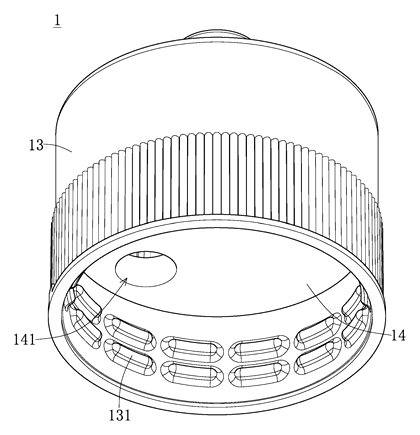
| No. | Part | What it does |
|---|---|---|
| 11 | Top Plate | Contains the first opening (exit) and first blocking structure. |
| 13 | Annular Side Wall | Connects top and bottom; has locking teeth for the bottle. |
| 14 | Bottom Plate | Contains the second opening (intake) and second blocking structure. |
| 1A | Accommodating Space | The chamber between plates holding the flavor components. |
| 17 | Flavor Component | Water-soluble granules or capsules stored in the space. |
| 15, 16 | Blocking Structures | Filters preventing solids from escaping but letting liquid pass. |
Operating Steps
- Preparation: The cap is manufactured with the flavor components (17) already sealed inside the accommodating space (1A). The blocking structures (15, 16) keep them contained.
- Attachment: The user screws the cap onto a bottle containing plain liquid (water, milk, etc.). The locking structures (131) engage the bottle mouth.
- Activation: The user tilts the bottle or shakes it. Liquid from the bottle body enters the cap through the second opening (141) in the bottom plate.
- Mixing: The liquid passes through the second blocking structure (16), enters the chamber, and dissolves the water-soluble flavor components (17).
- Dispensing: The now-flavored liquid moves toward the top plate, passes through the first blocking structure (15), and exits through the first opening (111) for drinking.
Applications
Ready-to-Mix Coffee
Ideal for cold brew or hot water bottles where ground coffee or instant espresso pellets are kept dry in the cap until the consumer adds water, ensuring freshness without brewing equipment.
Electrolyte Hydration
Sports drinks often lose potency when pre-mixed. This cap allows athletes to carry plain water and add electrolyte tablets or powder just before sipping, maintaining optimal concentration levels.
Vitamin-Enhanced Water
Sensitive vitamins like C and B-complex degrade in liquid over time. Storing them in the cap’s dry chamber preserves their efficacy until the moment of consumption, appealing to health-conscious buyers.
Novelty and Kids’ Drinks
For children’s juice boxes or soda bottles, the cap can contain candy-like flavor bursts or color-changing agents, turning the act of drinking into an interactive experience.
Where it is less suitable
- Carbonated Beverages: High pressure from carbonation may force liquid through the blocking structures too quickly or cause leakage if the seal isn’t designed for high PSI.
- Thick Liquids: Smoothies or viscous syrups may not flow easily through the small openings of the blocking structures, leading to poor mixing efficiency.
- Single-Use Cheap Packaging: The added complexity of the double-plate structure increases mold costs compared to standard screw caps, making it less viable for ultra-low-cost commodity products.
Patent & Production
At a glance
| Patent number | CN216612061U (application CN202122250866) |
| Type | China utility model (实用新型) - protects product shape and structure |
| Original title | Bottle Cap and Bottled Beverage (瓶盖及瓶装饮料) |
| Patent owner | Individual |
| Inventors | Wei Hongfan |
| Filing date | 2021-09-16 |
| Grant date | 2022-05-27 |
| Status (China) | Withdrawn - the owner abandoned the patent right (recorded 2025-08-19) |
| Patent family | Public record shows Chinese filings only - no US, European, Japanese, PCT or other filings listed |
| Cited by | 2 later documents |
| Source | Google Patents (search for CN216612061U) |
What the claims cover, in plain language
Claim 1 - A bottle cap comprising a top plate with a first opening, an annular side wall, and a bottom plate with a second opening. These form an accommodating space containing water-soluble edible flavor components. First and second blocking structures are placed on the top and bottom plates respectively to keep the solid flavor components inside while allowing liquid to flow through the space.
Claim 2-4 - Adds a flow guide structure within the accommodating space to change the liquid path, potentially connecting the top and bottom plates to form a specific fluid channel.
Claim 5 - Specifies that the bottom plate and second blocking structure can be integrally formed and the bottom plate is detachably disposed inside the ring-shaped sidewall.
Claim 6-8 - Details the flavor components as granules or capsules containing solid or non-solid flavoring agents.
Claim 9 - Covers the entire bottled beverage system using the cap described above.
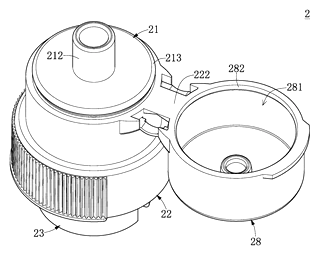
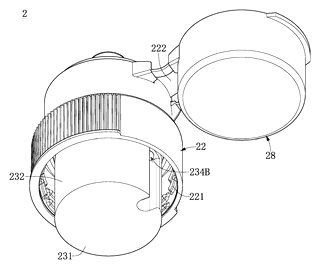
Claims 10-20 - Describe alternative embodiments, including a liquid storage member with auxiliary walls and communication channels, and variations on the lifting cover and snap-fit mechanisms.
This is a simplified reading for orientation only. The legal scope is defined by the exact claim wording in the official Chinese document.
What this means for US production
This patent was filed in China and has been withdrawn (abandoned) since August 2025. The public record shows no US or other foreign counterpart.
Two points to settle early:
- Other patents may exist. The field of “mix-in-the-cap” beverage closures is competitive. While this specific structural arrangement is no longer protected in China, other companies hold active patents on similar dual-chamber caps or valve-based mixing systems in the US. A freedom-to-operate (FTO) review is recommended to check for existing US patents on integrated flavor chambers before tooling.
- Material Compliance. Since the cap contacts food/beverages, the resin choice must meet FDA standards. The withdrawal of the patent does not exempt the product from regulatory safety requirements.
Customization and manufacturing
What can be customized
| Area | Options |
|---|---|
| Chamber Volume | Size of the accommodating space based on flavor dosage (e.g., 5g vs 10g granules). |
| Opening Geometry | Diameter and shape of first/second openings to control flow rate and filtration. |
| Blocking Structure | Mesh density or filter type (perforated plate vs. woven mesh insert). |
| Thread Type | Compatible with standard PCO 1810, 1881, or custom bottle neck finishes. |
| Decoration | In-mold labeling (IML) or pad printing on the outer top surface. |
| Assembly | Snap-fit bottom plate vs. ultrasonically welded fixed chamber. |
Things to plan for (US market)
- FDA 21 CFR - Food Contact Substances. All resins used in the cap must be approved for food contact.
- Proposition 65 (California) - Screening for chemicals known to cause cancer or reproductive harm in plastics and adhesives.
- Child Safety - If marketed near children, consider ASTM F963 toy safety standards if the cap is considered a play item, though primarily it is a package.
- Recycling Codes - Ensure the resin type matches local recycling capabilities (usually PP #5 or HDPE #2).
How a project runs
- Inquiry - Define bottle compatibility, flavor volume, and target cost.
- Design - CAD modeling of the two-plate chamber and blocking structures.
- Prototype - 3D printed samples for fit testing; CNC machined aluminum for initial molding trials.
- Pilot Run - Injection molding test shots; leak and flow rate verification.
- Production - Multi-cavity injection molding, assembly, and quality control.
Quantities & timeline
The design requires precision molds for the top and bottom plates, which are likely separate cavities or a multi-shot mold depending on complexity. Flow rates depend heavily on the tolerance of the blocking structures. Send us your bottle neck specs, desired flavor volume, and estimated annual quantity and we will reply with options.
Production notes
Tooling and process
Injection molding is likely the main process for the cap body, top lid, and bottom plate. Multi-cavity steel molds are typically needed for the chamber plates and blocking structures. The perforated or mesh blocking insert may be a separate molded part or an inserted screen. Assembly usually relies on snap-fit or ultrasonic welding to secure the bottom plate, with a silicone or TPE gasket press-fit where a seal is required.
Cost drivers
Tooling cost depends mainly on the number of cavities and the complexity of the two chamber plates. Material grade matters because the resin must be food-contact approved. Add-on costs typically come from decoration such as in-mold labeling and from leak testing.
Prototyping path
Prototypes would likely start with 3D-printed cap bodies for fit and flow checks, followed by machined or silicone-cast inserts for the blocking structure. Functional samples should be tested on the target bottle neck finish. Flow rate and leak behavior typically need several iterations before tooling.
What we would change before tooling
We would likely tune the opening sizes and mesh density against the intended granule size. Wall thickness around the threads and the bottom plate joint should be reviewed for moldability. The seal area may need a small redesign depending on the bottle finish selected.
Common failure points
Leaks at the bottom plate joint are a typical risk if the weld or snap-fit is inconsistent. Granules may bridge at the openings if the mesh is too fine for the flavor particle size. Thread engagement and cap torque can vary with resin shrinkage, so dimensions typically need confirmation on pilot shots.
Patent drawings
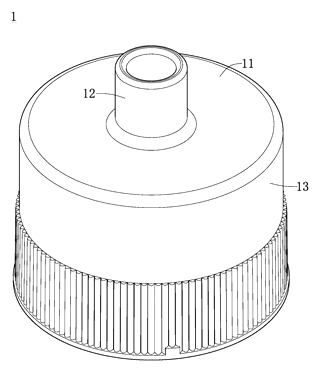
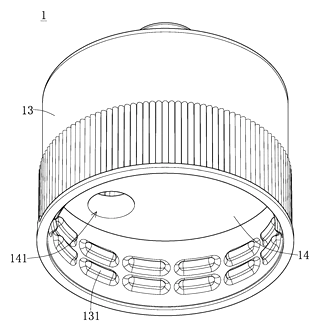
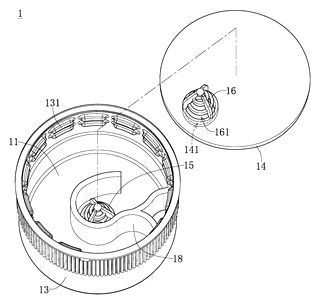
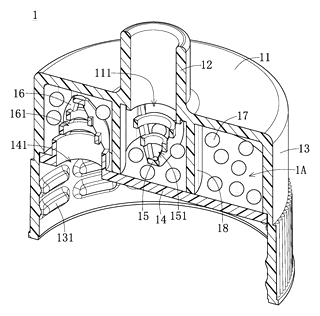
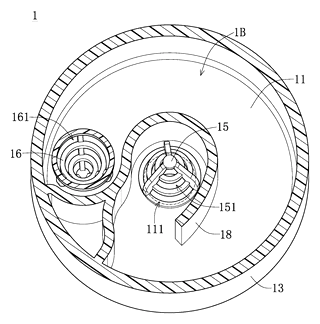
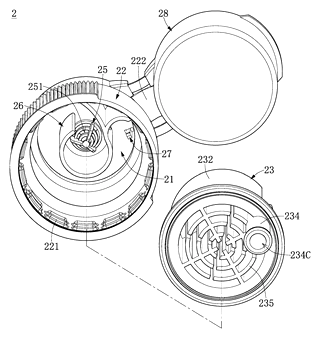
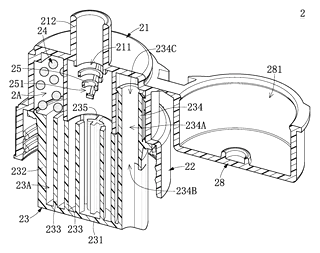
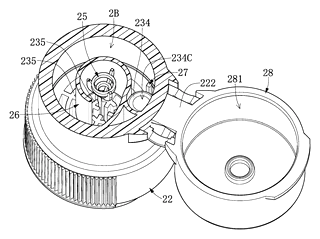
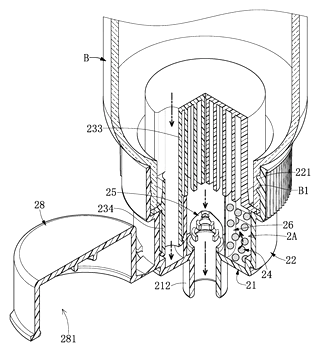
Drawings reproduced from the public patent document for reference.
Frequently asked questions
How does the flavor get into the drink?
The cap has a hidden chamber between its top and bottom plates. You put water-soluble granules in there. When you tilt or shake the bottle, liquid from the bottle enters the chamber through the bottom opening, dissolves the granules, and then exits through the top opening as a flavored drink.
Do I need to press a button or pull a tab?
No. The design relies on gravity and movement. As long as the bottle is upright enough for liquid to reach the bottom opening, and tilted enough for the mixed liquid to reach the top opening, it works automatically. Some versions might include a lifting cover for hygiene, but the core mixing is passive.
Can it handle hot liquids?
It depends on the plastic used. Standard polypropylene (PP) handles up to about 100°C (212°F), suitable for warm water or tea. For boiling water, you would need a higher temperature-resistant resin like Tritan or special-grade PP, confirmed in design.
What types of flavors can be used?
Any water-soluble ingredient: coffee granules, sugar, salt, electrolyte powders, or even freeze-dried fruit bits if they dissolve quickly. The patent mentions granules and capsules. Non-soluble items like large fruit chunks would clog the blocking structures.
Is it difficult to clean?
These caps are typically designed for single-use or disposable applications to maintain hygiene. If reusable, the bottom plate can sometimes be detached for cleaning, but this adds complexity to the sealing mechanism. Most commercial implementations treat it as a consumable part.
Will it leak if I drop the bottle?
The blocking structures are designed to keep solids in, but liquid can move. If the bottle is shaken violently, liquid might splash into the chamber prematurely. However, the tight tolerances of the injection-molded parts usually prevent significant leaking unless the cap is loose on the bottle threads. Drop tests are required to confirm seal integrity.
Can this design be made and sold in the US?
The patent was filed in China and has been withdrawn (abandoned) as of August 2025. The public record shows no US counterpart, so this specific patent does not restrict the design in the US. However, other active US patents may cover similar mixing technologies, so a freedom-to-operate check is advised.
Are you affiliated with the patent owner?
No. IP2M is an independent design and manufacturing service working from the public patent document.
Request a quote
Click Request a Quote below to see our email address - copy it, or open your email app with a ready-made message. Please mention patent CN216612061U in the subject.
Helpful details to include:
- Your company and channel (beverage brand, supplement maker, outdoor gear retailer)
- Bottle neck finish (PCO 1810, 1881, or custom dimensions)
- Flavor volume needed in the chamber (grams or milliliters)
- Target retail price per unit
- Estimated quantity (initial order and annual projection)
- Timeline - when you would like prototypes and mass production
You can also reach us at (332) 203-9997.
Page editor: Emily Zhang, Product Editor · IP2M
Last updated November 5, 2026. If something on this page looks wrong, email [email protected] and we will check it against the patent.
Interested in building this?
Tell us your target market, quantity and timeline. We reply with options for prototyping, small-batch runs or volume production.
Send your inquiry to
Please put CN216612061U in the subject line and tell us your company, country, estimated quantity and timeline.
Prefer to talk? Call (332) 203-9997.
More product-ready patents
All Packaging & Containers patents →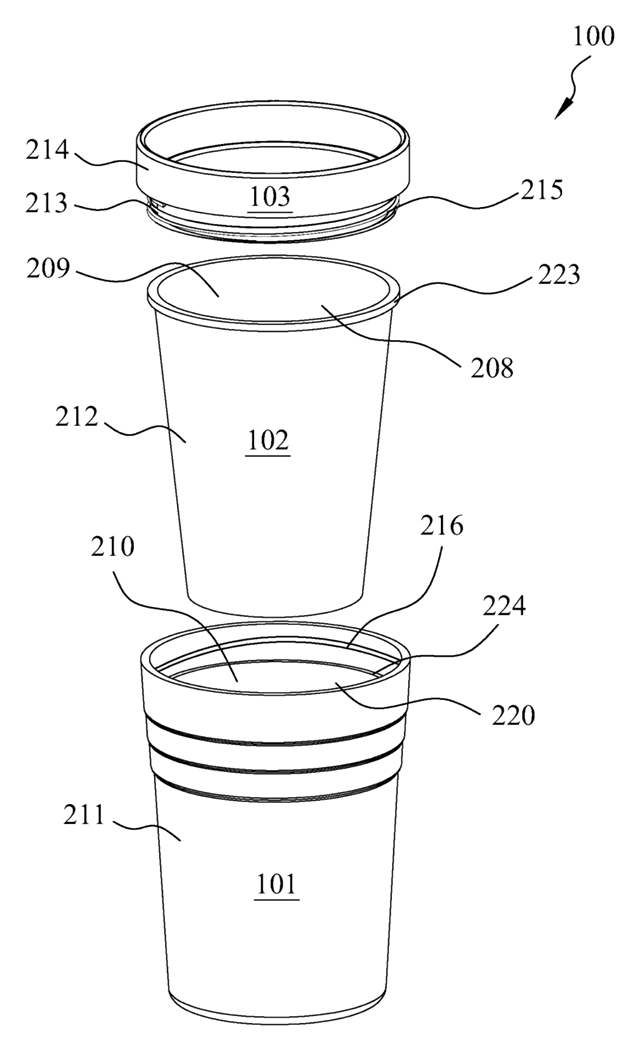
Packaging & Containers
Rigid Shell Container with Removable Silicone Liner
Cup or food box with a rigid outer shell and a removable, leak-tight silicone liner.
Patent CN212638395U
Packaging & Containers
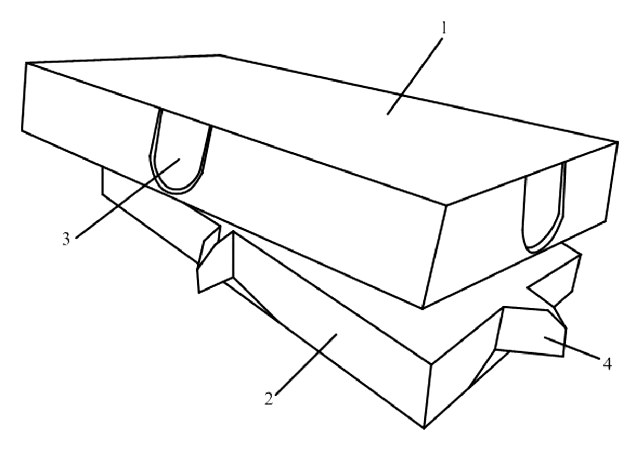
Child-Resistant Paperboard Medicine Box with Three-Point Opening
Paperboard medicine box that opens only when press points on three sides are pushed together.
Patent CN107117365B
Packaging & Containers
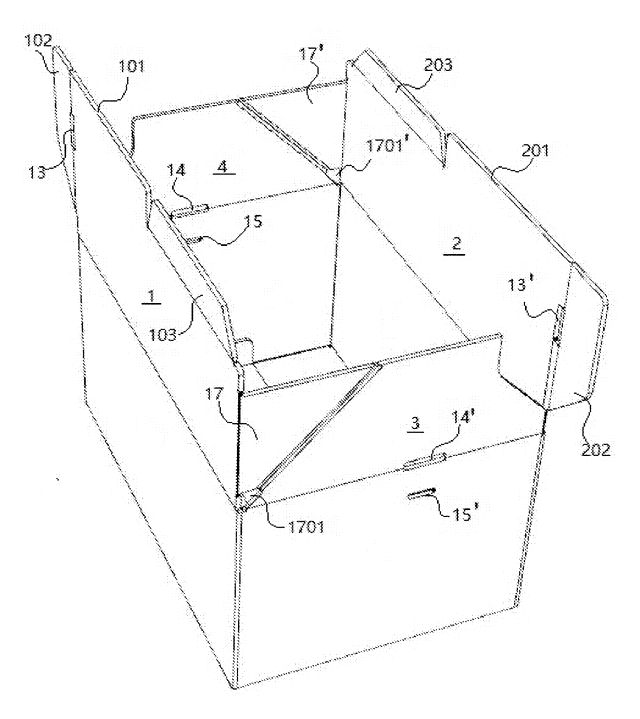
Tape-Free Reusable Shipping Box with Zigzag Interlocking Flaps
Reusable carton closed without tape: zigzag flaps interlock, tabs tuck in, a U-clip locks the lid.
Patent CN207242262U
Packaging & Containers
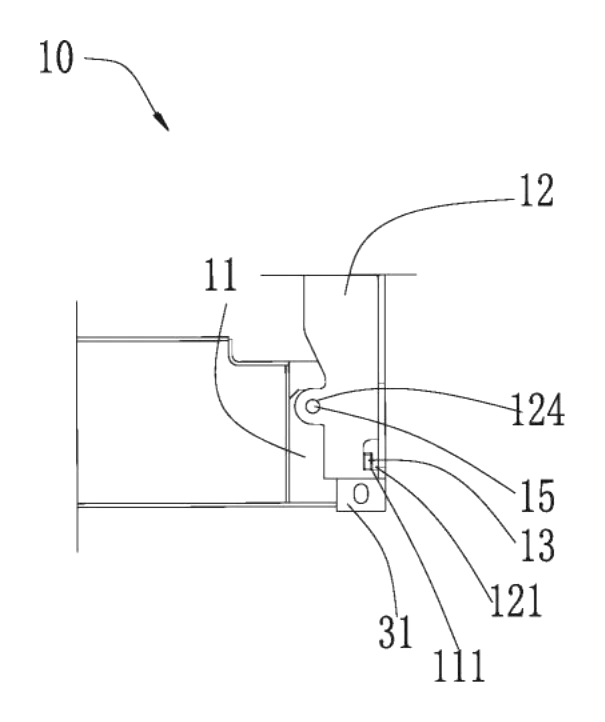
Hinge Device for Folding Containers with Integrated Twistlock Hole
Folding container hinge with a built-in twistlock hole and observation port.
Patent CN113460518B
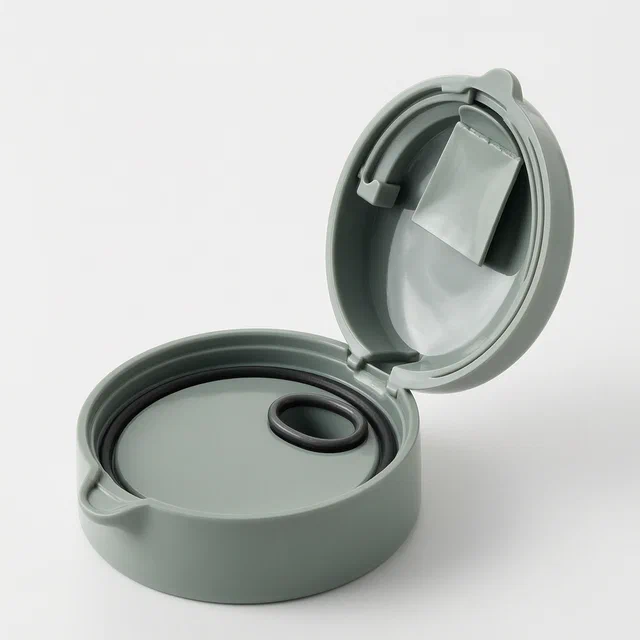
Packaging & Containers
Cylindrical Plastic Bottle Cap with Built-In Soup Ladle
Plastic bottle cap storing a soup ladle inside, with a flip-top lid and inner sealing closure.
Patent CN106144192B
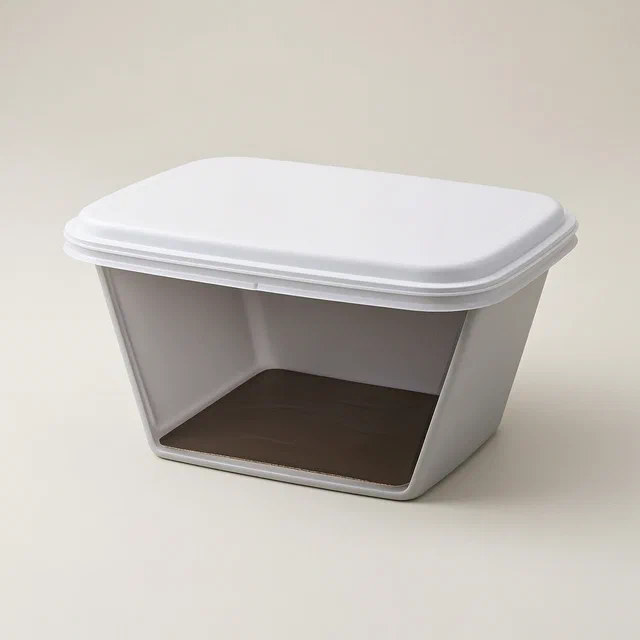
Packaging & Containers
Insulated Food Packaging Box with Detachable Liner and Self-Heating Cavity
Detachable insulated food box with a sealed cavity for a self-heating sheet and a temperature sticker.
Patent CN108372980B
Browse by category
- Apparel & Accessories (41)
- Baby & Kids (26)
- Bags & Luggage (15)
- Bath & Personal Care (27)
- Car Accessories (22)
- Furniture, Bedding & Storage (21)
- Garden & Outdoor (29)
- Health & Wellness (12)
- Home, Kitchen & Cleaning (44)
- Lighting (21)
- Packaging & Containers (11)
- Pet Products (10)
- Phone & Camera Accessories (8)
- Retail Display (22)
- School, Office & Art (31)
- Sports & Recreation (40)
- Tools & Workshop (49)
- Toys & Games (20)
This page is based on the public patent document CN216612061U, assigned to Individual. IP2M is an independent manufacturing service and is not affiliated with, endorsed by or licensed by the patent owner. Images marked as concept renderings are illustrations, not photos of an existing product. Patent status information is provided for reference only and is not legal advice; confirm freedom to operate for your market before production. Full disclaimer.