
Patent CN216977474U
Updated November 6, 2026Vacuum Storage Case with Button-Activated Flexible Seal
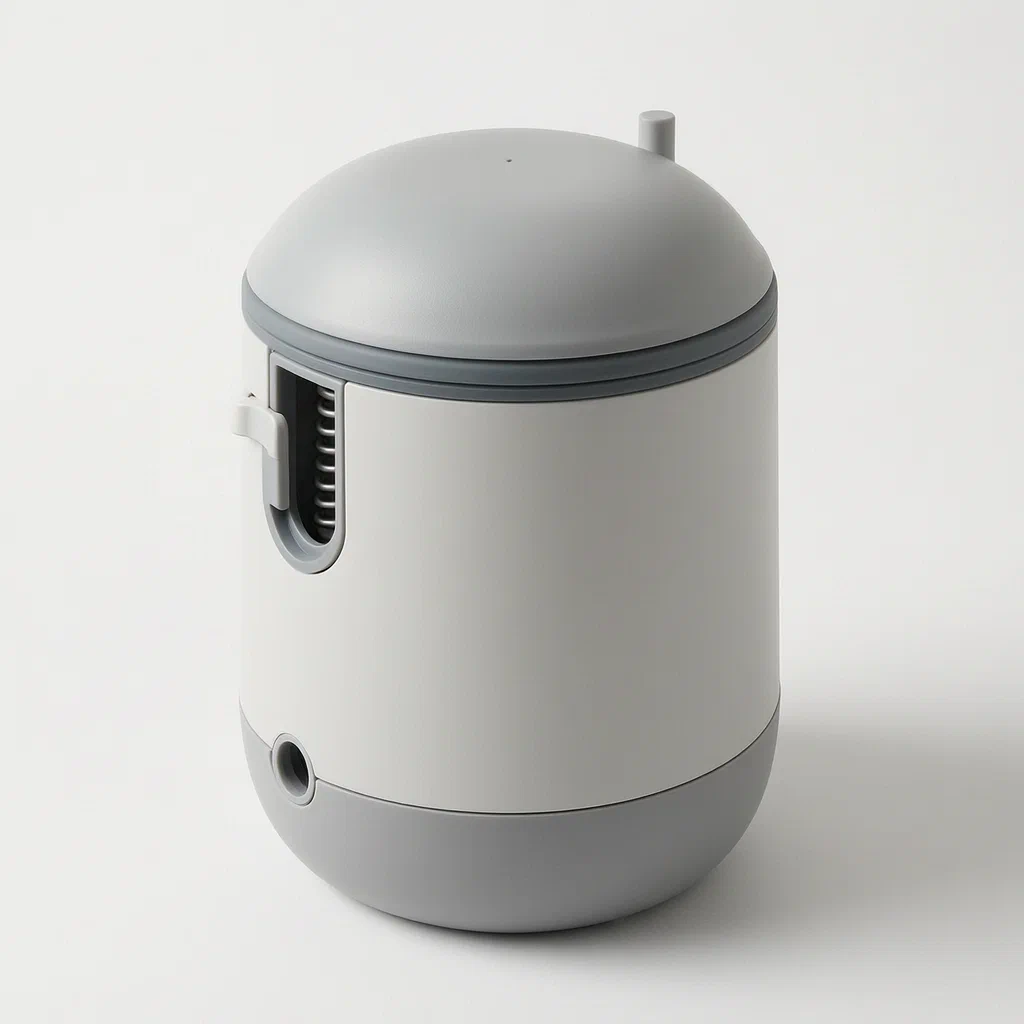
Traditional vacuum containers often rely on screw caps or complex valve systems that can fail if not tightened perfectly. This design simplifies the interface: a single sliding button controls the vacuum state. When pushed to one side, a torsion spring or elastic arm forces a flexible seal over the pumping port, locking in the vacuum. Pushing it back manually deforms the seal to open the port, letting you attach a pump. It is a robust, user-friendly solution for brands needing reliable preservation without intricate moving parts.
- China utility model - in force
- No filings outside China
- Plastic housing, flexible seal, spring mechanism
- Manual button actuation
Splat! What let you down?
🔘
Sliding Button Control
A simple linear slide opens or closes the vacuum port; no twisting required.
🛡️
Flexible Seal Deformation
The seal is pressed closed by an elastic member and opened by direct button pressure.
🔄
Elastic Return Force
Spring or elastic arms automatically reset the button to the sealed position when released.
🧩
Modular Assembly
Housing consists of a main body and a separate assembly seat for the button mechanism.
Bring this product to market
- ✓ Patent review Patent family and legal status reviewed in the relevant jurisdictions.
- 2 Product brief · now How it works, uses and options written up
- 3 Prototype First samples for buyers to review
- 4 Pilot run Small first batch for launch customers
- 5 Volume production Repeat orders at scale
Buyer interest
– of 100 buyers needed to start prototyping
One click, no sign-up. Each vote is one real visitor, and products with the most interest go to prototyping first.
Build team: no members yet. Need a partner, co-funding or skills to build this? Join and we introduce the team once it forms.
Patent Rights & Team Participation
Before joining a development team, participants should ensure they have the necessary rights or authorization to participate in the project.
Participation is generally appropriate where:
- You own the relevant patent rights or have obtained permission or a license from the rights holder.
- The relevant patent rights have expired or have been legally invalidated in the jurisdictions where the planned activities will take place.
- The planned development, manufacturing, and commercialization activities have been independently assessed and do not infringe applicable patent rights in the relevant jurisdictions.
Important: Being located outside a country where a patent is protected does not automatically exempt you from patent infringement risks. Patent rights may apply based on where development, manufacturing, use, sale, or import activities take place.
IP2M does not grant any patent license or authorization through team participation. Joining a project does not provide permission to use, manufacture, or commercialize patented technology.
The problem
Many vacuum storage containers use screw-on lids or push-button valves that require precise alignment or multiple steps to operate. If a lid isn’t tightened enough, the vacuum leaks; if a valve is too complex, it may jam or fail after repeated use. Users often struggle with knowing whether the container is truly sealed, especially with opaque materials. There is a need for a simpler, more intuitive way to engage and disengage the vacuum seal without heavy manual torque or complex internal mechanisms.
The solution
This patent describes a vacuum storage case where the sealing action is controlled by a sliding button on the exterior. The core of the design is the interaction between the button, a first elastic member, and a flexible sealing member covering the air pumping hole.
When the button is in the first position (the default/rest state), the first elastic member exerts force on the flexible sealing member, pressing it against the housing to close the through hole. This creates a tight seal, maintaining the vacuum inside the storage space.
When the user slides the button to the second position, the button physically pushes against the flexible sealing member, deforming it away from the hole. This opens the passage, allowing an external air-pumping device to extract air from the storage space. Once the button is released, the elastic force returns it to the first position, re-sealing the unit.
Who it is for
- Cosmetics and skincare brands: For storing sensitive serums, creams, or false eyelash adhesives that degrade quickly when exposed to air.
- Food and beverage packagers: Small-batch producers of spices, coffee grounds, or dried fruits who need a reusable, easy-to-close vacuum option.
- Pharmaceutical and supplement manufacturers: For unit-dose packaging of pills or powders that must remain moisture-free.
- Consumer goods designers: Looking for a simple, tool-free mechanism to replace traditional screw caps or flip-top lids.
How it works
The main parts
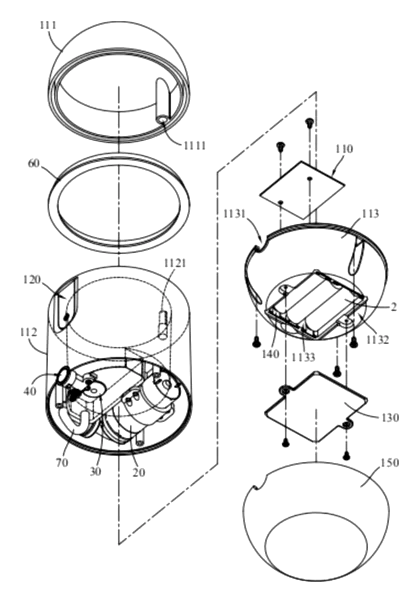
The device consists of a housing split into a main body part and an assembly seat part. The main body contains the storage space and the through hole. The assembly seat holds the operating components.
| No. | Part | What it does |
|---|---|---|
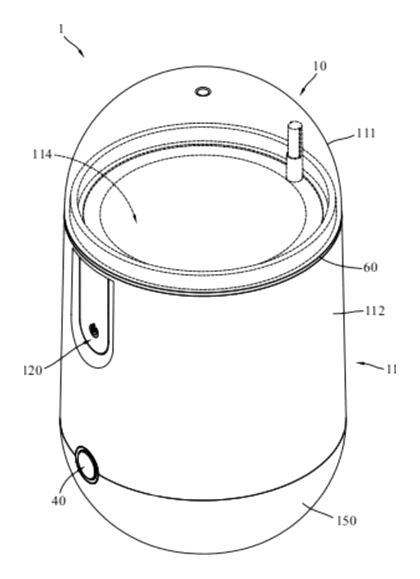
| 10 | Housing | Includes main body (11) and assembly seat. Forms the storage space. |
| 20 | Air-pumping device | Connected to the hole to extract air (external component). |
| 30 | Flexible sealing member | Covers the through hole; deforms to open/close. |
| 40 | Button | Slides between positions to actuate the seal. |
| 50 | First elastic member | Presses the seal closed when the button is in the first position. |
| 111 | Cover/Lid | Part of the main body, often with positioning holes. |
| 112 | First shell piece | Contains positioning posts for assembly. |
Operating steps
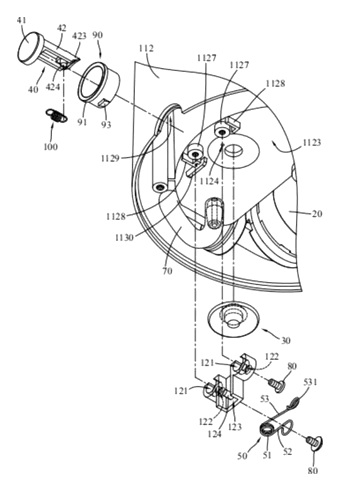
- Initial State: The button rests in the first position. The first elastic member (which can be a torsion spring or a simple elastic arm) presses the flexible sealing member against the through hole, ensuring the storage space is isolated from the outside.
- Opening: The user slides the button along the assembly seat’s guide slot to the second position. The extension part of the button contacts the flexible sealing member, pushing it aside and deforming it to uncover the through hole.
- Pumping: With the hole open, an air-pumping device attached to the housing extracts air from the storage space, creating a vacuum.
- Closing: The user releases the button. The second elastic member (or the return force of the system) pushes the button back to the first position. As the button withdraws, the first elastic member snaps the flexible sealing member back into place, sealing the vacuum.
Applications
False Eyelash Adhesive Storage
Glue for false eyelashes dries out rapidly when exposed to air. This case allows users to pull a simple button to pump out air, keeping the adhesive fresh longer than standard tubes.
Travel-Sized Cosmetics
For liquid foundations or oils, preventing spills and oxidation is key. The compact design fits in toiletry bags, and the button mechanism ensures the vacuum is maintained without fiddling with small screw caps.
Spice and Herb Preservation
Small quantities of expensive spices like saffron or truffle salt lose potency quickly. A vacuum-sealed container preserves aroma and flavor, with the button offering a quick check-and-seal routine.
Pharmaceutical Unit Doses
For tablets or capsules that are sensitive to humidity, this container provides a barrier against moisture. The clear status of the button (sealed vs. open) helps patients manage their medication storage easily.
Where it is less suitable
- Large volume storage: The mechanism relies on manual deformation of a seal, which may not scale well to large industrial tanks requiring high-pressure vacuums.
- High-frequency automated lines: While simple, the manual button operation is slower than fully automated capping machines used in mass production.
- Extreme temperature environments: The flexible seal material properties may change significantly under extreme heat or cold, potentially affecting the seal integrity unless specific materials are chosen.
Patent & Production
At a glance
| Patent number | CN216977474U (application CN202123101988) |
| Type | China utility model (实用新型) - protects product shape and structure |
| Original title | Vacuum Storage Case (真空储存盒) |
| Patent owner | Jiuen Lianke Tianjin Technology Co ltd |
| Inventors | Jin Dongmin |
| Filing date | 2021-12-06 |
| Grant date | 2022-07-15 |
| Status (China) | In force - valid until at most 2031-12-06, provided annual fees are paid |
| Patent family | Public record shows Chinese filings only - no US, European, Japanese, PCT or other filings listed |
| Cited by | 2 later documents |
| Source | Google Patents (search for CN216977474U) |
What the claims cover, in plain language
Claim 1 defines a vacuum storage case comprising a housing with a storage space, a through hole, and an air pumping hole. An air extracting device connects to the pumping hole. A flexible sealing member covers the through hole. A button slides on the housing between a first and second position. A first elastic member presses the flexible sealing member. In the first position, the button separates from the seal, and the elastic member closes the hole. In the second position, the button deforms the seal to open the hole. The housing has a main body and an assembly seat, with the button and elastic member mounted on the seat.
Claims 2-3 specify the flexible sealing member has a pressed portion covered by the seal, and the first elastic member can be a torsion spring with a spiral winding portion that abuts the seal.
Claims 4-6 describe a second elastic member fixed to the assembly seat and button, providing return force. The button has an operation part and an extension part sliding in a guide slot.
Claims 7-9 offer alternative embodiments for the first elastic member, such as an elastic piece with an arc-shaped convex surface or a bending tip that directly abuts the seal. Claim 9 notes the button has a pushing tip that deforms the seal in the second position.
Claim 10 mentions a protection piece sleeved on the housing, with hardness lower than the housing.
This is a simplified reading for orientation only. The legal scope is defined by the exact claim wording in the official Chinese document.
What this means for US production
This patent was filed in China and is currently in force. Making or selling this specific design in China requires the owner’s permission. However, the public record shows no US counterpart. Therefore, this Chinese patent alone does not restrict manufacturing or sales in the United States.
Two points to settle early:
- Other patents may exist. Vacuum packaging is a crowded field. While this specific button-spring mechanism is unique to this filing, similar “push-to-open” or “slide-to-seal” concepts might be covered by other US patents held by major packaging companies. A freedom-to-operate (FTO) review is recommended to ensure no infringement on existing US intellectual property.
- Material compatibility. The claims mention plastic housings and flexible seals. Depending on the contents (food, cosmetics, pharma), the materials must meet specific safety standards, which are independent of the patent but critical for market entry.
Customization and manufacturing
What can be customized
| Area | Options |
|---|---|
| Capacity | Volume of the storage space (e.g., 5ml to 50ml) |
| Materials | Housing: PP, ABS, PETG; Seal: Silicone, TPE, EPDM |
| Finish | Matte, glossy, soft-touch coating, transparent |
| Mechanism | Spring type (torsion vs. compression), button travel distance |
| Branding | Logo embossing, pad printing, color matching |
Things to plan for (US market)
- FDA 21 CFR - If intended for food contact, all materials touching the contents must comply with FDA regulations for food-safe plastics and elastomers.
- CPSC / ASTM F963 - If marketed as a toy or containing small parts accessible to children, safety testing for choking hazards and toxicity is required.
- Prop 65 (California) - Screening for chemicals known to cause cancer or reproductive harm in plastics and coatings.
- ISO 11607 - If used for medical devices, packaging must meet sterility and integrity standards.
How a project runs
- Inquiry - Define capacity, target cost, and material requirements.
- Design - CAD modeling of the housing, seal, and button mechanism; simulation of spring forces.
- Prototype - CNC or 3D printed samples to test button feel and seal integrity.
- Tooling - Injection molds for housing, button, and seal; die casting or wire EDM for metal springs if needed.
- Production - Molding, assembly, leak testing, and packaging.
Quantities & timeline
Injection molding tools for multi-part assemblies (housing, button, seal) typically take 4-8 weeks to build. Assembly is usually semi-automatic due to the small size and delicate nature of the flexible seals. Send us your capacity, material preferences, quantity and target price and we will reply with options.
Production notes
Tooling and process
The housing and button are likely produced via injection molding, given the complex geometry of the guide slots and mounting features. The flexible seal may also be injection molded using a softer elastomer or blow-molded depending on wall thickness requirements. Snap-fit or press-fit techniques are typical for assembling the internal components without screws, though the patent mentions screw fixation for some shell pieces.
Cost drivers
Wall thickness uniformity is likely critical for the seal’s performance. The number of molds and cavities directly impacts initial tooling costs, especially for the small, precise button and seal parts. Material grade affects both cost and sealing performance.
Prototyping path
We would typically start with a 3D-printed or CNC sample to verify the button travel and elastic return force. Follow up with a blow-molded trial housing or short-run injection mold to test the seal’s durability. Conduct drop and leak tests to ensure the vacuum holds under stress. Confirm the resin grade suits the items to be stored before finalizing tooling.
What we would change before tooling
We would optimize the spring rate consistency to ensure the button returns smoothly every time. Adjustments to the sealing surface and gasket compression profile might be needed to prevent leaks without making the button too hard to press. We would also check for stress whitening at corners in the plastic housing during high-force actuation.
Common failure points
Uneven wall thickness in the molded seal can lead to poor sealing. Lid not sealing is a primary risk if the elastic member loses tension. Cracking after drops is possible in rigid plastics if the design lacks sufficient ribbing or impact resistance. Thread engagement issues could arise if screw-fastened shells are stripped during assembly.
Patent drawings
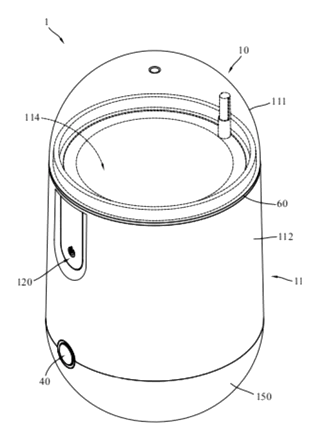
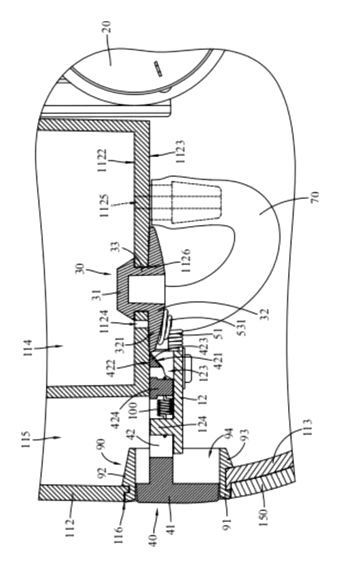
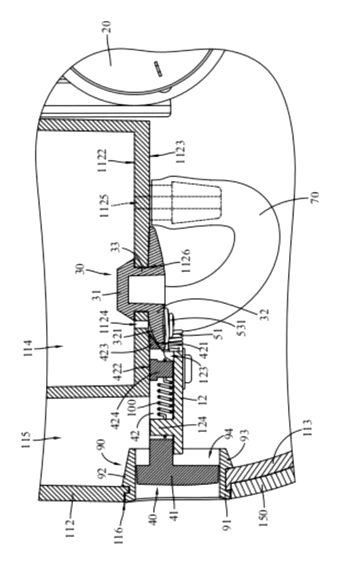
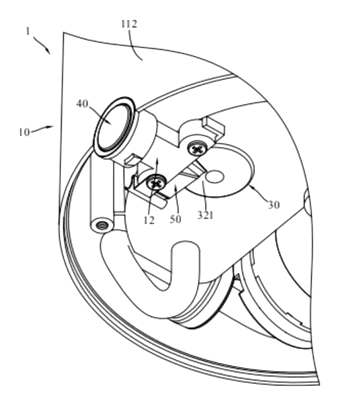
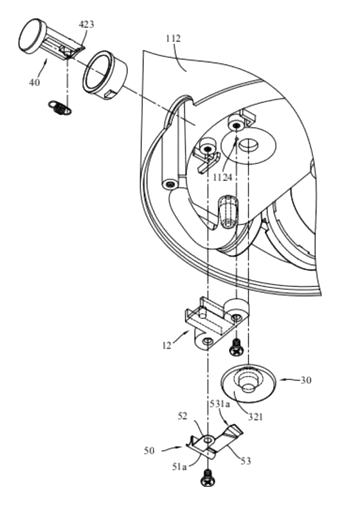
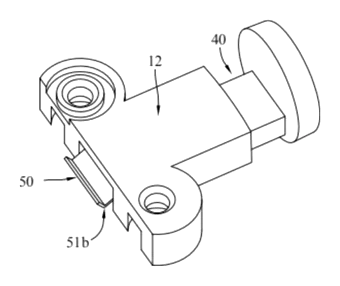
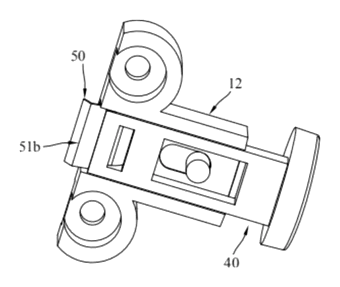
Drawings reproduced from the public patent document for reference.
Frequently asked questions
How does the vacuum seal work?
It uses a sliding button. When you push the button, it physically deforms a flexible rubber-like seal to open the pumping hole. When you let go, a spring pushes the button back, and the seal snaps shut, trapping the vacuum inside.
Do I need a special pump?
Yes, you need an external air-pumping device that connects to the designated air pumping hole. The patent describes the case itself, not the pump mechanism.
Is the seal durable?
The seal is made of a flexible material designed to withstand repeated deformation. Durability depends on the specific polymer chosen (e.g., silicone vs. TPE) and usage frequency.
Can it hold a strong vacuum?
The patent focuses on the mechanism for creating a sealed environment. The level of vacuum achieved depends on the efficiency of the external pump and the integrity of the seal, which should be confirmed in prototype testing.
What materials are safe for food?
The housing is typically plastic. For food use, you must select resins compliant with FDA 21 CFR standards. The flexible seal also needs food-grade certification.
Is it difficult to assemble?
The design includes positioning holes and columns to align parts correctly. Some versions use screws, while others may use snap-fits. Assembly is generally straightforward for automated or semi-automated lines.
Can this design be made and sold in the US?
The patent is filed in China and is in force there. The public record shows no US counterpart, so this specific Chinese patent does not restrict sales in the US. However, other US patents may exist in the vacuum packaging field, so a freedom-to-operate check is advised.
Are you affiliated with the patent owner?
No. IP2M is an independent design and manufacturing service working from the public patent document.
Request a quote
Click Request a Quote below to see our email address - copy it, or open your email app with a ready-made message. Please mention patent CN216977474U in the subject.
Helpful details to include:
- Your company and channel (cosmetics brand, food packager, pharma supplier)
- Target capacity (volume of the storage space)
- Material preferences (plastic type, seal material)
- Regulatory needs (FDA food contact, medical grade)
- Estimated quantity and target price
- Timeline - when you would like samples and the first shipment
You can also reach us at (332) 203-9997.
Page editor: Emily Zhang, Product Editor · IP2M
Last updated November 6, 2026. If something on this page looks wrong, email [email protected] and we will check it against the patent.
Interested in building this?
Tell us your target market, quantity and timeline. We reply with options for prototyping, small-batch runs or volume production.
Send your inquiry to
Please put CN216977474U in the subject line and tell us your company, country, estimated quantity and timeline.
Prefer to talk? Call (332) 203-9997.
More product-ready patents
All Packaging & Containers patents →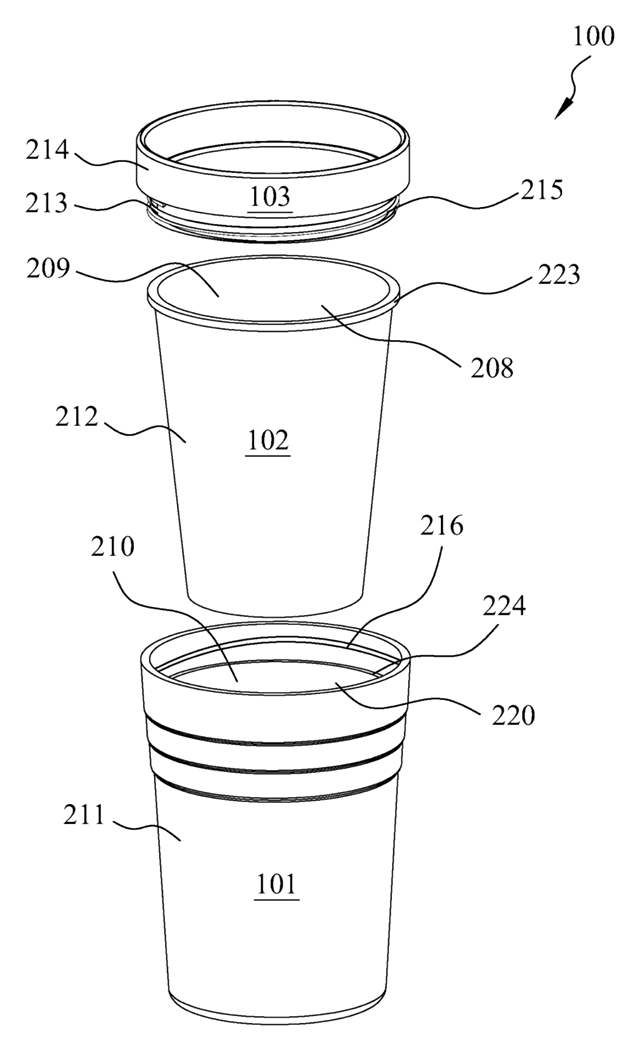
Packaging & Containers
Rigid Shell Container with Removable Silicone Liner
Cup or food box with a rigid outer shell and a removable, leak-tight silicone liner.
Patent CN212638395U
Packaging & Containers
Child-Resistant Paperboard Medicine Box with Three-Point Opening
Paperboard medicine box that opens only when press points on three sides are pushed together.
Patent CN107117365B
Packaging & Containers
Tape-Free Reusable Shipping Box with Zigzag Interlocking Flaps
Reusable carton closed without tape: zigzag flaps interlock, tabs tuck in, a U-clip locks the lid.
Patent CN207242262U
Packaging & Containers
Hinge Device for Folding Containers with Integrated Twistlock Hole
Folding container hinge with a built-in twistlock hole and observation port.
Patent CN113460518B
Packaging & Containers
Cylindrical Plastic Bottle Cap with Built-In Soup Ladle
Plastic bottle cap storing a soup ladle inside, with a flip-top lid and inner sealing closure.
Patent CN106144192B
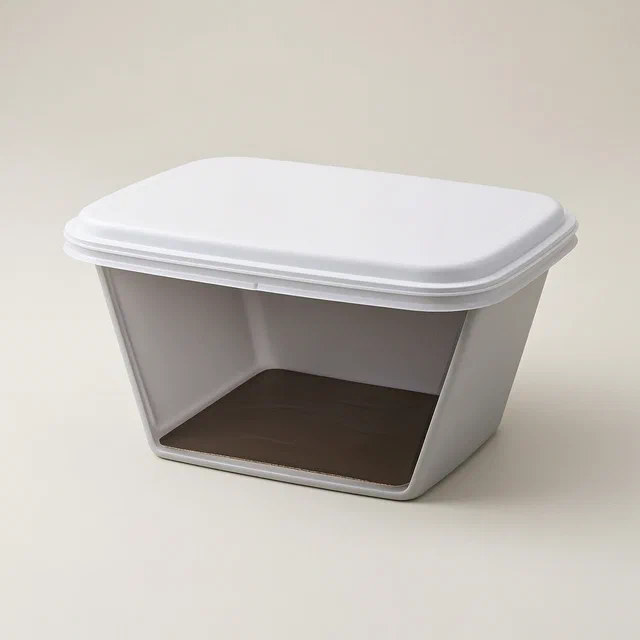
Packaging & Containers
Insulated Food Packaging Box with Detachable Liner and Self-Heating Cavity
Detachable insulated food box with a sealed cavity for a self-heating sheet and a temperature sticker.
Patent CN108372980B
Browse by category
- Apparel & Accessories (45)
- Baby & Kids (28)
- Bags & Luggage (16)
- Bath & Personal Care (30)
- Car Accessories (24)
- Furniture, Bedding & Storage (23)
- Garden & Outdoor (31)
- Health & Wellness (13)
- Home, Kitchen & Cleaning (48)
- Lighting (22)
- Packaging & Containers (12)
- Pet Products (11)
- Phone & Camera Accessories (9)
- Retail Display (24)
- School, Office & Art (34)
- Sports & Recreation (44)
- Tools & Workshop (53)
- Toys & Games (22)
This page is based on the public patent document CN216977474U, assigned to Jiuen Lianke Tianjin Technology Co ltd. IP2M is an independent manufacturing service and is not affiliated with, endorsed by or licensed by the patent owner. Images marked as concept renderings are illustrations, not photos of an existing product. Patent status information is provided for reference only and is not legal advice; confirm freedom to operate for your market before production. Full disclaimer.