
Patent CN218552187U
Updated November 6, 2026NB-IoT Smart Electric Heated Towel Rack with Remote Control
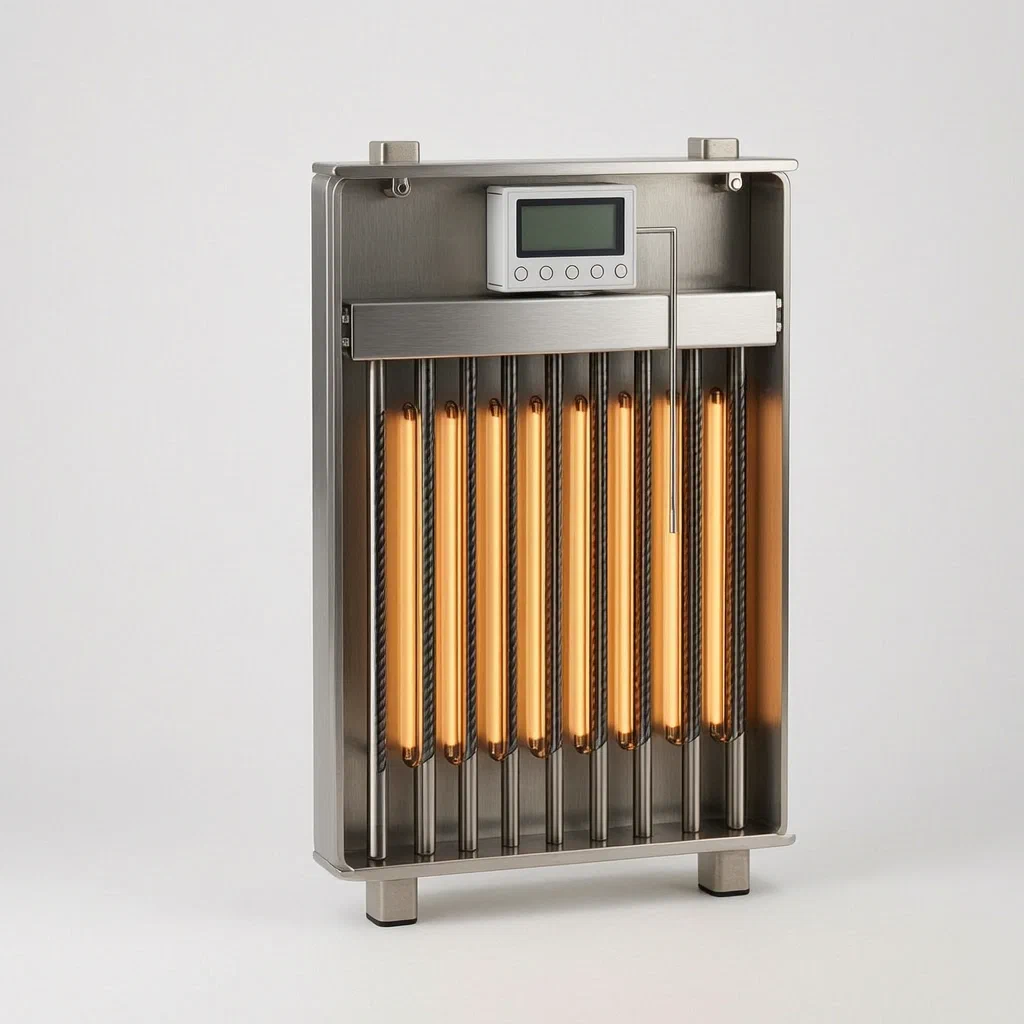
Standard heated towel racks often lack precise temperature feedback or require physical interaction for mode changes. This design integrates NB-IoT technology to enable remote monitoring and control through a cloud server. By embedding thermocouple sensors directly into the heating elements, the system provides real-time data on drying conditions. Users can select specific modes like drying or dehumidification via spring-contact buttons or mobile apps, ensuring consistent performance without needing to be physically present in the bathroom.
- China utility model - active
- No filings outside China
- Bathroom heating hardware
- Carbon fiber heating tubes, NB-IoT module, thermocouple sensors
Splat! What let you down?
📡
NB-IoT Connectivity
Wireless module uploads temperature data to a cloud server for remote viewing and control.
🌡️
Real-Time Sensing
Thermocouple sensors inside the heating bars measure actual temperature continuously.
💧
Dual Modes
Supports drying mode (approx. 65°C) and dehumidification mode with timed steps.
🖐️
Local & Remote Input
Spring-contact buttons on the unit allow manual selection; app allows remote settings.
Bring this product to market
- ✓ Patent review Patent family and legal status reviewed in the relevant jurisdictions.
- 2 Product brief · now How it works, uses and options written up
- 3 Prototype First samples for buyers to review
- 4 Pilot run Small first batch for launch customers
- 5 Volume production Repeat orders at scale
Buyer interest
– of 100 buyers needed to start prototyping
One click, no sign-up. Each vote is one real visitor, and products with the most interest go to prototyping first.
Build team: no members yet. Need a partner, co-funding or skills to build this? Join and we introduce the team once it forms.
Patent Rights & Team Participation
Before joining a development team, participants should ensure they have the necessary rights or authorization to participate in the project.
Participation is generally appropriate where:
- You own the relevant patent rights or have obtained permission or a license from the rights holder.
- The relevant patent rights have expired or have been legally invalidated in the jurisdictions where the planned activities will take place.
- The planned development, manufacturing, and commercialization activities have been independently assessed and do not infringe applicable patent rights in the relevant jurisdictions.
Important: Being located outside a country where a patent is protected does not automatically exempt you from patent infringement risks. Patent rights may apply based on where development, manufacturing, use, sale, or import activities take place.
IP2M does not grant any patent license or authorization through team participation. Joining a project does not provide permission to use, manufacture, or commercialize patented technology.
The problem
Traditional electric towel racks typically rely on simple thermostats or fixed heating elements without precise real-time feedback. Users often cannot verify if towels are actually dry from another room, and adjusting settings requires physical presence at the device. Furthermore, many smart home devices use Wi-Fi or Bluetooth, which may suffer from congestion or limited range in thick-walled bathrooms. There is a need for a heating solution that offers reliable long-range connectivity, accurate internal temperature measurement, and flexible operation modes for both local and remote users.
The solution
The patent describes a smart electric heating towel rack composed of a rack assembly, a heating crossbar set, and a control assembly. The core innovation lies in the integration of an NB-IoT wireless transmission module with embedded thermocouple sensors.
- Heating Structure: The rack features left and right vertical connecting rods mounted to the wall via connection seats. Horizontal bars are embedded in the front face. Inside these bars are heating tubes consisting of rod bodies and carbon fiber heating wires.
- Sensing System: Thermocouple sensors are built directly into the heating crossbar group. These sensors measure the temperature of the heating elements in real time.
- Control Logic: A main control board processes this data. It displays current temperatures on a digital screen visible through a transparent glass panel on the housing.
- Connectivity: An NB-IoT module connects to the main board, uploading sensor data to a cloud server. This allows smartphones to view status and send commands back to the rack.
- User Interface: Spring-contact buttons on the unit allow users to toggle between modes such as drying and dehumidification manually.
Who it is for
- Smart Home Integrators: Brands looking to add bathroom appliances to their existing IoT ecosystems using low-power wide-area network protocols.
- Hotel and Hospitality Suppliers: Facilities requiring centralized monitoring of towel drying cycles to ensure hygiene standards and energy efficiency.
- Modern Bathroom Hardware Manufacturers: Companies seeking to differentiate their product lines with remote-control capabilities and precise temperature management.
- Elderly Care Product Developers: Solutions where caregivers can verify drying status remotely without entering the bathroom frequently.
How it works
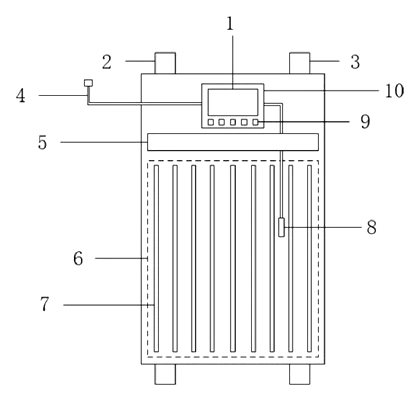
The main parts
| No. | Part | What it does |
|---|---|---|
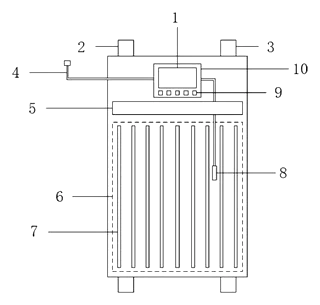
| 1 | Digital Display Screen | Shows current temperature and status behind the glass panel. |
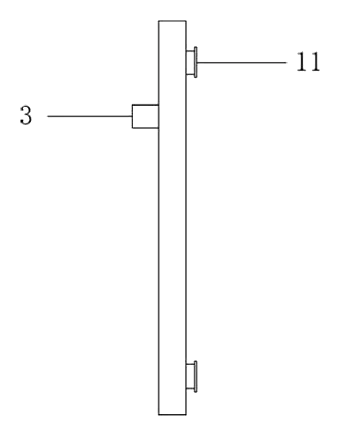
| 2, 3 | Vertical Connecting Rods | Structural supports for the rack, mounted to the wall. |
| 5 | Horizontal Bar | Front-facing bar where towels hang; part of the heat transfer surface. |
| 6 | Heating Crossbar Set | Internal assembly containing the heating elements. |
| 7 | Heating Crossbar Tubes | Rod bodies containing carbon fiber heating wires. |
| 8 | Thermocouple Sensor | Embedded in the heating set to measure real-time temperature. |
| 9 | Spring Contact Button | Local input for selecting modes and temperature. |
| 10 | Main Control Board | Processes sensor data and controls heating output. |
| 11 | Connection Seat | Mounting point on the back of the vertical rods. |
| N/A | NB-IoT Module | Wireless transmitter sending data to/from the cloud. |
Operating Steps
- Installation: The rack is hung on the wall using the connection seats on the vertical rods. Power is supplied via a plug.
- Mode Selection: The user presses the spring-contact button to choose a mode (e.g., Drying or Dehumidification) or sets parameters via the mobile app.
- Heating Activation: The main control board activates the carbon fiber heating wires within the crossbar tubes.
- Monitoring: The thermocouple sensor measures the temperature inside the bars. The digital display updates locally, and the NB-IoT module sends this data to the cloud server.
- Remote Adjustment: If connected via app, the user can change the target temperature or duration. The command travels from the phone to the cloud, then to the NB-IoT module, and finally to the main board to adjust power.
- Cycle Completion: In drying mode, the system maintains approx. 65°C for up to 10 hours. In dehumidification, it follows a stepped profile (60°C for 2 hours, then 50°C for 2 hours).
Applications
Modern Residential Bathrooms
Homeowners use the app to start drying towels before showering, ensuring warm, dry linens upon exit. The remote visibility helps manage energy usage by confirming when cycles end.
Luxury Hotels and Resorts
Housekeeping staff can monitor multiple racks across floors via a central dashboard. This ensures towels are properly dried and sanitized, maintaining high service standards without frequent room checks.
Elderly Assisted Living Facilities
Caregivers can verify that elderly residents’ towels are dry and the heater is functioning correctly from a common area. The automatic shut-off after set times reduces safety risks associated with unattended heating.
Fitness Centers and Spas
High-volume towel turnover requires efficient drying. The dehumidification mode helps reduce ambient humidity in locker rooms while preparing fresh towels, improving comfort for members.
Where it is less suitable
- Areas without NB-IoT Coverage: The remote control feature relies on cellular IoT networks; in regions with poor signal, functionality reverts to local manual control.
- Extreme High-Humidity Environments: While it has a dehumidification mode, it is designed for towel drying, not for large-scale room dehumidification compared to dedicated HVAC units.
- Budget-Conscious Basic Installations: The added cost of sensors, controllers, and modules makes it more expensive than simple resistive wire racks.
Patent & Production
At a glance
| Patent number | CN218552187U (application CN202123226649) |
| Type | China utility model (实用新型) - protects product shape and structure |
| Original title | An Intelligent Electric Heating Towel Rack Based on NB-IOT (一种基于NB-IOT的智能电热毛巾架) |
| Patent owner | Shandong GMYD Children Furniture Technology Co Ltd |
| Inventors | Yu Huishan, Zhou Huanghe, Bo Chengcai, Zhao Nan |
| Filing date | 2021-12-21 |
| Grant date | 2023-03-03 |
| Status (China) | In force - valid until at most 2031-12-21, provided annual fees are paid |
| Patent family | Public record shows Chinese filings only - no US, European, Japanese, PCT or other filings listed |
| Cited by | 1 later document |
| Source | Google Patents (search for CN218552187U) |
What the claims cover, in plain language
Claim 1 defines a smart electric heating towel rack comprising a rack assembly, a heating crossbar set, and a control assembly. The control assembly includes a digital display, a thermocouple sensor embedded in the heating bars, spring-contact buttons, a main control board, and an NB-IoT wireless transmission module. The module uploads temperature data to a cloud server, enabling remote viewing and control of heating modes. A transparent glass screen covers the display.
Claim 2 specifies that the heating crossbar set consists of several heating crossbar tubes. Claim 3 details that each heating tube comprises a rod body and a carbon fiber heating wire. Claim 4 describes the mechanical structure: left and right vertical connecting rods symmetrically arranged on the back with connection seats for wall mounting, and horizontal bars embedded in the front face.
This is a simplified reading for orientation only. The legal scope is defined by the exact claim wording in the official Chinese document.
What this means for US production
This patent was filed in China and is currently in force. Making or selling this specific configuration in China requires the owner’s permission. The public record shows no US or other foreign counterpart. Therefore, based solely on this document, there is no restriction on manufacturing or selling this design in the United States. However, freedom-to-operate depends on other potential patents.
Two points to settle early:
- Other patents may exist. Smart home devices and electric heating elements are heavily patented fields. Large electronics manufacturers and appliance brands hold numerous US patents on NB-IoT integration, specific heating element designs, and control algorithms. A freedom-to-operate (FTO) review is essential to ensure no infringement of existing US patents in the IoT or heating appliance sectors.
- Component sourcing. The NB-IoT module and carbon fiber heating elements must be sourced from suppliers that warrant non-infringing designs or provide indemnity clauses.
Customization and manufacturing
What can be customized
| Area | Options |
|---|---|
| Dimensions | Width and height of the rack frame; number of horizontal bars |
| Finish | Chrome plating, brushed nickel, matte black powder coat |
| Controls | Touch interface layout; app UI branding; voice assistant integration |
| Heating Profile | Default temperatures and timer durations for drying/dehumidify modes |
| Connectivity | NB-IoT band support (regional); optional Wi-Fi/Bluetooth fallback |
| Mounting | Wall bracket style; concealed wiring vs. exposed plug |
Things to plan for (US market)
- UL 484 / UL 1082: Standards for household electric appliances and specifically for portable heaters or similar thermal devices. Certification is critical for retail sales.
- FCC Part 15: Mandatory certification for intentional radiators like the NB-IoT module to ensure electromagnetic compatibility.
- Energy Star: Optional but beneficial for commercial buyers focusing on sustainability.
- California Prop 65: Screening required for materials used in plastics and metal finishes.
How a project runs
- Inquiry - Define size, finish, and specific IoT requirements.
- Design - Finalize PCB layout, sensor placement, and mechanical tolerances.
- Prototype - Build functional samples for thermal testing and connectivity validation.
- Certification Prep - Submit prototypes for UL and FCC pre-testing.
- Production - Mold housings, assemble electronics, test units, and package.
Quantities & timeline
Tooling for injection-molded plastic components and custom PCB fabrication takes several weeks. Electronics assembly and software integration require rigorous testing phases. Certification lead times vary by lab capacity. Send us your dimensions, finish preference, quantity, and target price and we will reply with options.
Production notes
Tooling and process
Stainless steel forming is likely required for the vertical and horizontal rods to maintain structural integrity under heat. Injection molding would typically be used for the control housing and button interfaces, depending on the final design complexity.
Cost drivers
Material grade typically has a significant impact on cost, particularly for corrosion-resistant stainless steel and premium carbon fiber elements. Plating grade and thickness also drive expenses, especially for premium finishes in humid environments.
Prototyping path
A 3D-printed housing can be used initially to verify fit and aesthetics. Off-the-shelf seals should be tested during early stages to assess water ingress resistance before committing to tooling.
What we would change before tooling
We would likely refine the wire routing and strain relief mechanisms to prevent fatigue over time. Adjustments to the thermal clearance around the sensors might be needed to ensure accurate readings without damaging components.
Common failure points
Water ingress at seams is a primary risk in bathroom applications. Heat path and thermal clearance issues could lead to sensor inaccuracies or component overheating. Additionally, mold and mildew growth in trapped water areas must be mitigated through design.
Patent drawings
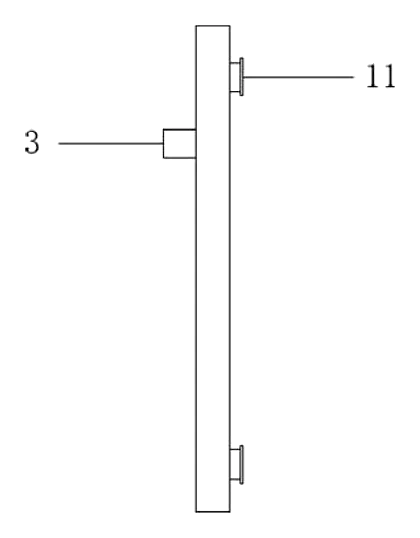
Drawings reproduced from the public patent document for reference.
Frequently asked questions
How does the remote control work?
The rack uses an NB-IoT module to send temperature data to a cloud server. You can view the current status and change settings (like mode or duration) via a smartphone app. Commands from the app go through the cloud back to the rack’s main control board.
What are the different heating modes?
The patent describes two main modes. Drying Mode defaults to approximately 65°C for up to 10 hours, with adjustable temperature (55-65°C) and time (1-10 hours). Dehumidification Mode heats to 60°C for 2 hours, then drops to 50°C for another 2 hours before stopping.
Do I need Wi-Fi for this to work?
No. It uses NB-IoT, a cellular-based Low Power Wide Area Network protocol. This often provides better coverage in bathrooms where Wi-Fi signals may be weak due to thick walls and tile. However, you do need a SIM/eSIM provisioned for NB-IoT services in your region.
Can I install it myself?
It mounts to the wall using connection seats on the vertical rods. It requires a standard electrical outlet for power. Professional installation is recommended to ensure proper wall anchoring and safe electrical connection.
Is the temperature accurate?
Yes. Thermocouple sensors are embedded directly inside the heating crossbar tubes. This allows the system to measure the actual temperature of the heating element rather than just the air, providing more precise control.
What happens if the internet goes down?
The local spring-contact buttons still function. You can manually select modes and temperatures on the unit itself. The digital display will continue to show real-time data, though remote access via the app will be unavailable until connectivity is restored.
Can this design be made and sold in the US?
The patent is in force in China, but the public record shows no US counterpart. Therefore, this specific patent does not restrict making or selling in the US. However, other US patents may cover similar smart heating technologies. We recommend a freedom-to-operate check before volume production.
Are you affiliated with the patent owner?
No. IP2M is an independent design and manufacturing service working from the public patent document.
Request a quote
Click Request a Quote below to see our email address - copy it, or open your email app with a ready-made message. Please mention patent CN218552187U in the subject.
Helpful details to include:
- Your company and channel (hotel supplier, smart home brand, bathroom fixture retailer)
- Dimensions and preferred finish (chrome, black, etc.)
- Quantity and target price
- Specific features (app branding, voice control integration)
- Timeline - when you would like samples and the first shipment
You can also reach us at (332) 203-9997.
Page editor: Emily Zhang, Product Editor · IP2M
Last updated November 6, 2026. If something on this page looks wrong, email [email protected] and we will check it against the patent.
Interested in building this?
Tell us your target market, quantity and timeline. We reply with options for prototyping, small-batch runs or volume production.
Send your inquiry to
Please put CN218552187U in the subject line and tell us your company, country, estimated quantity and timeline.
Prefer to talk? Call (332) 203-9997.
More product-ready patents
All Bath & Personal Care patents →
Bath & Personal Care
Foot-Pedal Soap & Sanitizer Dispenser Stand
Hands-free, battery-free dispenser stand - step on a pedal to press the pump of any soap or sanitizer bottle.
Patent CN207461995U
Bath & Personal Care
Ear-Shaped Mask Strap Guard with Tension Adjuster
Ear-shaped silicone guard and strap-length adjuster that make ear-loop masks comfortable to wear for long hours.
Patent CN205456233U
Bath & Personal Care
Adjustable-Length Back Scrubber Strap with Push-Button Handles
Back-scrubber strap with push-button handles that set its length and a spring that keeps it taut.
Patent CN207041452U
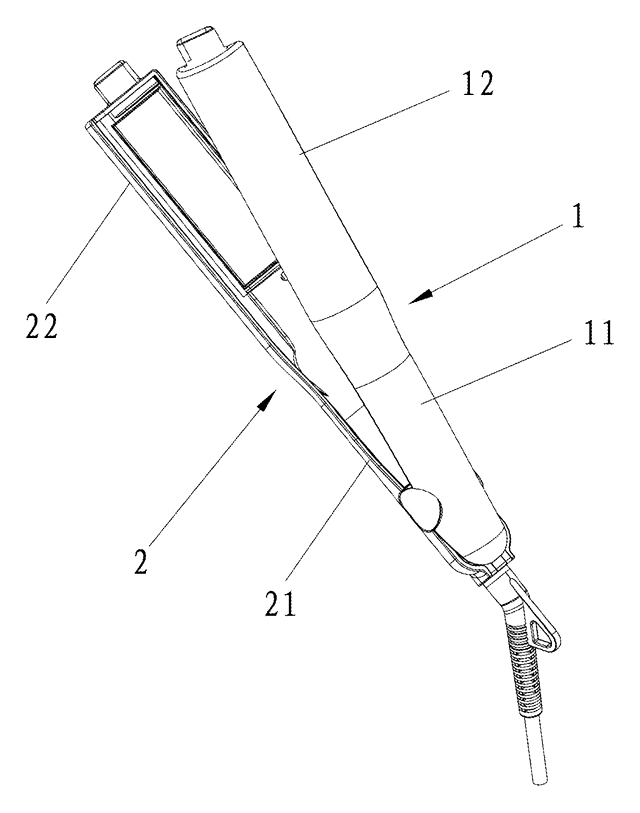
Bath & Personal Care
Angled-Plate Hair Straightener
Flat iron with plates twisted 45-75° to the handle, a curling groove and rubber-capped tips.
Patent CN206137462U
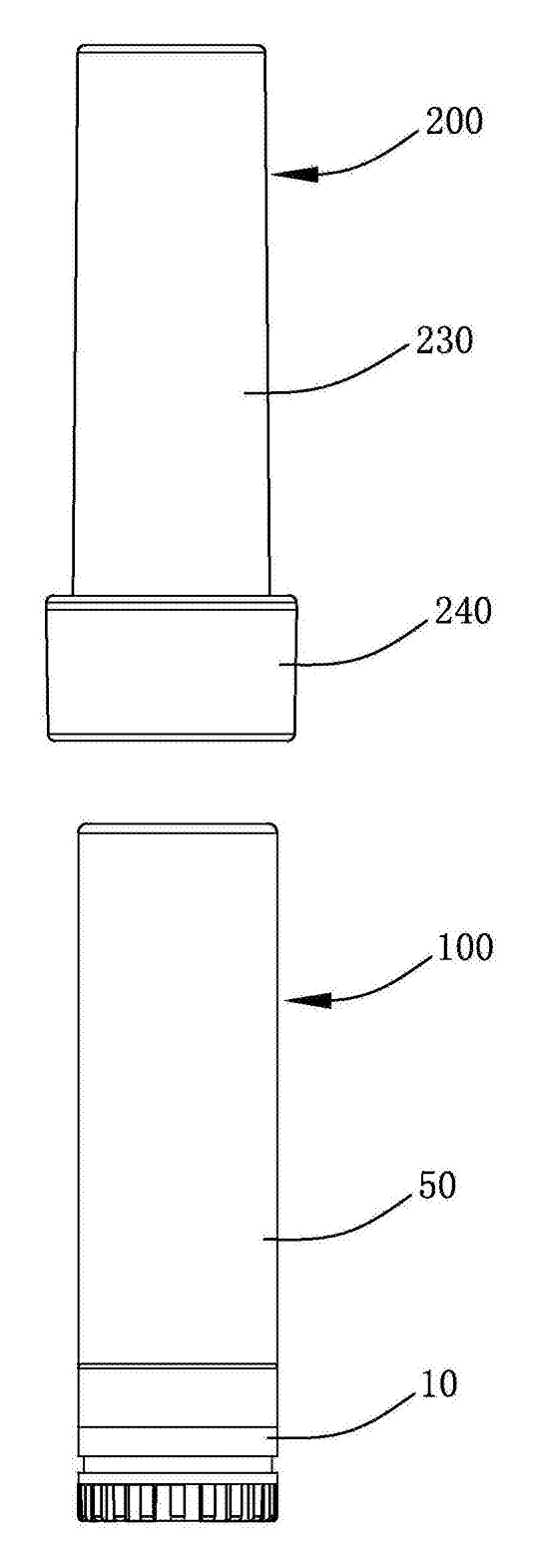
Bath & Personal Care
Refillable Lipstick Case with Sealed Snap-In Refill Pods
Reusable twist-up lipstick case; sealed refill pods unlock at the top of the stroke for shade swaps.
Patent CN206909979U
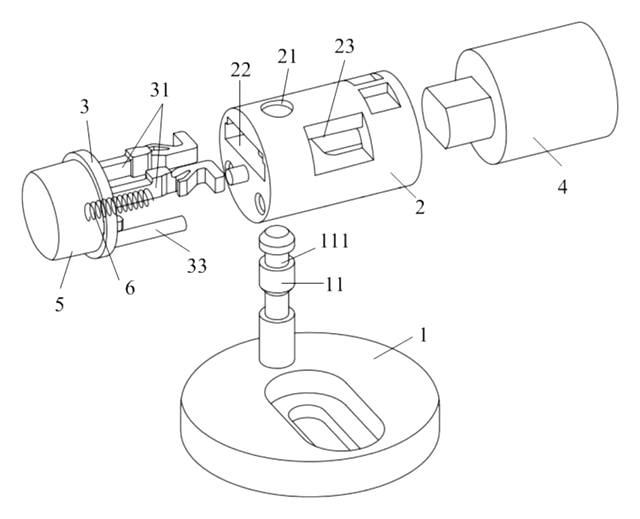
Bath & Personal Care
Quick-Release Toilet Seat Hinge with a Push-Button Two-Strip Latch
Toilet seat hinge: drop the shaft onto a grooved post to lock; one push parks the latch open to lift it off.
Patent CN210370292U
Browse by category
- Apparel & Accessories (43)
- Baby & Kids (28)
- Bags & Luggage (16)
- Bath & Personal Care (29)
- Car Accessories (23)
- Furniture, Bedding & Storage (22)
- Garden & Outdoor (29)
- Health & Wellness (13)
- Home, Kitchen & Cleaning (46)
- Lighting (22)
- Packaging & Containers (11)
- Pet Products (10)
- Phone & Camera Accessories (9)
- Retail Display (23)
- School, Office & Art (33)
- Sports & Recreation (41)
- Tools & Workshop (50)
- Toys & Games (21)
This page is based on the public patent document CN218552187U, assigned to Shandong GMYD Children Furniture Technology Co Ltd. IP2M is an independent manufacturing service and is not affiliated with, endorsed by or licensed by the patent owner. Images marked as concept renderings are illustrations, not photos of an existing product. Patent status information is provided for reference only and is not legal advice; confirm freedom to operate for your market before production. Full disclaimer.