
Patent CN218791055U
Updated November 1, 2026Sealed Inner Container for Food Heat-Preservation Boxes and Knapsacks
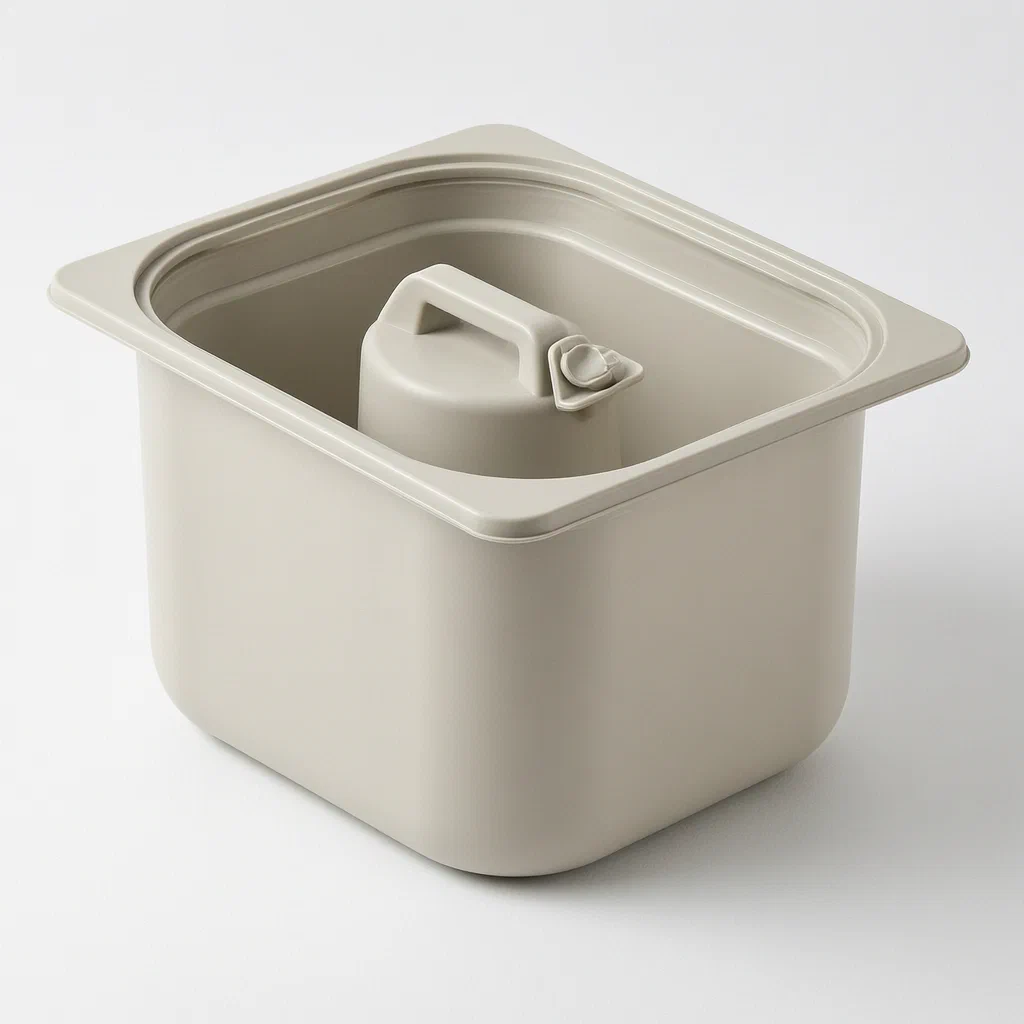
Standard food containers often struggle with two issues: pressure buildup when hot food is sealed, and instability when stacked or lifted. This patent describes an inner container specifically engineered for heat-preservation storage and transportation. The serving tray cover uses a stepped wall structure that increases contact area with the tray body for better sealing. A built-in vent valve on the cover’s handle protrusion releases excess air during closure, preventing the lid from popping open due to thermal expansion. Additionally, integrated lifting straps allow the entire tray to be easily removed from insulated boxes or backpacks without touching the hot surfaces. The handle design incorporates a recessed area for finger placement, ensuring a secure grip even when wearing gloves.
- China utility model - active
- No filings outside China
- Food service & logistics
- Sealed tray design with vent valve
Splat! What let you down?
🌡️
Vent Valve Integration
The lid handle includes a valve to release air pressure during sealing, improving closure reliability.
🔒
Enhanced Seal Structure
Vertical walls and outer edges on the cover increase contact area with the tray for better insulation retention.
🎒
Lifting Strap System
Integrated straps allow safe removal of hot trays from insulated boxes or backpacks.
📦
Stackable Stability
Protruding parts are designed to stay below the rim height, ensuring stable stacking of multiple containers.
Bring this product to market
- ✓ Patent vetted China-only family and legal status checked
- 2 Product brief · now How it works, uses and options written up
- 3 Prototype First samples for buyers to review
- 4 Pilot run Small first batch for launch customers
- 5 Volume production Repeat orders at scale
Buyer interest
– of 100 buyers needed to start prototyping
One click, no sign-up. Each vote is one real visitor, and products with the most interest go to prototyping first.
Build team: no members yet. Need a partner, co-funding or skills to build this? Join and we introduce the team once it forms.
The problem
In commercial food logistics and military field operations, keeping food hot during transport is challenging. Standard insulated containers often suffer from poor sealing integrity. When hot food is placed in a container and immediately closed, the steam creates internal pressure. This pressure can cause lids to warp, pop open, or leak heat, compromising the temperature control. Furthermore, traditional handles on hot containers can become too warm to touch safely, requiring additional tools like mitts or tongs. There is also a lack of standardized methods for quickly removing individual serving trays from larger, multi-compartment insulated boxes or backpacks without disturbing adjacent compartments or risking burns.
The solution
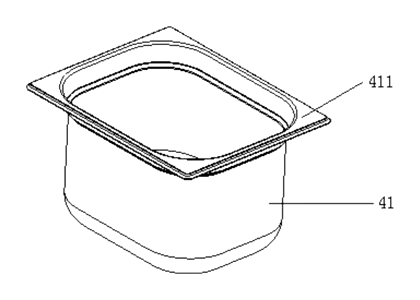
- The inner container consists of a serving tray body (41) with an open end featuring an outwardly extending expansion portion (411).
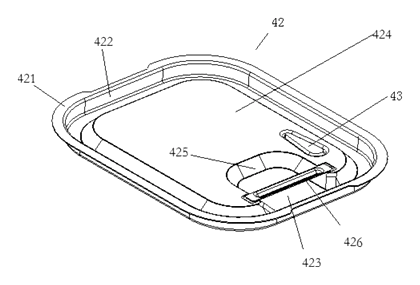
- The serving tray cover (42) has an outer edge (421) that rests on this expansion portion, creating a lap joint.
- A vertical wall (422) descends from the outer edge into the tray, with a sealing ring positioned between the wall and the tray body to form a closed space.
- The center of the cover features a protruding part (424) that houses a handle (426) and a vent valve (43).
- The vent valve allows air to escape as the lid is pressed down, equalizing pressure before the seal locks.
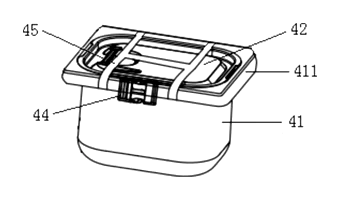
- Lifting straps (45) are attached to the opposite edges of the tray’s expansion portion, allowing the user to pull the entire tray out of an insulated unit.
Who it is for
- Catering and Logistics Companies: Brands needing reliable, stackable containers for transporting large volumes of hot meals where pressure buildup is a common failure point.
- Military and Emergency Response Suppliers: Organizations requiring rugged, portable food systems (like the patented knapsack variant) that allow quick deployment of individual rations.
- Outdoor Gear Manufacturers: Companies producing insulated backpacks or coolers who want to integrate modular, removable hot-food compartments rather than just cold storage.
- Commercial Kitchen Equipment Makers: Manufacturers of bulk food warming cabinets that need standardized, easy-to-clean inner vessels with secure lids.
How it works
The main parts
| No. | Part | What it does |
|---|---|---|
| 41 | Serving Tray Body | Holds the food; features an outward flange (411) for the lid. |
| 42 | Serving Tray Cover | Seals the tray; includes vertical walls and a central protrusion. |
| 421 | Outer Edge | Rests on the tray flange to stabilize the lid position. |
| 422 | Vertical Wall | Inserts into the tray to support the sealing ring. |
| 424 | Protruding Part | Central hub for the handle and vent valve; stays low for stacking. |
| 426 | Handle | Integrated into the protrusion; designed for finger grip. |
| 43 | Vent Valve | Releases air pressure during closing to ensure a tight seal. |
| 45 | Lifting Strap | Attached to the tray body for safe extraction from outer boxes. |
| 44 | Fixing Buckle | Secures the cover to the tray body side walls. |
Operating steps
- Fill the Tray: Place hot food into the serving tray body (41).
- Prepare the Lid: Open the vent valve (43) on the cover (42).
- Close the Lid: Align the vertical wall (422) with the tray interior and press the outer edge (421) onto the expansion portion (411).
- Equalize Pressure: As the lid seats, air escapes through the open valve (43).
- Seal: Once fully seated, close the vent valve (43) and engage the fixing buckle (44) if applicable.
- Transport/Extract: Use the lifting straps (45) to remove the entire container from an insulated box or knapsack.
Applications
Catering Delivery Services
High-volume meal prep facilities use these containers to transport trays of cooked dishes. The vent valve prevents lids from bulging during long drives, maintaining food safety standards and presentation quality upon arrival.
Field Ration Distribution
For emergency response teams or military units, the container fits into the patented “heat-preservation storage and transportation knapsack.” It allows soldiers or aid workers to carry individual hot meals securely, accessing them via the lifting straps without unpacking the entire kit.
Outdoor Camping Groups
Campers using insulated backpacks can pack separate hot food containers alongside cold drinks. The robust seal keeps soups or stews warm for hours, while the handle design makes it easy to serve food directly from the container around a campfire.
Institutional Cafeterias
Schools and hospitals benefit from the stackable design. The protruding handle sits lower than the rim, allowing multiple full containers to be stacked vertically in warming carts or shelves without wobbling or damaging the lids.
Where it is less suitable
- Cold Chain Only: While insulated, the specific focus on venting hot air pressure makes it optimized for hot foods; standard cold packs may not require the complex valve mechanism.
- Single-Serve Micro Portions: The structural complexity of the handle and valve is likely over-engineered for very small, disposable single-serving cups.
- Non-Food Chemical Storage: The materials and seal types described are tailored for food compatibility and thermal management, not necessarily for aggressive chemical resistance.
Frequently asked questions
Why does the lid have a vent valve?
When hot food is placed in the container, steam builds up pressure. If you try to seal the lid immediately, this pressure can push the lid open or deform the seal. The vent valve lets the air escape while you are closing the lid. Once sealed, the valve closes to keep the heat in and the moisture controlled.
Can these containers be stacked?
Yes. The design specifically addresses stacking stability. The central handle/protrusion on the lid is lower than the highest point of the lid’s rim (the vertical wall). This allows another container to sit flat on top of it without hitting the handle, preventing wobble or tipping during transport.
How do you remove the container from an insulated box?
The serving tray body has an outward-flaring rim (expansion portion) with attached lifting straps. You grab the straps to lift the entire hot tray out of the larger insulated box or backpack. This keeps your hands away from the hot metal or plastic body of the tray.
Is the handle safe to touch?
The handle is integrated into the central protrusion. Because it is elevated slightly above the main sealing surface and potentially made of insulating plastic, it is generally easier to grip than a metal rim. However, for very high temperatures, standard heat-resistant gloves are still recommended for safety.
What materials are used?
The patent describes plastic materials for the lifting belts and implies polymer construction for the tray and cover to allow for injection molding and sealing rings. Specific food-contact grades meeting FDA requirements would be selected based on the final manufacturing requirements.
Does it work for cold food?
While designed primarily for heat preservation (“warm storage”), the sealed nature of the container makes it effective for cold items as well. The vent valve is less critical for cold items unless condensation is a concern, but the seal remains intact.
Can this design be made and sold in the US?
The patent CN218791055U is active in China but has no US counterpart. Therefore, this specific patent does not block sales in the US. However, you must conduct a Freedom-to-Operate (FTO) search because other companies hold US patents on similar venting or latching mechanisms for food containers. We recommend verifying FTO before mass production.
Are you affiliated with the patent owner?
No. IP2M is an independent design and manufacturing service working from the public patent document.
Request a quote
Click Request a Quote below to see our email address - copy it, or open your email app with a ready-made message. Please mention patent CN218791055U in the subject.
Helpful details to include:
- Your company and channel (catering supplier, outdoor gear brand, institutional food service provider)
- Target capacity (volume of the serving tray)
- Temperature range (max hot temp or cold retention needs)
- Material preferences (specific FDA-grade plastics, silicone vs. fabric straps)
- Estimated quantity and target price
- Timeline - when you would like prototypes and first production run
You can also reach us at (332) 203-9997.
Explore this product
Interested in building this?
Tell us your target market, quantity and timeline. We reply with options for prototyping, small-batch runs or volume production.
Send your inquiry to
Please put CN218791055U in the subject line and tell us your company, country, estimated quantity and timeline.
Prefer to talk? Call (332) 203-9997.
More product-ready patents
All Sports & Recreation patents →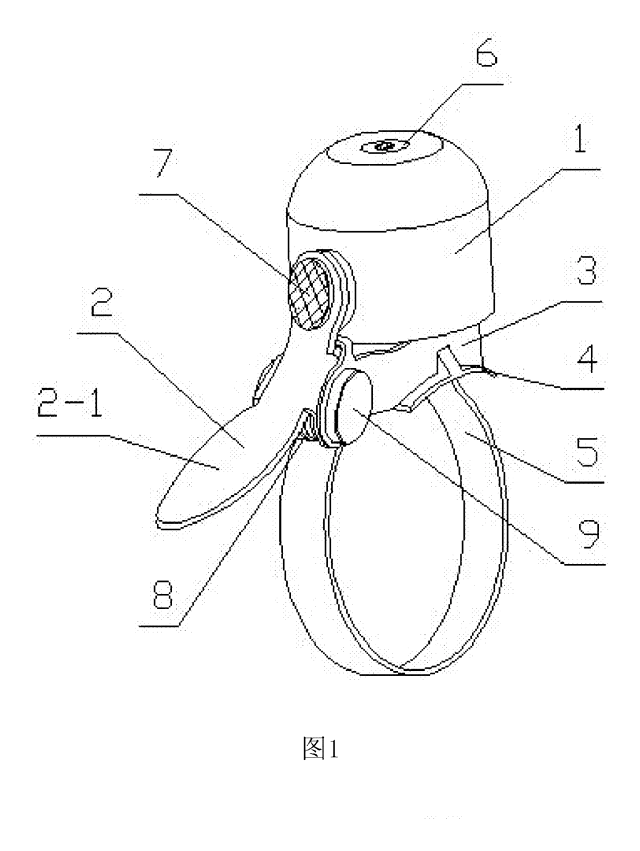
Sports & Recreation
Compact Torsion-Spring Bike Bell
Mini bike bell with a standard torsion spring and a rubber-floated dome - small size, clear tone, quick strap mount.
Patent CN205819384U
Sports & Recreation
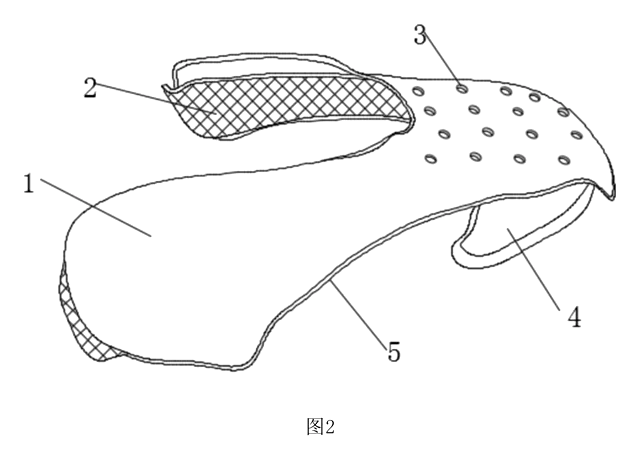
Padded Toe-Box Shield for Sneakers
Ventilated, silicone-lined toe-box insert that supports the front of a sneaker and cushions the toes.
Patent CN209473731U
Sports & Recreation
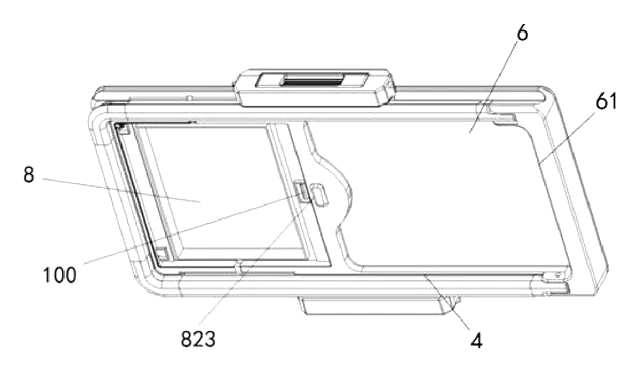
Reversible Fishing Seat-Box Lid with Backrest
Fishing seat-box lid that flips on removable hinge pins: cushion, backrest and storage on one face.
Patent CN208624426U
Sports & Recreation
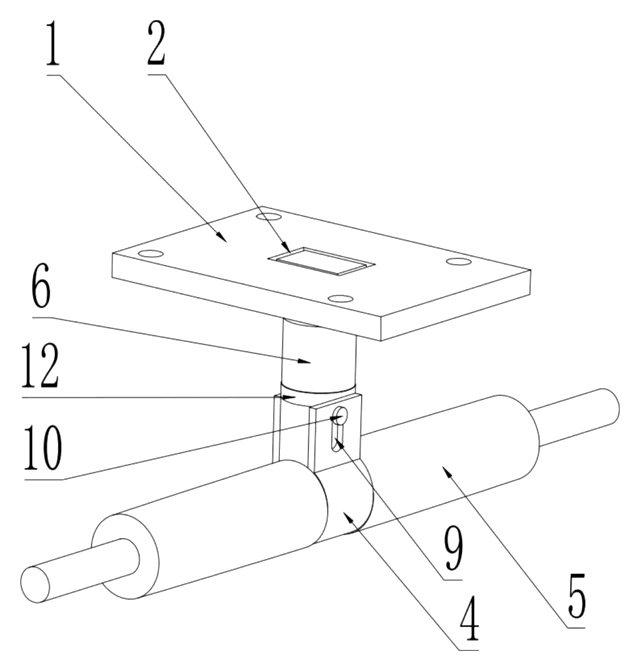
Swivel-Pin Skateboard Truck with Rubber Sleeve
Skateboard truck with a turning center pin, a tilting axle clamp and a rubber sleeve that centers it.
Patent CN216777880U
Sports & Recreation
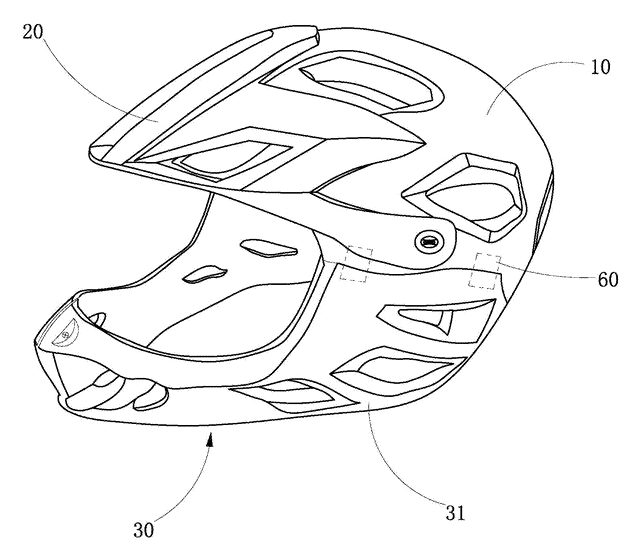
Full-Face Bike Helmet with Magnetic Detachable Chin Bar
Full-face cycling helmet whose chin bar clips on and off with magnetic, latching side connectors.
Patent CN206630067U
Sports & Recreation
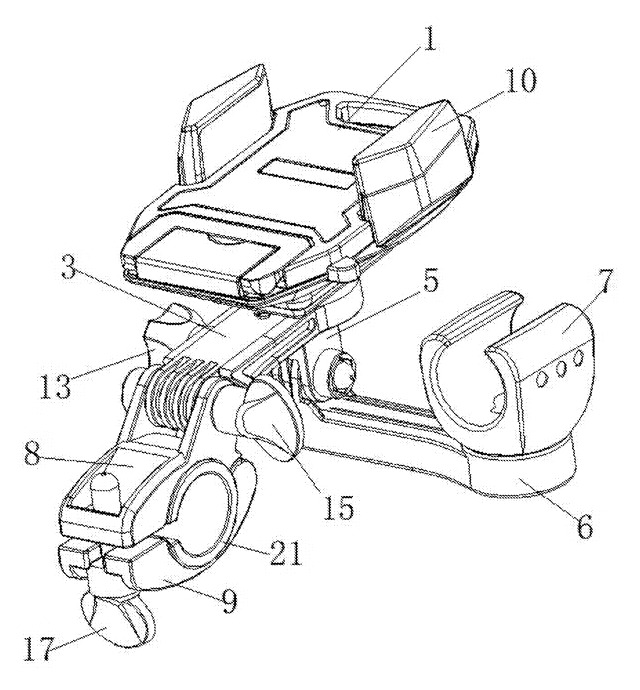
Bike Phone Holder with Built-In Flashlight Clamp
Handlebar mount with a phone cradle on top and a flashlight clamp below, on one arm.
Patent CN206077485U
Browse by category
- Apparel & Accessories (27)
- Baby & Kids (19)
- Bags & Luggage (12)
- Bath & Personal Care (19)
- Car Accessories (15)
- Furniture, Bedding & Storage (15)
- Garden & Outdoor (21)
- Health & Wellness (9)
- Home, Kitchen & Cleaning (31)
- Lighting (14)
- Packaging & Containers (7)
- Pet Products (7)
- Phone & Camera Accessories (5)
- Retail Display (16)
- School, Office & Art (22)
- Sports & Recreation (30)
- Tools & Workshop (35)
- Toys & Games (15)
This page is based on the public patent document CN218791055U, assigned to Institute of Systems Engineering of PLA Academy of Military Sciences. IP2M is an independent manufacturing service and is not affiliated with, endorsed by or licensed by the patent owner. Images marked as concept renderings are illustrations, not photos of an existing product. Patent status information is provided for reference only and is not legal advice; confirm freedom to operate for your market before production. Full disclaimer.