At a glance
| Patent number | CN219941768U (application CN202320223020) |
| Type | China utility model (实用新型) - protects product shape and structure |
| Original title | Transforming toys and construction toys (变形玩具和建筑玩具) |
| Patent owner | Epoch Co Ltd |
| Inventors | Kamiyama Kei |
| Filing date | 2023-02-01 |
| Grant date | 2023-11-03 |
| Status (China) | Withdrawn - the owner abandoned the patent right (effective 2026-05-08) |
| Patent family | Chinese filings only - no US, European, Japanese, PCT or other filings listed |
| Cited by | 2 later documents |
| Source | Google Patents (search for CN219941768U) |
What the claims cover, in plain language
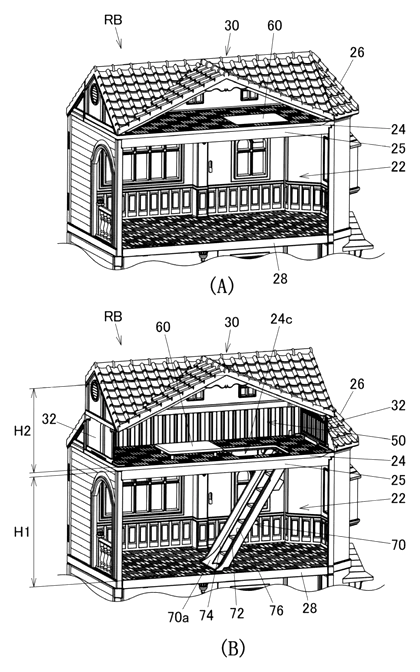
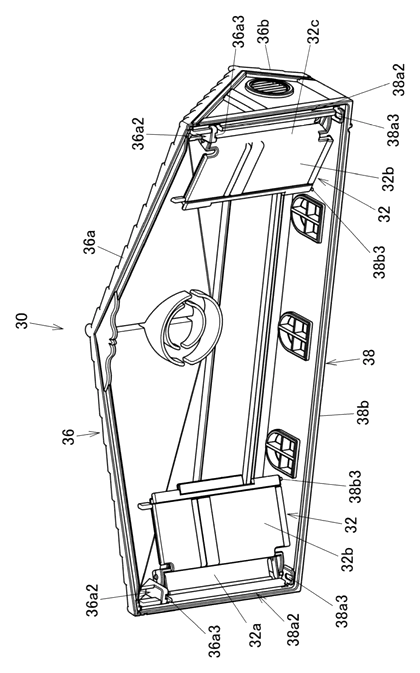
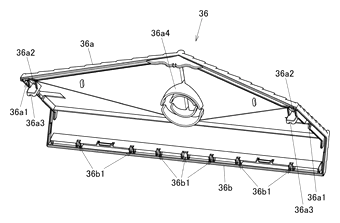
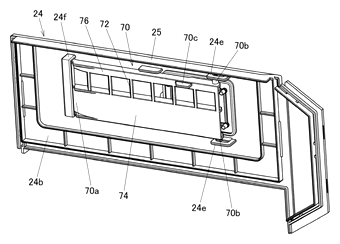
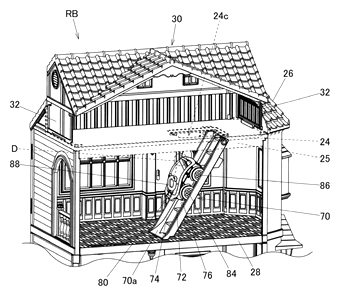
Claim 1 - a transformable toy with a floor portion and a ceiling portion defining a first room, and a roof unit. The roof unit has at least one leg portion that extends and retracts downward. In a first configuration, the leg is retracted and the roof unit sits on the ceiling portion. In a second configuration, the leg protrudes downward to define a second room between the ceiling and the roof, where the second room has a smaller height dimension than the first room.
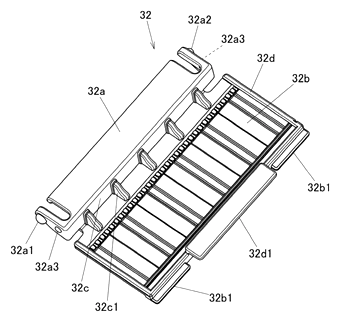
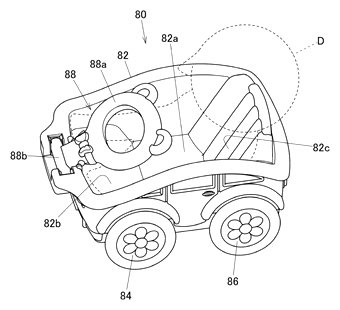
Claim 2 - the ceiling portion is elongated, and the legs are a pair of leg portions placed on both longitudinal sides, each rotatably connected to the inner side of the roof unit by a rotating portion. Claim 3 - the roof unit includes a holding portion to keep the legs retracted. Claim 4 - an outer roof section connects outside the first room in the second configuration, with a locking portion that engages a locked portion on the roof unit. Claim 5 - a groove on the roof unit receives the locking portion, contacting it in the left-right direction. Claim 6 - a stepped member (storage ladder) on the back of the ceiling portion overlaps an opening, rotates on a shaft, and drops to the floor portion by its own weight when released from an engagement mechanism. Claim 7 - in the second state, the legs extend orthogonal to the ceiling’s upper surface. Claim 8 - a fitting portion on the ceiling engages the roof unit’s lower surface in the first configuration and the legs in the second. Claim 9 - a construction toy comprising the transformable toy. Claim 10 - a construction toy comprising the transformable toy and a vehicle character body.
This is a simplified reading for orientation only. The legal scope is defined by the exact claim wording in the official Chinese document.
What this means for US production
This patent was filed only in China and is withdrawn, as the owner actively abandoned the right effective 2026-05-08. It therefore no longer restricts anyone in China. It has no US or other foreign counterpart.
Two points to settle early:
- Other patents may exist. Dollhouses, transforming playsets, and construction toys are heavily patented fields with many active US registrations covering hinges, folding rooms, and modular structures, so a freedom-to-operate (FTO) review of the extending leg mechanism, ladder drop system, and hinge layout is needed before tooling.
- Spring tension and pinch points. The leg portions act as leaf springs; the force required to extend and retract them, along with the gaps around the rotating portions, must be tuned in design to prevent finger entrapment during play.
Customization and manufacturing
What can be customized
| Area | Options |
|---|---|
| Scale | Dimensions to fit standard figure sizes (e.g., about 1:12 or 1:16 scale, to be confirmed in design) |
| Room count | Number of left and right side rooms, additional floors |
| Colors and graphics | Wall prints, roof textures, floor patterns |
| Accessories | Furniture pieces, stairs, extension floors |
| Figure compatibility | Sizing the attic height dimension for specific character bodies or vehicle character bodies |
| Packaging | Closed-box dimensions based on the first configuration footprint |
Things to plan for (US market)
- CPSC 16 CFR 1501 - small parts regulation for toys intended for children under 3 years old; the rotating legs, ladder shaft, and locking grooves must be evaluated if marketed to this age group.
- ASTM F963 - the standard consumer safety specification for toy safety, covering mechanical hazards, sharp edges, and structural integrity for playsets.
- CPSIA - limits on lead and phthalates in substrates and surface coatings used on the plastic building panels and legs.
- California Prop 65 - screening of plastics, paints, and spring metals for listed chemicals.
How a project runs
- Inquiry - target scale, figure compatibility, room layout, and quantity.
- Design - CAD modeling of the hinge mechanism, leg rotation geometry, ladder pivot, and locking groove tolerances.
- Prototype - 3D-printed or soft-tooled samples to test the transformation between the first and second configurations and verify the attic height dimension.
- Pilot run - injection-molded parts assembled for ASTM F963 mechanical testing, cycle testing of the leaf-spring legs, and drop tests.
- Production - steel mold fabrication, injection molding of panels and legs, pad printing, sub-assembly of hinges and ladders, final packing.
Quantities & timeline
Each room panel, the roof unit, and the leg portions require dedicated injection molds; the hinge mechanism and ladder shaft need precise tooling for smooth rotation. Certification testing under ASTM F963 takes several weeks once pilot samples are ready. Send us your target scale, room layout, figure compatibility requirements, estimated quantity, and target price and we will reply with options.
Patent drawings
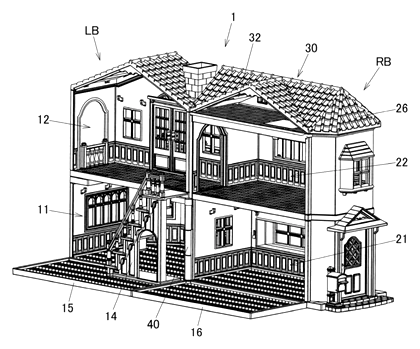
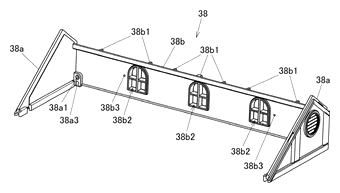
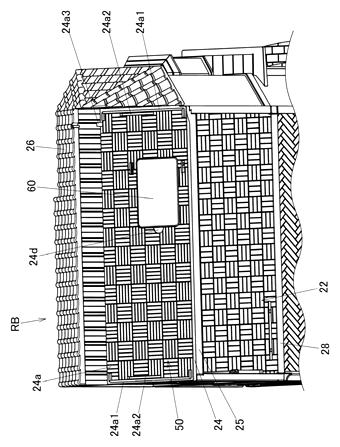
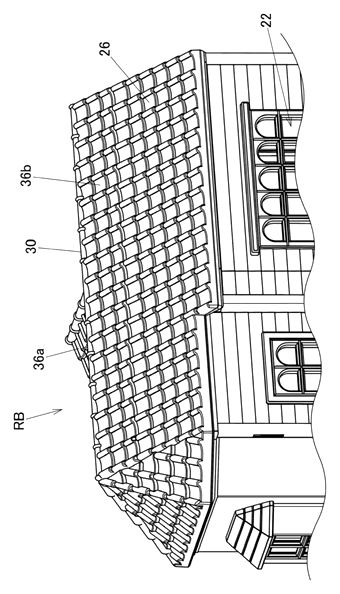
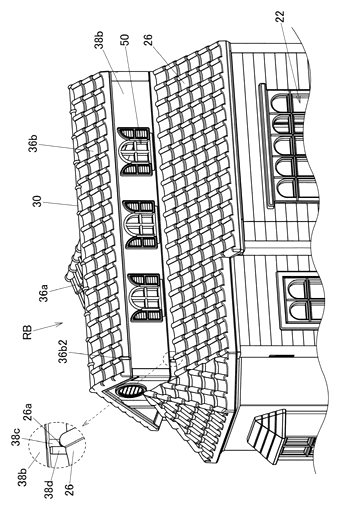
Drawings reproduced from the public patent document for reference.