
Patent CN220002285U
Updated November 7, 2026Eye Massager with Integrated Atomization and Hot Compress
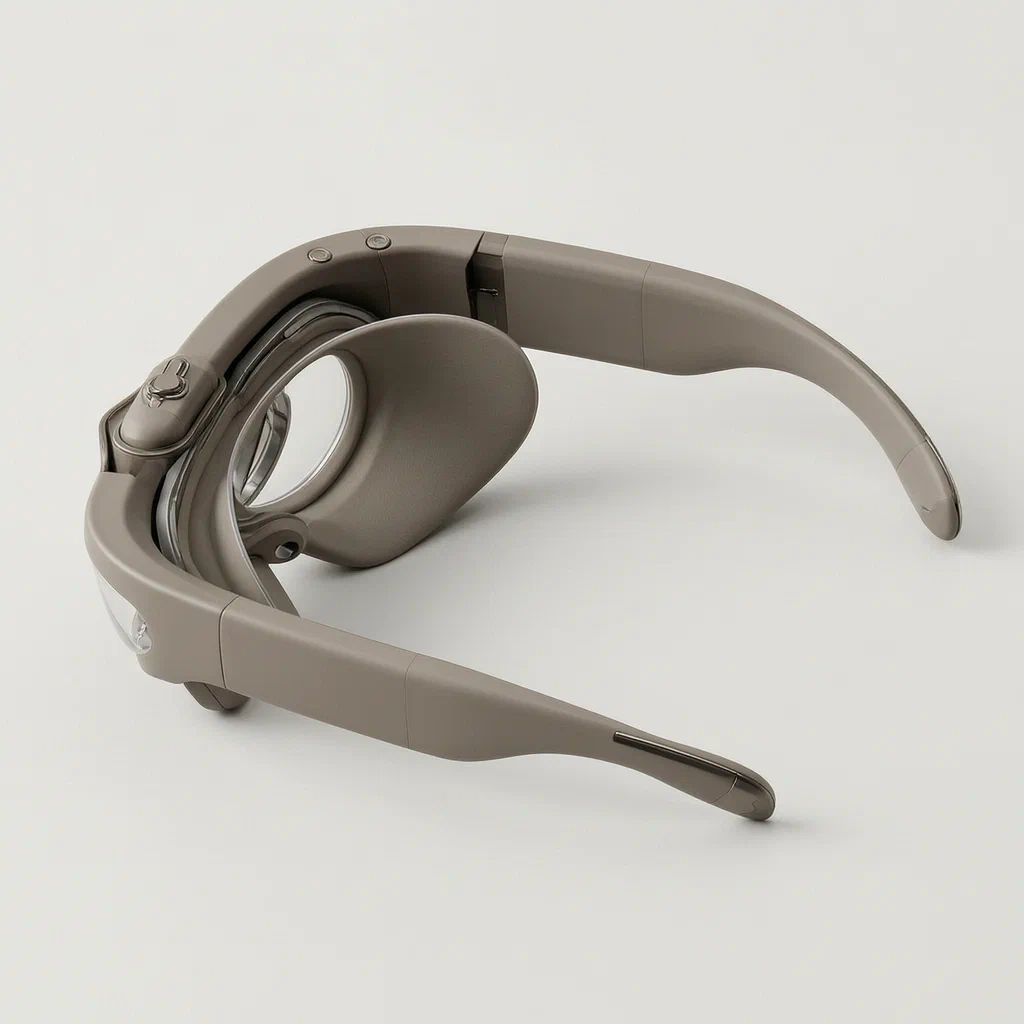
Standard eye massagers often block vision entirely, forcing users to stop working or relaxing to use them. This design integrates a see-through lens into the housing so users can maintain visual awareness while receiving treatment. It combines a resistance heating strip with an ultrasonic-style atomizer that sprays liquid medication or water into a silicone-sealed chamber. The heat warms the mist before it contacts the skin, aiming to relax eye muscles and relieve fatigue through a combination of thermal therapy and moisture delivery.
- China utility model - lapsed
- No filings outside China
- Personal care devices
- Silicone sealing, resistance heating, atomizer module
Splat! What let you down?
👓
See-through lenses
Transparent central windows allow users to keep their eyes open and see surroundings during treatment.
💨
Heated atomized mist
An internal reservoir sprays liquid into the eye cavity, where a heating element warms the mist.
🔌
Modular atomizer
The spray unit snaps into the frame via electrical contacts, allowing easy replacement or cleaning.
🤏
Flexible silicone seal
A soft rim conforms to facial contours to trap the mist against the skin around the eyes.
Bring this product to market
- ✓ Patent review Patent family and legal status reviewed in the relevant jurisdictions.
- 2 Product brief · now How it works, uses and options written up
- 3 Prototype First samples for buyers to review
- 4 Pilot run Small first batch for launch customers
- 5 Volume production Repeat orders at scale
Buyer interest
– of 100 buyers needed to start prototyping
One click, no sign-up. Each vote is one real visitor, and products with the most interest go to prototyping first.
Build team: no members yet. Need a partner, co-funding or skills to build this? Join and we introduce the team once it forms.
Patent Rights & Team Participation
Before joining a development team, participants should ensure they have the necessary rights or authorization to participate in the project.
Participation is generally appropriate where:
- You own the relevant patent rights or have obtained permission or a license from the rights holder.
- The relevant patent rights have expired or have been legally invalidated in the jurisdictions where the planned activities will take place.
- The planned development, manufacturing, and commercialization activities have been independently assessed and do not infringe applicable patent rights in the relevant jurisdictions.
Important: Being located outside a country where a patent is protected does not automatically exempt you from patent infringement risks. Patent rights may apply based on where development, manufacturing, use, sale, or import activities take place.
IP2M does not grant any patent license or authorization through team participation. Joining a project does not provide permission to use, manufacture, or commercialize patented technology.
The problem
Traditional eye massagers are opaque goggles that completely block the user’s field of view. This forces the user to close their eyes or remove the device to check screens, read documents, or interact with others. Additionally, many devices rely solely on vibration or air pressure, lacking a mechanism to deliver moisture or warmth in a controlled, contained manner. Users seeking relief from dry eyes or fatigue often need both hydration and heat, but standard units do not provide a way to apply these simultaneously without leaking fluid onto clothing or the face.
The solution
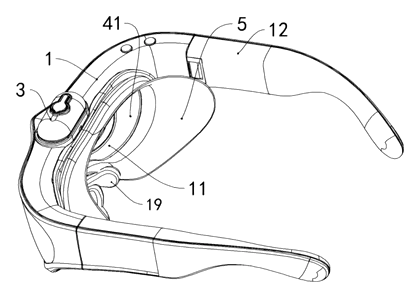
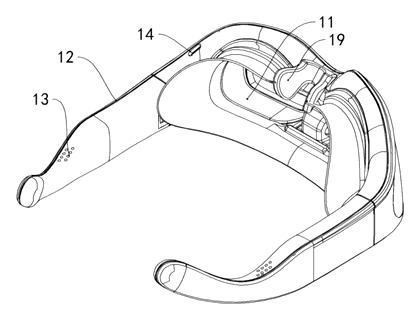
- A glasses-like frame (1) creates a sealed physiotherapy cavity (11) around the eyes.
- Transparent lenses (2) are embedded in the front of the cavity, allowing the user to see out while wearing the device.
- An atomization generating device (3) contains a storage bin for liquid and a nozzle that extends into the cavity to spray mist.
- A hot compress heating device is placed inside the cavity to warm the sprayed mist before it reaches the eyes.
- An elastic sealing part (5), typically made of silicone, attaches to the edge of the cavity to fit snugly against the skin around the user’s eyes, isolating the interior from the outside environment.
According to the patent, the heated mist is directed into the sealed cavity to warm and moisten the area around the eyes while the transparent lenses keep the view open.
Who it is for
- Office workers and remote professionals who need eye relief without stopping work, thanks to the see-through lenses.
- Retailers of personal wellness gadgets looking for differentiated products that combine humidification with thermal therapy.
- Corporate wellness programs providing ergonomic aids for employees suffering from digital eye strain.
- E-commerce sellers targeting consumers interested in spa-at-home solutions for dry eye symptoms.
How it works
The main parts
| No. | Part | What it does |
|---|---|---|
| 1 | Frame body | Houses the cavity and mounting points for all components. |
| 2 | Perspective lens | Clear window enabling outward visibility during use. |
| 3 | Atomization device | Modular unit storing liquid and spraying it into the cavity. |
| 4 | Heat conducting strip | Distributes heat from the resistance element across the cavity walls. |
| 5 | Elastic sealing part | Silicone rim ensuring a tight fit against the face to contain mist. |
| 6 | Adjusting structure | Hinges and springs allowing the arm length and angle to be modified. |
Operating steps
- Preparation: Fill the removable liquid bin in the atomizer module with water or prescribed medication.
- Assembly: Snap the atomizer module into the groove on the frame; electrical contacts align automatically.
- Wearing: Place the glasses over the eyes; the silicone seal conforms to the orbital bone area.
- Activation: Turn on the control module. The atomizer sprays fine mist into the cavity.
- Therapy: The heating element warms the mist and the surrounding air, delivering warm vapor to the eye area while the user continues to see through the lenses.
Applications
Office break recovery
Users at desks can wear the device for short intervals to moisten dry eyes caused by screen exposure without missing urgent emails or calls, as they retain visual access.
Home spa routines
Consumers create a self-care ritual by using herbal liquids or saline solutions in the atomizer, enjoying a warm, steam-like experience similar to professional salon treatments.
Travel comfort
The compact, glasses-like form factor allows travelers to manage jet lag-induced eye fatigue on planes or trains, fitting easily into carry-on bags alongside regular eyewear.
Clinical adjunct support
Note: Not a medical device. Some users may employ this for general comfort when experiencing mild irritation from environmental factors, though it does not replace professional medical advice.
Where it is less suitable
- Full blackout rest needs: Users requiring complete darkness for migraine relief will find the transparent lenses distracting.
- Heavy-duty industrial environments: The delicate silicone seals and electronic contacts are not designed for dusty or high-vibration factory settings.
Patent & Production
At a glance
| Patent number | CN220002285U (application CN202321017664) |
| Type | China utility model (实用新型) - protects product shape and structure |
| Original title | Eye massager (眼部按摩器) |
| Patent owner | Guangdong Moyun Intelligent Technology Co ltd |
| Inventors | Huang Dan, Liang Sirong |
| Filing date | 2023-04-29 |
| Grant date | 2023-11-14 |
| Status (China) | Lapsed - terminated for non-payment of annual fees (recorded 2026-04-24) |
| Patent family | Public record shows Chinese filings only - no US, European, Japanese, PCT or other filings listed |
| Cited by | 1 later document |
| Source | Google Patents (search for CN220002285U) |
What the claims cover, in plain language
Claim 1 - defines an eye massager comprising a spectacle frame body (1) with a physiotherapy cavity (11); a perspective lens (2) engaged with the cavity to allow seeing outside; an atomization generating device (3) with a storage bin and nozzle extending into the cavity; a hot compress heating device within the cavity to heat the atomized medicament; and an elastic sealing part (5) at the cavity edge to fit closely to the skin around the eyes.
Claim 2 - specifies the heating device includes a heat conducting strip (41) and a resistance heating part, controlled by a module electrically connected to the heater. Claim 3 - lists the sequential arrangement: perspective lens, atomization output, heat conducting strip, and elastic sealing part. Claim 4 - describes an adjusting structure (6) with hinges, rotating shafts, and torsion springs for fitting adjustment. Claim 7 - details the atomization device having first and second liquid storage bins, with the second bin detachably connected via a discharge hole and puncture column. Claim 9 - explains the electrical connection method: the atomizer has a first contact, the frame groove has a second contact, and inserting the atomizer completes the circuit.
This is a simplified reading for orientation only. The legal scope is defined by the exact claim wording in the official Chinese document.
What this means for US production
This patent was filed in China and has lapsed due to non-payment of maintenance fees, so it no longer restricts anyone in China either. The public record shows no US or other foreign counterpart.
Two points to settle early:
- Other patents may exist. The personal care electronics market is crowded with patents covering ultrasonic atomizers, heated eye masks, and wearable sensors. Companies like TheraSpecs, Renpho, and various tech giants hold portfolios in this space. A freedom-to-operate (FTO) review is required to ensure the specific combination of see-through lenses and heated mist does not infringe on existing US patents.
- Safety certification. Unlike simple mechanical tools, this product involves electricity, heat, and liquid near the human face. UL/ETL standards for consumer appliances and FDA guidelines for medical claims (if any) must be strictly adhered to.
Customization and manufacturing
What can be customized
| Area | Options |
|---|---|
| Lens material | Polycarbonate or acrylic, tinted or clear |
| Seal type | Medical-grade silicone shapes for different face sizes |
| Atomizer capacity | Reservoir volume adjustments for run-time |
| Control interface | Button layout, app connectivity (Bluetooth/WiFi) |
| Power source | Built-in rechargeable battery vs. USB-C powered |
| Aesthetics | Frame color, texture, and branding logos |
Things to plan for (US market)
- FDA Regulations: If marketed for “relief of dry eyes” or “treatment,” it may be considered a medical device. Most consumer models avoid medical claims to stay under general wellness rules.
- UL 60335 / FCC Part 15: Electrical safety and electromagnetic compatibility testing are mandatory for import and sale.
- California Prop 65: Warning labels required if certain chemicals are present in plastics or solder.
- Battery Safety: UN 38.3 transport certification for lithium-ion cells.
How a project runs
- Inquiry - define target features, budget, and volume.
- Design - CAD modeling of frame, seal, and electronics integration.
- Prototype - 3D printed housings with off-the-shelf motors/heaters.
- Testing - Thermal performance, leak tests, and electrical safety checks.
- Tooling - Injection molds for plastic parts, die-casting for metal frames if needed.
Quantities & timeline
Injection molding requires steel molds for the complex frame geometry and silicone tooling for the seals. Electronics assembly involves PCB fabrication and component sourcing. Testing cycles for heat distribution and battery life add significant time before mass production. Send us your target specs, quantity, and certification requirements and we will reply with options.
Production notes
Tooling and process
The main frame likely requires injection molding for the plastic housing, while the flexible seal uses silicone molding. The atomizer unit involves precise electronics assembly and potentially ultrasonic welding for waterproofing the liquid compartment. Battery pack assembly is critical for safety.
Cost drivers
Key costs come from the skin-contact material grade (medical silicone is expensive), motor life (for the atomizer pump), and battery certification. High part count in the adjusting hinge mechanism also drives assembly labor. Actual costs typically depend on final materials, order volume, and supplier quotes.
Prototyping path
Start with a 3D-printed housing to test fit. Use off-the-shelf motor and battery modules for initial functional samples. Conduct thermal and vibration tests early to validate heat spread and durability before committing to tooling. The exact sequence depends on the final design and supplier feedback.
What we would change before tooling
Simplify the hinge boss and pivot wear areas by reducing moving parts. Ensure wall thickness and joint design prevent stress cracking. Verify wire routing and strain relief to avoid internal shorts during folding. Final changes will typically depend on prototype results.
Common failure points
Watch for skin-contact material irritation if the silicone is low grade. Heat buildup can occur if the thermal path is blocked. Spring fatigue in the adjusting mechanism may lead to loose fits. Charging safety issues arise if the battery management system is poor.
Patent drawings
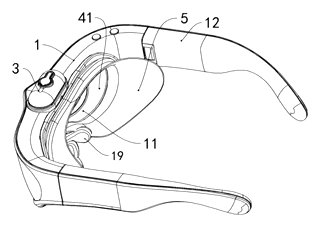
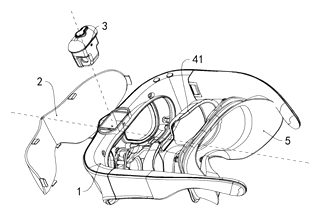
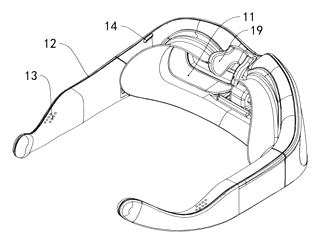
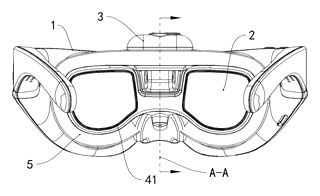
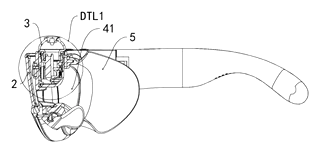
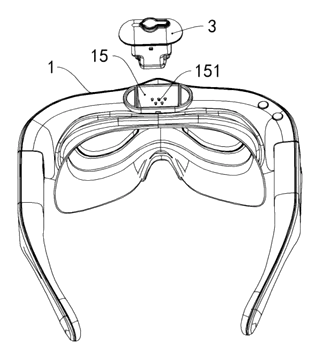
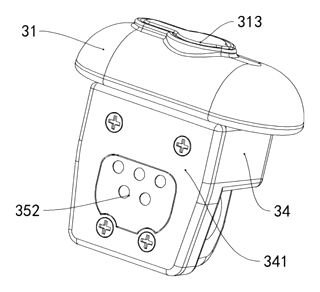
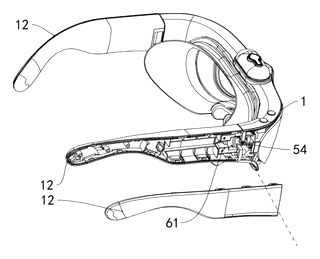
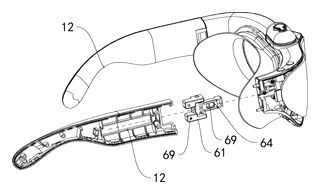
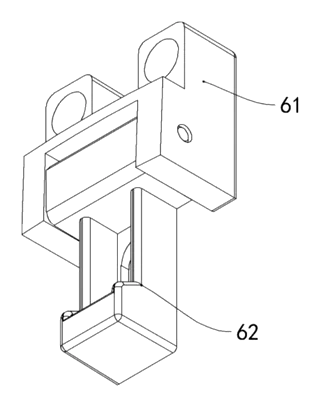
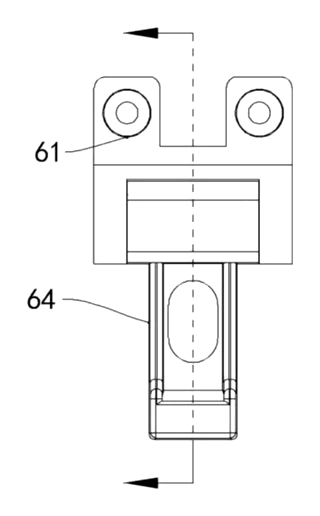
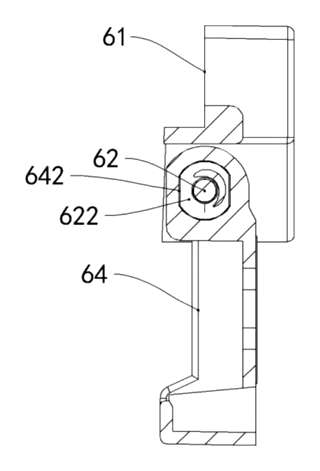
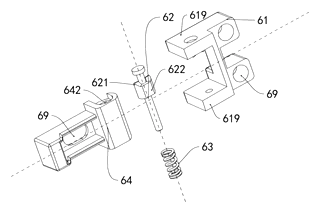
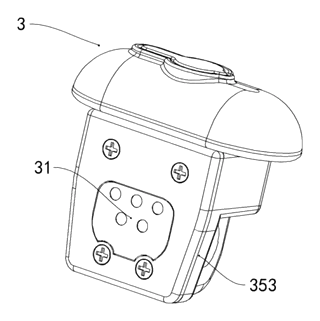
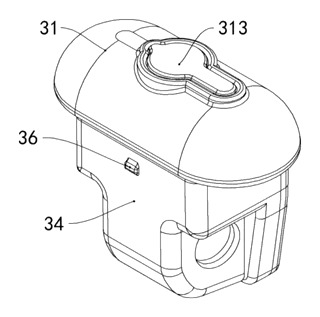
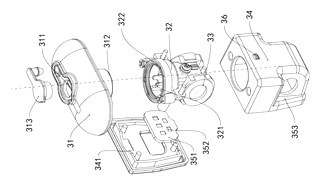
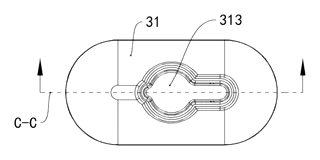
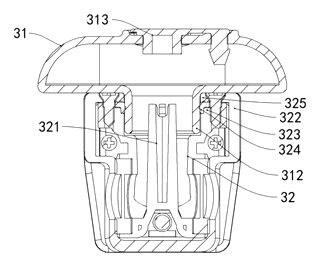
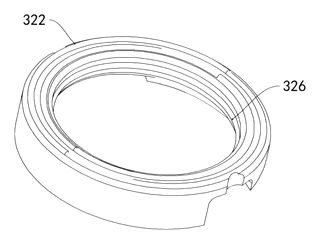
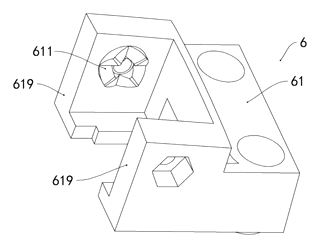
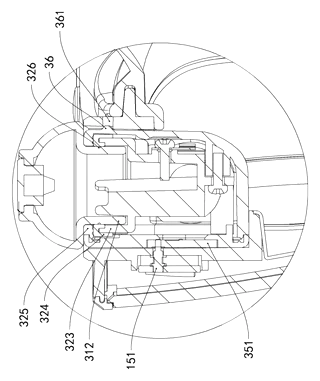
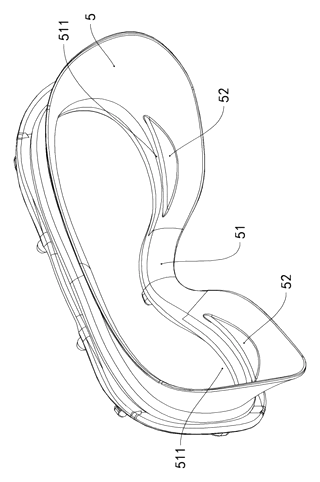
Drawings reproduced from the public patent document for reference.
Frequently asked questions
Can I see through the lenses while using it?
Yes. The patent describes perspective lenses (2) integrated into the front of the physiotherapy cavity. These are transparent windows that allow you to look at screens, books, or your surroundings while the mist and heat treat your eyes. This distinguishes it from traditional opaque eye masks.
Does it use liquid medication?
The device has a storage bin for liquid. The patent mentions “medicament” but does not specify which types. In practice, manufacturers typically recommend distilled water, saline solution, or specific eye-safe essences. Do not use thick oils or viscous liquids unless the nozzle is specifically designed for them, as clogging is a risk. Always follow the final product manual.
How is the heat generated?
It uses a resistance heating part located on a heat conducting strip (41) inside the cavity. A control module manages the temperature, often using a sensor to maintain a preset level. This ensures the mist is warmed before contacting the eye area, enhancing comfort.
Is the silicone seal replaceable?
The patent describes an elastic sealing part (5) fitted to the edge. While the drawings show it as a fixed component, in commercial production, these seals are often designed to be removable for cleaning or replacement. Check with the manufacturer regarding spare parts availability.
How long does the battery last?
The patent does not specify battery capacity or runtime. Typical devices in this class offer 1-2 hours of continuous use per charge. Runtime depends on the intensity of the heating and atomization settings.
Is it safe for sensitive skin?
The seal is described as silica gel material (silicone), which is generally hypoallergenic and flexible. However, individual reactions vary. Clean the seal regularly to prevent bacterial growth. If irritation occurs, discontinue use.
Can this design be made and sold in the US?
The patent was filed in China and has lapsed (terminated for non-payment of fees). The public record shows no US counterpart, so this specific patent does not restrict the design in the US. However, other active patents in the eye-care electronics field may exist. We recommend a freedom-to-operate review before large-scale production.
Are you affiliated with the patent owner?
No. IP2M is an independent design and manufacturing service working from the public patent document.
Request a quote
Click Request a Quote below to see our email address - copy it, or open your email app with a ready-made message. Please mention patent CN220002285U in the subject.
Helpful details to include:
- Your company and channel (wellness brand, electronics retailer, corporate gift supplier)
- Target features (app control, specific battery size, custom lens tint)
- Quantity estimates for first order
- Certifications required (FCC, CE, RoHS, etc.)
- Timeline for prototypes and mass production
You can also reach us at (332) 203-9997.
Page editor: Daniel Chen, Product Research Editor · IP2M
Last updated November 7, 2026. If something on this page looks wrong, email [email protected] and we will check it against the patent.
Interested in building this?
Tell us your target market, quantity and timeline. We reply with options for prototyping, small-batch runs or volume production.
Send your inquiry to
Please put CN220002285U in the subject line and tell us your company, country, estimated quantity and timeline.
Prefer to talk? Call (332) 203-9997.
More product-ready patents
All Health & Wellness patents →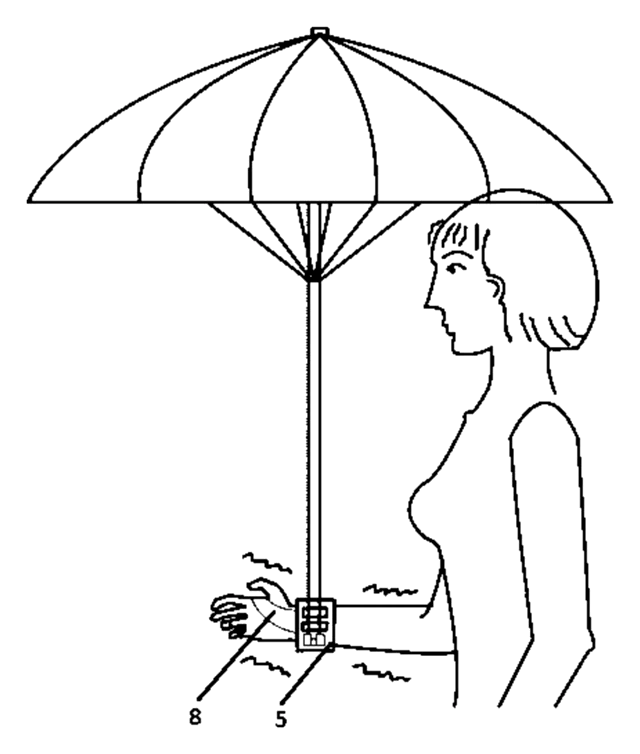
Health & Wellness
Wrist-Mounted Umbrella Stabilizer
Wrist-worn umbrella holder with an anti-shake link; the patent designs it for people with tremor.
Patent CN212545964U
Health & Wellness
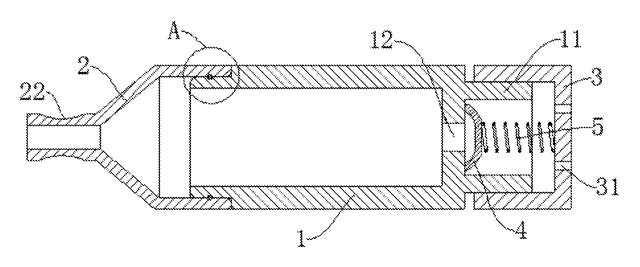
Spring-Valve Breath Trainer for Singers
Pocket breath trainer: blow against a spring-loaded valve to practice breath support for singing.
Patent CN207833725U
Health & Wellness
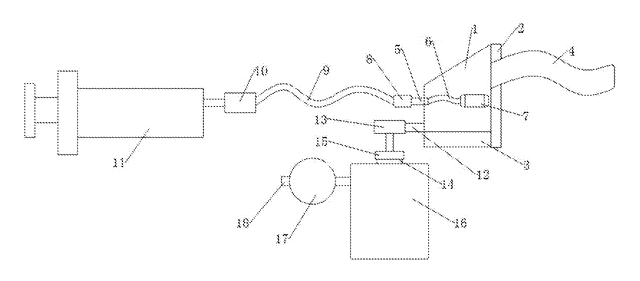
Closed-Loop Nasal Rinse Kit with Collection Bottle
Nasal rinse set: syringe-fed nose plug inside a sealed hood, with used solution drawn into a bottle.
Patent CN208017763U
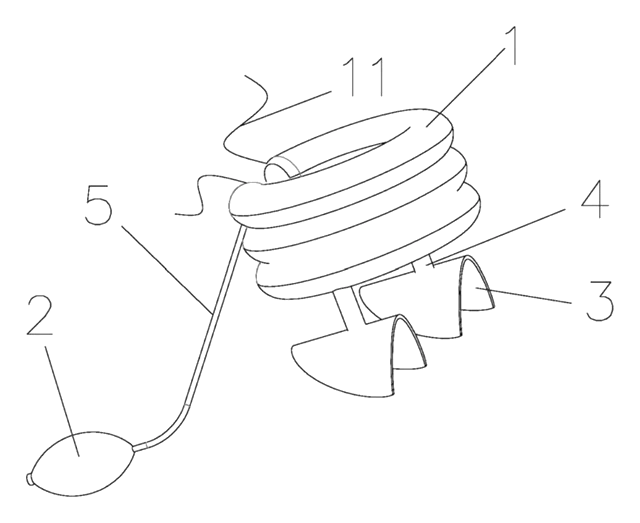
Health & Wellness
Inflatable Cervical Traction Collar Shaped for a Child's Neck
Child-size three-ring air collar on telescoping shoulder struts, inflated with a hand bulb.
Patent CN208958444U
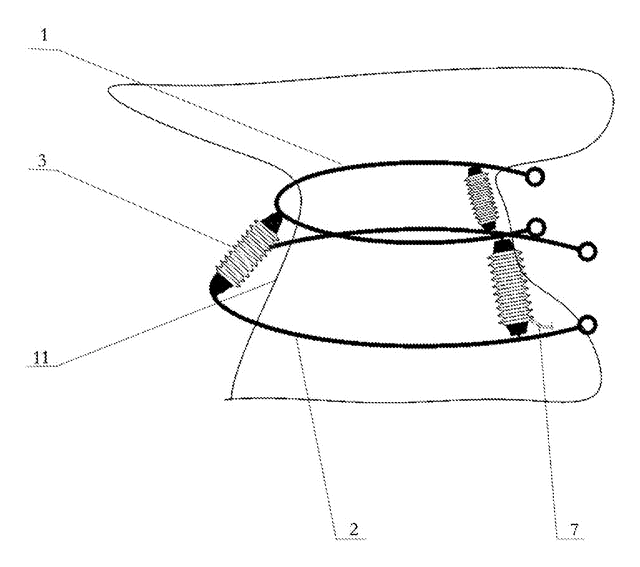
Massage & Wellness
Pneumatic Multi-Directional Neck Traction Collar
Three-airbag cervical collar that inflates in sequence to guide the head in multiple directions.
Patent CN207202980U
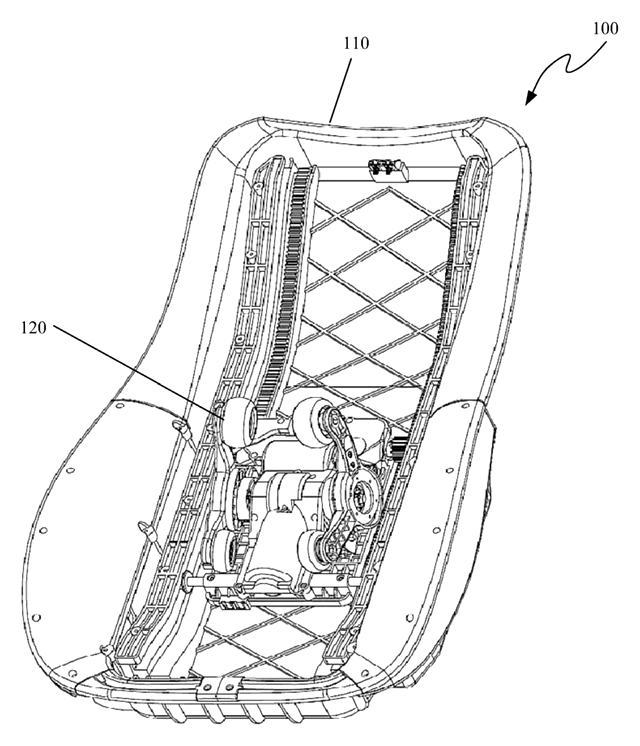
Health & Wellness
Shoulder-Detecting Massage Chair Mechanism with Forked Swing Arms
Massage chair core uses forked swing arms and sensors to detect shoulders and adjust the routine.
Patent CN106618998B
Browse by category
- Apparel & Accessories (46)
- Baby & Kids (28)
- Bags & Luggage (17)
- Bath & Personal Care (30)
- Car Accessories (25)
- Furniture, Bedding & Storage (23)
- Garden & Outdoor (32)
- Health & Wellness (14)
- Home, Kitchen & Cleaning (48)
- Lighting (23)
- Packaging & Containers (12)
- Pet Products (11)
- Phone & Camera Accessories (9)
- Retail Display (25)
- School, Office & Art (35)
- Sports & Recreation (45)
- Tools & Workshop (54)
- Toys & Games (22)
This page is based on the public patent document CN220002285U, assigned to Guangdong Moyun Intelligent Technology Co ltd. IP2M is an independent manufacturing service and is not affiliated with, endorsed by or licensed by the patent owner. Images marked as concept renderings are illustrations, not photos of an existing product. Patent status information is provided for reference only and is not legal advice; confirm freedom to operate for your market before production. Full disclaimer.