
Patent CN221128038U
Updated October 31, 2026LED Plant Growth Lamp with Adjustable Angle, Folding and Automatic Lifting
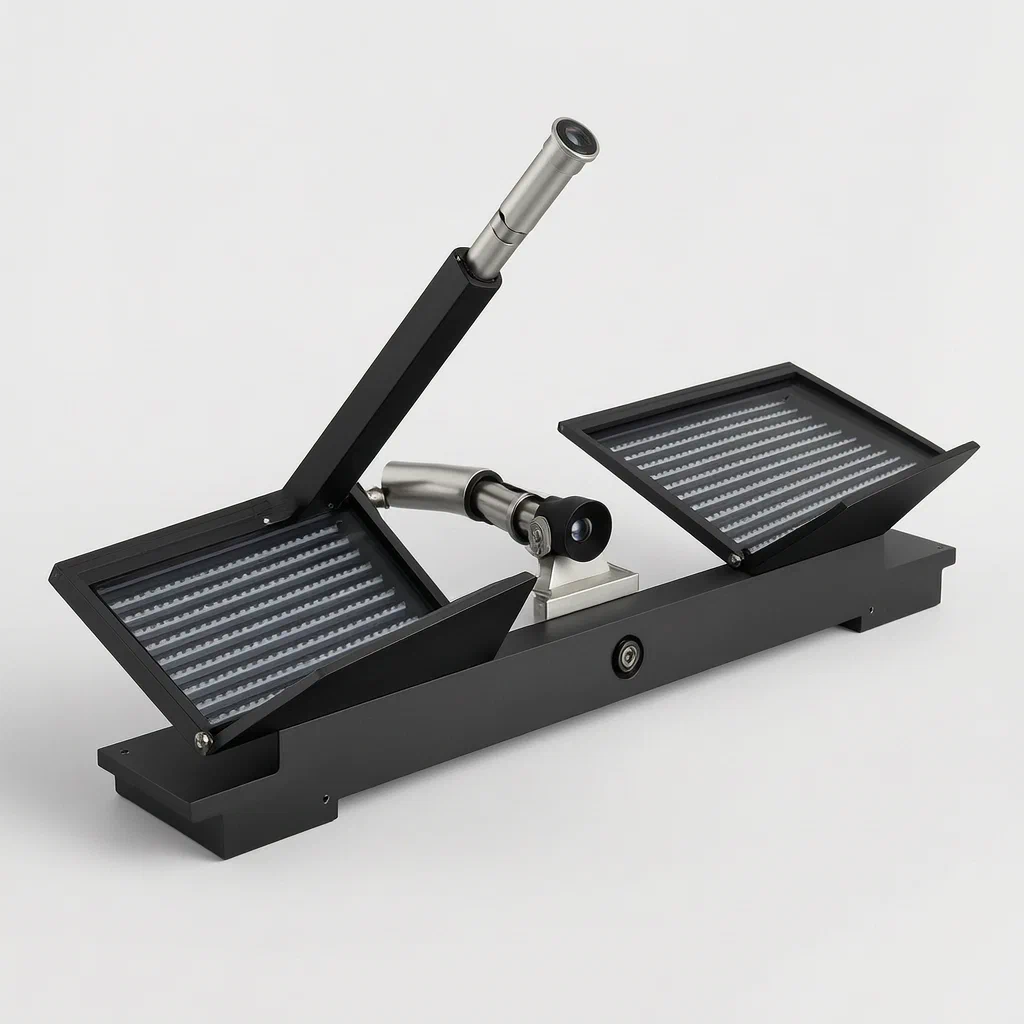
Static grow lights often sit too high for seedlings or too low for mature plants, wasting energy or causing heat stress. Manual adjustment is tedious and imprecise. This design integrates an automatic lifting mechanism driven by a motor and steel rope, paired with a radar ranging sensor to maintain the ideal distance. The lamp panels use a damping hinge, allowing them to fold flat for compact transport or rotate to fixed angles for targeted lighting on wide shelves.
- China utility model - active
- No filings outside China
- Auto-lifting & folding structure
- Radar ranging integration
Splat! What let you down?
📏
Automatic Lifting
Motor-driven winding shaft adjusts lamp height to keep optimal distance from plants.
📐
Foldable Panels
Damping hinges allow panels to fold flat for storage or lock at specific angles.
📡
Radar Sensing
Bottom-mounted radar sensor measures distance to automate height adjustments.
⚙️
Anti-Slip Rope
Elastic damping sheet clamps the steel rope to prevent loosening during operation.
Bring this product to market
- ✓ Patent vetted China-only family and legal status checked
- 2 Product brief · now How it works, uses and options written up
- 3 Prototype First samples for buyers to review
- 4 Pilot run Small first batch for launch customers
- 5 Volume production Repeat orders at scale
Buyer interest
– of 100 buyers needed to start prototyping
One click, no sign-up. Each vote is one real visitor, and products with the most interest go to prototyping first.
Build team: no members yet. Need a partner, co-funding or skills to build this? Join and we introduce the team once it forms.
The problem
Traditional LED plant growth lamps typically have fixed heights or require manual adjustment via telescopic poles or hanging chains. As plants grow, their light requirements change; seedlings need close proximity, while mature plants may spread wider or taller. Manually adjusting the height frequently is inconvenient and often leads to suboptimal positioning—either too close, risking heat damage, or too far, reducing photosynthetic efficiency. Additionally, many grow lights are bulky and difficult to store when not in use, and their fixed panel orientation limits flexibility for different planting arrangements, such as multi-tier shelving where side lighting might be beneficial.
The solution
The patent describes an LED plant growth lamp that solves these issues through three main structural innovations:
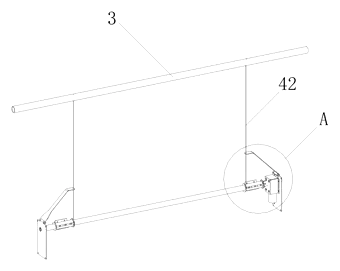
- Automatic Lifting Mechanism: The lamp body is connected to a mounting frame via a system comprising a lifting driving member (motor), a steel rope, and a winding shaft. The motor rotates the winding shaft to reel in or let out the steel rope, raising or lowering the entire lamp assembly relative to the fixed frame. This allows dynamic height adjustment without user intervention.
- Damping Rotation Structure: The plant growth lamp panels are attached to the lamp body using hinges equipped with damping rotating shafts. This structure allows the panels to rotate freely against resistance and then lock securely at any desired angle. It enables two key functions: folding the panels flat against the body for compact storage and transportation, or angling them outward to cover a wider area of plants.
- Distance Sensing: A radar ranging sensor is installed at the bottom of the lamp housing. This sensor measures the distance between the light source and the plant canopy. By integrating this data with the control board, the system can automatically command the lifting mechanism to maintain a pre-set optimal distance as the plants grow.
Who it is for
- Indoor Gardening Brands: Companies looking to differentiate their product line with automated features that reduce user maintenance effort.
- Commercial Greenhouse Operators: Facilities managing large numbers of plants where consistent light-to-distance ratios are critical for uniform growth across batches.
- Home Gardeners & Hobbyists: Users who want a “set and forget” solution that adapts to plant growth stages without daily manual tweaking.
- Retail Display Manufacturers: Designers creating integrated lighting for plant sales displays where space-saving folding capabilities are valuable for inventory management.
How it works
The main parts
| No. | Part | What it does |
|---|---|---|
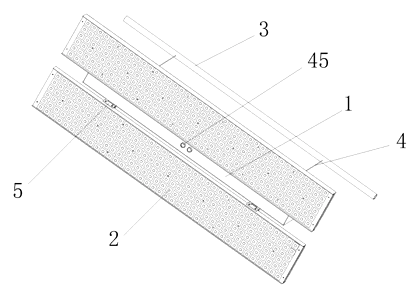
| 1 | Lamp Body | Housing containing the control board, power supply, and lifting motor. |
| 2 | Plant Growth Lamp Panel | The LED light source; can be single or dual symmetric panels. |
| 3 | Mounting Frame | Fixed structure to which the lamp hangs; supports the lifting mechanism. |
| 4 | Automatic Lifting Mechanism | Motor (41), Steel Rope (42), Winding Shaft (43), Anti-falling Damper (44). |
| 5 | Damping Rotation Structure | Hinge with damping shaft connecting panels to the body. |
| 6 | Heat Sink | Attached to the back of the lamp panels for thermal management. |
| 45 | Radar Ranging Sensor | Measures distance from the lamp to the plants below. |
Operating steps
- Installation: The mounting frame (3) is secured above the growing area. The lamp body (1) hangs from it via the steel rope (42).
- Height Adjustment: The control board receives data from the radar sensor (45). If the distance deviates from the target, it activates the lifting driving member (41). The motor turns the winding shaft (43), reeling the rope to raise or lower the lamp.
- Panel Configuration: The user rotates the lamp panels (2) using the damping hinges (5). For narrow rows, they fold inward. For wide beds, they open up to a set angle. The damping ensures they stay in position once released.
- Safety Lock: An elastic damping sheet (442) presses against the wound steel rope section, preventing accidental unwinding due to vibration or gravity if power is lost.
Applications
Vertical Farming Shelves
In stacked hydroponic systems, plants grow rapidly. The radar sensor detects the canopy height increase, and the motor lifts the light to maintain the precise distance required for each shelf tier, ensuring uniform yield without manual checks.
Home Indoor Gardens
For hobbyists growing herbs or vegetables indoors, the folding panels allow the unit to be compacted when moving the stand or storing it seasonally. The auto-lift feature handles the changing needs of seedlings versus mature plants automatically.
Retail Plant Displays
Shops selling live plants can use these units to provide supplemental light. When customers browse, the lights can be folded flat to save overhead space or angled to highlight specific display sections, improving visual appeal and plant health simultaneously.
Nursery Propagation Areas
Seedlings require very close light intensity compared to established saplings. The automatic lifting mechanism adjusts the height precisely as the batch grows, optimizing energy consumption by keeping the light as close as safely possible without scorching delicate leaves.
Where it is less suitable
- Outdoor Large-Scale Agriculture: The mechanical complexity and electronic sensors are overkill for open-field crops where natural sunlight dominates.
- Fixed-Ceiling Industrial Lighting: Environments with extremely stable, non-growing inventory do not benefit from the dynamic height adjustment feature.
- Ultra-Budget DIY Projects: The inclusion of motors, radar sensors, and precision damping hinges makes this significantly more expensive than simple static LED strips.
Frequently asked questions
How does the automatic lifting work?
The lamp hangs from a steel rope connected to a winding shaft inside the housing. A small electric motor drives the shaft. When the radar sensor detects that the plants have grown closer to the light, the controller signals the motor to unwind the rope, raising the lamp to restore the optimal distance.
Why use a radar sensor instead of ultrasonic?
The patent specifies a radar ranging sensor. Radar generally offers higher precision and better immunity to environmental factors like humidity or temperature changes compared to basic ultrasonic sensors, ensuring reliable height adjustments in varying greenhouse conditions.
Can the panels really fold completely flat?
Yes. The damping rotation structure uses hinges that allow the panels to rotate. They can be folded inward against the main body to minimize the footprint for storage or shipping. The damping feature provides resistance so they don’t flop around loosely, but they can still be manually adjusted to any angle.
What happens if the power goes out?
The design includes an anti-falling rope damper. An elastic sheet clamps the wound section of the steel rope. This friction-based locking mechanism helps hold the lamp in place temporarily even if power is lost, preventing it from crashing down onto the plants.
Is this compatible with smart home systems?
The patent mentions a control board but does not specify Wi-Fi or Bluetooth protocols. Customization options include adding IoT modules for app control or voice assistant integration, depending on the chosen microcontroller and firmware.
How heavy can the lifting mechanism handle?
The load capacity depends on the motor torque and the strength of the steel rope and winding shaft. These components are selected based on the total weight of the lamp body and panels. Specific ratings are confirmed during the prototype phase.
Can this design be made and sold in the US?
The patent is registered only in China and is currently in force there. It does not restrict sales in the US because there is no corresponding US patent. However, you should verify that no other existing US patents cover similar automated grow light technologies before mass production.
Are you affiliated with the patent owner?
No. IP2M is an independent design and manufacturing service working from the public patent document.
Request a quote
Click Request a Quote below to see our email address - copy it, or open your email app with a ready-made message. Please mention patent CN221128038U in the subject.
Helpful details to include:
- Your company and channel (grow light brand, indoor farming supplier, retail chain)
- Power rating (Watts) and LED spectrum preference
- Lifting range (how many inches/meters the lamp needs to move)
- Control features (manual, timer, or radar-auto)
- Estimated quantity and target price
- Timeline - when you would like samples and the first shipment
You can also reach us at (332) 203-9997.
Explore this product
Interested in building this?
Tell us your target market, quantity and timeline. We reply with options for prototyping, small-batch runs or volume production.
Send your inquiry to
Please put CN221128038U in the subject line and tell us your company, country, estimated quantity and timeline.
Prefer to talk? Call (332) 203-9997.
More product-ready patents
All Garden & Outdoor patents →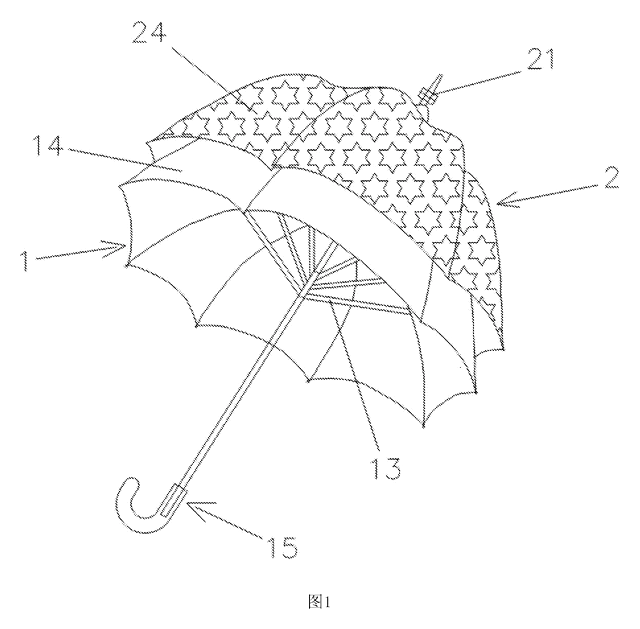
Garden & Outdoor
2-in-1 Parent & Child Umbrella
Full-size umbrella with a nested smaller umbrella on top - a rotating decorative layer that detaches into a kid-size umbrella.
Patent CN205611962U
Garden & Outdoor
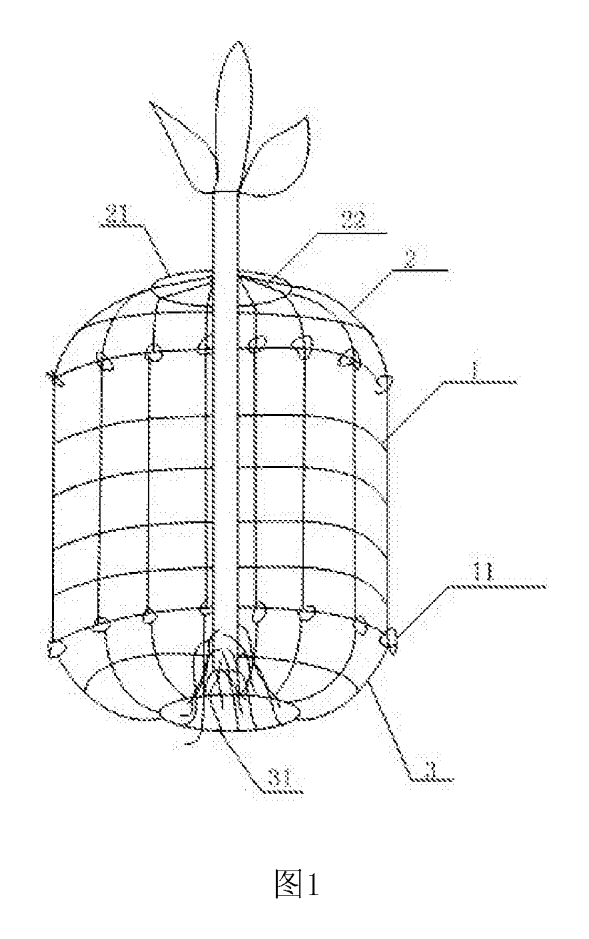
Wire-Mesh Tree Root & Trunk Guard Against Rodents
Three-part wire-mesh guard that protects the roots and lower trunk of young trees from burrowing and gnawing animals.
Patent CN206808261U
Garden & Outdoor
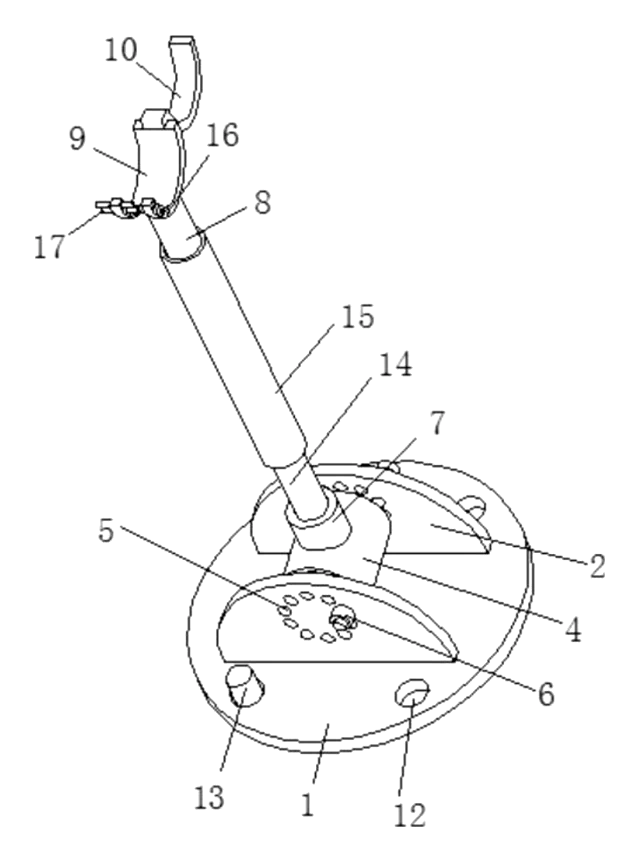
Adjustable-Angle Tree Support Prop
Tree prop with a pinned base, angle-locking hinge, twist-adjust tube and a locking trunk ring.
Patent CN208370491U
Garden & Outdoor
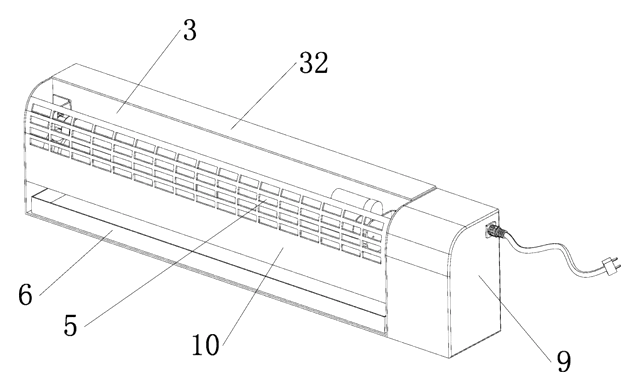
Self-Renewing Glue-Roller Mosquito Trap
UV insect trap with a glue roller that re-coats itself and scrapes the catch into a tray - no glue boards.
Patent CN217038569U
Garden & Outdoor
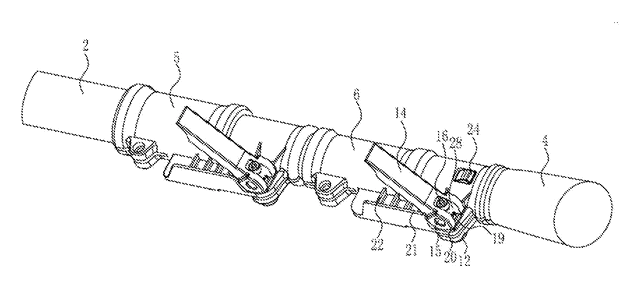
Cam-Lock Telescopic Pole for Garden Power Tools
Telescopic pole for garden power tools with cam-lever locks and a spring-button, tear-drop head socket.
Patent CN205812889U
Garden & Outdoor
Mosquito Fan That Listens for Mosquitoes Before It Sprays
Fan with a scanning microphone dish that mists repellent only when it hears mosquitoes.
Patent CN208708542U
Browse by category
- Apparel & Accessories (25)
- Baby & Kids (18)
- Bags & Luggage (12)
- Bath & Personal Care (18)
- Car Accessories (14)
- Furniture, Bedding & Storage (13)
- Garden & Outdoor (21)
- Health & Wellness (9)
- Home, Kitchen & Cleaning (28)
- Lighting (14)
- Packaging & Containers (7)
- Pet Products (6)
- Phone & Camera Accessories (5)
- Retail Display (15)
- School, Office & Art (21)
- Sports & Recreation (27)
- Tools & Workshop (32)
- Toys & Games (14)
This page is based on the public patent document CN221128038U, assigned to Aodesen Electronics Shenzhen Co ltd. IP2M is an independent manufacturing service and is not affiliated with, endorsed by or licensed by the patent owner. Images marked as concept renderings are illustrations, not photos of an existing product. Patent status information is provided for reference only and is not legal advice; confirm freedom to operate for your market before production. Full disclaimer.