At a glance
| Patent number | CN221128038U (application CN202323237762) |
| Type | China utility model (实用新型) - protects product shape and structure |
| Original title | LED plant growth lamp with adjustable illumination angle, folding and automatic lifting functions (一种光照角度可调、可折叠、可自动升降led植物生长灯) |
| Patent owner | Aodesen Electronics Shenzhen Co ltd |
| Inventors | Zheng Jinxiong, Zhao Feng, Zhao Jianwei |
| Filing date | 2023-11-29 |
| Grant date | 2024-06-14 |
| Status (China) | In force - a China utility model lasts at most 10 years from filing; valid until 2033-11-29 if annual fees are paid |
| Patent family | Chinese filings only - no US, European, Japanese, PCT or other filings listed |
| Cited by | 1 later document |
| Source | Google Patents (search for CN221128038U) |
What the claims cover, in plain language
Claim 1 defines the core structure: an LED plant growth lamp comprising a lamp body, a plant growth lamp panel, a mounting frame, an automatic lifting mechanism, and a damping rotation structure. The lamp body connects to the frame via the lifting mechanism to allow vertical movement. The panel connects to the body via the damping rotation structure, allowing it to fold or lock at an angle.
Claim 2 specifies that there are two plant growth lamp panels arranged symmetrically on the left and right sides of the lamp body. Claim 3 adds a heat sink to the back of the panel. Claim 4 identifies the damping rotation structure as a hinge with a damping rotating shaft. Claim 5 details the lamp body housing, which contains a control board and a power supply. Claim 6 breaks down the lifting mechanism into a lifting driving member (motor), a steel rope, and a winding shaft inside the housing. Claim 7 introduces an anti-falling rope damper consisting of a damping support and an elastic damping sheet that clamps the wound portion of the steel rope to prevent loosening. Claim 8 includes a radar ranging sensor at the bottom of the housing, connected to the control board. Claim 9 describes a gravity center balance bracket on the steel rope with a limiting hole to guide the rope’s movement.
This is a simplified reading for orientation only. The legal scope is defined by the exact claim wording in the official Chinese document.
What this means for US production
This patent was filed only in China and is currently in force. Making or selling this specific configuration in China requires the owner’s permission. However, since there are no US patents in this family, the design itself is not protected by US patent law.
Two points to settle early:
- Other patents may exist. Smart lighting and automated gardening devices are competitive fields. While this specific combination of radar sensing and mechanical lifting is patented in China, similar functionality might be covered by broader US patents regarding automated plant care systems or smart home integration. A freedom-to-operate (FTO) review is recommended before launching in the US market.
- Component Sourcing. The use of specific radar modules and damping hinges requires careful selection of suppliers who can meet quality standards for consumer electronics longevity.
Customization and manufacturing
What can be customized
| Area | Options |
|---|---|
| Light Spectrum | Full spectrum, red/blue mix, or tunable white LEDs |
| Panel Count | Single panel, dual symmetric (as claimed), or multi-arm configurations |
| Lifting Range | Stroke length determined by winding shaft capacity and rope length |
| Control Interface | App connectivity, physical buttons, or voice assistant integration |
| Housing Material | Aluminum alloy for heat dissipation or reinforced plastic for cost reduction |
| Sensor Type | Ultrasonic alternative if radar costs are prohibitive (requires software change) |
Things to plan for (US market)
- UL 8750 / UL 1590 - Safety standards for LED drivers and luminaires used in indoor environments.
- FCC Part 15 - Electromagnetic compatibility certification for the digital electronics (control board, radar module).
- RoHS Compliance - Restriction of hazardous substances in electrical and electronic equipment.
- Energy Star - Optional but beneficial for marketing efficient grow lights.
How a project runs
- Inquiry - Define power output, lifting range, and control features.
- Design - Select motor torque, gear ratio for winding shaft, and radar module specifications.
- Prototype - Build functional units to test lifting smoothness, noise levels, and folding hinge durability.
- Pilot Run - Conduct safety testing (UL/FCC) and reliability cycles for the lifting mechanism.
- Production - Injection molding for housings, PCB assembly, final wiring, and packaging.
Quantities & timeline
The lifting mechanism requires precise machining for the winding shaft and custom molds for the damping hinge components. Radar modules are sourced externally. Assembly involves integrating sensitive electronics with mechanical parts. Development time is primarily spent tuning the control algorithm for the radar-triggered lifting. Send us your power specs, lifting range, control preferences, quantity and target price and we will reply with options.
Patent drawings
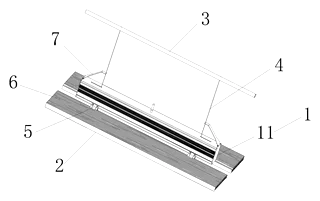
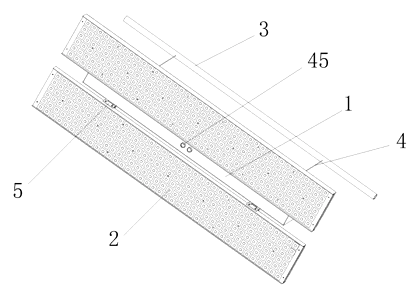
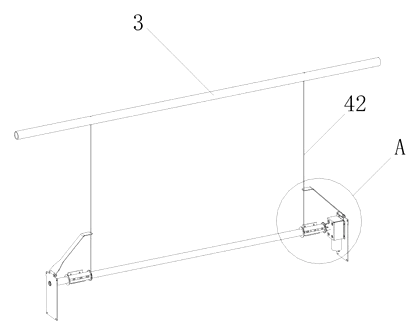
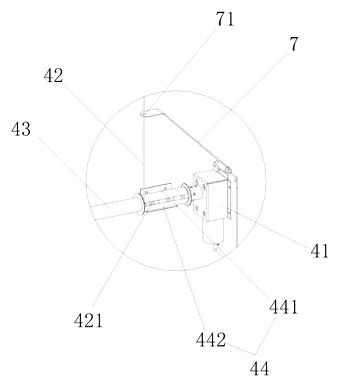
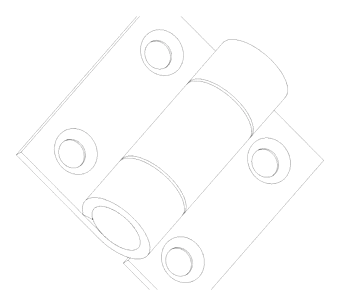
Drawings reproduced from the public patent document for reference.