
Patent CN222445290U
Updated November 3, 2026Fan Vehicle with Adjustable Wind Resistance for Pedal Training
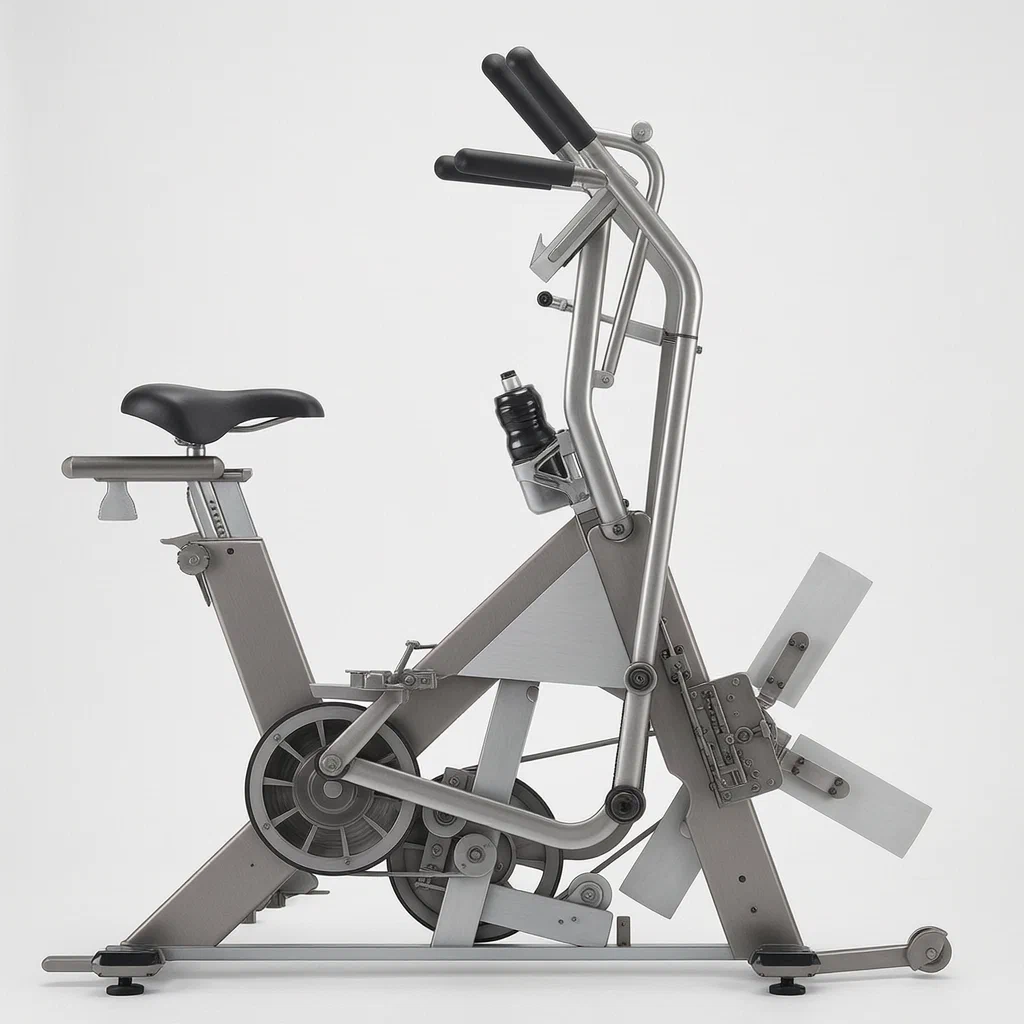
Standard stationary bikes offer fixed or mechanically complex resistance. This design uses airflow itself as the load source. The pedals drive a large wind wheel. Each blade on the wheel is mounted so it can pivot. A simple lever and cable system slides a central ring, which rotates all blades simultaneously via linkages. When the blades are flat against the direction of travel, resistance is low. When they turn edge-on to the airflow, resistance spikes. This provides immediate, tactile feedback on effort level, driven purely by aerodynamics rather than friction pads or magnets.
- China utility model - in force
- No filings outside China
- Pedal vehicle / fitness equipment
- Wind wheel with adjustable blade angles
Splat! What let you down?
🌬️
Airflow Resistance
Resistance comes from the wind wheel's blades cutting through air, not friction pads.
🔄
Blade Angle Control
User adjusts blade rotation to increase or decrease windward area instantly.
🔗
Linkage Mechanism
A slider and rod assembly rotates all blades simultaneously for smooth tuning.
🛑
Self-Locking Handle
The operating handle locks at any angle, holding the blade position steady.
Bring this product to market
- ✓ Patent vetted China-only family and legal status checked
- 2 Product brief · now How it works, uses and options written up
- 3 Prototype First samples for buyers to review
- 4 Pilot run Small first batch for launch customers
- 5 Volume production Repeat orders at scale
Buyer interest
– of 100 buyers needed to start prototyping
One click, no sign-up. Each vote is one real visitor, and products with the most interest go to prototyping first.
Build team: no members yet. Need a partner, co-funding or skills to build this? Join and we introduce the team once it forms.
The problem
Many pedal-powered recreational vehicles or indoor training units rely on mechanical friction or magnetic brakes to provide resistance. These systems can be heavy, require maintenance, or offer resistance levels that feel artificial compared to natural movement. Additionally, adjusting resistance often requires stopping the vehicle or using complex electronic controls. For outdoor pedal carts or hybrid fitness devices, there is a need for a lightweight, direct method to vary effort based on speed and physical input, without adding significant weight or complexity.
The solution
This patent describes a fan vehicle where the primary source of resistance is aerodynamic drag generated by a rotating wind wheel.
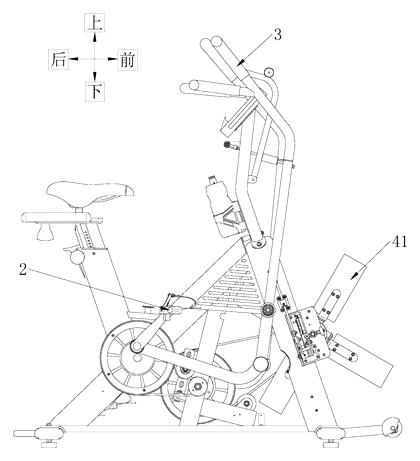
- The vehicle frame holds two pedals spaced apart for the user to step on.
- A wind wheel is linked to the pedals, so it rotates whenever the user pedals.
- The wind wheel consists of multiple blades arranged around a central axis.
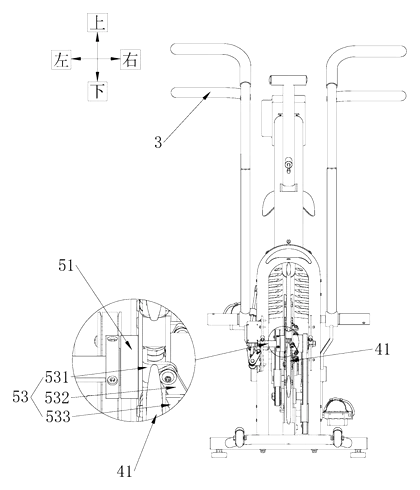
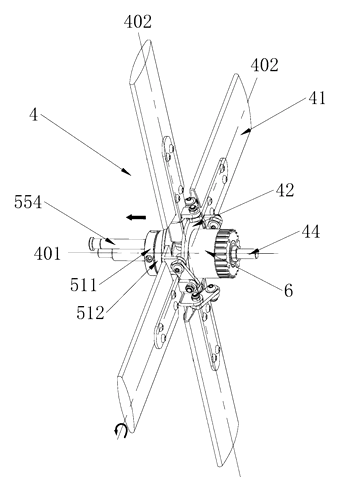
- Crucially, each blade is mounted on its own blade rotating shaft, allowing it to pivot (autorotate) independently of the main wheel spin.
- An operating mechanism connects to the blades. When the user manipulates this mechanism, it drives the blades to rotate around their individual shafts.
- As the blade angle changes, its windward area (the surface facing the airflow) increases or decreases.
- This change in surface area directly alters the movement windage (air resistance), providing variable load to the rider.
Who it is for
- Fitness Equipment Brands: Companies looking to differentiate stationary bikes or cross-trainers with a unique, mechanical “air brake” feel that doesn’t require electricity.
- Outdoor Recreation Manufacturers: Makers of adult pedal carts or trikes who want a built-in way to simulate uphill effort or high-speed drag without adding heavy flywheels or disc brakes.
- Rehabilitation Centers: Facilities needing low-impact, adjustable resistance tools where the load scales naturally with the user’s pedaling speed and effort.
- Industrial Designers: Teams exploring simple, robust mechanisms for variable resistance in consumer products, avoiding complex electronics or wear-prone friction parts.
How it works
The main parts
| No. | Part | What it does |
|---|---|---|
| Frame | Vehicle Frame | Supports the pedals and wind wheel assembly. |
| Pedals | Pedals | User steps here; drives the wind wheel rotation. |
| Wheel | Wind Wheel | Rotates with the pedals; contains the blades. |
| Blades | Blades | Generate resistance; can pivot to change angle. |
| Mech | Operating Mechanism | Slider, rods, and cables that move the blades. |
| Link | Linkage Assembly | Connects the slider to each blade to rotate them. |
| Handle | Operating Member | User-controlled lever/handle with self-locking. |
Operating Steps
- Pedal Motion: The user steps on the pedals, causing the wind wheel to spin. The blades revolve around the central shaft.
- Adjustment Input: The user pushes or pulls the operating member (handle).
- Force Transmission: This action moves a slider along the rotor shaft via a linkage assembly (first, second, and third links).
- Blade Rotation: The sliding motion forces the blades to rotate around their individual blade rotating shafts.
- Resistance Change:
- To increase resistance: The blades turn to present more surface area to the air (higher windward area).
- To decrease resistance: The blades turn to slice through the air more easily (lower windward area).
- Locking: The handle’s self-locking feature holds the blades at the desired angle during riding.
Applications
Indoor Cycling Trainers
For home gyms, this design offers a silent, electric-free resistance option. The “feel” of the air resistance increases exponentially with speed, mimicking outdoor riding dynamics without needing a large fan motor or magnetic brake unit. It appeals to users who prefer mechanical simplicity and durability over smart-connectivity features.
Adult Pedal Carts
Outdoor recreational trikes or quadricycles can use this system to give riders control over their exertion level. On flat ground, the blades can be set to minimum resistance for easy cruising. If the rider wants a workout or faces a slight incline, they can manually increase the blade angle to add drag, simulating a heavier load without braking the wheels themselves.
Rehabilitation Devices
Physical therapy settings benefit from the linear and predictable nature of aerodynamic resistance. Since the resistance is tied to the rotational speed and blade angle, therapists can set specific, repeatable loads. The lack of electrical components makes the device safer for wet environments or areas where power supply is unreliable, and the self-locking handle ensures stability during patient exercises.
Educational STEM Kits
The mechanism serves as an excellent teaching tool for physics concepts like aerodynamics, torque, and mechanical linkages. Schools or hobbyists can build scaled-down versions to demonstrate how changing the angle of attack affects drag. It provides a tangible example of converting human kinetic energy into controlled mechanical work without hidden electronic black boxes.
Where it is less suitable
- High-Speed Road Vehicles: At very high speeds, the aerodynamic noise and potential instability of large spinning blades may be undesirable compared to enclosed drivetrains.
- Compact Urban Commuters: The large diameter required for an effective wind wheel makes this unsuitable for foldable or ultra-compact personal transporters.
- Precision Electronic Feedback Systems: Users requiring exact wattage readings or programmable interval training with digital displays will find this purely mechanical system lacks the necessary data integration capabilities.
Frequently asked questions
How does the resistance actually change?
The resistance is aerodynamic. The wind wheel spins when you pedal. Each blade can pivot on its own axis. When you turn the handle, a linkage system rotates all the blades. Turning them to face the air squarely increases the windward area, creating more drag. Turning them edge-on reduces drag.
Is this better than magnetic resistance?
It depends on the use case. Magnetic resistance is quiet and compact. This wind-based system is simpler, requires no electronics, and provides a “natural” feel where resistance increases with speed. It is also lighter and potentially cheaper to manufacture for certain applications, though it generates more noise than sealed magnetic systems.
Can I use this outdoors?
Yes, the design supports outdoor pedal vehicles. However, materials must be chosen for environmental exposure. We recommend UV-stabilized glass-filled nylon for the blades and powder-coated or anodized aluminum for the frame to prevent corrosion and degradation from sun and rain.
How much weight can the blades handle?
The patent does not specify a load rating. The blades are designed to withstand centrifugal force and aerodynamic pressure. In our designs, we use impact-grade materials and reinforce the root connections. Load capacity is confirmed through prototype testing based on the final wheel diameter and RPM limits.
Is the adjustment mechanism reliable?
The mechanism uses a slider and multi-link rod system. To ensure reliability, we focus on the hinge bosses and pivot points. Using bushings or hardened pins prevents wear. The self-locking handle keeps the setting stable during use. Regular inspection of the linkage joints is recommended for long-term durability.
Can I customize the size?
Yes. The frame and wind wheel diameter can be scaled. Smaller diameters suit indoor trainers; larger diameters are better for outdoor carts where higher inertia is desirable. The linkage mechanism remains proportional, so the core design logic applies across sizes.
Can this design be made and sold in the US?
The patent was filed only in China and is in force there. It has no US counterpart, so this specific Chinese patent does not restrict US sales. However, variable resistance fitness equipment is a crowded patent field. We strongly recommend a freedom-to-operate (FTO) check to ensure no existing US patents cover similar blade-adjustment mechanics.
Are you affiliated with the patent owner?
No. IP2M is an independent design and manufacturing service working from the public patent document.
Request a quote
Click Request a Quote below to see our email address - copy it, or open your email app with a ready-made message. Please mention patent CN222445290U in the subject.
Helpful details to include:
- Your company and channel (fitness brand, outdoor recreation maker, industrial designer)
- Intended use (indoor trainer, outdoor cart, rehabilitation device)
- Target wheel diameter and frame size constraints
- Material preferences (e.g., aluminum vs. steel frame, nylon vs. ABS blades)
- Estimated quantity and target price
- Timeline - when you would like samples and the first shipment
You can also reach us at (332) 203-9997.
Explore this product
Interested in building this?
Tell us your target market, quantity and timeline. We reply with options for prototyping, small-batch runs or volume production.
Send your inquiry to
Please put CN222445290U in the subject line and tell us your company, country, estimated quantity and timeline.
Prefer to talk? Call (332) 203-9997.
More product-ready patents
All Sports & Recreation patents →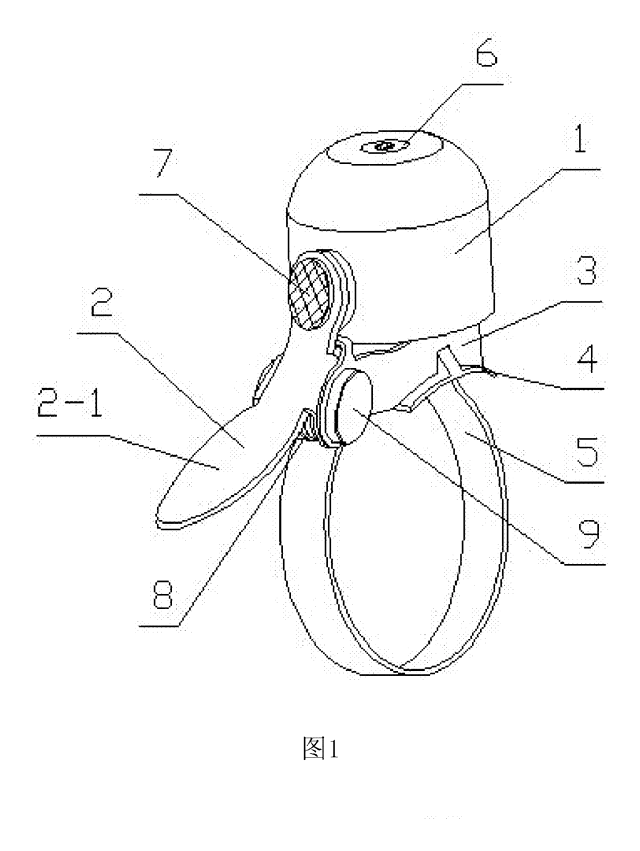
Sports & Recreation
Compact Torsion-Spring Bike Bell
Mini bike bell with a standard torsion spring and a rubber-floated dome - small size, clear tone, quick strap mount.
Patent CN205819384U
Sports & Recreation
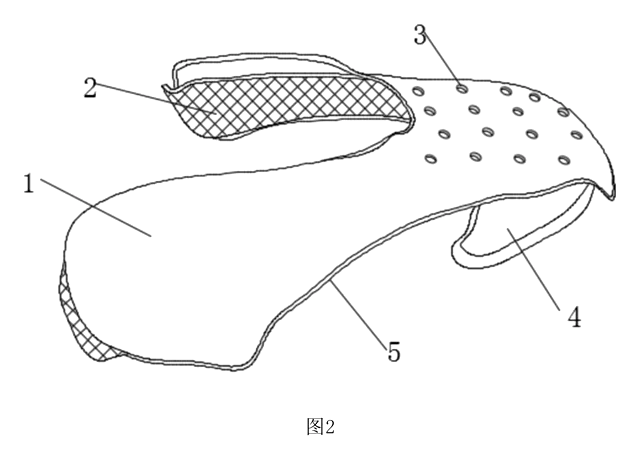
Padded Toe-Box Shield for Sneakers
Ventilated, silicone-lined toe-box insert that supports the front of a sneaker and cushions the toes.
Patent CN209473731U
Sports & Recreation
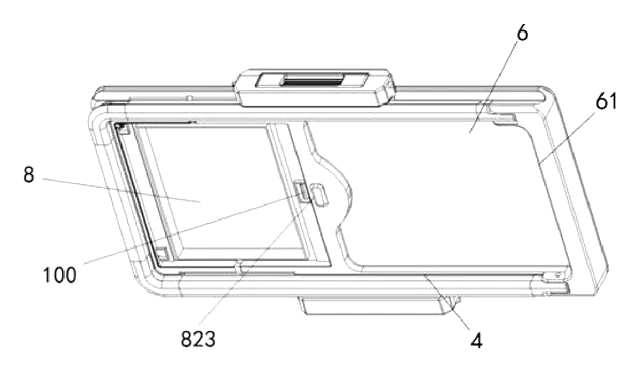
Reversible Fishing Seat-Box Lid with Backrest
Fishing seat-box lid that flips on removable hinge pins: cushion, backrest and storage on one face.
Patent CN208624426U
Sports & Recreation
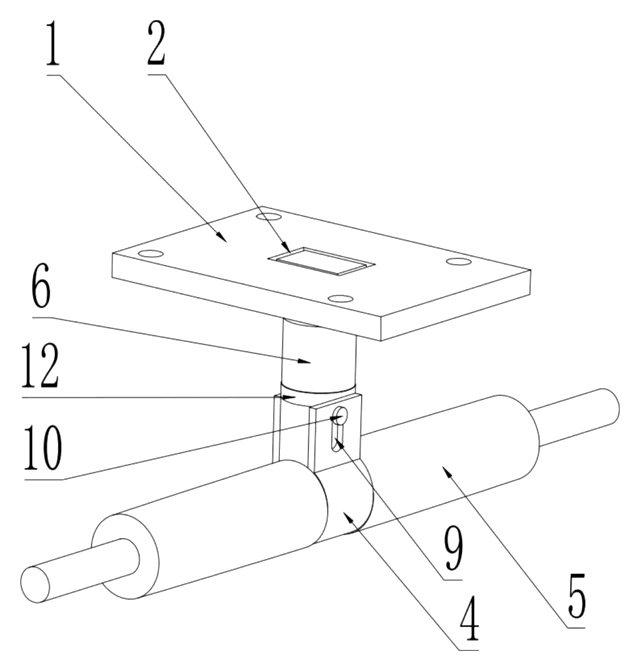
Swivel-Pin Skateboard Truck with Rubber Sleeve
Skateboard truck with a turning center pin, a tilting axle clamp and a rubber sleeve that centers it.
Patent CN216777880U
Sports & Recreation
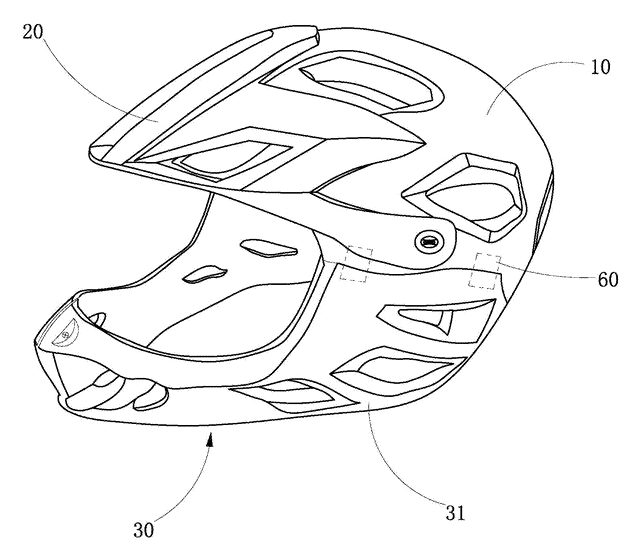
Full-Face Bike Helmet with Magnetic Detachable Chin Bar
Full-face cycling helmet whose chin bar clips on and off with magnetic, latching side connectors.
Patent CN206630067U
Sports & Recreation
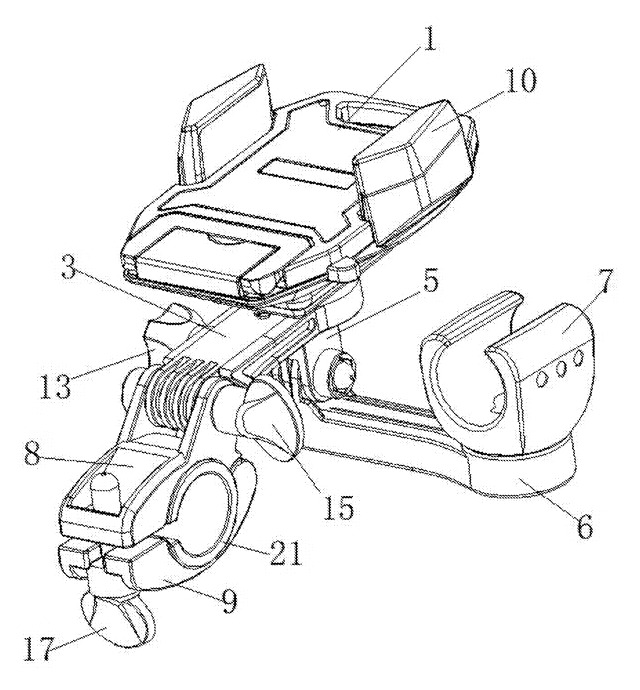
Bike Phone Holder with Built-In Flashlight Clamp
Handlebar mount with a phone cradle on top and a flashlight clamp below, on one arm.
Patent CN206077485U
Browse by category
- Apparel & Accessories (36)
- Baby & Kids (25)
- Bags & Luggage (15)
- Bath & Personal Care (25)
- Car Accessories (21)
- Furniture, Bedding & Storage (19)
- Garden & Outdoor (27)
- Health & Wellness (12)
- Home, Kitchen & Cleaning (40)
- Lighting (20)
- Packaging & Containers (10)
- Pet Products (9)
- Phone & Camera Accessories (7)
- Retail Display (21)
- School, Office & Art (30)
- Sports & Recreation (37)
- Tools & Workshop (46)
- Toys & Games (19)
This page is based on the public patent document CN222445290U, assigned to Xiamen K Power Sports Co ltd. IP2M is an independent manufacturing service and is not affiliated with, endorsed by or licensed by the patent owner. Images marked as concept renderings are illustrations, not photos of an existing product. Patent status information is provided for reference only and is not legal advice; confirm freedom to operate for your market before production. Full disclaimer.