
Patent CN222786704U
Updated November 3, 2026Modular Pet Food Dispensing Toy with Lockable Heads and Block Members
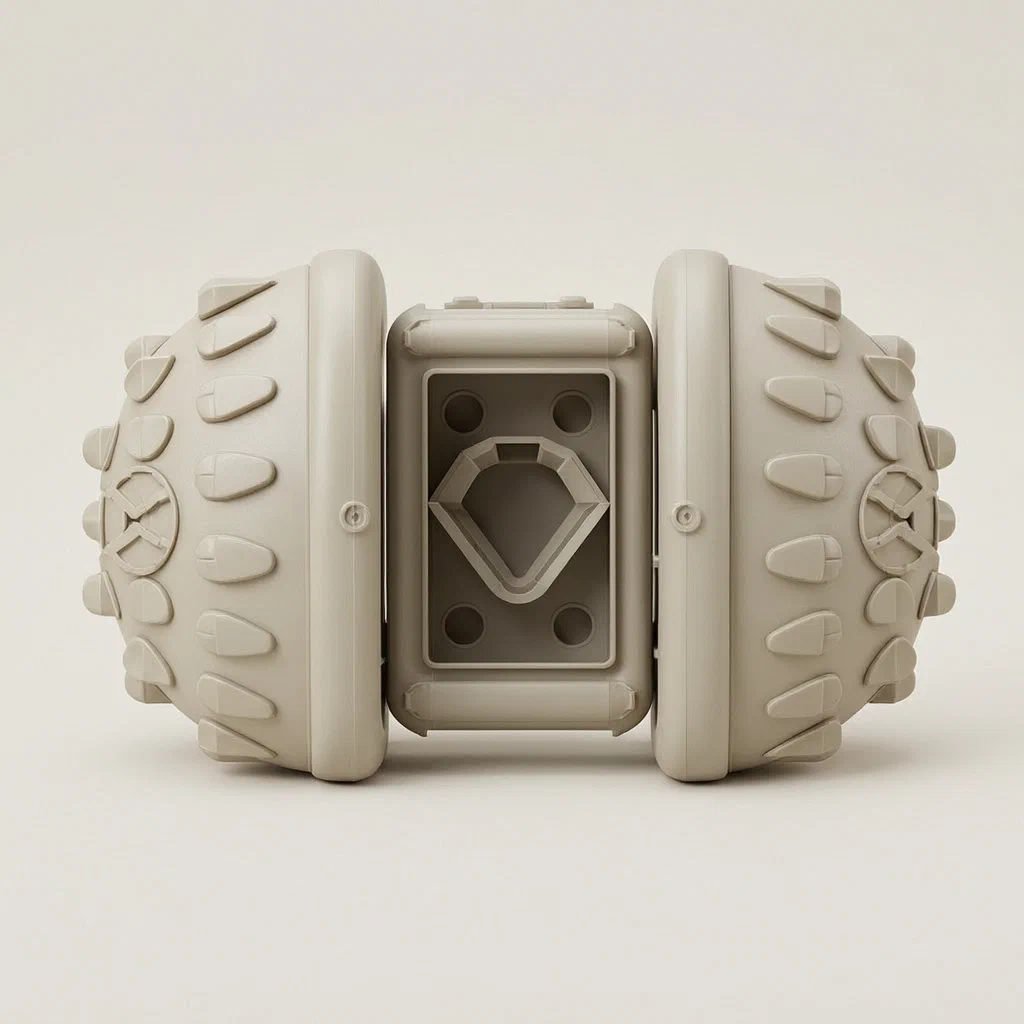
Standard treat balls often frustrate pets when they roll away or spill everything at once. This modular design solves control issues by using lockable head portions attached to a central tube. Users can twist and pull the heads to unlock them for filling, then lock them back in place to ensure food only dispenses through designated outlets and weeping mouths. The structure combines chewing surfaces with functional treat-release points, offering a customizable experience for different pet sizes and feeding styles.
- China utility model - active
- No filings outside China
- Modular snap-fit design
- Lockable heads for spill control
Splat! What let you down?
🔒
Lockable Heads
Twist-and-lock mechanism prevents pets from removing heads and scattering food.
🧩
Modular Assembly
Central tube accepts various head portions and block members for customization.
🦷
Chewing Surfaces
Head portions feature rounded tips with molar bumps for dental engagement.
💧
Controlled Release
Body has grain outlets; blocks have weeping mouths for gradual treat flow.
Bring this product to market
- ✓ Patent vetted China-only family and legal status checked
- 2 Product brief · now How it works, uses and options written up
- 3 Prototype First samples for buyers to review
- 4 Pilot run Small first batch for launch customers
- 5 Volume production Repeat orders at scale
Buyer interest
– of 100 buyers needed to start prototyping
One click, no sign-up. Each vote is one real visitor, and products with the most interest go to prototyping first.
Build team: no members yet. Need a partner, co-funding or skills to build this? Join and we introduce the team once it forms.
The problem
Many pet treat dispensers are single-piece units where the opening size is fixed. If the opening is too large, the pet gets all the food immediately, defeating the purpose of enrichment. If it is too small, the pet cannot extract the food, leading to frustration. Furthermore, simple ball-shaped dispensers often roll away unpredictably, making it difficult for the owner to monitor consumption. Some designs lack secure closures, allowing enthusiastic pets to pull the dispenser apart, resulting in spilled kibble and potential choking hazards from detached small parts. Owners need a way to refill the device quickly without tools, but also need assurance that the device stays closed during vigorous play.
The solution
- Tubular Body: The core component is a hollow tube (body portion) with at least one grain outlet on its surface.
- Head Portions: Two end caps (head portions) attach to the body. Each head has an internal cavity with a coupling member that fits over the body’s end.
- Locking Mechanism: The body surface features guide channels. The head portions have mating protrusions. By aligning the protrusion with the channel, sliding axially, and rotating, the user locks the head in place. A resilient member snaps into a through-slot to hold the lock.
- Block Members: Additional components (block members) can attach to the body via a second cavity. These blocks feature weeping mouths for liquid or soft treat dispensing and wet grain grooves for spreading paste-like foods.
- Chewing Features: The outer surface of the head portions includes rounded tips with molar bumps, providing textured areas for the pet to chew on safely.
Who it is for
- Pet Product Brands looking for a customizable SKU line where heads and blocks can be swapped to create different difficulty levels or aesthetics.
- Amazon Sellers who want a product with a clear functional advantage (spill prevention) to differentiate from generic treat balls.
- Wholesalers supplying pet stores that require durable, easy-to-clean toys with replaceable parts.
- Veterinary Clinics recommending enrichment tools that promote chewing behavior without risking ingestion of small detached parts.
How it works
The main parts
| No. | Part | What it does |
|---|---|---|
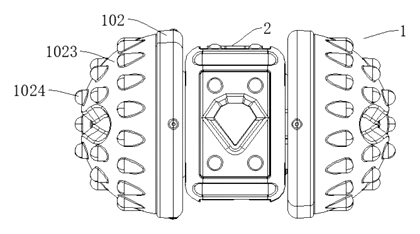
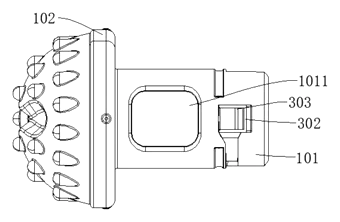
| 101 | Body Portion | Central tube containing food; has grain outlets and locking channels. |
| 102 | Head Portions | End caps with internal cavities; feature molar bumps for chewing. |
| 2 | Block Member | Attachable segment with weeping mouths and wet grain grooves. |
| 3 | Locking Means | Guide channels on body; mating protrusions on heads. |
| 301 | Guide Channel | Path for axial sliding and rotational locking. |
| 302 | Through Slot | Section where the resilient member engages to lock the head. |
| 303 | Resilient Member | Spring-loaded block that holds the protrusion in place. |
| 304 | Mating Protrusion | Tab on the head that moves within the guide channel. |
| 4 | Alignment Mark | Visual indicator showing locked vs. unlocked position. |
Operating Steps
- Unlocking: Rotate the head portion so the alignment mark points to the axial section. Slide the head outward along the axis. The mating protrusion moves out of the through-slot, releasing the resilient member.
- Refilling: With the head removed, fill the body portion with kibble or insert a block member if desired.
- Locking: Align the protrusion with the guide channel entrance. Push the head onto the body (axial movement). Rotate the head (rotational movement) until the protrusion slides under the resilient member in the through-slot. The alignment mark now points to the slot, indicating a secure lock.
- Dispensing: When the pet rolls or chews the toy, food exits through the grain outlets on the body or weeping mouths on the blocks. The locked heads prevent accidental disassembly.
Applications
Daily Enrichment
Dogs and cats interact with the toy to release dry kibble. The lockable design ensures the food comes out slowly through specific outlets, keeping the pet engaged longer than a standard bowl.
Wet Food Administration
Using the block members with wet grain grooves, owners can spread peanut butter or wet food. The weeping mouths allow liquids to seep out gradually, encouraging licking and reducing mess compared to open bowls.
Dental Care
The head portions feature molar bumps on rounded tips. As the pet manipulates the toy to get food, these textured surfaces provide mild abrasive action, helping to clean teeth and gums during play.
Travel and Confinement
The compact tubular shape fits well in crates or carriers. Because the heads are locked securely, the risk of spilling food inside a vehicle or kennel is significantly reduced compared to loose-lid containers.
Where it is less suitable
- Aggressive Chewers: While bite-resistant materials are recommended, extremely powerful jaws may eventually damage the plastic threads or locking tabs if the material choice is not robust enough.
- Liquid-Only Diets: The primary function is solid food dispensing; very thin liquids may leak uncontrollably through the grain outlets if not sealed properly.
Frequently asked questions
How does the locking mechanism work?
The toy uses a twist-and-lock system. The head portion has a protrusion that slides into a guide channel on the body. Once pushed in, you rotate the head. This moves the protrusion under a resilient (spring-like) member, snapping it into place. To unlock, you simply rotate back and pull.
Is it safe for aggressive chewers?
The design includes molar bumps on rounded tips to encourage chewing without sharp edges. However, safety depends on the material chosen during production. We recommend high-density, bite-resistant plastics. It is not indestructible; very strong jaw pressure could eventually damage the locking tabs.
Can I mix dry and wet food?
Yes. The body has outlets for dry kibble. You can attach block members that have “weeping mouths” and wet grooves specifically designed for spreading pastes like peanut butter or yogurt. This allows for varied feeding experiences.
How do I clean it?
Because the heads and blocks are removable, you can take the toy apart completely. The smooth internal surfaces of the tube are designed to be rinsed easily. There are no hidden screws or complex joints that trap dirt, provided the modular fit is precise.
What is the capacity?
The patent does not specify exact volumes. Capacity is determined by the diameter and length of the tubular body chosen in the final design. Larger bodies hold more food, suitable for big dogs, while smaller ones fit cats or small breeds.
Are the parts interchangeable?
Within the same product line, yes. Different head portions and block members can usually be swapped onto the same body tube, allowing you to create different configurations for different pets or play styles.
Can this design be made and sold in the US?
The patent is active in China but has no US counterpart. This means you can manufacture and sell this specific design in the US without infringing this patent. However, you must conduct a freedom-to-operate search to ensure no other US patents cover similar locking mechanisms in pet toys.
Are you affiliated with the patent owner?
No. IP2M is an independent design and manufacturing service working from the public patent document.
Request a quote
Click Request a Quote below to see our email address - copy it, or open your email app with a ready-made message. Please mention patent CN222786704U in the subject.
Helpful details to include:
- Your company and channel (pet brand, distributor, online seller)
- Target pet size (which dictates the dimensions)
- Material preference (standard plastic vs. premium bite-resistant)
- Quantity and desired launch date
- Customization needs (colors, logo placement, packaging style)
You can also reach us at (332) 203-9997.
Explore this product
Interested in building this?
Tell us your target market, quantity and timeline. We reply with options for prototyping, small-batch runs or volume production.
Send your inquiry to
Please put CN222786704U in the subject line and tell us your company, country, estimated quantity and timeline.
Prefer to talk? Call (332) 203-9997.
More product-ready patents
All Pet Products patents →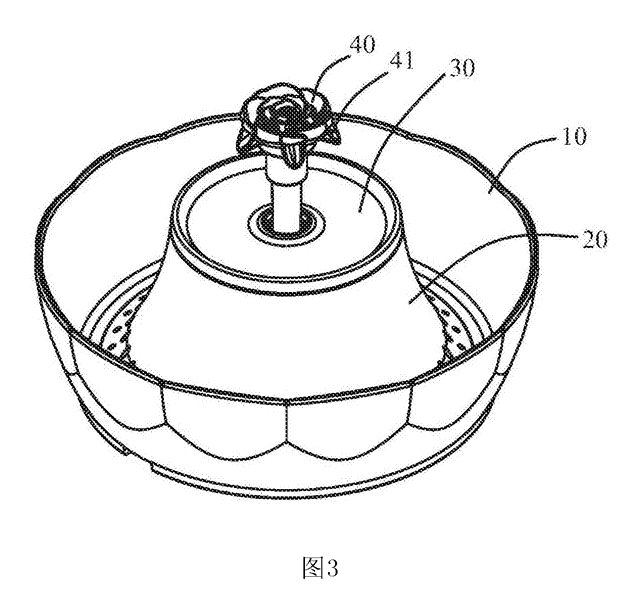
Pet Products
Multi-Pet Fountain Water Dispenser
Round pet fountain with a central flower spray head - several pets drink from any side; water is filtered and circulated.
Patent CN207870035U
Pet Products
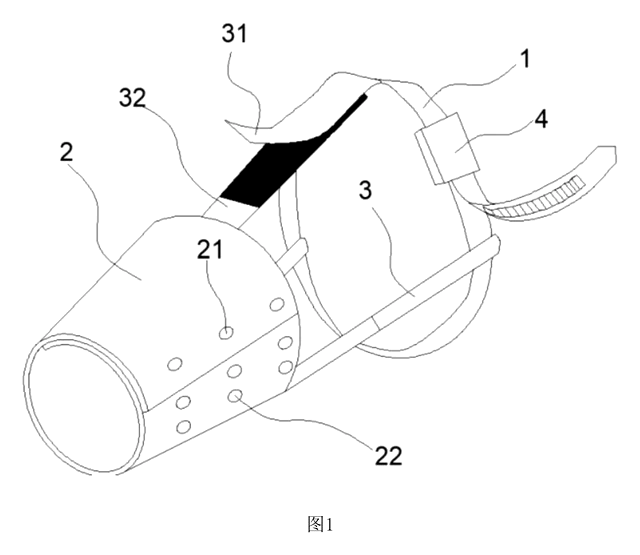
Adjustable Snap-Fit Animal Muzzle
Soft muzzle with snap-adjustable snout sleeve, ratchet neck strap and detachable connecting straps.
Patent CN208523497U
Pet Products
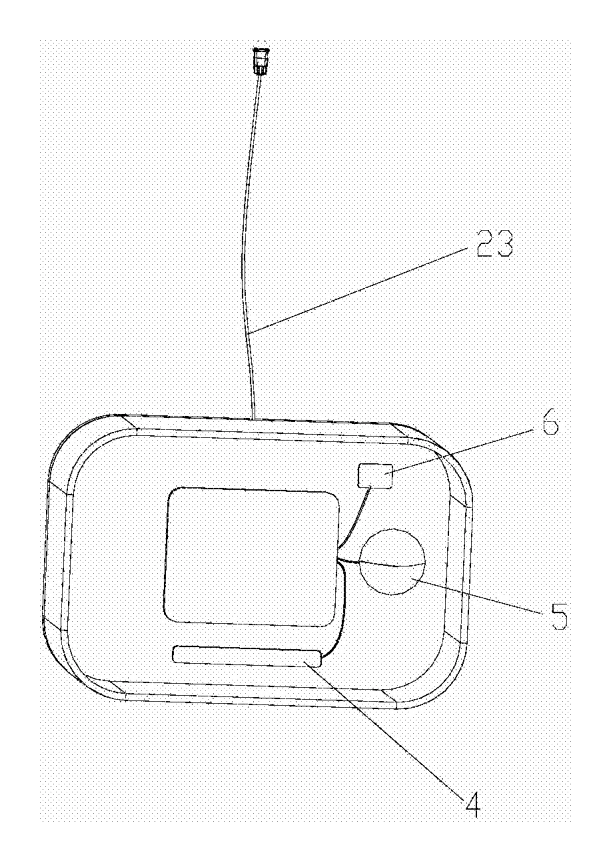
Wireless-Powered Aquarium with Internal Induction Receiver
Aquarium using electromagnetic induction to power internal lights and pumps without pass-through wires.
Patent CN206324044U
Pet Products
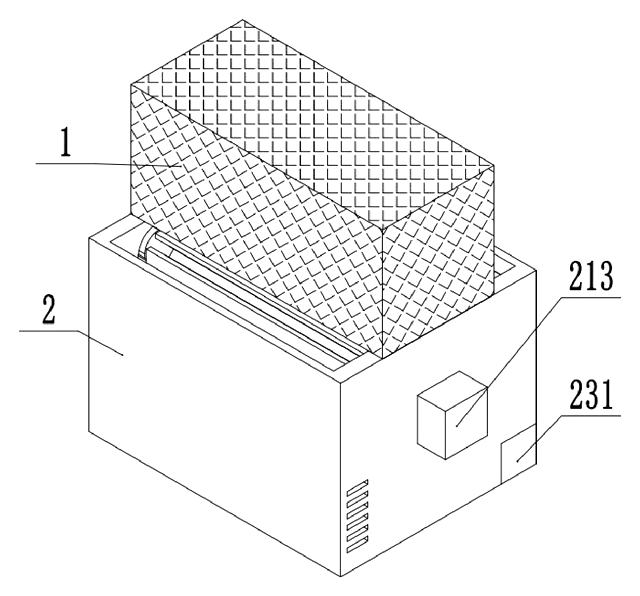
Automatic Cleaning Rodent Rearing Cage with Carousel Tray System
Rodent cage with a rotating tray carousel that washes, UV-sterilizes and dries automatically.
Patent CN118415089B
Pet Products
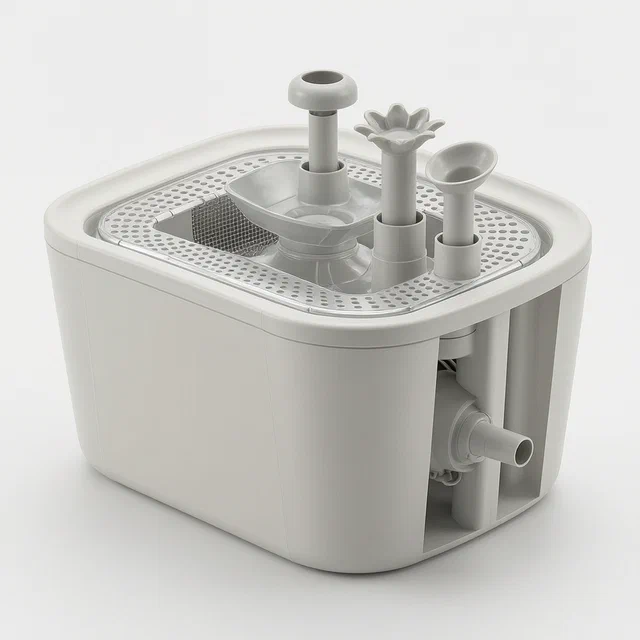
Automatic Pet Drinking Fountain with Interchangeable Water Outlet Heads
Pet fountain with a pressurized pump and swappable shower heads for multiple water flow patterns.
Patent CN207803161U
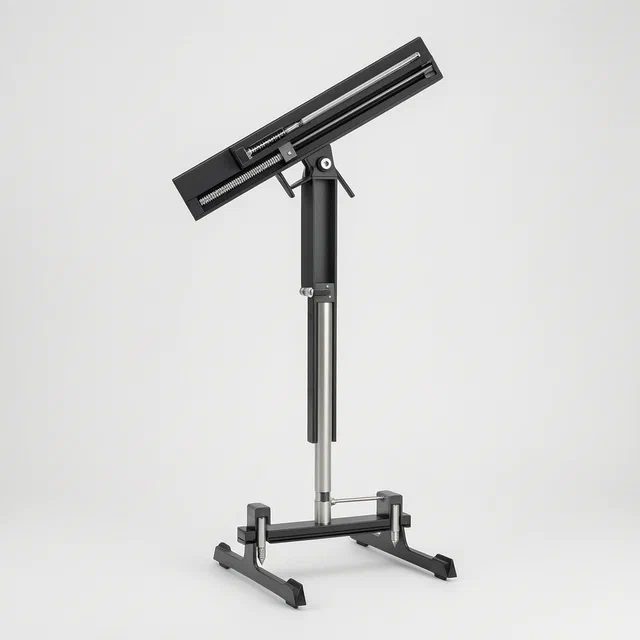
Pet Products
Mechanical Flying Disc Launcher for Pet Dog Training
Spring-loaded flying disc launcher for dogs with adjustable height, angle, and folding base.
Patent CN118614420B
Browse by category
- Apparel & Accessories (36)
- Baby & Kids (25)
- Bags & Luggage (15)
- Bath & Personal Care (25)
- Car Accessories (21)
- Furniture, Bedding & Storage (19)
- Garden & Outdoor (27)
- Health & Wellness (12)
- Home, Kitchen & Cleaning (40)
- Lighting (20)
- Packaging & Containers (10)
- Pet Products (9)
- Phone & Camera Accessories (7)
- Retail Display (21)
- School, Office & Art (30)
- Sports & Recreation (37)
- Tools & Workshop (46)
- Toys & Games (19)
This page is based on the public patent document CN222786704U, assigned to Jiangsu Tianquan Pet Products Co ltd. IP2M is an independent manufacturing service and is not affiliated with, endorsed by or licensed by the patent owner. Images marked as concept renderings are illustrations, not photos of an existing product. Patent status information is provided for reference only and is not legal advice; confirm freedom to operate for your market before production. Full disclaimer.