
Market & Commercial Opportunity
The U.S. Camping Lantern Market
Market size, product segments, buyer channels, competition, trends, manufacturing, compliance and the commercial opportunity in U.S. camping and emergency lanterns.
Published November 10, 2026
Executive summary
Camping lanterns are a small category inside outdoor lighting, sold on runtime, ruggedness and, increasingly, on charging other devices. Public summaries put the global camping lights and lanterns market at about USD 182.2 million in 2023 with roughly 7.3% growth to 2030, and at about USD 192 million in 2024 with 7.9% growth to 2031; the two estimates use different definitions and should be read as a range. [F1] [F2] Neither gives a U.S.-only figure, and neither isolates the lantern sub-types described in this report.
Year-round demand sits in two places. Camping and outdoor recreation set the seasonal peak, and emergency preparedness adds a second, less seasonal buyer who buys a lantern to keep in a cupboard or a car. The emergency buyer rarely researches beam profiles; the camping buyer does, and compares runtime, weight and weather resistance on the listing. [F1] [F3]
The category is brand-led but thin. Coleman, Goal Zero, BioLite and Black Diamond hold most of the visible shelf through outdoor retail and e-commerce, and the sources establish their presence rather than their share. [F3] A new lantern therefore competes against a small set of well-known products, which makes a visible feature and a clean water test more valuable than another lumen figure.
Two patents on this site relate to products sold in this market, both three-sided lantern formats. They are listed at the end of this report; the market analysis below is separate from their structures.
1. Market size and growth
Global camping lights and lanterns. Public report summaries put the category at about USD 182.2 million in 2023 with reported growth near 7.3% a year to 2030, or about USD 192 million in 2024 with 7.9% growth to 2031 under an alternative definition. The figures differ in scope and should be treated as a range. [F1] [F2]
United States. This review did not find a U.S.-only camping-lantern figure in the sources; the category numbers above are global. [F1] [F2]
Sub-types. No source in this review breaks the category into three-sided, collapsible, power-bank or fuel lanterns in dollars. The segments below are a working segmentation, not measured shares. [F1] [F3]
IP2M estimate. Based on the two category estimates, an illustrative 5% share would imply roughly USD 9–10 million at manufacturer level. That is orientation arithmetic, not a measured segment, forecast or valuation. [F1] [F2]
2. Product segments and who buys
| Segment | Typical product forms | Buyer and channel | What decides the purchase |
|---|---|---|---|
| Camping lantern | Collapsible, hanging and three-sided lanterns for tent and table | Campers and outdoor households through outdoor retail and e-commerce | Runtime, weight, weather resistance, pack size |
| Emergency lantern | Rechargeable lanterns kept for power cuts and storms | Households through mass retail, hardware and e-commerce | Runtime, charging, a flashlight mode, price |
| Power-bank lantern | Lanterns with USB output for phones and small devices | Campers and emergency buyers through e-commerce and outdoor retail | Battery capacity, output ports, charging time |
| Hanging and area light | Hooks, magnets, tripod mounts, larger area lights | Campers and outdoor hosts through outdoor retail | Coverage, mounting, hanging height, brightness |
| Fuel and hybrid lanterns | Propane, butane and dual-fuel lanterns | Traditional campers through outdoor and hardware retail | Familiarity, fuel availability, heat output |
The published figures cover the category, not these rows, and the emergency, power-bank and fuel rows are described from product types in the sources rather than from measured volumes. [F1] [F3]
The two buyers behave differently. A camping buyer compares a lantern against a headlamp and a phone light, so pack size and runtime matter as much as brightness. An emergency buyer compares it against candles and a phone, so a lantern that also charges a phone wins on the shelf even at a higher price. [F1] [F3]
3. Competitive landscape
The visible shelf is held by Coleman, Goal Zero, BioLite and Black Diamond, sold through outdoor retail and e-commerce. The sources establish their presence and channel, not their market share. [F3]
The competitive structure is narrow rather than fragmented. Coleman covers the mass outdoor and hardware shelf; Goal Zero and BioLite sell battery and power-bank integration at a premium; Black Diamond sits with the weight-conscious camping buyer. A new lantern has to beat a product the buyer can already buy, so the design claim has to be visible in a photograph and provable in a specification table. [F3]
4. Trends and innovation opportunities
Trends
Power-bank integration. Lanterns increasingly carry USB output so one battery serves light and phone. That adds certification scope and battery cost, and it changes the buyer’s value equation in an emergency. [F1] [F3]
Rechargeable over disposable. Rechargeable and solar-charging models are gaining against disposable-battery lanterns, which shifts the design toward sealed battery compartments and charging ports. [F1]
Collapsible and packable formats. Campers compare packed volume, and collapsible diffusers and folding bodies have become a common way to sell a smaller packed size. This is a product-type observation from the sources, not a measured trend. [F3]
Weather claims. Water and dust resistance has become a shelf claim rather than a specialist one, and buyers read the rating before the lumen figure. [F3]
Innovation opportunities
The opportunities below are an analyst reading of the segment structure, not a sourced forecast.
- Heat path away from the battery. A lantern whose battery sits in its own bracket, with a vented channel behind it, can run brighter for longer without cooking the cell. What to prove: the thermal run passes at maximum output, the vent does not admit water when the lantern sits on wet ground, and the battery life is not shortened in normal use.
- A lantern that charges a phone. USB output turns the lantern into an emergency tool. What to prove: the port door seals after repeated use, the output is stable as the battery drains, and the extra certification does not push the price above the shelf.
- Screw-free assembly. Clamping grooves and blocks instead of screws cut assembly time and remove a common failure point in a cheap lantern. What to prove: the joints survive drop testing and the parts do not loosen with heat cycles.
- Pack-flat area light. A three-sided or folding lantern that packs flat suits car camping and small apartments. What to prove: the folded size survives shipping, the hinge does not crack in cold weather, and the light distribution stays even when partly folded.
5. Manufacturing and supply chain
A rechargeable lantern combines a battery pack, an LED board, an optical stack, a housing and a switch. The housing is usually injection-molded ABS or polycarbonate; the diffuser is molded in clear or frosted PMMA or polycarbonate; the battery is a bought-in pack; the driver and charging circuit sit on a small board; and the sealing relies on gaskets, port doors and, on vented designs, a membrane vent.
Processes. Injection molding for housing, diffuser and caps; board assembly and battery pack assembly, usually bought in; final assembly, charging test, burn-in and packaging at the lantern factory. Vented designs add a thermal and water test step that a sealed lantern does not need.
Tooling. Housing and diffuser molds are the main tooling cost, followed by assembly fixtures and test jigs. A new optical shape means a new diffuser mold; a new vent path or port layout usually means changes to the housing mold, which is why sealing and charging decisions should be fixed before tooling.
Cost drivers. Battery capacity and certification, LED bin, diffuser material and thickness, port hardware, gasket count, packaging and freight. A power-bank function adds battery cost and certification cost, so it has to be sold at a price the shelf will carry.
Quality and testing. The tests that decide a listing are runtime at each output level, charging cycles, drop, water ingress at the seams and ports, and thermal behaviour at maximum output. A vented or ported lantern should be tested with water and heat at the same time, because a design that passes one can fail the other.
No public source in this review breaks down component cost or lead time for camping lanterns. The manufacturing paragraphs above are manufacturing judgment, to be replaced with supplier quotes before a commercial commitment.
6. Compliance and market entry
Portable electric luminaires sold in the United States are commonly reviewed against UL 153, with LED equipment referenced to ANSI/UL 8750; digital drivers and wireless modules fall under FCC Part 15; a rechargeable pack may need UL 2054; lithium cells shipped by air bring UN 38.3 testing and transport rules; and California Proposition 65 warnings may apply to materials and coatings. Listing scope should be confirmed with a test lab. [F4] [F5] [F6] [F7] [F8]
This review did not identify a product-specific mandatory federal performance standard for camping lanterns beyond those electrical, battery and radio rules. That is a finding of absence in this review, not a legal conclusion that no standard exists; retailer requirements and voluntary standards can still add scope. [F4] [F8]
The public record shows no U.S. family member for either patent linked to this report. That is an opening rather than a clearance: separate U.S. patents on lantern optics, diffusers, venting and power-bank housings may still apply, and a freedom-to-operate review is required before launch.
For a U.S. launch, the practical sequence is: confirm listing scope with a test lab; run electrical, battery and radio tests; run runtime, drop and water tests to the buyer’s target; review materials against Proposition 65; and keep the test records with the product file. A brand already selling into the channel usually owns this process, which is one reason OEM supply is a better first route than a new direct brand.
7. Commercial paths, risks and open questions
Path 1: OEM or private label for an outdoor or emergency brand. The brand brings the channel, warranty and compliance file; IP2M supplies the optical stack, venting and assembly package. This is the realistic route for a lantern that needs water and thermal testing before it can be sold.
Path 2: emergency-preparedness seller. A lantern sold as a household emergency product is compared on runtime and phone charging, not on camping weight. The channel is mass retail and e-commerce, and the season is storm-driven rather than summer-driven.
Path 3: component supply. A lantern maker may want the optical stack, the vented battery bracket or the screw-free housing as a module. This is the lowest-volume, highest-margin route and the easiest to test with one partner.
Risks. Water ingress at the vent or the USB door, battery certification and freight rules, thermal limits at maximum output, seasonal inventory risk, and price competition from established lanterns are the recurring risks. A lantern that fails in rain ends the customer relationship immediately, whatever the runtime figure says.
Open questions. The public record does not provide U.S. volume for camping lanterns, willingness to pay for power-bank integration or three-sided optics, or water and thermal test data for the designs described on the linked patent pages. The grade for any single product would improve with a committed brand pilot and passing water, drop and runtime data, and would fall if the vent and port cannot be sealed at a competitive cost or if an FTO review finds blocking U.S. claims.
Sources
- [F1] Infiniti Research / Technavio, Global Camping Lights and Lanterns Market 2024–2028, public summary, 2024 (2023 data).
- [F2] 168report, camping lights and lanterns market report, public listing, 2025 (alternative estimate, different definition).
- [F3] OutdoorGearLab, The Best Lanterns of 2026, buying guide, 2026 (brand landscape only).
- [F4] Intertek, UL 153 standard information for portable electric luminaires, current.
- [F5] U.S. Federal Communications Commission, Part 15 – Radio Frequency Devices, current.
- [F6] UL Solutions, UL 2054 – Household and Commercial Batteries, current.
- [F7] International Air Transport Association, lithium-battery dangerous-goods guidance, current.
- [F8] California Office of the Attorney General, California Proposition 65, current.
Related patent categories
Related patents
Product pages for patents that fit this market. Each page covers the mechanism, use cases, customization and patent status.
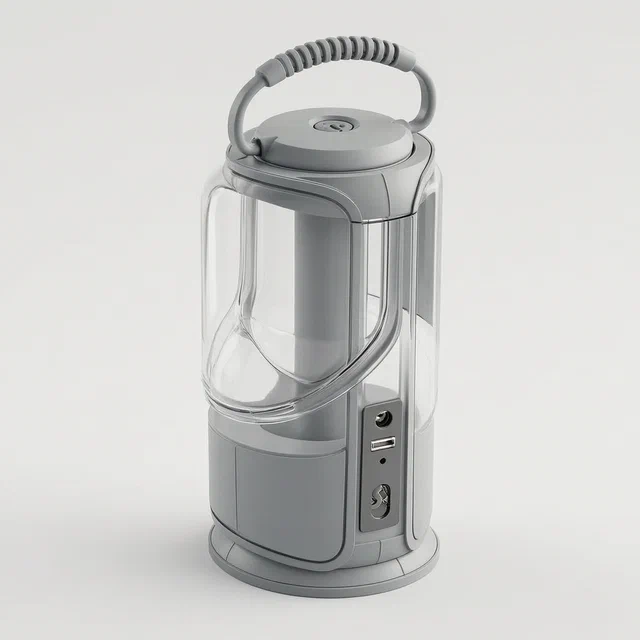
Lighting
Three-Sided LED Camping Lantern with Heat Dissipation Channel
In-force Chinese patent for a 3-sided LED camp lantern with active heat venting and snap-fit assembly.
Patent CN108278508B
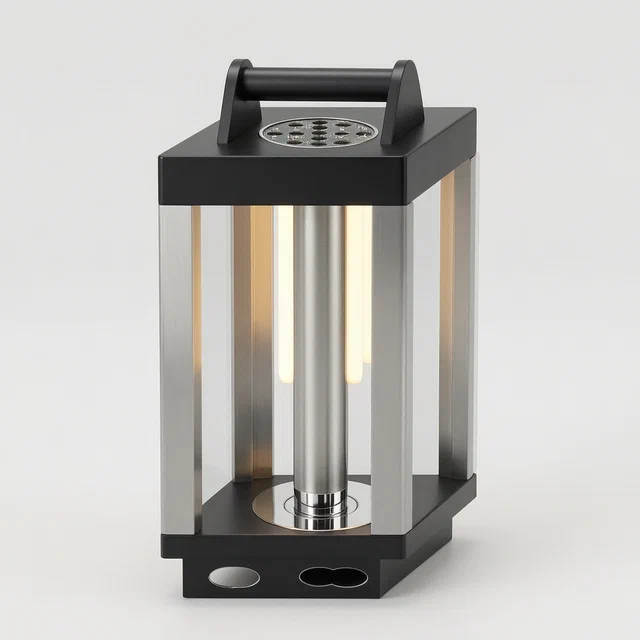
Lighting
Adaptive Outdoor Portable LED Lantern with Adjustable Light Intensity
Outdoor LED lantern with mechanical light absorption and voltage-based brightness control.
Patent CN109555995B