
Market & Commercial Opportunity
The U.S. Desk and Study Furniture Market
Market size, product segments, buyer channels, competition, trends, manufacturing, compliance and the commercial opportunity in U.S. desks and study furniture.
Published November 10, 2026
Executive summary
Desks and study furniture sit at the intersection of two large, mature replacement markets: school furniture and home furniture. Public report summaries put global student desks and chairs at roughly USD 2.57–2.90 billion in 2024, growing at about 4.1–4.6% a year, and the U.S. school furniture category at roughly USD 1.8–2.06 billion in 2024. Folding tables and storage beds add adjacent demand. [F1] [F3] [F4] [F5] [F6] [F8]
Those are category figures, not the size of any single product. The public record does not isolate adjustable student desks, integrated desk-and-chair units or safety-lock folding tables, so a product plan should treat the numbers as a ceiling and a direction, not as a forecast. [F4] [F5]
The category splits into four product families with different buyers: K-12 schools, higher education, home study, and folding or multi-use furniture. Each has its own channel, price point and compliance burden, and the same mechanism rarely sells unchanged in two of them.
Four patents on this site relate to products sold in this market, spanning the school channel, the home-study channel and the multi-use folding channel. They are listed at the end of this report; this report covers the market around them rather than repeating their technical detail.
1. Market size and growth
Student desks and chairs. Global manufacturer revenue for student desks and chairs is estimated at about USD 2.897 billion in 2024 with reported growth near 4.1% a year to 2031, or about USD 2.571 billion with 4.6% growth under an alternative definition. The two figures differ in scope, so they are best read as a range. [F1] [F3]
U.S. school furniture. The U.S. school furniture category is estimated at about USD 2.06 billion in 2024 with 6.2% growth to 2030, or about USD 1.8 billion with 3.89% growth to 2029 under a narrower definition. This scope includes seating, desks and tables, and storage across K-12 and higher education, not one product type. [F4] [F5]
Folding and multi-use furniture. The broad global folding-table category is estimated at about USD 10.0 billion in 2024 with 5.9% growth to 2030, while folding dining tables alone are estimated at about USD 1.51 billion with 6.6% growth to 2031. The broad figure includes residential, commercial and outdoor products and should not be used as a total addressable market for a safety-lock folding table. [F6] [F7]
Storage furniture. Beds with storage are estimated at about USD 2.318 billion globally in 2024 with 6.6% growth to 2031, or about USD 2.011 billion with 6.8% growth under an alternative definition. This category includes wall beds and lift-up beds, so it is adjacent context for space-saving furniture rather than a desk figure. [F8] [F9]
IP2M estimate. Based on the U.S. school furniture range above, a hypothetical 5% share for adjustable or integrated study units would imply roughly USD 90–103 million at category level. That is an orientation figure derived from the published range, not a measured segment, forecast or valuation. [F4] [F5]
2. Product segments and who buys
The category is not one product and not one buyer. The table below is a working segmentation built from the product forms in the sources, not a set of measured market shares.
| Segment | Typical product forms | Buyer and channel | What decides the purchase |
|---|---|---|---|
| K-12 schools | Adjustable-height desks, tilt-top desks, integrated desk-and-chair units, storage-linked units | Districts and schools through dealer bids and contract furniture | Durability, safety, age fit, replacement cycle |
| Higher education | Adjustable workstations, tables with power access | Dealer and contract | Adjustability, durability, power access |
| Home study | Compact desks, integrated desk-and-chair units, storage desks | Households through e-commerce and retail | Small-space fit, price, assembly time, delivery |
| Folding and multi-use | Folding tables, folding desk-and-chair sets | Retail, e-commerce, distributors, venues | Portability, stored thickness, safety lock, price |
| Adjacent storage | Storage beds, wall beds, lift-up beds | Households and dealers | Space saving, installation, safety |
The published figures cover the school furniture and folding-table categories, not these rows. That is why the market-size section warns against reading a category number as a segment number. [F4] [F5] [F6] [F7] [F8] [F9]
Channel matters more than the headline size. A school sale is a procurement decision with testing, bids and a budget cycle; a home-study sale is a retail decision where price, delivery and assembly are visible on the product page; a folding-table sale is often a comparison against an incumbent brand on a shelf or a listing. The same desk rarely serves all three without changes to cost, packaging and compliance. [F4] [F5] [F15]
3. Competitive landscape
School furniture. The U.S. school channel is served by established contract suppliers including Smith System, MillerKnoll, HNI/HON, Virco, Steelcase, Fleetwood, VS America, Hertz Furniture and Paragon. The sources establish their presence and channel, not their market share. [F4]
Folding and multi-use furniture. The retail and e-commerce channel includes Lifetime Products, Cosco, Meco, National Public Seating, Office Star, Correll, KI, Iceberg and Midwest Folding Products. These brands compete on price, portability and availability, and a new mechanism has to survive a landed-cost comparison against them. [F15]
Storage beds. Adjacent storage furniture is served by Wilding Wallbeds, SICO, Clei, More Space Place and Lagrama, mostly through dealer or contract channels. [F8]
The competitive picture is mature rather than fragmented. That is good news for a manufacturing partner with a real mechanism and bad news for a me-too product: incumbents already have dealer relationships, warranty processes and testing budgets, and they will compare a new design against a product they can already buy.
4. Trends and innovation opportunities
Trends
Adjustability and posture. Height and tilt adjustment are the features school and home buyers use to justify a replacement purchase, and the school furniture sources track adjustable lines within the category without isolating their volume. [F4] [F5]
Space-saving and multi-use. Folding tables and storage beds are separate growing categories, and they show the same demand pattern: furniture that stores smaller, moves when needed and still has to feel solid in use. [F6] [F7] [F8] [F9]
Channel mix and price transparency. The folding and multi-use channel is brand-driven and price-visible, while the school channel is relationship- and bid-driven. A product sold in both needs two cost structures, not one. [F4] [F15]
Replacement and durability. School furniture is bought on replacement cycles, and the purchase case rests on how long the mechanism lasts, not on novelty alone. That favours designs that can be cycle-tested and serviced. [F4] [F5]
Innovation opportunities
The opportunities below are an analyst reading of the segment structure above, not a sourced forecast. Each one succeeds or fails on a test the buyer can see.
- Reading angle without a separate book stand. A work surface that tilts and holds an open book removes an accessory from the classroom and the small home desk. What to prove: the angle holds under load, the holding arms do not pinch fingers, and the mechanism survives daily use.
- One-piece study station. Desk, seat and storage in one footprint fits a compact room or a classroom that cannot fit three separate pieces. What to prove: every pivot stays aligned, assembly time stays short, and the unit is stable when the seat moves.
- Fold with a lock. A folding table that locks automatically when opened removes the liability of a table that folds under load. What to prove: the lock engages every cycle, it cannot be defeated by a child, and the hardware cost fits a retail price point.
- Reconfigurable mobility. Casters with a foot brake let one desk serve different layouts and still lock for writing. What to prove: the brake holds on a smooth floor, the casters survive thresholds, and the lock does not become a trip or pinch hazard.
5. Manufacturing and supply chain
Desks and study furniture are built from three material families: steel tube and sheet for frames, board (MDF or particle board) for work surfaces and panels, and molded plastic for seats, covers, storage boxes and small mechanisms. A typical school desk combines all three, which means the product is really a multi-process assembly.
Processes. Steel parts are cut, bent, welded and powder-coated; board is cut, drilled and edge-banded; plastic parts are injection-molded; hardware is bought in. Final assembly is usually a mix of factory assembly and flat-pack, depending on the channel: schools accept assembled or knock-down units, while home-study and e-commerce products live or die on flat-pack size and instructions.
Tooling. The main tooling cost sits in press and bend tools for steel, welding fixtures, and injection molds for seats, covers and storage components. A mechanism such as a tilt lock, a folding latch or a storage linkage adds its own small tools and assembly fixtures, and that tooling has to be amortised over the first order.
Cost drivers. Steel and board prices, hardware count, coating, packaging, container freight and assembly labour move the landed cost more than design detail does. School price points are set by bid and leave little room for a mechanism that adds parts without removing another cost.
Quality and testing. The tests that decide a school sale are the ones already named in the compliance section: sharp points and edges, lead in coatings, and load and cycle testing of moving parts. A folding latch, caster brake or tilt lock should be cycle-tested to a target the buyer accepts, with the test record kept with the product file.
Supply chain and logistics. Minimum order quantities, lead times and freight terms are project-specific and not published for these products; they are negotiated with the factory. Flat-pack design, carton strength and container loading matter as much as the mechanism for a price-driven order.
No public source in this review breaks down component cost or lead time for these products. The manufacturing paragraphs above are manufacturing judgment, to be replaced with supplier quotes before a commercial commitment.
6. Compliance and market entry
Furniture sold in the United States is subject to general product-safety rules, and children’s furniture adds specific requirements. CPSIA lead limits, testing, certification and tracking labels apply to covered children’s products; the 16 CFR 1500.48 and 1500.49 sharp-point and sharp-edge tests apply to articles intended for children under eight; and 16 CFR 1303 limits lead in paint and coatings. California Proposition 65 warnings may apply depending on the materials and exposure. [F10] [F11] [F12] [F13]
ASTM F1487 is a public playground equipment standard and does not apply to student desks, folding tables or storage beds; citing it for furniture would be wrong. This review did not identify a product-specific mandatory federal performance standard for student desks or folding tables, which is a finding of absence in this review, not a legal conclusion that no standard exists. State procurement rules and voluntary standards can still add requirements. [F10] [F14]
Separately, the public record shows no U.S. family member for the patents linked to this report. That is an opening rather than a clearance: separate U.S. patents on tilt mechanisms, casters, gas springs or folding locks may still apply, and a freedom-to-operate review is required before launch.
For a U.S. launch, the practical sequence is: confirm whether the product is a children’s product under CPSIA; run the applicable sharp-point, sharp-edge and lead tests; prepare a Children’s Product Certificate where required; review materials against Proposition 65; and keep the test scope with the product file. [F10] [F11] [F12] [F13] A partner already selling into the channel usually owns this process, which is one reason contract manufacturing is a better first route than a new direct-to-consumer brand.
7. Commercial paths, risks and open questions
Path 1: contract manufacturing for a school-furniture brand. The brand brings dealer relationships, warranty and testing; IP2M supplies the mechanism, drawings, prototypes and production package. The sale is slow but repeatable, and the mechanism has to pass cycle, load and sharp-edge testing before a pilot.
Path 2: private label for a home-study retailer or e-commerce seller. The product is simplified for price and assembly time, sold through one channel, and improved from reviews. The risk is that the mechanism becomes invisible in a price-driven listing; the opportunity is that a visible feature such as a tilting plate or an automatic lock is easy to demonstrate in photos and video.
Path 3: component supply. A folding-table or desk maker may want the lock, caster or storage linkage as a module rather than a finished product. This is the lowest-volume, highest-margin route and the easiest to test with one partner.
Risks. Procurement timing in schools, incumbent supplier relationships, mechanism durability, pinch points, cleaning, packaging cost and freight are the recurring risks in this category. A school pilot can consume a full budget cycle, and a failure in a ratchet, caster lock or folding latch can end the account.
Open questions. The public record does not provide U.S. volume for adjustable student desks, willingness to pay for a tilting or integrated feature, or cycle-test data for these mechanisms. The grade for any single product would improve with a committed distributor pilot and passing test data, and would fall if the mechanism cannot meet a school price point or if an FTO review finds blocking U.S. claims.
Sources
- [F1] Global Info Research, Global Student Desks and Chairs Market 2025–2031, public summary, 2025 (2024 data).
- [F3] 168report, student desks and chairs market report, public listing, 2025 (2024 data; alternative estimate).
- [F4] Grand View Research, U.S. School Furniture Market Size, Share & Trends Analysis, press release, 2024.
- [F5] Arizton, US School Furniture Market — Focused Insights 2024–2029, public listing, 2024.
- [F6] Global Industry Analysts, Folding Tables — Global Market Trajectory & Analytics, public summary, 2024.
- [F7] Global Info Research, Global Folding Dining Table Market 2025–2031, public summary, 2025.
- [F8] Global Info Research, storage beds market report, public listing, 2025.
- [F9] QYResearch Japan, storage beds market report, public listing, 2024 (alternative estimate).
- [F10] U.S. Consumer Product Safety Commission, Highlights of Requirements for Furniture Sold in the United States, guidance, current.
- [F11] eCFR, 16 CFR Part 1500, current.
- [F12] eCFR, 16 CFR Part 1303, current.
- [F13] California Office of the Attorney General, California Proposition 65, current.
- [F14] ASTM International, ASTM F1487-25, Standard Consumer Safety Performance Specification for Playground Equipment for Public Use, 2025.
- [F15] Maia Research, Global Folding Tables & Chairs Industry Trends Analysis Report 2025, public listing, 2025 (retail channel and brand landscape).
Related patent categories
Related patents
Product pages for patents that fit this market. Each page covers the mechanism, use cases, customization and patent status.
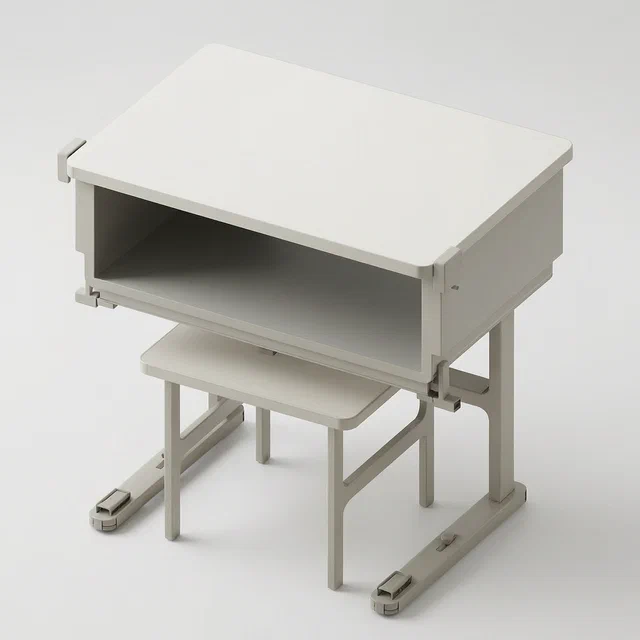
Furniture, Bedding & Storage
Student Desk with Adjustable Tilt and Book Support
Student desk with tilting top, ratchet lock, folding book arms, and mobile casters.
Patent CN113475859B
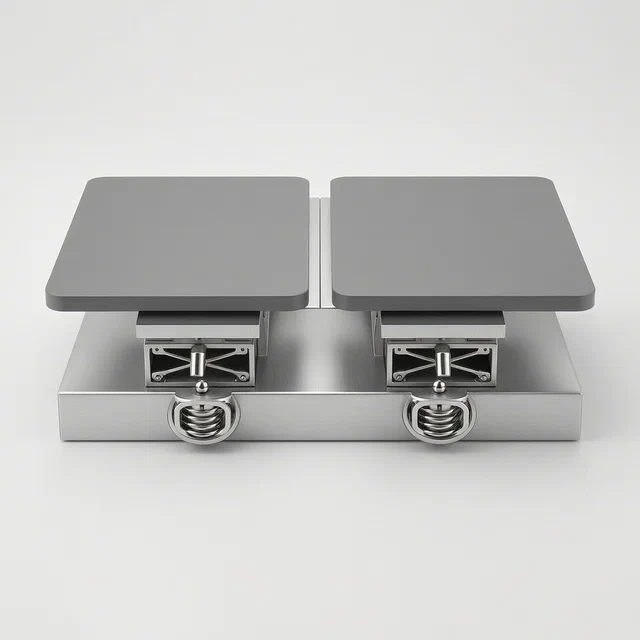
Furniture, Bedding & Storage
Folding Table with Safety Lock and Automatic Latch Mechanism
Folding table with automatic safety lock: raising the extension plate engages a spring-loaded sliding latch.
Patent CN114098278B
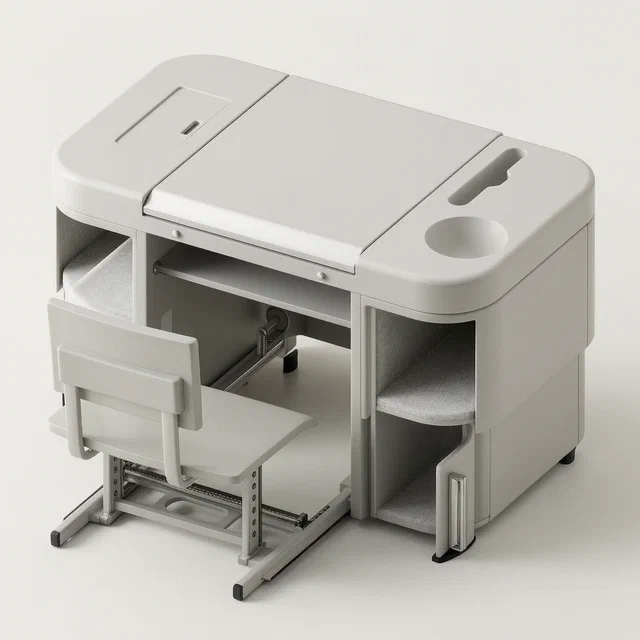
Furniture, Bedding & Storage
Integrated Table and Chair with Adjustable Storage Space
Integrated desk and chair with rotating top, sliding seat, auto-cover, and insulated cup holder.
Patent CN113520080B
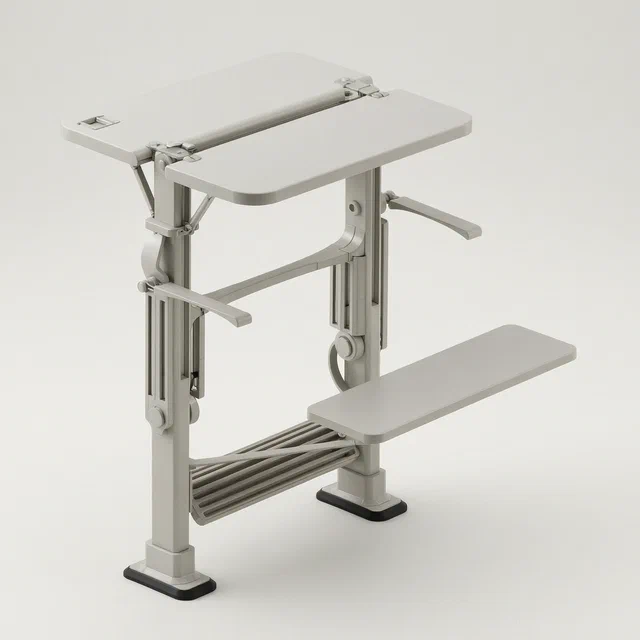
Furniture, Bedding & Storage
Collapsible Student Desk and Chair with Arm Rests
Collapsible student desk with synchronized folding seat, arms, and footrest for space-saving storage.
Patent CN113615980B