Market & Commercial Opportunity
The U.S. Insole Market for Adjustable Height Insoles
Market size, product segments, buyer channels, competition, trends, manufacturing, compliance and the commercial opportunity in U.S. adjustable and height-increasing insoles.
Published November 10, 2026
Executive summary
Insoles are a large, mature, replacement-driven U.S. category, and the height-increasing niche sits inside it. Public estimates put U.S. shoe insoles at about USD 1.6 billion in 2024 on a narrower definition and USD 1.2 billion for foot insoles alone; North American insoles were valued at about USD 1.14 billion in 2024, and a broader all-inserts measure puts the U.S. market at USD 6.34 billion. [F1] [F2] [F3] The spread is a definition problem, not a growth story, and the four figures should not be added.
The category is brand-led and price-sensitive. Dr. Scholl’s, Superfeet, Implus, Powerstep, Aetrex, Sidas, Bauerfeind and Ottobock hold the comfort, sports and orthotic segments, and the public summaries do not name a height-increasing line or rank one. [F1] [F4] Women’s products accounted for about 47.2% of North American insole value in 2024, and demand grows slowly. [F2]
The height-increasing buyer is buying a different foot position rather than more cushioning: height compensation, arch preference or ventilation in a warm climate. That buyer already searches and buys online, which is why marketplace listings and private-label programmes are the realistic channels. [F1] [F2]
No public source in this review measures U.S. height-increasing insole volume, price or repeat purchase, so this report labels the niche unmeasured wherever it touches it.
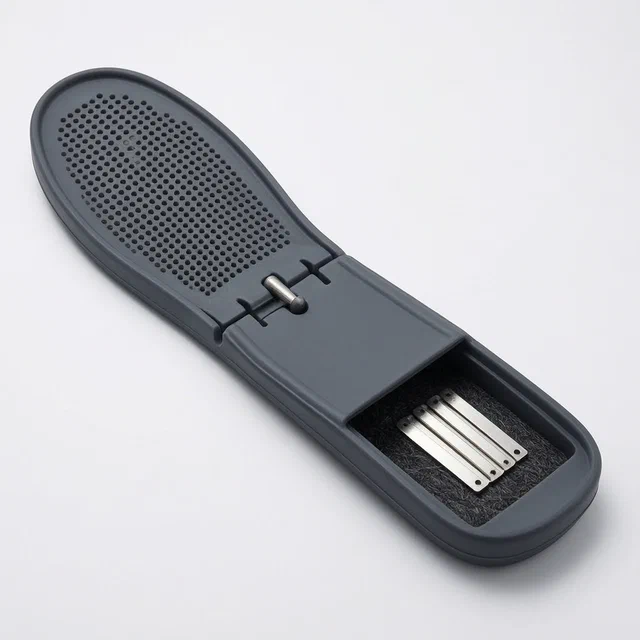
One patent on this site relates to a product sold in this market, an adjustable height-increasing insole. It is listed at the end of this report; the market analysis below is separate from its structure.
1. Market size and growth
U.S. insoles. About USD 1.6 billion in 2024 on a narrower definition, and USD 1.2 billion for foot insoles alone. [F1]
North America. Insoles were valued at about USD 1.14 billion in 2024, with women’s products close to half of value at 47.2%. [F2]
Broad measure. A broader all-inserts definition puts the U.S. market at USD 6.34 billion. It covers products the narrower measures exclude. [F3]
Height-increasing insoles. No public source in this review reports this niche separately in dollars or units. [F1] [F2] [F3]
IP2M estimate. Based on the aftermarket range above, an illustrative 5% share for adjustable and height-increasing insoles would imply roughly USD 55–80 million at retail level. That is orientation arithmetic on an unmeasured sub-segment, not a segment estimate. [F1] [F2]
2. Product segments and who buys
| Segment | Typical product forms | Buyer and channel | What decides the purchase |
|---|---|---|---|
| Comfort and cushioning | Foam and gel insoles, mass-market packs | Households through drug, mass retail and e-commerce | Price, softness, size availability |
| Sports and activity | Shock-absorbing insoles for running and work boots | Active buyers through sporting goods and e-commerce | Cushioning, fit, odour control |
| Orthotic and medical | Semi-rigid supports, sometimes fitted | Patients and clinicians through specialty retail and clinics | Clinical fit, prescription, insurance |
| Height-increasing | Stacked or adjustable heel inserts | Fashion-driven buyers online | Visible height gain, concealment, comfort |
| Ventilation-led | Insoles with air channels or odour layers | Warm-climate and work-boot buyers | Breathability, odour, price |
The published figures cover insoles generally; the height and ventilation rows are described from product types in the channel, not from measured volumes. [F1] [F2] [F4]
The height buyer’s decision is different in kind from the comfort buyer’s. Comfort is judged by feel after a day of wear; height is judged by how much it adds and whether anyone can tell. That makes the product an online, image-led purchase with a fit risk attached, and it makes returns and sizing the operational problem rather than brand heritage. [F1] [F2]
3. Competitive landscape
Dr. Scholl’s, Superfeet, Implus, Powerstep, Aetrex, Sidas, Bauerfeind and Ottobock serve the U.S. market, mostly in the comfort, sports and orthotic segments. The sources establish presence and segment, not share, and none names a height-increasing line. [F1] [F4]
The structure is brand-led at the top of each segment and marketplace-led in the niche. Large footcare brands own drug and mass distribution and carry the clinical credibility; marketplace sellers own the search results for specific needs, including height. A new mechanism therefore has two possible entries: as a private-label product behind an existing footcare or footwear brand, or as a differentiated listing from an online seller. Both routes are decided on landed cost per pair, because the category compares on price per pair more than on any other attribute. [F1] [F2]
4. Trends and innovation opportunities
Trends
Slow, replacement-driven demand. North American insole demand is mature, growing slowly over the last five years, and purchased as a replacement item. [F2]
Women’s share of value. Women’s products accounted for about 47.2% of North American insole value in 2024, which shapes sizing, packaging and channel emphasis. [F2]
Online search by need. Buyers search by use — comfort, sport, odour, height — which rewards listings that name a specific job rather than a general cushioning claim. This is a reading of marketplace structure, not a measured trend in the sources. [F1]
Claim scrutiny. Comfort and posture language sits close to medical claims, so brands increasingly keep descriptions functional and avoid therapeutic wording. [F5] [F7]
Innovation opportunities
The opportunities below are an analyst reading of the segment structure, not a sourced forecast.
- Adjustable height in one assembly. A pad stack that can be added or removed inside the insole lets one SKU serve several height preferences. What to prove: the stack stays closed while walking, the height is repeatable, and the same shell fits the standard size run.
- Ventilation that survives the stack. Air channels and filter layers that keep working when pads are added or removed. What to prove: airflow does not collapse under the foot, and the filter layers are cleanable.
- Concealment in a normal shoe. Height that does not lift the heel out of the shoe or show above the collar. What to prove: the insole fits the target shoe interior at maximum stack, and the shoe still closes.
- One assembly instead of loose parts. A lid or door over the pad compartment that keeps the parts together in a shoe and in a drawer. What to prove: the door holds with the foot in place and does not break when the insole is pulled out.
5. Manufacturing and supply chain
An insole is a multi-material, low-unit-value product. The body is molded EVA, PU foam, gel or rubber; the top cover is a textile, often treated for odour; the base may carry a rigid shell for support; the height version adds stacked pads, a backing plate and a closure.
Processes. Foam molding or die cutting, fabric lamination, printing, cutting of add-on parts, and assembly. A stacked design adds a pin-shaft joint, card slots and a closure, which are assembly operations rather than molding ones and therefore add labour more than tooling.
Tooling. Size-specific molds and cutting dies carry the tooling cost, and a full size run multiplies them. For a height version the molds are the same as the base insole’s, and the added cost sits in the pad parts and the assembly jig, which makes the first production run cheaper than a new insole shape would be.
Cost drivers. Foam grade and density, cover fabric, odour treatment, add-on parts, assembly labour, packaging and freight. In a category where the buyer compares price per pair, the bamboo charcoal or odour layer and a rubber body can be the difference between a mass-retail price point and a shelf that will not take it.
Quality and testing. Buyers check dimensional fit across the size run, compression set, cover adhesion, odour performance and, for adjustable versions, whether the pads stay in place over a walking cycle. A stacked insole should be walked, not just handled, because the failure mode is a pad that migrates under the arch.
No public source in this review breaks down component cost or lead time for insoles. The manufacturing paragraphs above are manufacturing judgment, to be replaced with supplier quotes before a commercial commitment.
6. Compliance and market entry
This review did not identify a product-specific mandatory federal performance standard for insoles. CPSIA applies only to products intended primarily for children under 12; the sharp-point and sharp-edge rules in 16 CFR 1500.48 and 1500.49 apply to articles for children under eight; California Proposition 65 warnings apply where a listed chemical may be present; and an insole with a textile cover may fall under FTC textile fiber-content and country-of-origin labeling rules. [F5] [F6] [F7]
The larger constraint is claim language. Comfort, posture and height benefits must stay descriptive, because medical-sounding wording can turn the product into a regulated device or an unsubstantiated health claim. That is a marketing and labelling discipline rather than a certification step, and it is where most insole launches get into trouble. [F5] [F7]
The public record shows no U.S. family member for the patent linked to this report. That is an opening rather than a clearance: separate U.S. patents on adjustable insoles and on layered insole constructions may still apply, and a freedom-to-operate review is required before launch.
For a U.S. launch, the practical sequence is: fix the size run and the fit chart; confirm every material for the odour and textile claims; run fit, compression-set and walking tests; review all claim wording; run a Proposition 65 review of coatings and treatments; and keep the records with the product file. A footcare brand or an importer already selling into the channel usually owns this process.
7. Commercial paths, risks and open questions
Path 1: private label or OEM for a footcare brand. The brand brings the channel, the fit charts and the packaging; IP2M supplies the pad-stack mechanism, the ventilation layer and the production package. This is the realistic route in a price-led category.
Path 2: private label for a footwear brand. A shoe brand can add a height-adjustable insole to its own footwear range, where the fit is already known and the insole is sold as an accessory.
Path 3: marketplace seller with an existing insole listing. The seller owns the search position; a differentiated mechanism becomes the listing’s visible difference, and the first order can be small.
Risks. Fit across the size run, returns on a purchase the buyer cannot try, unsubstantiated comfort or posture claims, landed cost against foam insoles, and odour or textile labelling are the recurring risks. In a low-price replacement category, the return rate decides the margin before the product does.
Open questions. The public record does not give U.S. volume for height-increasing insoles, their price points or repeat purchase rate, and there is no wear data for the mechanism described on the linked patent page. The grade for any single product would improve with a brand pilot and passing wear, fit and labelling review, and would fall if the insole cannot meet a mass-retail price point or if an FTO review finds blocking U.S. claims.
Sources
- [F1] Global Industry Analysts, Shoe Insoles – Global Market Trajectory and Analytics, public summary, 2024.
- [F2] GlobalData, Insole in North America – Market Summary and Forecast to 2029, public summary, 2024.
- [F3] Future Market Insights, USA Shoe Insert Market 2025–2035, public summary, 2025 (broad definition).
- [F4] LP Information, Global Orthotic Insoles Market Growth 2025–2031, public summary, 2025 (company landscape only).
- [F5] U.S. Consumer Product Safety Commission and eCFR, CPSIA and 16 CFR Part 1500, current.
- [F6] California Office of the Attorney General, California Proposition 65, current.
- [F7] U.S. Federal Trade Commission, Textile Fiber Products Identification Act labeling rules, current.
Related patent categories
Related patents
Product pages for patents that fit this market. Each page covers the mechanism, use cases, customization and patent status.