
Patent CN105904412B
Updated November 7, 2026Modular Screwdriver and Bottle Opener Tool with Threaded Interchangeable Heads
In vehicle maintenance, switching between different screwdriver types and using a bottle opener often requires carrying multiple separate tools, leading to clutter and lost items. This design integrates these functions into a single compact unit. It uses a threaded connection system where various heads can be screwed together to form a longer driver or stored inside each other. A mechanical lock using a spring-loaded ball ensures that the connected heads do not unscrew under torque, providing a stable tool for tight spaces.
- China invention patent - In Force
- No filings outside China
- Automotive & General Tools
- Threaded modular heads, spring-lock ball

Splat! What let you down?
🔧
Threaded Assembly
Heads connect via external and internal threads, allowing length extension or nesting.
🏀
Spring-Lock Ball
A ball bearing locks into a hemispherical groove to prevent unscrewing under load.
🍺
Dual Function
Each head acts as a bottle opener edge while serving as a screwdriver tip.
📦
Compact Storage
Smaller heads nest inside larger ones, keeping all tools in one handle.
Bring this product to market
- ✓ Patent review Patent family and legal status reviewed in the relevant jurisdictions.
- 2 Product brief · now How it works, uses and options written up
- 3 Prototype First samples for buyers to review
- 4 Pilot run Small first batch for launch customers
- 5 Volume production Repeat orders at scale
Buyer interest
– of 100 buyers needed to start prototyping
One click, no sign-up. Each vote is one real visitor, and products with the most interest go to prototyping first.
Build team: no members yet. Need a partner, co-funding or skills to build this? Join and we introduce the team once it forms.
Patent Rights & Team Participation
Before joining a development team, participants should ensure they have the necessary rights or authorization to participate in the project.
Participation is generally appropriate where:
- You own the relevant patent rights or have obtained permission or a license from the rights holder.
- The relevant patent rights have expired or have been legally invalidated in the jurisdictions where the planned activities will take place.
- The planned development, manufacturing, and commercialization activities have been independently assessed and do not infringe applicable patent rights in the relevant jurisdictions.
Important: Being located outside a country where a patent is protected does not automatically exempt you from patent infringement risks. Patent rights may apply based on where development, manufacturing, use, sale, or import activities take place.
IP2M does not grant any patent license or authorization through team participation. Joining a project does not provide permission to use, manufacture, or commercialize patented technology.
The problem
Mechanics and DIY enthusiasts often need multiple screwdriver types (flathead, Phillips, hex) and occasionally a bottle opener. Carrying separate tools takes up space in a toolbox or pocket. Furthermore, when extending a screwdriver shaft by attaching bits, loose connections can slip or unscrew when applying high torque, especially in confined automotive engine bays. Existing multi-tools often lack a positive locking mechanism for stacked heads, relying solely on friction or simple snap-fits that may fail under stress.
The solution
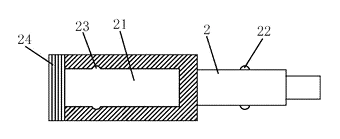
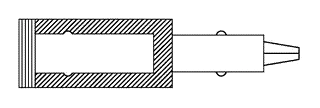
The device consists of a handle (1) and multiple bottle opener bodies (heads).
- The handle has an internal cavity (11) sized to receive the main screwdriver head.
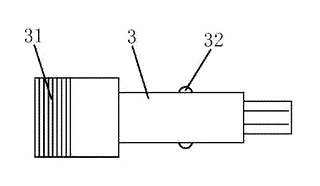
- One specific head, the Phillips screwdriver body (3), features an external thread (31) on its rear end and a locking ball (32) near the front.
- Other heads—the Flathead (2), Hex, and Cross/Star drivers—have an internal thread (24) and a corresponding cavity (21) to accept the next head in the chain.
- When assembled, the external thread of one head screws into the internal thread of another.
- A spring-loaded ball (22/32) pops out from a mounting groove and snaps into a hemispherical groove (lock pearl neck) on the mating part, securing the rotational alignment and preventing the threads from backing off during use.
Who it is for
- Automotive Aftermarket Brands: Looking for compact, multi-function EDC (Every Day Carry) tools for mechanic kits.
- Toolbox Manufacturers: Seeking value-add accessories that combine common utility needs (opening bottles, driving screws).
- Promotional Product Suppliers: For corporate gifts targeting auto clubs or repair shops, due to the “automobile-specific” branding potential.
- DIY Home Improvement Retailers: Selling versatile hand tools that reduce the need for large sets of individual drivers.
How it works
The main parts
| No. | Part | What it does |
|---|---|---|
| 1 | Handle | Contains Cavity I (11) to store the primary head; has Lock Pearl Neck (12). |
| 2 | Flathead Body | Has Flathead tip; contains Cavity II (21) and Internal Thread (24); houses Lock Pearl (22). |
| 3 | Phillips Body | Has Phillips tip; features External Thread (31) and Lock Pearl (32). |
| 11 | Cavity I | Storage space in the handle for the first head. |
| 21 | Cavity II | Storage space within a head for the next smaller/nested head. |
| 24 | Internal Thread | Female thread for connecting to the male thread of another head. |
| 31 | External Thread | Male thread for inserting into another head. |
| 22, 32 | Lock Pearls | Spring-loaded balls that engage with grooves to lock rotation. |
Operating Steps
- Extraction: Pull the primary head (e.g., Flathead) out of the Handle’s Cavity I.
- Extension: To reach deeper screws, take the Phillips head (which has the external thread) and screw it into the Flathead’s internal thread/cavity.
- Locking: As they screw together, the spring-loaded ball on the inner component pushes against the wall of the outer component until it snaps into the hemispherical groove (lock pearl neck). This creates a tactile “click” and prevents back-driving.
- Storage: To pack away, unscrew the heads (by depressing the ball if necessary, though the patent implies standard unthreading) and nest them back into their respective cavities or the handle.
Applications
Automotive Engine Bay Repairs
Tight spaces around car engines require long-reach screwdrivers. By threading multiple heads together, a mechanic can extend the shaft without needing a separate extension bar, while the locking ball ensures the bit doesn’t spin independently under torque.
Emergency Roadside Kits
Drivers need tools for minor adjustments (battery terminals, hose clamps) and convenience items (opening beverage bottles after repairs). This single compact unit replaces two separate tools, saving weight and space in a glovebox.
Bicycle Maintenance
Bike repair often involves hex bolts and Phillips screws. The modular nature allows cyclists to carry just the handle and the specific bits needed for their bike model, nesting unused bits inside the used ones to keep the kit small.
Outdoor Camping Gear
Campers frequently need to assemble gear (screws/bolts) and open beverages. The dual-purpose head design eliminates the need to carry a dedicated bottle opener, reducing overall pack weight.
Where it is less suitable
- High-Torque Industrial Fastening: While the lock helps, this is not a substitute for impact-rated sockets or powered drivers for rusted or over-torqued automotive lug nuts.
- Precision Electronics Work: The blunt, thick profile of a bottle-opener-integrated head may not fit into very small electronic enclosures compared to slim precision screwdrivers.
- Single-Type High-Volume Use: If you are driving hundreds of identical screws, a dedicated ratcheting driver is faster than assembling and disassembling threaded modules.
Patent & Production
At a glance
| Patent number | CN105904412B (application CN201610454042) |
| Type | China invention patent (发明专利) - protects product structure and function |
| Original title | Automobile-specific Intelligent Bottle Opener (一种汽车专用智能起子) |
| Patent owner | Weimar Automobile Technology Group Co.,Ltd. |
| Inventors | Wan Dong, Tan Kecheng, Zhong Wanli, Wang Hongguang, Wang Haiwen, Li Jingxiang, Huang Qian, Lai Daomin |
| Filing date | 2016-06-21 |
| Grant date | 2018-04-10 |
| Status (China) | In Force - valid until at most 2036-06-21, provided annual fees are paid |
| Patent family | Public record shows Chinese filings only - no US, European, Japanese, PCT or other filings listed |
| Cited by | 0 later documents |
| Source | Google Patents (search for CN105904412B) |
What the claims cover, in plain language
Claim 1 defines an automobile-specific intelligent bottle opener comprising a handle and bottle opener bodies. The handle has a cavity to accommodate a screwdriver head. The bodies include multiple different screwdriver heads. One body has an externally threaded connection end. The remaining bodies have a cavity to accommodate the next body and an internally threaded wall corresponding to the external thread. Crucially, each body has a locking ball mounted in a groove via a spring. When the spring is uncompressed, the ball protrudes. The mating cavities have lock pearl necks (grooves) to receive these balls, securing the connection.
Claim 2 specifies the set of heads: a flathead (one-word), hexagonal (interior hexagon), cross-head (Phillips), and star/cross driver. The Phillips head carries the external thread. The others carry the internal thread/cavity.
Claim 3 states the cavities are formed by press molding into deep circular ports.
Claim 4 details the locking mechanism: the lock pearl is a hard spherical bead, the mounting groove is cylindrical, and the receiving groove (lock pearl neck) is hemispherical.
This is a simplified reading for orientation only. The legal scope is defined by the exact claim wording in the official Chinese document.
What this means for US production
This patent was filed in China and is currently in force there. Making or selling this specific threaded-and-ball-lock configuration in China requires permission from the owner. However, the public record shows no US counterpart. Therefore, manufacturing or selling this design in the United States is not restricted by this specific Chinese patent.
Two points to settle early:
- Other patents may exist. Modular screwdrivers and combination tools are a crowded field. Companies like Leatherman, Victorinox, and major US hardware brands hold numerous patents on multi-tool geometries, locking mechanisms, and thread interfaces. A freedom-to-operate (FTO) review is essential to ensure your specific implementation of the spring-ball lock and nested threads does not infringe on existing US utility or design patents.
- Material Safety. Since this tool combines a sharp screwdriver tip and a bottle opener edge, material choice impacts safety certifications.
Customization and manufacturing
What can be customized
| Area | Options |
|---|---|
| Head Types | Mix and match: Flat, Phillips, Hex, Torx, Square drive. |
| Thread Pitch | Standard metric or imperial threads for compatibility with other tool systems. |
| Lock Mechanism | Ball size, spring stiffness, and groove depth to adjust “click” feedback. |
| Materials | Stainless steel (corrosion resistance), Chrome-Vanadium (strength), Aluminum (lightweight). |
| Finish | Black oxide, satin chrome, knurled grips for better torque handling. |
| Handle Design | Ergonomic shapes, magnetic tips, or integrated LED lights. |
Things to plan for (US market)
- ASTM F963 (if marketed as a toy/general consumer item): Though primarily a tool, if sold to consumers, check labeling requirements.
- CPSC Regulations: Ensure no sharp edges violate packaging rules for retail sales.
- California Prop 65: Metal finishes and plastics must be screened for lead, cadmium, and phthalates.
- UL Standards: Not typically required for manual tools unless electrical components (like LEDs) are added.
How a project runs
- Inquiry - Define the set of heads, target price, and volume.
- Design - CAD modeling of the thread interface and spring-ball tolerance stack-up.
- Prototype - CNC machined samples to test thread engagement and lock retention strength.
- Pilot Run - Injection molded or die-cast batches for durability testing (torque tests).
- Production - Mass manufacturing of heads, handles, and springs; assembly and packaging.
Quantities & timeline
Complexity lies in the tolerance matching between the spring ball and the hemispherical groove. Too tight, and it won’t click; too loose, and it slips. Molds for the plastic/metal handles and precision machining for the metal heads are key cost drivers. Send us your head configurations, material preferences, quantity and target price and we will reply with options.
Patent drawings
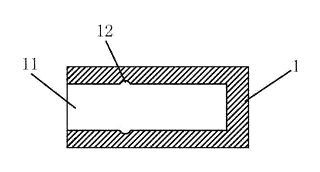
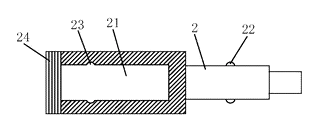
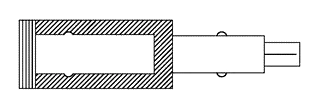
Drawings reproduced from the public patent document for reference.
Production notes
Tooling and process
Manufacturing likely involves stamped steel or machining for the screwdriver heads to achieve precise thread profiles. The handle could be die-cast aluminum or glass-filled nylon injection molding for lightweight durability. The locking mechanism requires small springs and hardened steel balls, which are typically sourced as standard components but fitted into machined recesses.
Cost drivers
The primary cost drivers are typically cutting edge machining for the screwdriver tips and the precision required for the thread engagement. The number of stamping dies or injection molds increases with each unique head shape. Assembly steps involving the insertion of springs and balls add labor costs compared to simple monolithic tools.
Prototyping path
We would typically start with a 3D-printed handle to verify ergonomics. Use machined or off-the-shelf blade stock for initial head prototypes to test the thread fit. Create heat-treatment trial coupons to ensure the locking balls do not deform under pressure. Build a full functional sample to test the “click” sound and retention strength before moving to tooling.
What we would change before tooling
Before committing to expensive molds, we would validate the spring fatigue and rate consistency. If the ball is too stiff, users struggle to unscrew; if too soft, it slips. We might adjust the hemispherical groove geometry to improve the tactile feedback. Ensuring the surface finish of the threads reduces wear over time.
Common failure points
Edge hardness below spec can cause the screwdriver tips to round off quickly. Pivot pin wear is not applicable here, but thread galling is a risk if materials are too similar. Spring-back or kickback issues arise if the locking ball fails to seat properly, causing the tool to suddenly disconnect under torque. Coating wear on the handle can expose base metals to corrosion.
Frequently asked questions
How does the locking mechanism work?
Each head has a small spring-loaded ball. When you screw one head into another, the ball rides along the surface until it drops into a hemispherical groove (the “lock pearl neck”). This click indicates the threads are fully engaged and prevents the heads from unscrewing accidentally while you apply torque.
Can I use this as a regular screwdriver?
Yes. The heads are shaped like standard screwdrivers (flat, Phillips, hex). The bottle opener edge is integrated into the side of the head, so it does not interfere with the driving face. You can use it exactly like a normal driver, or stack heads to make a longer one.
Is the bottle opener effective?
The patent describes the heads as “bottle opener bodies,” implying the edge is designed to pry caps. Effectiveness depends on the final steel thickness and edge angle chosen in design. It is intended for casual use alongside maintenance tasks, not industrial prying.
What materials are used?
The patent mentions pressing and molding processes. Typical implementations would use stainless steel or chrome-vanadium for the heads for strength, and aluminum or reinforced nylon for the handle. Specific grades are confirmed in design based on your target price and durability requirements.
Can I customize the head types?
Yes. You can choose which combinations of Flat, Phillips, Hex, or Star heads are included. You can also specify whether the handle stores one or multiple heads. Custom thread pitches can be engineered to match existing tool systems if needed.
Does the tool rust?
If made from carbon steel, yes, unless coated. Stainless steel options are recommended for automotive or outdoor use to resist corrosion from sweat, rain, or fluids. Surface finishes like black oxide or zinc plating also help protect the metal.
Can this design be made and sold in the US?
The patent was filed in China and is currently in force there. However, the public record shows no US counterpart. This means this specific Chinese patent does not restrict manufacturing or selling in the US. Please note that other US patents may cover similar modular tool concepts, so a freedom-to-operate check is advised before mass production.
Are you affiliated with the patent owner?
No. IP2M is an independent design and manufacturing service working from the public patent document.
Request a quote
Click Request a Quote below to see our email address - copy it, or open your email app with a ready-made message. Please mention patent CN105904412B in the subject.
Helpful details to include:
- Your company and channel (auto accessory brand, tool distributor, promotional gift buyer)
- Head types desired (e.g., Flat + Phillips + Hex)
- Material preference (Stainless Steel, Chrome-Vanadium, etc.)
- Handle style (Color, grip texture, logo placement)
- Estimated quantity and target price
- Timeline - when you would like samples and the first shipment
You can also reach us at (332) 203-9997.
Page editor: Daniel Chen, Product Research Editor · IP2M
Last updated November 7, 2026. If something on this page looks wrong, email [email protected] and we will check it against the patent.
Interested in building this?
Tell us your target market, quantity and timeline. We reply with options for prototyping, small-batch runs or volume production.
Send your inquiry to
Please put CN105904412B in the subject line and tell us your company, country, estimated quantity and timeline.
Prefer to talk? Call (332) 203-9997.
More product-ready patents
All Tools & Workshop patents →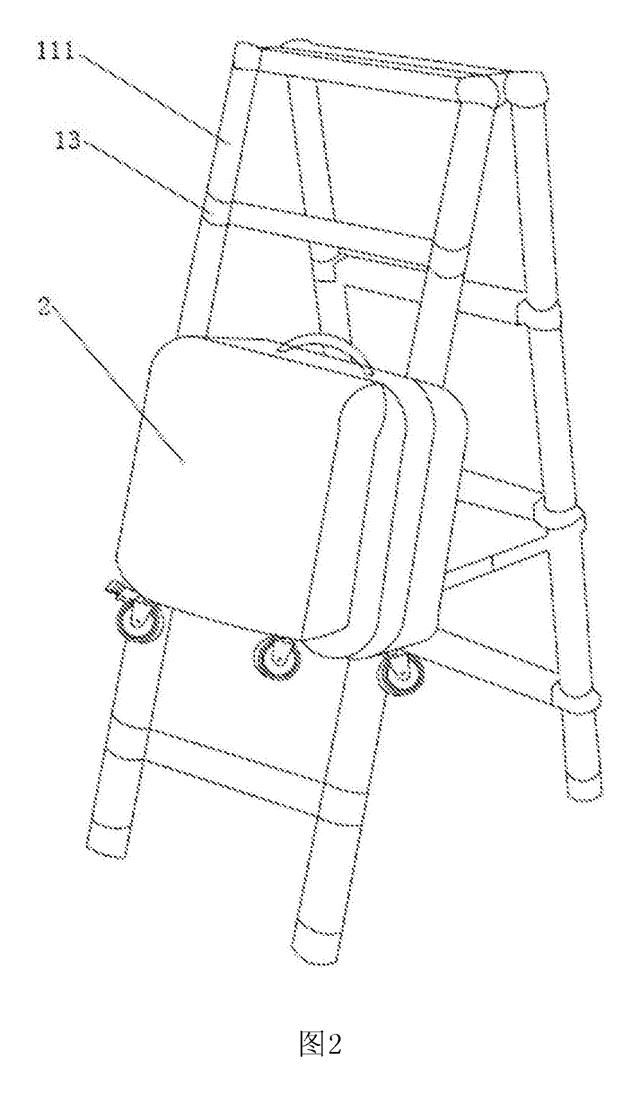
Tools & Workshop
Rolling Tool Box with Telescoping Step Ladder
Telescoping A-frame ladder with an attached rolling tool box that slides to your working height.
Patent CN206290197U
Tools & Workshop
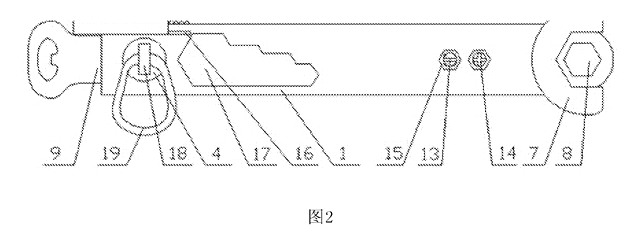
Folding 3-Handle Wrench Multi-Tool
Folding three-handle wrench multi-tool with magnetic screwdriver bits, saw, file and bottle opener.
Patent CN205290875U
Tools & Workshop
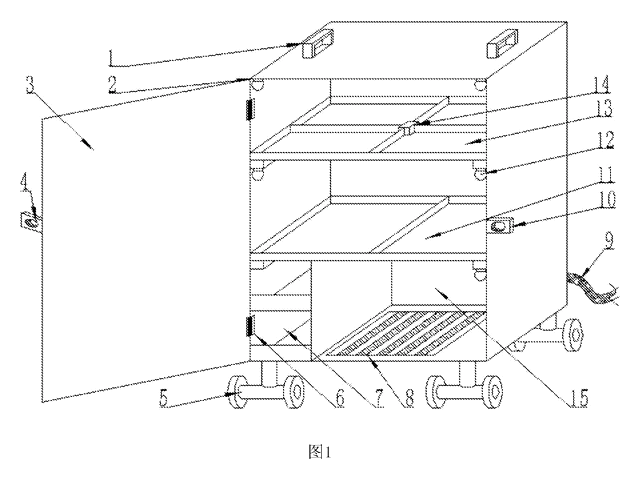
Rolling Auto-Repair Tool Cabinet with Built-In Lights
Lockable rolling tool cabinet for car repair with interior lights, a lubricant tray, parts drawers and a tool bay.
Patent CN205989314U
Tools & Workshop
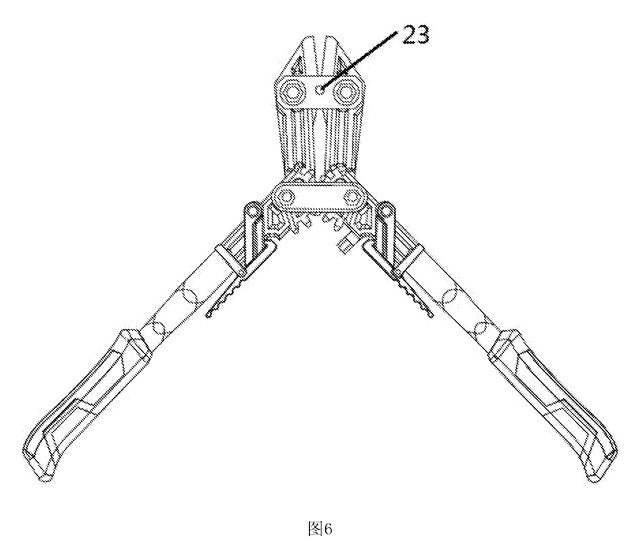
Wide-Opening Folding Bolt Cutter
Bolt cutter with linked, gear-meshing handles that open up to 190° and fold in half for storage.
Patent CN207206226U
Tools & Workshop
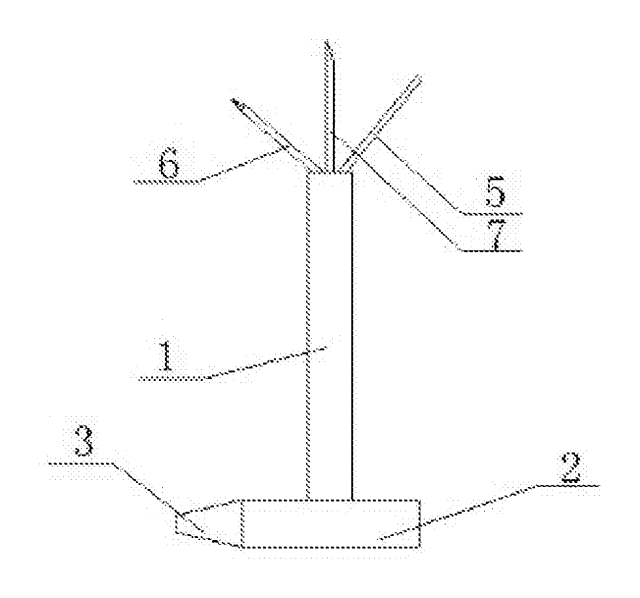
Nail-Holding Hammer with Fold-Out Drivers
Hammer with a nail-holding T-slot in the head and fold-out drivers stored in the handle.
Patent CN205254927U
Tools & Workshop
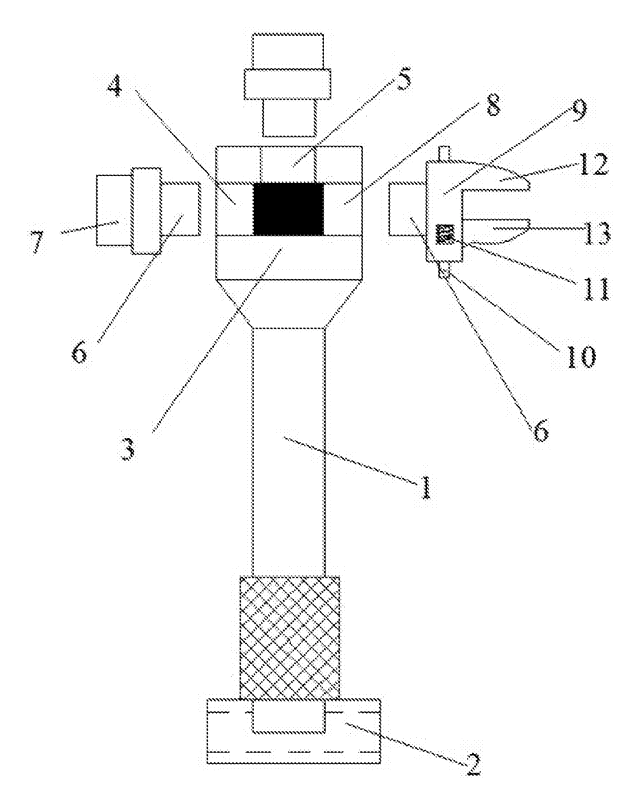
Modular Wrench with Screw-On Heads
Wrench handle with a three-way threaded hub for screw-on adjustable and hex heads, plus a pipe sleeve.
Patent CN206216564U
Browse by category
- Apparel & Accessories (52)
- Baby & Kids (31)
- Bags & Luggage (18)
- Bath & Personal Care (34)
- Car Accessories (27)
- Furniture, Bedding & Storage (26)
- Garden & Outdoor (34)
- Health & Wellness (15)
- Home, Kitchen & Cleaning (53)
- Lighting (25)
- Packaging & Containers (13)
- Pet Products (12)
- Phone & Camera Accessories (11)
- Retail Display (27)
- School, Office & Art (39)
- Sports & Recreation (50)
- Tools & Workshop (58)
- Toys & Games (24)
This page is based on the public patent document CN105904412B, assigned to Weimar Automobile Technology Group Co.,Ltd.. IP2M is an independent manufacturing service and is not affiliated with, endorsed by or licensed by the patent owner. Images marked as concept renderings are illustrations, not photos of an existing product. Patent status information is provided for reference only and is not legal advice; confirm freedom to operate for your market before production. Full disclaimer.