
Patent CN109288236B
Updated November 8, 2026Rotary Gap Cleaning Brush for Woven Mats
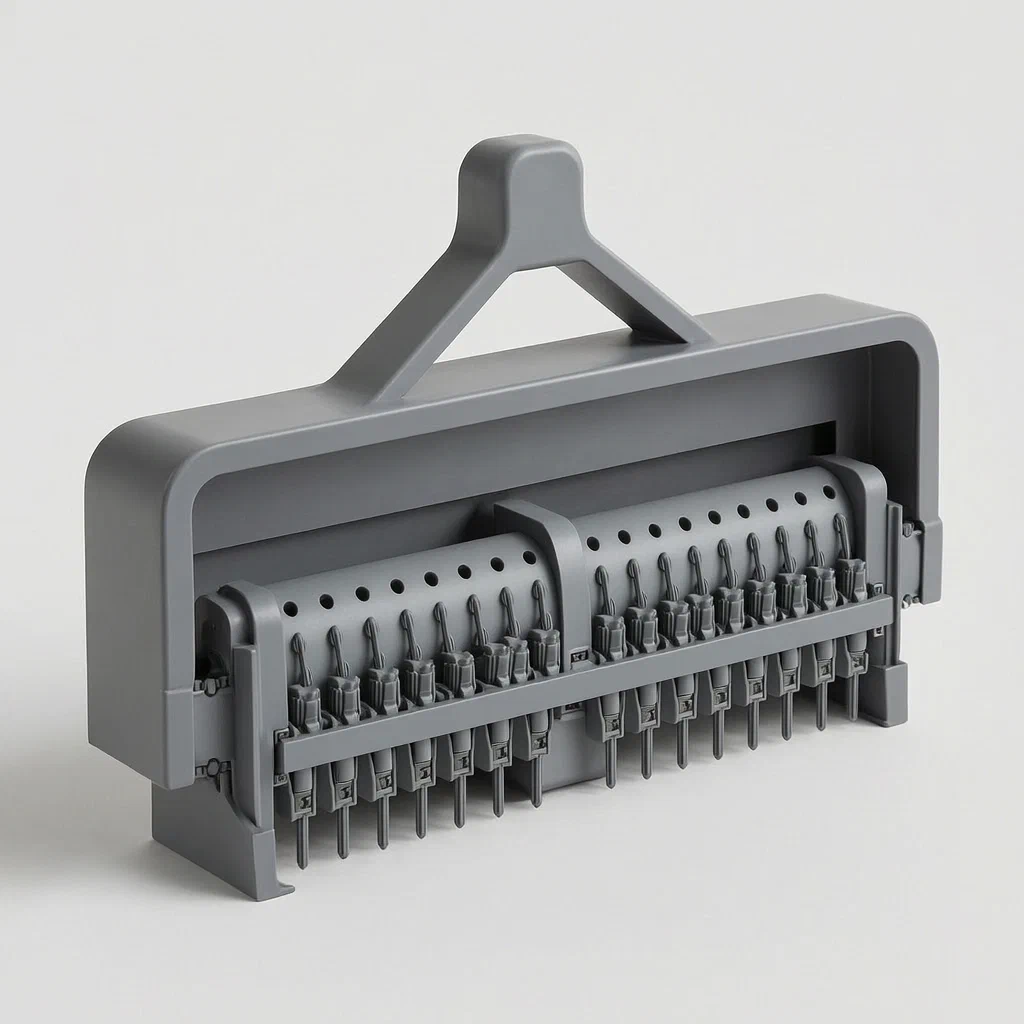
Standard brushes often push dirt deeper into the tight weaves of bamboo or rattan mats rather than removing it. This design solves that by using a rotating roller fitted with flexible adhesive posts. The posts protrude through holes in the roller and act like tiny fingers, reaching into the narrow gaps between the woven strips. When rolled across the mat, they pull out embedded debris without damaging the delicate structure of the weave.
- China invention patent - lapsed
- No filings outside China
- Cleaning tools
- Rotary roller with adhesive posts
Splat! What let you down?
🧹
Deep-gap cleaning
Adhesive posts extend through the roller to reach inside tight mat weaves.
🔄
Rotating action
The roller spins to continuously expose fresh cleaning surfaces.
⚖️
Weighted stability
Internal counterweight balls help maintain balance during use.
🛠️
Modular assembly
Bearings and slots allow for easy maintenance and part replacement.
Bring this product to market
- ✓ Patent review Patent family and legal status reviewed in the relevant jurisdictions.
- 2 Product brief · now How it works, uses and options written up
- 3 Prototype First samples for buyers to review
- 4 Pilot run Small first batch for launch customers
- 5 Volume production Repeat orders at scale
Buyer interest
– of 100 buyers needed to start prototyping
One click, no sign-up. Each vote is one real visitor, and products with the most interest go to prototyping first.
Build team: no members yet. Need a partner, co-funding or skills to build this? Join and we introduce the team once it forms.
Patent Rights & Team Participation
Before joining a development team, participants should ensure they have the necessary rights or authorization to participate in the project.
Participation is generally appropriate where:
- You own the relevant patent rights or have obtained permission or a license from the rights holder.
- The relevant patent rights have expired or have been legally invalidated in the jurisdictions where the planned activities will take place.
- The planned development, manufacturing, and commercialization activities have been independently assessed and do not infringe applicable patent rights in the relevant jurisdictions.
Important: Being located outside a country where a patent is protected does not automatically exempt you from patent infringement risks. Patent rights may apply based on where development, manufacturing, use, sale, or import activities take place.
IP2M does not grant any patent license or authorization through team participation. Joining a project does not provide permission to use, manufacture, or commercialize patented technology.
The problem
Woven cooling mats, made from bamboo, rattan, or synthetic fibers, have narrow gaps between their interlaced strips. Over time, dust, pet hair, skin flakes, and small debris accumulate deep within these crevices. Traditional flat brooms or vacuum attachments cannot reach into the tight spaces, often pushing the dirt further down instead of extracting it. Scrubbing with a stiff brush can damage the mat’s surface or fray the edges of the weave. Users need a tool that can physically grab and pull out debris from the vertical channels of the mat without requiring harsh abrasion or complex machinery.
The solution
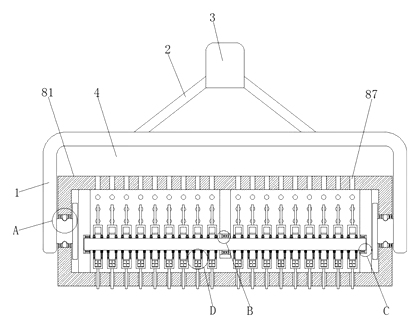
- Support Frame (1): The main body holds the handle and houses the cleaning mechanism. It provides structural integrity and guides the user’s motion.
- Handle (3) and Connecting Rods (2): Attached to the top of the frame, these allow the user to grip and apply downward pressure. The handle includes anti-slip textures for secure holding.
- Central Groove (4): Located at the bottom center of the frame, this cavity contains the rotating roller and its support structures.
- Rotating Roller (81): The core cleaning element. It has multiple through-holes (87) distributed evenly on its front, back, top, and bottom surfaces.
- Adhesive Posts (836): These flexible stems are mounted internally on fixed discs (831) and pass through the roller’s holes to extend outward. They act as the grabbing elements that enter the mat’s gaps.
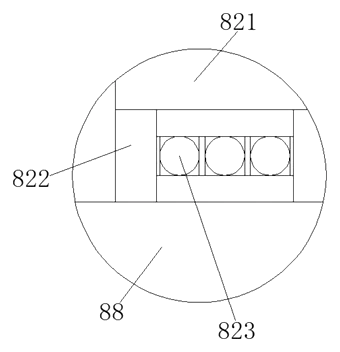
- Support and Lifting Mechanism: Bearings (85, 823, 826, 834) and shafts (88) allow the roller to spin freely. Support columns (5) and clamping plates ensure the roller stays aligned within the groove.
Who it is for
- Household Cleaning Brands: Companies looking to expand their range of niche home care tools with a product designed specifically for popular summer bedding items.
- Mat Manufacturers: Sellers of bamboo or rattan cooling mats who want to offer a complementary accessory that enhances the longevity and hygiene of their primary product.
- E-commerce Retailers: Amazon or direct-to-consumer sellers targeting seasonal spikes in demand for cooling mats, needing a differentiated cleaning solution.
- Wholesale Distributors: Buyers seeking unique, functional plastic-molded tools that address a specific pain point not solved by generic brushes.
How it works
The main parts
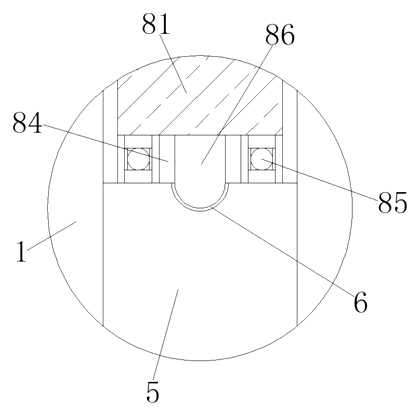
| No. | Part | What it does |
|---|---|---|
| 1 | Support Frame | Main chassis; houses the groove and connects to the handle. |
| 2, 3 | Connecting Rods & Handle | User interface for gripping and applying pressure. |
| 4 | Groove | Central cavity containing the cleaning mechanism. |
| 5, 6, 7 | Support Columns & Clamps | Hold the roller assembly in place within the groove. |
| 81 | Rotating Roller | Spins to bring adhesive posts into contact with the mat. |
| 87 | Through-holes | Openings in the roller wall allowing posts to protrude. |
| 836 | Adhesive Posts | Flexible stems that grab debris from mat gaps. |
| 831 | Fixed Discs | Internal carriers for the adhesive posts. |
| 838 | Counterweight Balls | Stabilize the roller’s rotation via gravity. |
| 85, 823, 826, 834 | Bearings | Enable smooth rotation of the roller and shafts. |
Operating steps
- Positioning: Place the rotating roller (81) onto the surface of the woven mat so that the extended adhesive posts (836) align with the gaps between the mat strips.
- Application of Pressure: Push the handle (3) down. The weight of the device and user pressure ensure the posts penetrate the mat’s crevices.
- Rolling Motion: Move the brush forward or backward along the mat. The friction of the mat against the adhesive posts causes the rotating roller (81) to spin around the rotation axis (88).
- Debris Removal: As the roller turns, the posts carrying trapped dust and hair rotate away from the gap, exposing them to air where the debris falls off or can be wiped away. New posts emerge from the next set of through-holes (87) to continue cleaning.
- Self-Cleaning Cycle: The continuous rotation ensures that dirty sections of the roller move away from the mat, preventing re-contamination of already cleaned areas.
Applications
Bamboo Cooling Mats
Bamboo mats have rigid slats with precise spacing. This brush reaches into those hard-to-clean grooves where sweat and dust accumulate, extending the mat’s usable life.
Rattan and Synthetic Weaves
Flexible woven mats trap fine particles. The adhesive posts gently extract lint and hair without snagging or tearing the softer fibers compared to bristle brushes.
Summer Bedding Maintenance
During hot months, cooling mats are used daily. Regular cleaning with this tool prevents odor buildup and maintains hygiene without requiring water washing, which can warp natural materials.
Pet Owner Households
Pet hair easily embeds in floor mats and bedding. The rolling action lifts hair from deep within the weave, making it easier to dispose of than brushing from the top surface.
Where it is less suitable
- High-pile Carpets: The short length of the adhesive posts is designed for narrow mat gaps, not deep carpet fibers.
- Smooth Surfaces: On glass or polished wood, there are no gaps for the posts to engage, rendering the mechanism ineffective.
- Heavy Industrial Debris: The tool is intended for household dust and hair, not large solid objects or thick grease.
Patent & Production
At a glance
| Patent number | CN109288236B (application CN201811214423) |
| Type | China invention patent - protects method and structure |
| Original title | Gap Cleaning Brush Specifically for Woven Cooling Mats (一种编织凉席专用缝隙清理刷) |
| Patent owner | Shandong Kupin Intelligent Technology Co ltd |
| Inventors | Jiang Juhua |
| Filing date | 2018-10-18 |
| Grant date | 2020-10-30 |
| Status (China) | Lapsed - terminated for non-payment of annual fees (recorded 2024-10-15) |
| Patent family | Public record shows Chinese filings only - no US, European, Japanese, PCT or other filings listed |
| Cited by | 1 later document |
| Source | Google Patents (search for CN109288236B) |
What the claims cover, in plain language
Claim 1 defines a gap cleaning brush comprising a support frame (1), connecting rods (2), and a handle (3). The frame has a central groove (4) housing a cleaning mechanism (8). This mechanism includes a rotating roller (81) with limiting slots (84) and through-holes (87). Inside the roller, a rotation axis (88) supports fixed discs (831) equipped with adhesive posts (836) that extend through the holes. The roller is supported by bearings (85, 823, 826, 834) and support columns (5). A lifting mechanism uses an annular slide rail (833) and rail groove sleeve (835) to manage the roller’s position. Counterweight balls (838) are placed within the fixed discs to stabilize the rotation. The claim specifies the geometric relationship between the posts, holes, and bearings to ensure the roller rotates smoothly while the posts engage with mat gaps.
This is a simplified reading for orientation only. The legal scope is defined by the exact claim wording in the official Chinese document.
What this means for US production
This patent was filed in China and has lapsed, so it no longer restricts anyone in China either. The public record shows no US or other foreign counterpart.
Two points to settle early:
- Other patents may exist. Household cleaning tools are a crowded field. While this specific mechanical arrangement of adhesive posts on a weighted roller appears unique to this filing, similar concepts for “gap cleaning” or “rotary brushes” may be covered by earlier or later US patents. A freedom-to-operate (FTO) review is recommended before mass production to ensure no infringement of existing utility patents in the US market.
- Material Safety. Since the tool contacts bedding and potentially skin, material choices must comply with safety standards for plastics and adhesives.
Customization and manufacturing
What can be customized
| Area | Options |
|---|---|
| Post Material | Silicone, TPE, or soft PVC for different grip strengths and durability. |
| Frame Color/Finish | Standard injection molded colors or matte/gloss finishes. |
| Handle Ergonomics | Adjust shape and size for different hand sizes or grip styles. |
| Roller Diameter | Modify to fit specific mat gap widths (e.g., bamboo vs. rattan). |
| Packaging | Blister pack, box, or eco-friendly paper wrap options. |
Things to plan for (US market)
- FDA Compliance (21 CFR): If marketed for food-contact adjacent surfaces or general hygiene, materials should be FDA-compliant for safety, though this is primarily a household tool.
- CPSC General Requirements: Ensure no sharp edges or pinch points that could cause injury during normal use.
- California Prop 65: Screen plastics and adhesives for restricted chemicals like phthalates or lead.
- ASTM F963: If sold as a toy or if children might interact with it significantly, test for small parts and toxicity.
How a project runs
- Inquiry - Define target mat types, quantity, and desired aesthetic.
- Design Adaptation - CAD modeling of the roller and post interaction; adjust hole density and post length.
- Prototype - 3D print the frame and roller; silicone mold for posts; assemble and test on sample mats.
- Tooling - Create steel molds for the frame, roller shell, and internal discs.
- Production - Injection molding, assembly of bearings and posts, quality control testing.
Quantities & timeline
The complexity lies in the multi-part assembly (frame, roller, discs, posts, bearings). Molds for the hollow roller and the intricate disc holders require precision. Assembly involves press-fitting bearings and inserting posts, which adds labor cost. Certification tests for material safety run concurrently with tooling. Send us your target mat dimensions, quantity, and packaging requirements and we will reply with options.
Production notes
Tooling and process
Injection molding is the primary process for the plastic frame, roller shell, and internal discs. The adhesive posts likely require a separate silicone or rubber molding step, possibly involving overmolding or manual insertion. Stamping may be used for metal bearings or shafts if not sourced as standard components.
Cost drivers
Part count likely drives assembly costs; the design has many small internal components (bearings, discs, weights). The number of molds increases with the complexity of the roller’s internal geometry. Material grade affects durability; silicone posts last longer than cheap PVC but cost more. Surface finish on the visible frame impacts perceived value.
Prototyping path
We would typically start with a 3D model to check interference between the posts and the mat gaps. Print the frame and roller bodies for fit and handling. Use CNC or simple tooling for the stressed bearing seats. Assemble a functional sample with off-the-shelf bearings and molded posts to test the rolling action on actual mats.
What we would change before tooling
We would likely simplify the bearing arrangement if possible to reduce assembly steps. Consider integrating the counterweights into the disc mold to eliminate loose parts. Verify that the post retention method withstands repeated twisting forces without pulling out.
Common failure points
Thin walls on the roller may warp under heat or stress. Adhesive posts could detach from the discs if the connection is weak. Water or residue may get trapped in the groove if drainage is poor. Hinge-like movements in the support columns could fatigue over time.
Patent drawings
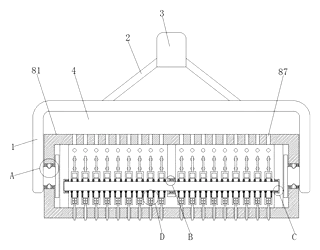
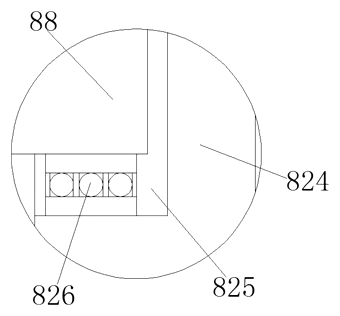
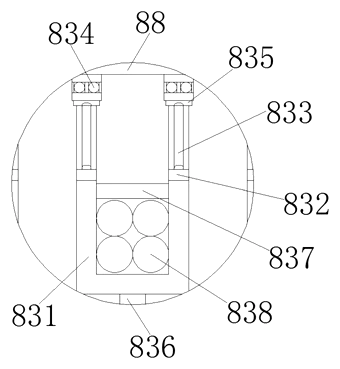
Drawings reproduced from the public patent document for reference.
Frequently asked questions
How does it clean better than a regular brush?
Regular brushes sweep the surface. This design uses flexible adhesive posts that physically enter the narrow gaps between the mat strips. As you roll the device, the posts grab debris from inside the weave and lift it out, rather than just pushing it around.
Does it work on all types of woven mats?
It is optimized for mats with distinct gaps, such as bamboo slat mats or open-weave rattan. Very tight synthetic weaves or high-pile rugs may not allow the posts to penetrate effectively. The length and stiffness of the posts can be adjusted in custom designs to match specific mat types.
Are the adhesive posts replaceable?
The patent describes a modular internal structure with bearings and slots. In a production version, the roller assembly could be designed to snap apart, allowing users to replace worn posts or clean the internal mechanism. This depends on the final design choices.
Will it damage my mat?
According to the patent, the mechanism relies on gentle engagement with the gaps. The posts are typically made of soft, flexible materials like silicone or rubber. Unlike stiff bristles, they do not scrub the surface aggressively, reducing the risk of fraying or scratching delicate bamboo or rattan fibers.
Is it electric?
No. The device operates entirely mechanically. You push and roll it across the mat; the friction between the mat and the posts causes the internal roller to spin. No batteries or motors are required.
Can this design be made and sold in the US?
The patent was filed in China and has lapsed due to non-payment of fees, and the public record shows no US counterpart, so it does not restrict the design in the US or in China. However, other US patents may cover similar cleaning mechanisms, so we recommend a freedom-to-operate check before volume production.
Are you affiliated with the patent owner?
No. IP2M is an independent design and manufacturing service working from the public patent document.
Request a quote
Click Request a Quote below to see our email address - copy it, or open your email app with a ready-made message. Please mention patent CN109288236B in the subject.
Helpful details to include:
- Your company and channel (home goods brand, mat manufacturer, e-commerce seller)
- Target mat types (bamboo, rattan, synthetic) and typical gap width
- Quantity needed for initial order
- Customization requests (color, logo, handle style)
- Timeline - when you would like samples and the first shipment
You can also reach us at (332) 203-9997.
Page editor: Emily Zhang, Product Editor · IP2M
Last updated November 8, 2026. If something on this page looks wrong, email [email protected] and we will check it against the patent.
Interested in building this?
Tell us your target market, quantity and timeline. We reply with options for prototyping, small-batch runs or volume production.
Send your inquiry to
Please put CN109288236B in the subject line and tell us your company, country, estimated quantity and timeline.
Prefer to talk? Call (332) 203-9997.
More product-ready patents
All Home, Kitchen & Cleaning patents →
Home, Kitchen & Cleaning
Self-Wringing Flat Mop with Fold-Away Wringer
Flat mop with a built-in wringer that opens only when you wring and folds flat against the pole when you mop.
Patent CN207734114U
Home, Kitchen & Cleaning
Magnetic Double-Sided Window Cleaner with Dial-Set Magnet Strength
Magnetic window cleaner with a sealed, sliding magnet, dial-set strength for different glass thicknesses and a spring-held idle position.
Patent CN209360543U
Home, Kitchen & Cleaning
Metal Kettle with Magnetic Lid That Stays On When Pouring
Metal teapot/kettle with a magnet-held lid that does not fall off when pouring, and an insulated, vented lid knob.
Patent CN210540477U
Home, Kitchen & Cleaning
Reinforced Disposable Soup Spoon
Disposable soup spoon with a handle-to-bowl rib, stiffened edges and a ring foot to resist breaking.
Patent CN206964482U
Home, Kitchen & Cleaning
Self-Switching Double-Squeegee Window Cleaner
Cleaning head with two squeegee blades that switch automatically with the direction of movement.
Patent CN212630655U
Home, Kitchen & Cleaning
Self-Rinsing Roller Scrub Brush with Dirty-Water Tank
Powered roller brush that rinses and spins its bristles clean inside the body and stores the dirty water.
Patent CN210076909U
Browse by category
- Apparel & Accessories (52)
- Baby & Kids (31)
- Bags & Luggage (18)
- Bath & Personal Care (34)
- Car Accessories (27)
- Furniture, Bedding & Storage (26)
- Garden & Outdoor (34)
- Health & Wellness (15)
- Home, Kitchen & Cleaning (53)
- Lighting (25)
- Packaging & Containers (13)
- Pet Products (12)
- Phone & Camera Accessories (11)
- Retail Display (27)
- School, Office & Art (39)
- Sports & Recreation (50)
- Tools & Workshop (58)
- Toys & Games (24)
This page is based on the public patent document CN109288236B, assigned to Shandong Kupin Intelligent Technology Co ltd. IP2M is an independent manufacturing service and is not affiliated with, endorsed by or licensed by the patent owner. Images marked as concept renderings are illustrations, not photos of an existing product. Patent status information is provided for reference only and is not legal advice; confirm freedom to operate for your market before production. Full disclaimer.