
Patent CN113475859B
Updated November 8, 2026Student Desk with Adjustable Tilt and Book Support
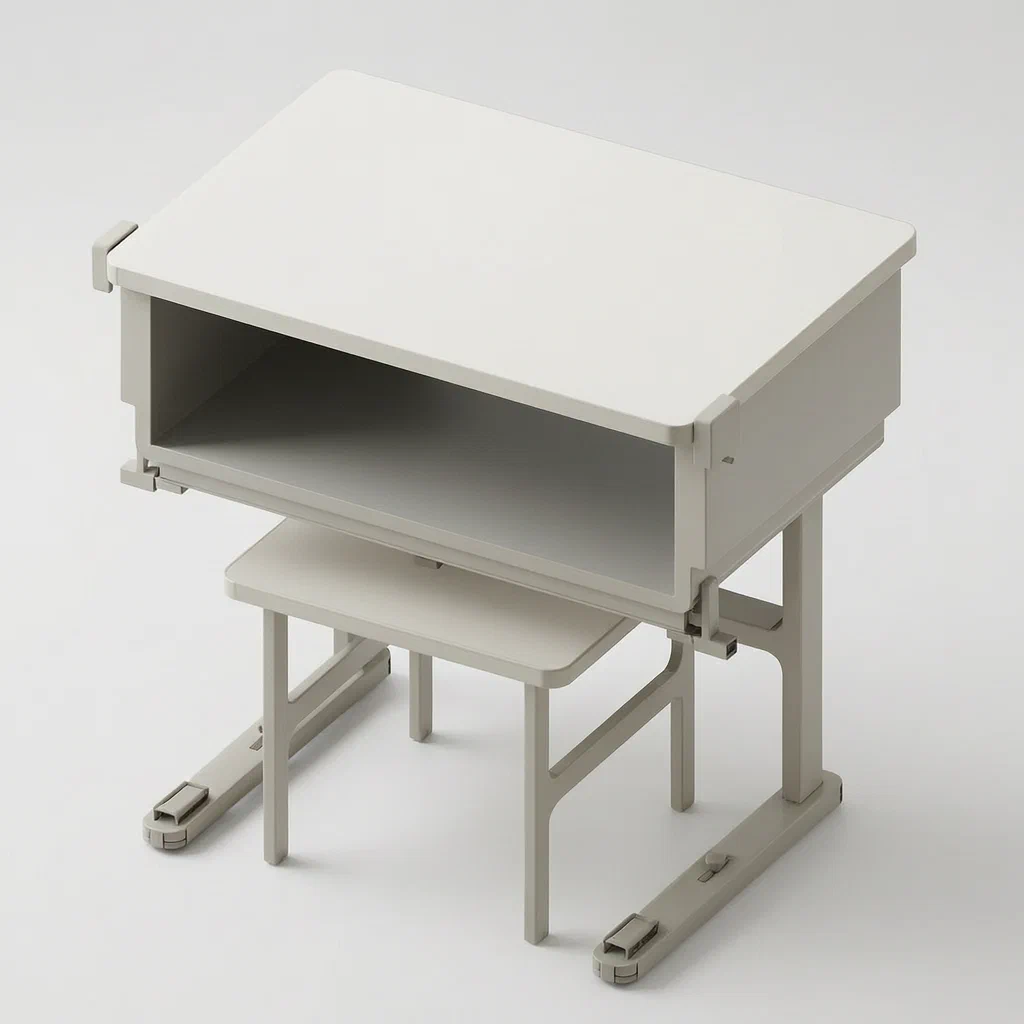
Traditional fixed-height desks force students to hunch over or hold books awkwardly, leading to poor posture and eye strain. This patent describes a student desk where the top rotates on a central axis. A pull-down lever engages a slotting rotating plate, which lifts a supporting rod to tilt the desk surface. Once the desired angle is reached, a ratchet wheel and bar lock the position securely. Additionally, folding light barrier arms extend to hold open books at the correct height, while a foot pedal releases the caster locks for effortless repositioning.
- China invention patent
- In force in China
- No filings outside China
- Steel frame, plastic mechanisms, wood/MDF top
Splat! What let you down?
📐
Tilting Desk Top
The desk plate rotates upward via a pull-down lever to adjust reading angles.
🔒
Ratchet Locking
A ratchet wheel and spring-loaded bar secure the table at any chosen angle.
📚
Foldable Book Arms
Light barrier arms extend to hold books, then fold back into the storage block.
🛞
Mobile & Stable
Integrated casters allow movement; a foot pedal locks them in place during use.
Bring this product to market
- ✓ Patent review Patent family and legal status reviewed in the relevant jurisdictions.
- 2 Product brief · now How it works, uses and options written up
- 3 Prototype First samples for buyers to review
- 4 Pilot run Small first batch for launch customers
- 5 Volume production Repeat orders at scale
Buyer interest
– of 100 buyers needed to start prototyping
One click, no sign-up. Each vote is one real visitor, and products with the most interest go to prototyping first.
Build team: no members yet. Need a partner, co-funding or skills to build this? Join and we introduce the team once it forms.
Patent Rights & Team Participation
Before joining a development team, participants should ensure they have the necessary rights or authorization to participate in the project.
Participation is generally appropriate where:
- You own the relevant patent rights or have obtained permission or a license from the rights holder.
- The relevant patent rights have expired or have been legally invalidated in the jurisdictions where the planned activities will take place.
- The planned development, manufacturing, and commercialization activities have been independently assessed and do not infringe applicable patent rights in the relevant jurisdictions.
Important: Being located outside a country where a patent is protected does not automatically exempt you from patent infringement risks. Patent rights may apply based on where development, manufacturing, use, sale, or import activities take place.
IP2M does not grant any patent license or authorization through team participation. Joining a project does not provide permission to use, manufacture, or commercialize patented technology.
The problem
Students often struggle with posture and comfort when using standard fixed-height desks. Reading requires holding books manually or placing them flat, forcing the neck to bend downward. When moving the furniture for cleaning or rearranging, heavy desks are difficult to push, and once positioned, they may slide unexpectedly if not stabilized properly. There is a need for a compact, multi-functional student workstation that adjusts to the user’s visual needs and remains stable yet movable.
The solution
This patent describes a multifunctional desk and chair assembly. The core innovation lies in the supporting mechanism and pull-down mechanism. The desk plate (4) is mounted on a storage block (3). To tilt the desk, the user pulls a rod (74), which moves a sliding block (73) downward. This action rotates a slotting rotating plate (76), which in turn pushes up an ejector rod (72) attached to the underside of the desk plate. As the plate rotates upward, it reaches the desired angle.
To keep the desk at this angle, a clamping mechanism is used. Ratchet wheels (83) are placed on the sides of the desk pivot. Spring-loaded ratchet bars (86) engage with the teeth of the ratchet wheel. This prevents the desk from falling back down due to gravity unless the bars are manually pulled back.
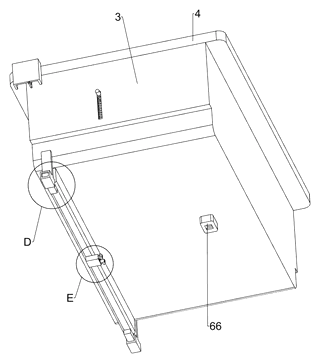
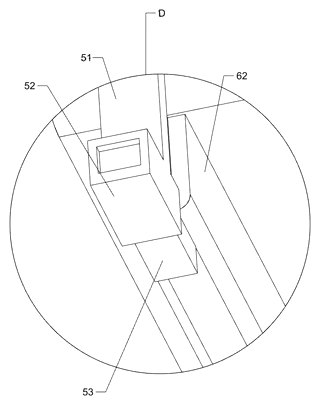
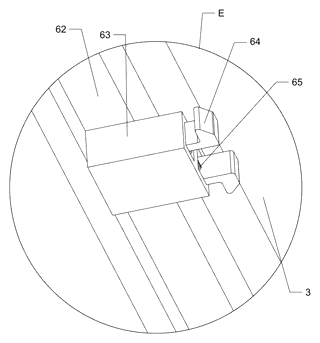
For reading support, baffle mechanisms (6) are housed within the storage block. These consist of light barriers (62) on supporting rods (61). When needed, these arms extend forward to hold open books. They feature a special-shaped block (64) and reset spring (65) that allow them to clip into grooves on a clamping block (66) for stability, or retract easily when not in use.
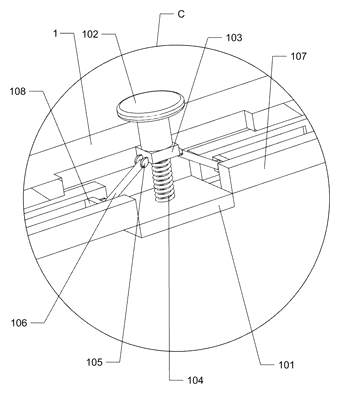
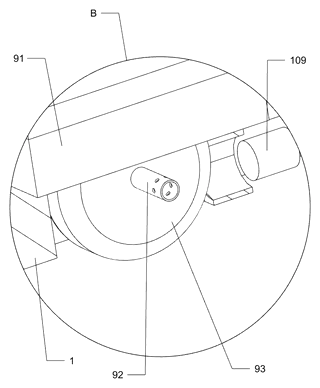
Finally, mobility is addressed by a moving mechanism (9) with rollers (93) and a stopping mechanism (10). A pressing block (102) connected to a spring system controls push rods (109). When the student presses the block, the push rods retract from the rollers, allowing the desk to roll freely. Releasing the pressure causes the springs to push the rods against the rollers, locking them in place to prevent accidental movement during study.
Who it is for
- Educational Furniture Brands: Companies looking to expand their product lines with ergonomic, space-saving student desks that offer more value than basic static models.
- School Procurement Officers: Institutions needing durable, adjustable desks for classrooms or libraries where students have varying heights and reading preferences.
- Home Office Suppliers: Retailers targeting parents who want to create dedicated homework stations for children that promote better posture and reduce clutter.
- OEM Manufacturers: Factories specializing in metal and wood furniture seeking new structural designs that combine multiple functions (tilt, storage, mobility) into one assembly.
How it works
The main parts
| No. | Part | What it does |
|---|---|---|
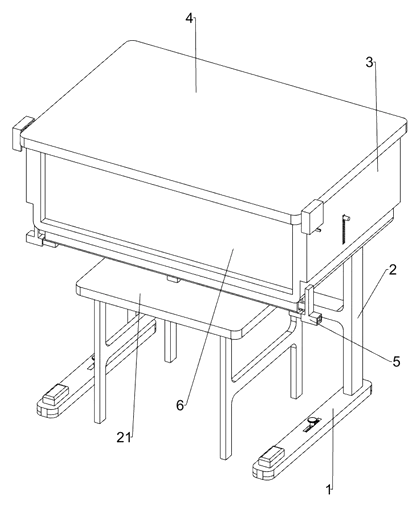
| 1 | Support Frame | Base structure holding the stools and storage block. |
| 3 | Storage Block | Central housing containing mechanisms and storing books/items. |
| 4 | Desk Plate | The work surface, rotatably mounted on the storage block. |
| 5 | Supporting Mechanism | Fixed blocks and pushing blocks that interact with book arms. |
| 6 | Baffle Mechanisms | Folding arms (light barriers) that hold open books. |
| 7 | Pull-down Mechanism | Lever and rod system that tilts the desk plate upward. |
| 8 | Clamping Mechanism | Ratchet wheel and bars that lock the desk at a specific angle. |
| 9 | Moving Mechanism | Rollers and protection blocks for mobility. |
| 10 | Stopping Mechanism | Foot-operated press block that locks/unlocks the rollers. |
Operating steps
- Tilting the Desk: The student pulls the pull rod (74) downwards. This compresses a spring and rotates the internal slotting plate (76). The rear of the plate rises, pushing the ejector rod (72) and lifting the front edge of the desk plate (4).
- Locking the Angle: As the desk tilts, the ratchet wheel (83) rotates. The ratchet bar (86), pushed by its spring, snaps into the next tooth, preventing the desk from dropping. The student stops pulling when the desired reading angle is achieved.
- Deploying Book Arms: The student pulls out the first pushing block (53) on the side of the storage block. This releases the latch on the light barrier (62). The arm swings up and forward. The special-shaped block (64) clicks into the groove of the clamping block (66) to hold the arm rigidly in place to support an open textbook.
- Moving the Unit: To relocate the desk, the student places their foot on the pressing block (102) at the base. This lifts the connecting block (103), pulling the push rod (109) away from the roller (93). The desk can now be rolled smoothly across the floor.
- Stabilizing: Once in position, the student removes their foot. The second supporting spring (104) pushes the connecting block down, causing the push rod (109) to clamp against the roller (93), stopping rotation and keeping the desk stationary.
Applications
Elementary School Classrooms
Young students benefit from the ability to tilt the desk to match their eye level, reducing neck strain during long reading sessions. The integrated storage keeps supplies organized.
Home Study Areas
Parents appreciate the dual function of desk and book stand, saving space in small rooms. The mobility features make it easy to move the desk away from walls for cleaning.
Library Reading Rooms
The sturdy ratchet lock ensures the desk stays at the chosen angle for public users. The folding book arms provide immediate support for large reference volumes without extra accessories.
Tutoring Centers
Tutors can quickly adjust the desk angle to show materials to students. The foot-lock mechanism allows rapid repositioning between different seating arrangements without lifting heavy furniture.
Where it is less suitable
- Fixed Installation Settings: If the desk is bolted to the floor or part of a permanent cubicle, the mobility and stopping mechanisms add unnecessary cost and complexity.
- Heavy Industrial Use: The design focuses on lightweight student materials; it is not rated for heavy machinery or industrial tools that might exceed the load capacity of the ratchet and tilt mechanisms.
- Single-Function Desks: For buyers needing only a simple writing surface without reading aids or mobility, this complex mechanical assembly may be over-engineered compared to standard static tables.
Patent & Production
At a glance
| Patent number | CN113475859B (application CN202110860946) |
| Type | China invention patent (发明专利) - protects product structure and method |
| Original title | A multifunctional desk and chair for students (一种学生用多功能桌椅) |
| Patent owner | Jiangxi Wanyou Industrial Co ltd |
| Inventors | Ma Xuezhi |
| Filing date | 2021-07-29 |
| Grant date | 2023-07-25 |
| Status (China) | In force - valid until at most 2041-07-29, subject to payment of annual fees |
| Patent family | Public record shows Chinese filings only - no US, European, Japanese, PCT or other filings listed |
| Cited by | 0 later documents |
| Source | Google Patents (search for CN113475859B) |
What the claims cover, in plain language
Claim 1 - A multifunctional student desk comprising a support frame, stools, a storage block, a rotatable desk plate, a supporting mechanism, baffle mechanisms, and a pull-down mechanism. The desk plate rotates on the storage block. The supporting mechanism uses fixed blocks and sliding pushing blocks to manage the baffle arms. The baffle mechanisms include light barriers on rods, secured by special-shaped blocks and reset springs that engage with grooves in a clamping block. The pull-down mechanism uses a sliding block, pull rod, and slotting rotating plate to lift the desk plate via an ejector rod. A clamping mechanism with ratchet wheels and spring-loaded bars locks the desk angle. A moving mechanism with rollers and a stopping mechanism with a press block and push rods allows for controlled mobility.
This is a simplified reading for orientation only. The legal scope is defined by the exact claim wording in the official Chinese document.
What this means for US production
This patent was filed in China and is currently in force. The public record shows no US or other foreign counterpart. Making or selling this specific design in China requires the owner’s permission. However, since there is no US patent, the design itself does not restrict manufacturing or sales in the United States based on this specific patent document.
Two points to settle early:
- Other patents may exist. Ergonomic student furniture is a crowded field with many existing US patents covering tilt mechanisms, book stands, and caster locks. A freedom-to-operate (FTO) review is essential to ensure your version does not infringe on active US patents held by major educational furniture brands.
- Mechanical Complexity. The integration of ratchets, springs, and levers increases the part count. Ensure the bill of materials (BOM) aligns with your target price point before committing to tooling.
Customization and manufacturing
What can be customized
| Area | Options |
|---|---|
| Materials | Steel tube frame, MDF/wood top, ABS/PP plastic mechanisms |
| Dimensions | Desk width, depth, and stool height to fit age groups |
| Finishes | Powder coating colors for frame; laminate or paint for top |
| Features | Add/remove book arms; change caster size/type; adjust ratchet pitch |
| Colors | Standard neutral tones or custom brand colors for plastics and metals |
Things to plan for (US market)
- ASTM F1487 - Standard Consumer Safety Performance Specification for Children’s Furniture. Covers stability, protrusions, and entrapment hazards.
- CPSIA - Compliance with lead and phthalate limits in paints and plastics for products intended for children under 12.
- ANSI/BIFMA X5.5 - General Purpose Lounge Chairs (if the stool is marketed as seating for older students/adults, though usually children’s furniture falls under ASTM).
- California Prop 65 - Warning requirements for certain chemicals in finishes or plastics.
How a project runs
- Inquiry - Define target age group, dimensions, and material preferences.
- Design Review - Check mechanical tolerances for ratchet and tilt mechanisms; select suppliers for springs and casters.
- Prototype - Build functional samples to test tilt smoothness, locking strength, and caster mobility.
- Safety Testing - Submit prototypes for ASTM/CPSIA testing if required by your channel.
- Production - Mold plastics, weld/bend steel frames, assemble, and pack.
Quantities & timeline
Injection molds are needed for the complex plastic parts (sliding blocks, rotating plates, ratchet bars). Steel tubes require bending jigs and welding fixtures. Wood tops need CNC cutting. Assembly involves significant manual labor for fitting springs and rods. Send us your target quantity, material specs, and safety certification needs and we will reply with options.
Production notes
Tooling and process
Likely requires injection molding for the intricate plastic components like the slotting rotating plate and ratchet bars. Steel tube bending and welding are typical for the support frame. Wood or MDF machining creates the desk plate. Powder coating is standard for finishing the metal frame.
Cost drivers
Connector and bracket count likely drives assembly costs. Tube diameter and wall thickness affect material usage. Packaging volume is high due to the bulky assembled nature or complex disassembly. Surface finish quality impacts perceived value.
Prototyping path
We would typically start with a 3D model and load path check. Create a welded or bolted frame sample. Use 3D-printed connectors to verify the tilt and lock mechanisms. Perform a load test on the frame. Proceed to tooling and first article inspection.
What we would change before tooling
We would likely simplify the spring retention methods if possible to reduce assembly time. Verify the tolerance stack-up of the ratchet mechanism to ensure smooth engagement without jamming. Consider consolidating small plastic parts to reduce mold counts.
Common failure points
Loose joints after repeated load are a risk in the frame. Insufficient load rating could cause the tilt mechanism to fail. Stripped screws in particle board are common if fasteners are not anchored correctly. Spring fatigue may reduce locking effectiveness over time.
Patent drawings
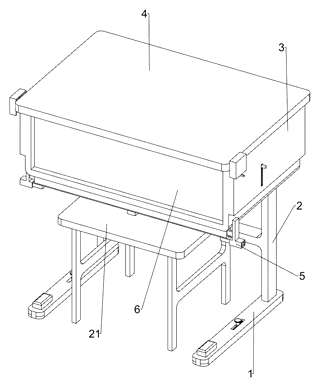
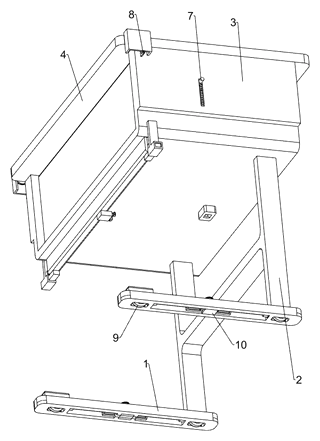
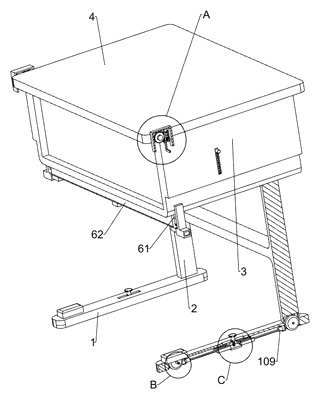
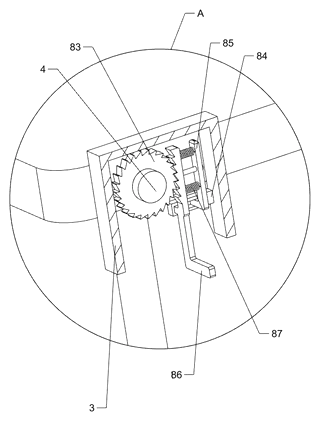
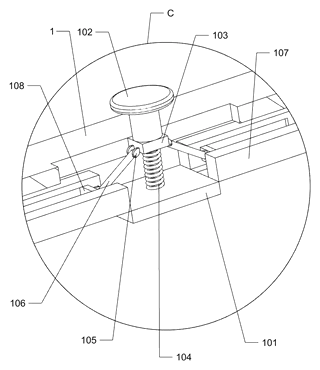
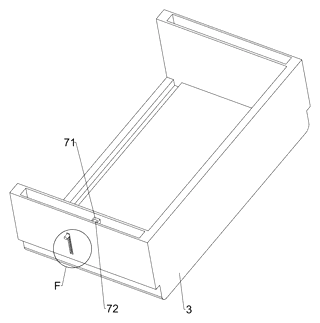
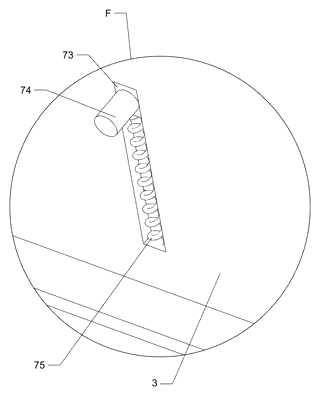
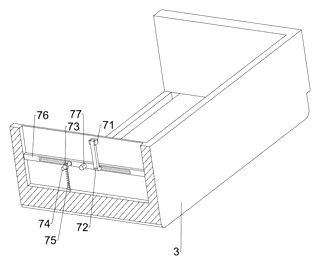
Drawings reproduced from the public patent document for reference.
Frequently asked questions
How does the desk tilt?
The desk plate is mounted on a pivot. A pull-down lever inside the storage block rotates an internal cam, which pushes up a rod attached to the underside of the desk. This lifts the front of the desk to your desired angle.
Does it stay at the chosen angle?
Yes. A ratchet wheel and a spring-loaded pawl (bar) engage automatically as you tilt the desk. This locks the position securely so the desk doesn’t drop when you let go of the lever.
Can I remove the book holders?
The book holders (light barriers) are integrated into the storage block but can be folded down when not in use. They snap into place when extended to provide rigid support for open books.
Is the desk easy to move?
It has built-in casters. A foot pedal at the base unlocks the wheels for rolling. When you release the pedal, a spring pushes a stopper against the wheel, locking the desk in place to prevent sliding while studying.
What materials are used?
The frame is typically steel tubing, the desk top is wood or MDF, and the mechanical parts (gears, levers, housings) are molded plastic (ABS or PP). Finishes are powder-coated metal and laminated or painted wood.
Is this safe for young children?
The design aims to reduce pinch points, but strict adherence to US safety standards (like ASTM F1487) is required during manufacturing to ensure no sharp edges or entrapment hazards exist.
Can this design be made and sold in the US?
The patent was filed in China and is in force there. However, the public record shows no US counterpart, so this specific patent does not restrict making or selling the design in the US. Note that other US patents may exist in this field, so a freedom-to-operate check is recommended.
Are you affiliated with the patent owner?
No. IP2M is an independent design and manufacturing service working from the public patent document.
Request a quote
Click Request a Quote below to see our email address - copy it, or open your email app with a ready-made message. Please mention patent CN113475859B in the subject.
Helpful details to include:
- Your company and channel (school supplier, furniture brand, online retailer)
- Target age group and desk dimensions
- Material preferences (e.g., solid wood vs. MDF, plastic color)
- Quantity and estimated order volume
- Timeline - when you need samples and production start
You can also reach us at (332) 203-9997.
Page editor: Daniel Chen, Product Research Editor · IP2M
Last updated November 8, 2026. If something on this page looks wrong, email [email protected] and we will check it against the patent.
Interested in building this?
Tell us your target market, quantity and timeline. We reply with options for prototyping, small-batch runs or volume production.
Send your inquiry to
Please put CN113475859B in the subject line and tell us your company, country, estimated quantity and timeline.
Prefer to talk? Call (332) 203-9997.
More product-ready patents
All Furniture, Bedding & Storage patents →
Furniture, Bedding & Storage
Roll-Up Travel Neck Pillow with Buckles
U-shaped travel pillow with a front buckle and a back buckle that holds it rolled up for carrying.
Patent CN206543091U
Furniture, Bedding & Storage
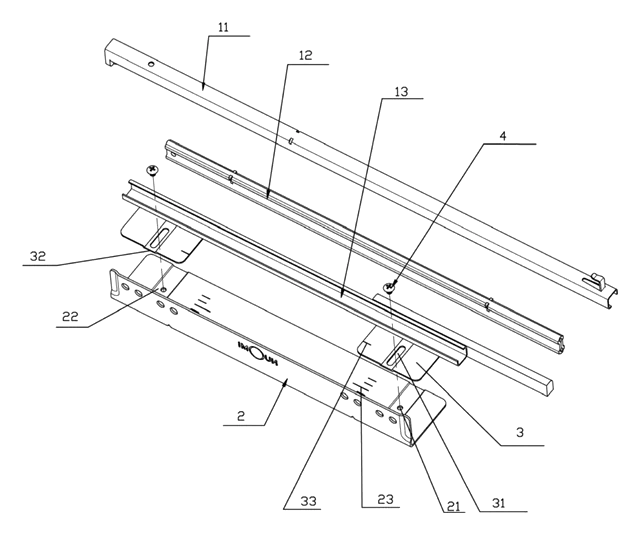
Width-Adjustable Slide Rail for Pull-Out Baskets
Basket slide rail on a slotted, scaled adjusting plate, so one pull-out basket fits several cabinet widths.
Patent CN208909382U
Furniture, Bedding & Storage
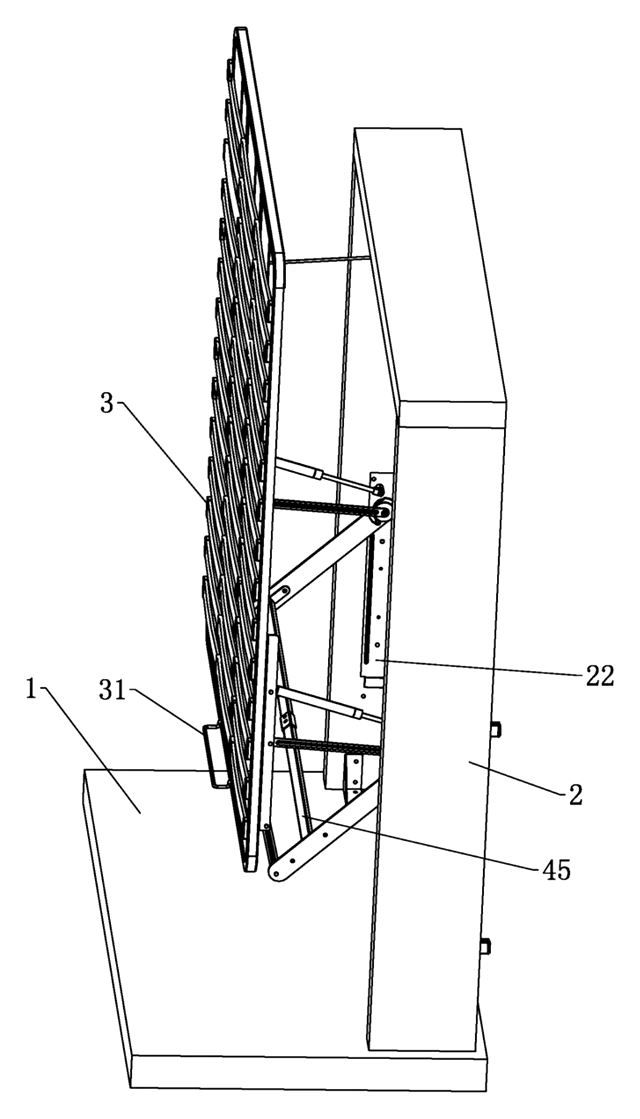
Lift-Up Storage Bed with Four-Bar Linkage That Slides the Deck Away from the Headboard
Storage bed deck that rises on four-bar linkages and gas springs, clearing the headboard as it opens.
Patent CN210870645U
Furniture, Bedding & Storage
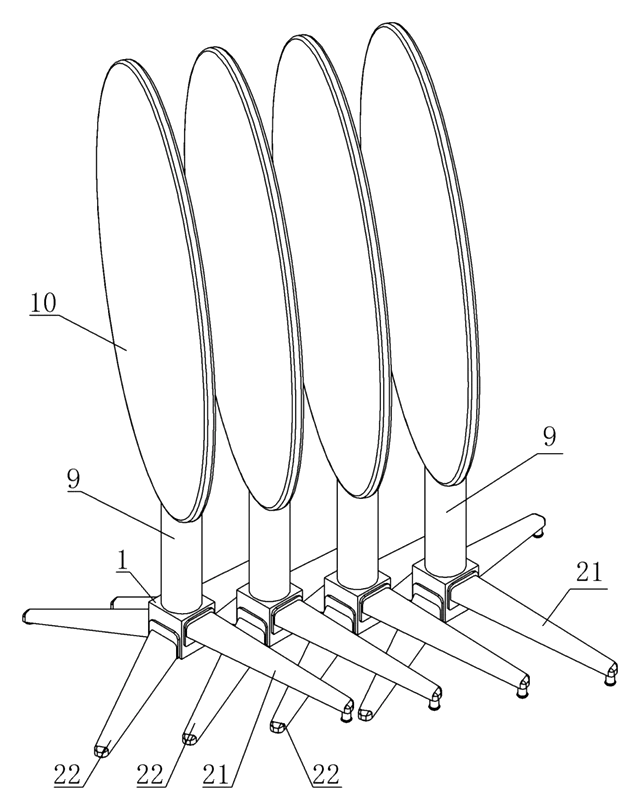
Self-Leveling, Nesting Table Base with a Torsion-Ring Leg Hub
Four-leg base that self-levels through a torsion-ring hub and nests sideways with flip-top tables.
Patent CN211483640U
Furniture, Bedding & Storage
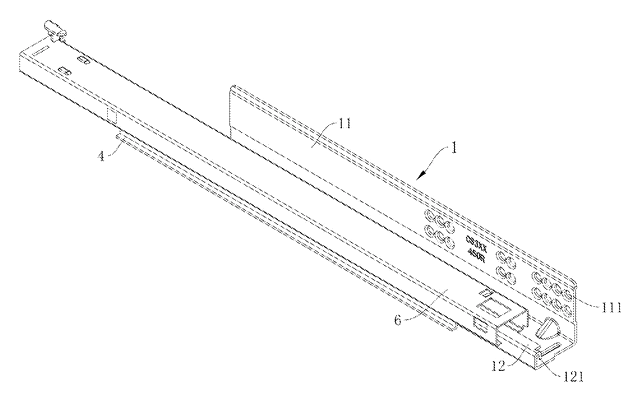
Rack-and-Pinion Synchronized Drawer Slide with a Folded-In Fixed Rail
Full-extension drawer slide: a pinion between two racks keeps the rails moving in step.
Patent CN206314843U
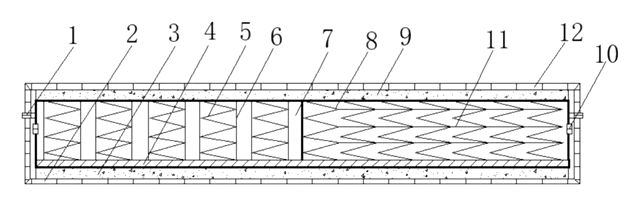
Furniture & Bedding
Dual-Zone Split-Spring Mattress with Removable Fabric Cover
Half-pocket, half-standard spring mattress sharing one base plate, with a removable cover.
Patent CN208355064U
Browse by category
- Apparel & Accessories (52)
- Baby & Kids (31)
- Bags & Luggage (18)
- Bath & Personal Care (34)
- Car Accessories (27)
- Furniture, Bedding & Storage (26)
- Garden & Outdoor (34)
- Health & Wellness (15)
- Home, Kitchen & Cleaning (53)
- Lighting (25)
- Packaging & Containers (13)
- Pet Products (12)
- Phone & Camera Accessories (11)
- Retail Display (27)
- School, Office & Art (39)
- Sports & Recreation (50)
- Tools & Workshop (58)
- Toys & Games (24)
This page is based on the public patent document CN113475859B, assigned to Jiangxi Wanyou Industrial Co ltd. IP2M is an independent manufacturing service and is not affiliated with, endorsed by or licensed by the patent owner. Images marked as concept renderings are illustrations, not photos of an existing product. Patent status information is provided for reference only and is not legal advice; confirm freedom to operate for your market before production. Full disclaimer.