
Patent CN214724089U
Updated November 8, 2026Two-Part Tool Box with Metal Frames and Plastic Bodies
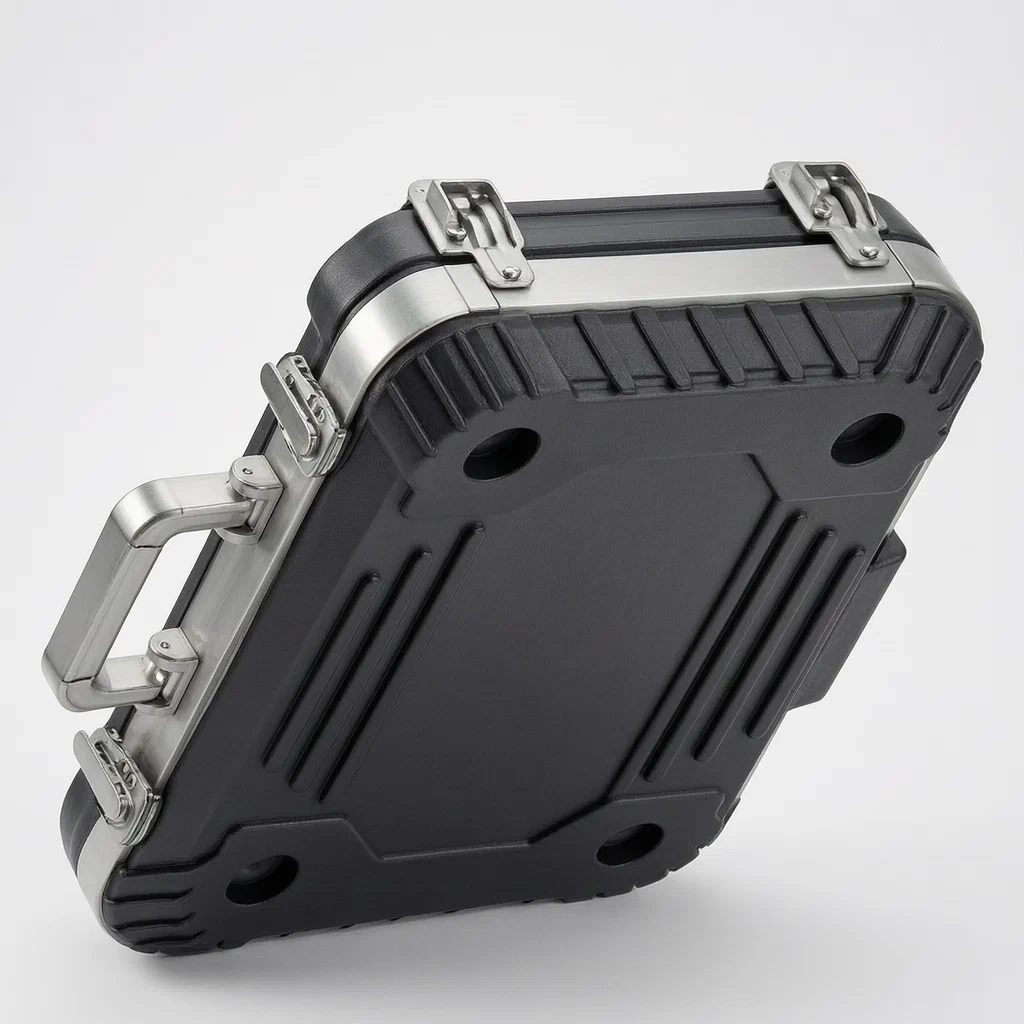
Standard plastic tool boxes often lack structural rigidity at the hinge and latch points, leading to wear or failure under heavy loads. This design uses metal frames integrated with plastic bodies to reinforce these critical areas. Pull nails secure the locking mechanisms directly to the metal sides, while a pivoting retaining ring provides a robust closure. The combination offers improved durability for professional tool storage.
- China utility model - withdrawn
- No filings outside China
- Tool storage hardware
- Metal frames, plastic bodies, pull-nail locking
Splat! What let you down?
🔩
Metal Frame Reinforcement
Plastic bodies are inserted into metal frames, adding rigidity to the structure.
🔒
Pull-Nail Positioning
Locking units are secured to the metal sides using pull nails with blocking portions.
🔄
Retaining Ring Lock
A pivoting retaining ring engages a seat on the opposite casing to lock the box shut.
⚙️
Pivot Swing Assembly
Hinges are also mounted via pull nails to the metal frames for stable opening and closing.
Bring this product to market
- ✓ Patent review Patent family and legal status reviewed in the relevant jurisdictions.
- 2 Product brief · now How it works, uses and options written up
- 3 Prototype First samples for buyers to review
- 4 Pilot run Small first batch for launch customers
- 5 Volume production Repeat orders at scale
Buyer interest
– of 100 buyers needed to start prototyping
One click, no sign-up. Each vote is one real visitor, and products with the most interest go to prototyping first.
Build team: no members yet. Need a partner, co-funding or skills to build this? Join and we introduce the team once it forms.
Patent Rights & Team Participation
Before joining a development team, participants should ensure they have the necessary rights or authorization to participate in the project.
Participation is generally appropriate where:
- You own the relevant patent rights or have obtained permission or a license from the rights holder.
- The relevant patent rights have expired or have been legally invalidated in the jurisdictions where the planned activities will take place.
- The planned development, manufacturing, and commercialization activities have been independently assessed and do not infringe applicable patent rights in the relevant jurisdictions.
Important: Being located outside a country where a patent is protected does not automatically exempt you from patent infringement risks. Patent rights may apply based on where development, manufacturing, use, sale, or import activities take place.
IP2M does not grant any patent license or authorization through team participation. Joining a project does not provide permission to use, manufacture, or commercialize patented technology.
The problem
Many consumer-grade tool boxes rely entirely on plastic molding for their hinges and latches. Over time, the repeated stress of opening, closing, and carrying heavy tools can cause the plastic bosses to crack or wear down, leading to loose hinges or failed locks. Additionally, aligning the top and bottom halves of a two-piece box can be difficult without precise mechanical guides, resulting in rattling or misalignment during transport. There is a need for a storage container that combines the lightweight nature of plastic with the structural strength of metal at high-stress connection points.
The solution
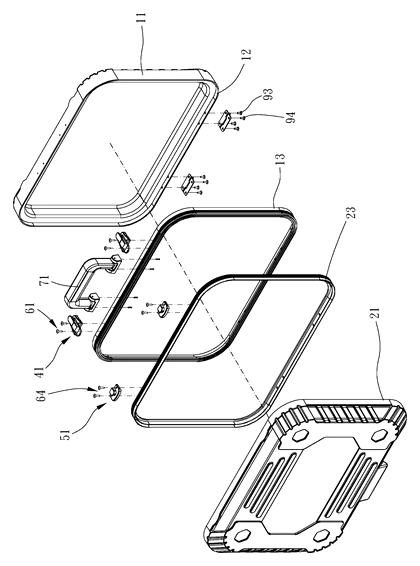
The patent describes a tool box composed of two main casings: a first casing and a second casing. Each casing features a plastic body (12, 22) with protruding ribs (121, 221) and a metal frame (13, 23). The metal frame consists of two side portions and a cover portion. The plastic body’s ribs are inserted into the covering space of the metal frame through an opening.
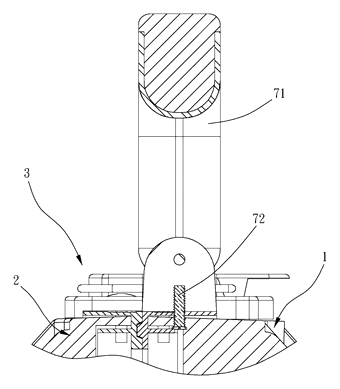
The two casings are connected by pivot swinging assemblies. These assemblies include pivot units attached to the metal frames using positioning members, specifically identified as pull nails (61, 64). These pull nails pass through the locking or pivot units and the plastic ribs, abutting against the metal side portions to secure the components.
To close the box, a locking assembly is used. It comprises a first locking unit on one casing and a second locking unit on the other. The first locking unit includes a seat and a wrench-like pulling member. A retaining ring (45) is connected to the pulling member. When engaged, the retaining ring sleeves over a seat on the second locking unit, locking the two casings together. Alignment between the closed covers is achieved via a raised wall on one cover fitting into a groove on the other.
Who it is for
- Professional tool brands seeking durable storage solutions that withstand heavy daily use in workshops.
- Industrial suppliers requiring robust containers for shipping and storing precision instruments or parts.
- DIY retailers offering mid-to-high-end tool kits where structural integrity is a key selling point.
- Contract manufacturers looking for designs that combine injection molding with metal stamping for value-added products.
How it works
The main parts
| No. | Part | What it does |
|---|---|---|
| 1, 2 | First/Second Casing | Top and bottom halves of the box. |
| 12, 22 | Plastic Body | Forms the main volume; has protruding ribs. |
| 13, 23 | Metal Frame | Surrounds the plastic body; provides structural strength. |
| 121, 221 | Protruding Ribs | Plastic extensions that fit into the metal frame. |
| 41, 51 | Locking Units | Mechanisms that engage to close the box. |
| 61, 64 | Positioning Members | Pull nails that fasten units to the metal frames. |
| 45 | Retaining Ring | Engages with the second locking unit to lock the box. |
| 81, 82 | Raised Wall/Groove | Aligns the covers when the box is closed. |
Operating Steps
- Assembly: The plastic body is molded with ribs that slide into the folded metal frame. Pull nails are driven through the locking or pivot units, the plastic ribs, and the metal sides, creating a tight interference fit.
- Opening: The user disengages the retaining ring from the second locking unit. The pivot swing assemblies allow the first casing to rotate away from the second casing.
- Closing: The raised wall on one cover aligns with the groove on the other, guiding the casings together.
- Locking: The retaining ring is rotated or slid over the seat of the second locking unit, preventing the casings from separating.
Applications
Professional Workshop Storage
In busy workshops, tool boxes are frequently moved and dropped. The metal frame reinforcement ensures that the hinges and latches do not shear off the plastic body under impact, extending the product’s lifespan significantly compared to all-plastic alternatives.
Field Service Kits
Technicians who carry tools in vehicles experience constant vibration and movement. The interlocking raised wall and groove system prevents the two halves of the box from shifting or rattling during transit, protecting delicate instruments inside.
Industrial Parts Organization
Factories often store small metal parts or fasteners in bulk. The robust pull-nail mounting of the locking units means the latch can withstand frequent opening and closing cycles without loosening, ensuring parts remain contained even in rough handling environments.
Retail Display Boxes
For premium tool sets sold in retail stores, the visible metal frame adds an aesthetic of durability and quality. The smooth operation of the pivot and lock mechanisms enhances the unboxing experience, reinforcing the brand’s promise of reliability.
Where it is less suitable
- Extreme Chemical Exposure: While the patent mentions plastic and metal, specific chemical resistance properties are not detailed; specialized resin selection would be required for harsh industrial chemicals.
- Ultra-Lightweight Requirements: The addition of metal frames increases weight compared to pure plastic designs, making it less ideal for applications where minimizing gram weight is the primary constraint.
Patent & Production
At a glance
| Patent number | CN214724089U (application CN202120295114) |
| Type | China utility model (实用新型) - protects product shape and structure |
| Original title | Tool Box (工具盒) |
| Patent owner | Mingxin International Co ltd |
| Inventors | Chen Yongshun |
| Filing date | 2021-02-02 |
| Grant date | 2021-11-16 |
| Status (China) | Withdrawn - the owner abandoned the patent right (recorded 2024-06-25) |
| Patent family | Public record shows Chinese filings only - no US, European, Japanese, PCT or other filings listed |
| Cited by | 2 later documents |
| Source | Google Patents (search for CN214724089U) |
What the claims cover, in plain language
Claim 1 defines a tool box with two casings (first and second). Each casing has a plastic body with protruding ribs and a metal frame. The ribs insert into the frame’s covering space. The casings are connected by locking assemblies. Each locking unit is positioned on the metal frame using positioning members (described as pull nails in dependent claims) that pass through the locking unit, the rib, and the frame’s side portions. The two locking units engage to prevent the casings from opening.
Claim 2 specifies that the locking units have recesses that accommodate parts of the metal frame side portions, improving stability. Claim 3 notes that blocking portions of the positioning members are exposed in the internal spaces of the casings. Claim 4 adds a handle secured by screws through the frame and rib. Claim 5 details the locking mechanism: a seat, a retaining ring, and a wrench/pulling member. The retaining ring embeds into a hole in the second seat to lock. Claim 8 introduces alignment features: a raised wall on one cover and a groove on the other, which taper toward each other for easier closing. Claim 10 clarifies that the plastic bodies are formed by air-blowing forming processing and the positioning members are pull nails. It also describes pivot swinging components for the hinge, similarly mounted with pull nails.
This is a simplified reading for orientation only. The legal scope is defined by the exact claim wording in the official Chinese document.
What this means for US production
This patent was filed in China and is currently withdrawn due to abandonment by the owner. The public record shows no US or other foreign counterpart. Since the patent rights were abandoned, the technical solution described is no longer protected in China. Consequently, there is no restriction on making or selling this specific design in China based on this patent. Furthermore, because the public record shows no US counterpart, this patent does not restrict the design in the United States.
Two points to settle early:
- Other patents may exist. Tool boxes and storage containers are a crowded field with many active US patents regarding hinge mechanisms, latching systems, and material composites. A freedom-to-operate (FTO) review is recommended to ensure no other active US patents cover similar metal-frame/plastic-body hybrid structures or specific pull-nail fastening methods.
- Material sourcing. The design relies on integrating stamped metal frames with blow-molded plastic bodies. Supply chain consistency for both materials is critical for maintaining the tight interference fits described in the claims.
Customization and manufacturing
What can be customized
| Area | Options |
|---|---|
| Dimensions | Length, width, and height of the casings; internal tray layouts. |
| Materials | Type of steel for frames (e.g., galvanized); type of plastic for bodies (e.g., PP, ABS). |
| Finish | Powder coating, zinc plating, or paint for metal frames; color matching for plastic. |
| Locking System | Variation of the retaining ring size; addition of padlock holes; different latch styles. |
| Handles | Integrated vs. separate handles; rubberized grips. |
| Alignment | Shape and depth of the raised wall/groove interface. |
Things to plan for (US market)
- CPSC Regulations: Ensure sharp edges on metal frames are deburred or covered to meet safety standards for consumer products.
- Proposition 65: If using certain plastics or coatings, check for California Prop 65 warning requirements regarding chemicals like lead or phthalates.
- ASTM Standards: While not mandatory for general tool boxes, adherence to ASTM D4169 (distribution performance) can help validate packaging and drop-test resilience.
How a project runs
- Design Validation: Confirm dimensions and load capacities; select metal gauge and plastic resin.
- Tooling Creation: Develop molds for the plastic bodies (blow molding or injection) and dies for the metal frames (stamping).
- Prototyping: Assemble sample units to test the pull-nail insertion process and locking engagement.
- Testing: Conduct cycle testing on hinges and latches; verify alignment of raised walls and grooves.
- Production: Mass produce frames and bodies; assemble using automated press-fit or manual pull-nail driving stations.
Quantities & timeline
Lead times depend on mold creation for the plastic bodies and die development for the metal frames. The assembly complexity involving pull nails may require specialized fixtures. Send us your target dimensions, material preferences, quantity estimates, and desired finish options and we will reply with options.
Production notes
Tooling and process
Manufacturing likely involves stamped steel for the frames and glass-filled nylon injection molding for the bodies. The integration requires precise press-fit pins or rivets equivalent to the pull nails described. Surface finish operations are needed for the metal parts.
Cost drivers
Key cost factors include the number of stamping dies for the complex frame geometry and material and heat treatment if the steel requires hardening. Assembly steps for inserting the pull nails can drive labor costs.
Prototyping path
Start with a functional sample using machined metal frames and 3D-printed plastic bodies to verify fit. Then proceed to tooling for final production. Heat-treatment trial coupons may be needed if specific hardness is required for the frame edges.
What we would change before tooling
We would likely verify the wall thickness and joint design of the plastic ribs to ensure they withstand the insertion force of the pull nails without cracking. Adjust the tolerance stack-up for the snap-fit or interference fit between the metal frame and plastic body.
Common failure points
Potential issues include pivot pin wear if the metal-on-metal contact is not lubricated or hardened. Coating wear on the frames can lead to rust. Ensure thread engagement for any screw-mounted handles is sufficient to prevent stripping.
Patent drawings
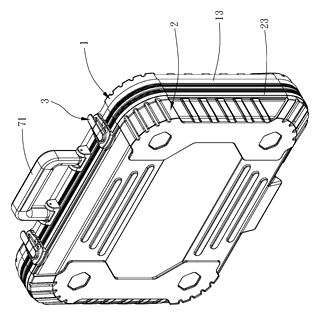
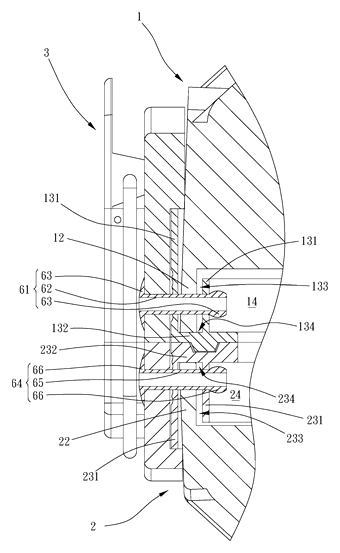
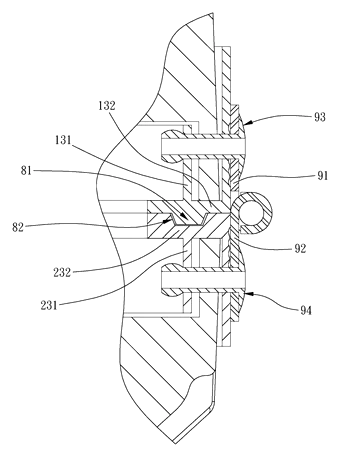
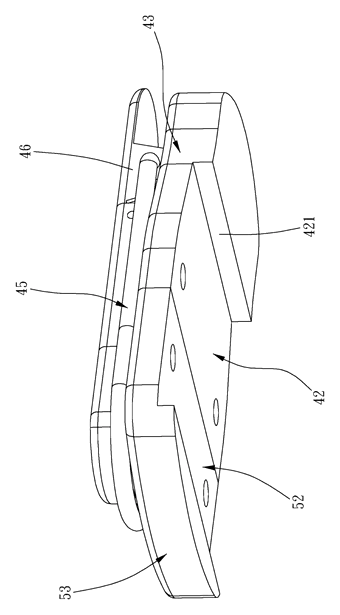
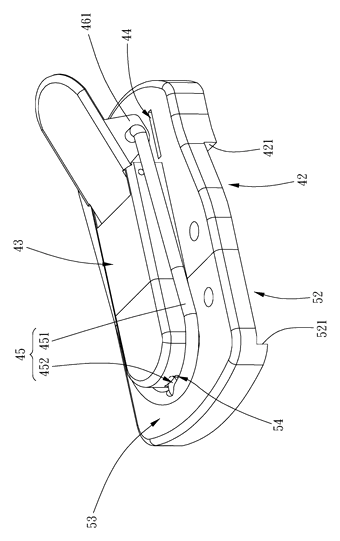
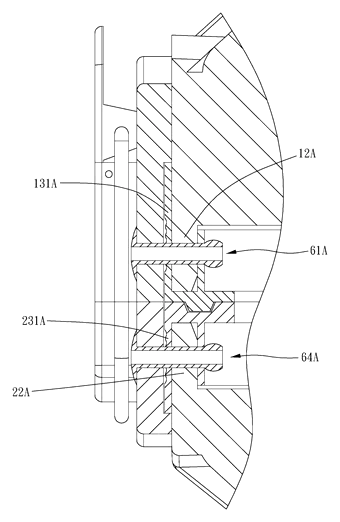
Drawings reproduced from the public patent document for reference.
Frequently asked questions
Why use a metal frame instead of just plastic?
The metal frame reinforces the areas where hinges and latches attach. In all-plastic boxes, these points are prone to cracking or wearing out from repeated stress. The frame distributes the load and provides a stronger anchor for the locking components.
How are the locking units attached to the box?
They use pull nails (a type of positioning member). These nails pass through the locking unit, the plastic rib, and the metal frame side. The ends of the nail expand or block to hold everything tightly together, creating a secure mechanical bond without needing separate screws for every part.
Does the box rattle when closed?
The design includes a raised wall on one cover and a groove on the other. These features align the two halves precisely when closing, reducing gaps and minimizing rattling during transport.
Can I customize the size?
Yes. The patent describes the structural relationship between the plastic body and metal frame, but the overall dimensions are flexible. We can adjust the length, width, and height to fit your specific tool inventory or branding requirements.
Is the lock secure enough for expensive tools?
The locking assembly uses a retaining ring that engages deeply with the opposing seat. This mechanical interlock is designed to resist accidental opening. For higher security, additional padlock holes can be incorporated into the design during the customization phase.
What materials are used?
The bodies are typically made from durable plastics (like PP or ABS), formed by blowing or injection molding. The frames are made from stamped metal, usually steel, which can be plated or coated to prevent corrosion.
Can this design be made and sold in the US?
The patent was filed in China and is now withdrawn (abandoned), meaning the owner gave up the rights. The public record shows no US counterpart. Therefore, this specific patent does not restrict making or selling this design in the US. However, other active US patents may cover similar tool box mechanisms, so a freedom-to-operate check is recommended.
Are you affiliated with the patent owner?
No. IP2M is an independent design and manufacturing service working from the public patent document.
Request a quote
Click Request a Quote below to see our email address - copy it, or open your email app with a ready-made message. Please mention patent CN214724089U in the subject.
Helpful details to include:
- Your company and channel (tool brand, industrial supplier, DIY retailer)
- Target dimensions (length, width, height)
- Material preferences (steel type, plastic type, colors)
- Locking features (standard latch, padlock ready, etc.)
- Estimated quantity and target price
- Timeline - when you would like samples and the first shipment
You can also reach us at (332) 203-9997.
Page editor: Daniel Chen, Product Research Editor · IP2M
Last updated November 8, 2026. If something on this page looks wrong, email [email protected] and we will check it against the patent.
Interested in building this?
Tell us your target market, quantity and timeline. We reply with options for prototyping, small-batch runs or volume production.
Send your inquiry to
Please put CN214724089U in the subject line and tell us your company, country, estimated quantity and timeline.
Prefer to talk? Call (332) 203-9997.
More product-ready patents
All Tools & Workshop patents →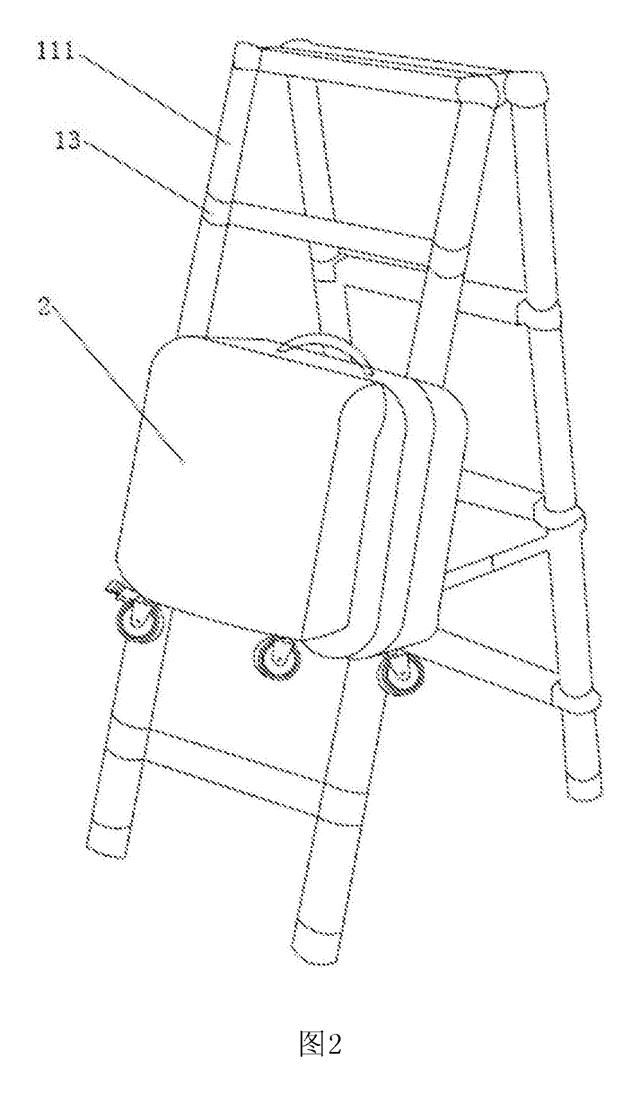
Tools & Workshop
Rolling Tool Box with Telescoping Step Ladder
Telescoping A-frame ladder with an attached rolling tool box that slides to your working height.
Patent CN206290197U
Tools & Workshop
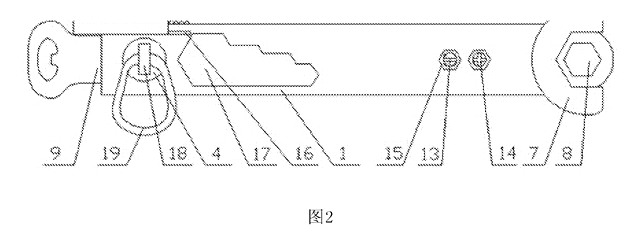
Folding 3-Handle Wrench Multi-Tool
Folding three-handle wrench multi-tool with magnetic screwdriver bits, saw, file and bottle opener.
Patent CN205290875U
Tools & Workshop
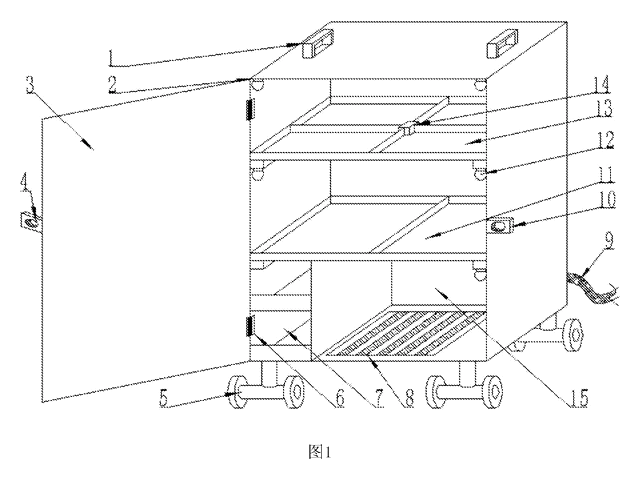
Rolling Auto-Repair Tool Cabinet with Built-In Lights
Lockable rolling tool cabinet for car repair with interior lights, a lubricant tray, parts drawers and a tool bay.
Patent CN205989314U
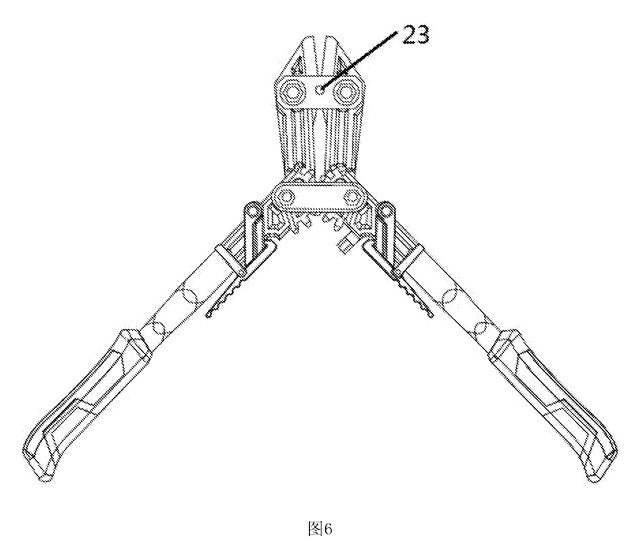
Tools & Workshop
Wide-Opening Folding Bolt Cutter
Bolt cutter with linked, gear-meshing handles that open up to 190° and fold in half for storage.
Patent CN207206226U
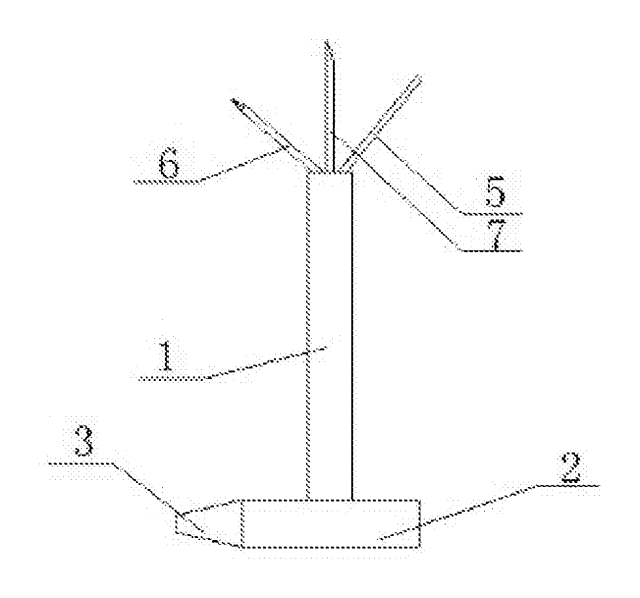
Tools & Workshop
Nail-Holding Hammer with Fold-Out Drivers
Hammer with a nail-holding T-slot in the head and fold-out drivers stored in the handle.
Patent CN205254927U
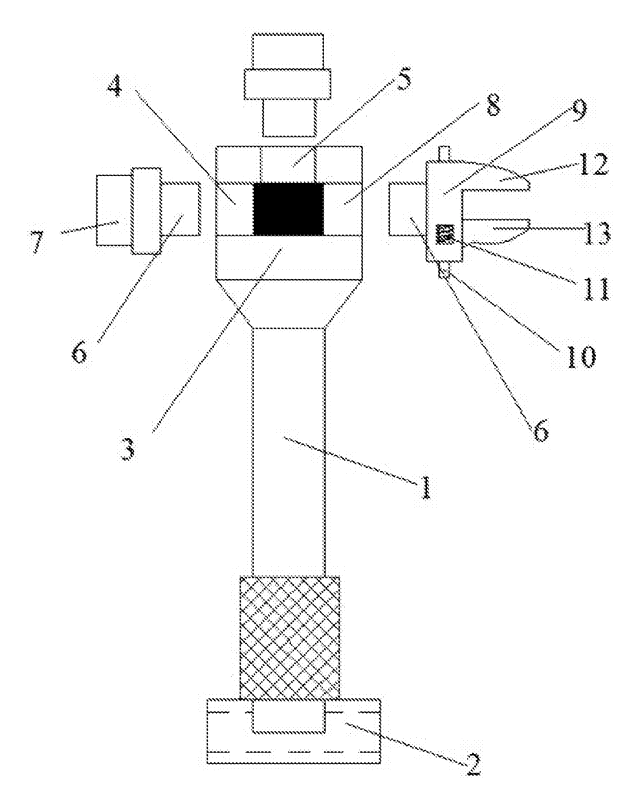
Tools & Workshop
Modular Wrench with Screw-On Heads
Wrench handle with a three-way threaded hub for screw-on adjustable and hex heads, plus a pipe sleeve.
Patent CN206216564U
Browse by category
- Apparel & Accessories (52)
- Baby & Kids (31)
- Bags & Luggage (18)
- Bath & Personal Care (34)
- Car Accessories (27)
- Furniture, Bedding & Storage (26)
- Garden & Outdoor (34)
- Health & Wellness (15)
- Home, Kitchen & Cleaning (53)
- Lighting (25)
- Packaging & Containers (13)
- Pet Products (12)
- Phone & Camera Accessories (11)
- Retail Display (27)
- School, Office & Art (39)
- Sports & Recreation (50)
- Tools & Workshop (58)
- Toys & Games (24)
This page is based on the public patent document CN214724089U, assigned to Mingxin International Co ltd. IP2M is an independent manufacturing service and is not affiliated with, endorsed by or licensed by the patent owner. Images marked as concept renderings are illustrations, not photos of an existing product. Patent status information is provided for reference only and is not legal advice; confirm freedom to operate for your market before production. Full disclaimer.